If any cultural entity has proven its indelible mark on the global consciousness, it is The Beatles. In recent weeks, a confluence of events has underscored the Fab Four’s enduring relevance, sparking a renewed wave of interest that many are dubbing a modern-day Beatlemania. From the release of new solo material by its surviving members to its integration into major sporting events and television farewells, and even its unexpected appearances in criminal proceedings, The Beatles’ cultural footprint remains remarkably expansive and deeply embedded in contemporary society.
A Multifaceted Resurgence
The past few weeks have offered a veritable feast for Beatles enthusiasts and cultural observers alike. Paul McCartney, one half of the legendary songwriting partnership, recently unveiled his 20th solo album, "The Boys of Dungeon Lane." Heralded by The Guardian as "an adventurous and limber take on guitar music," the release itself signifies a continued creative output from one of music’s most iconic figures, directly linking current artistic endeavors to the band’s legacy.
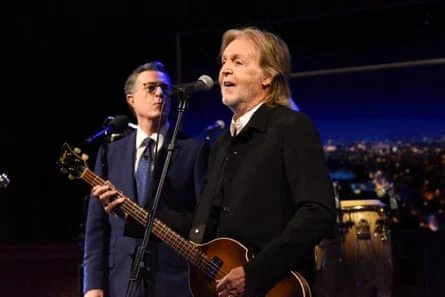
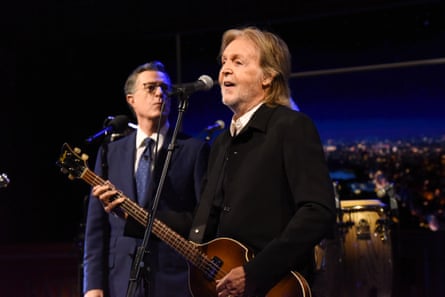
The global reach of The Beatles was further amplified during the recent announcement of England’s World Cup squad. In a move that resonated with fans and symbolized national spirit, the accompanying soundtrack featured the quintessential Beatles anthem, "Come Together." This choice was juxtaposed with a visually striking film showcasing fashionable young people in New York, and a nostalgic clip of a young, impish John Lennon, effectively weaving the band’s iconic imagery and music into a contemporary national event. The same week saw a poignant moment on American television when Stephen Colbert, bidding farewell to his final episode of "The Late Show," was played off the air by a spirited rendition of "Hello, Goodbye" performed by Paul McCartney. These disparate yet significant instances highlight how The Beatles’ music and imagery continue to be potent cultural touchstones, capable of evoking emotion and signaling cultural moments across diverse platforms.
Beyond these high-profile events, grassroots initiatives demonstrate the band’s deep connection with communities. In the coastal town of Felixstowe, England, a group of 70 individuals gathered to campaign for a dedicated "Beatles Day." Their efforts included a creative recreation of the iconic album cover for "Sgt. Pepper’s Lonely Hearts Club Band," a testament to the visual and thematic impact of the band’s work on local culture. Concurrently, the market for Beatles memorabilia remains exceptionally robust. Scarcely a week passes without reports of newly discovered artifacts, signed records, or personal items connected to the band members, fetching significant sums at auction and underscoring the continued financial and historical value placed upon their legacy.

The Unforeseen Shadows of Legacy
However, the pervasive influence of The Beatles is not solely confined to celebratory or nostalgic contexts. In a stark illustration of the band’s reach into unexpected spheres, Peter Murrell, the former chief executive of the Scottish National Party (SNP), admitted to embezzlement. In a notable detail that cast a peculiar shadow over the scandal, it was revealed that party funds had been illicitly used to purchase a special edition Beatles pen set, valued at a considerable £1,475. This incident, while sensational, inadvertently highlights the enduring desirability and perceived value associated with Beatles-themed merchandise, even in the most unlikely of circumstances.
A Reassessment of Cultural Impact
Ian Leslie, a bestselling author whose work includes "John and Paul: A Love Story in Songs," posits that the current wave of interest signifies a new era of Beatlemania, reminiscent of the revival seen in the 1990s. Leslie argues that society is only now beginning to fully comprehend the magnitude of The Beatles’ cultural phenomenon. He contends that for decades, the band was often unfairly measured against contemporaries like The Rolling Stones. "That rivalry is irrelevant," Leslie asserts. "They moved on to a plane of their own. You think about Shakespeare: we’re still reading Marlowe and the other Elizabethan playwrights, but the bard is – like the Beatles – in a whole separate category." This comparison elevates The Beatles beyond mere musical artists, positioning them as foundational figures in cultural history, akin to literary giants.
The Beatles occupy a unique and deeply ingrained position within the British cultural imagination. For over six decades, their songs have provided the soundtrack to countless lives, marking personal milestones and collective memories. Furthermore, the band’s complex interpersonal dynamics – their friendships, creative collaborations, eventual breakups, and the individual tragedies that followed – have woven a compelling psychodrama that continues to captivate audiences and fuel enduring fascination.
The Catalyst for Renewed Interest: "Get Back" and Upcoming Biopics
Leslie attributes the current surge in interest, in part, to Peter Jackson’s acclaimed eight-hour documentary, "The Beatles: Get Back." This immersive film offered viewers an unprecedentedly intimate and intense look into the band’s creative process during the challenging recording sessions for the "Let It Be" album. The documentary’s raw and revealing portrayal resonated deeply, providing a fresh perspective on the band’s dynamics and their artistic struggles.
However, the most significant upcoming event poised to further amplify Beatlemania is the series of four biopics dedicated to each of the band’s members, helmed by acclaimed director Sam Mendes. Scheduled for release in 2028, these films are anticipated to dominate the cultural landscape and potentially eclipse the impact of Jackson’s documentary. The casting itself has generated considerable buzz, with Paul Mescal slated to portray Paul McCartney, Harris Dickinson as John Lennon, Joseph Quinn as George Harrison, and Barry Keoghan as Ringo Starr. The project promises a deep dive into the individual lives and relationships that shaped the band, offering a comprehensive exploration of their storied careers.
Adding to the cinematic landscape, Christian Schwochow’s BBC drama series, "Hamburg Days," is also in production, focusing on the formative years the band spent performing in the German city. This parallel project further indicates a growing appetite for exploring the Beatles’ rich history through various media.
The "Greatest Adventure" in Pop Music
Cultural critic Simon Reynolds, author of the forthcoming book "Still In A Dream," emphasizes the transformative journey of The Beatles, noting their rapid evolution from pop sensations to psychedelic explorers within a mere decade. He famously described this period as "the greatest adventure that ever happened in pop music." Reynolds also highlights how The Beatles embodied a changing Britain, a nation that, despite its post-war austerity, was punching significantly above its cultural weight on the international stage. "Here’s this shabby, worn-out, repressed little culture thousands of miles away that is unexpectedly sparring with and even – I would say, with Stones and Beatles – eclipsing the source nation," Reynolds observed, referring to the band’s influence on American music and culture. This perspective underscores their role not just as musicians, but as cultural ambassadors and innovators who redefined Britain’s global image.
Pre-Release Buzz and Anticipation
Even before their release, the Sam Mendes biopics have ignited considerable discussion and, in some quarters, strong emotions. Pattie Boyd, the former wife of George Harrison, who will be portrayed by Aimee Lou Wood in one of the films, has reportedly expressed significant anger at not being consulted by Mendes or his team. This reaction hints at the deeply personal connections many individuals have with the Beatles’ story and suggests that the films are likely to stir up both admiration and controversy.
Leslie predicts that the anticipation surrounding the Mendes films will escalate the current drumbeat of Beatles content to an unprecedented level. "It’ll be like a second wave of Beatlemania," he stated, drawing a parallel to the frenzy that surrounded the band in their heyday. He further elaborated on the remarkable longevity of their appeal: "It’s absolutely crazy. They’re a pop band that people were saying, in 1963, would be lucky to last a year. Now 60 years on they’ll be the biggest cultural moment of the year. It’ll be like Barbenheimer all over again." This bold comparison to the cultural phenomenon of "Barbenheimer" (the simultaneous release and massive success of "Barbie" and "Oppenheimer") underscores Leslie’s conviction that the Beatles’ cinematic revival will be a defining cultural event of the coming years, demonstrating their continued capacity to capture the public imagination on a massive scale. The sheer volume of upcoming projects, coupled with the ongoing release of new music, memorabilia, and the continued impact of retrospective documentaries, all point towards an era where the legacy of The Beatles is not just being remembered, but actively revitalized and reinterpreted for a new generation.