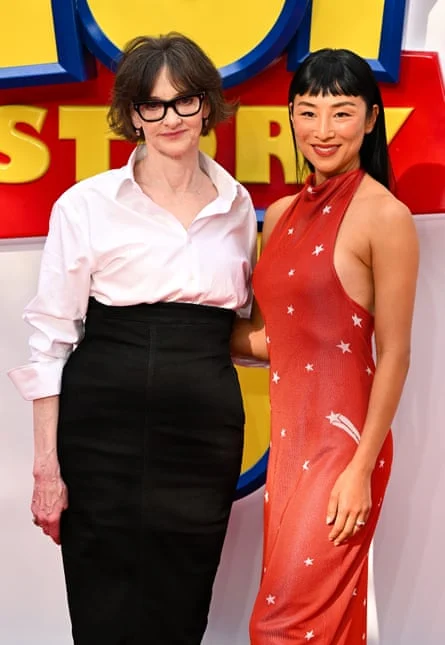
The highly anticipated "Toy Story 5" is generating significant buzz not only for its return to beloved characters but also for the surprisingly deep conversations its stars are having about its thematic resonance. In a recent discussion, voice actors Tim Allen (Buzz Lightyear), Tom Hanks (Sheriff Woody), and Greta Lee (Lilypad), alongside actress Joan Cusack (Jessie), delved into the film’s exploration of modern societal issues, the evolution of technology, and the enduring lessons learned from the animated saga.
The production of "Toy Story 5" represents a significant milestone for Pixar, building upon a franchise that has consistently pushed the boundaries of computer-generated animation and storytelling for nearly three decades. The original "Toy Story," released in 1995, revolutionized the animation industry, earning critical acclaim and commercial success. Subsequent installments have continued to explore complex emotional landscapes, resonating with audiences of all ages. This latest chapter, set to arrive in theaters on June 19th, appears poised to continue this tradition by tackling contemporary challenges through the lens of its iconic characters.
The Art of Voice Acting: Efficiency Meets Emotion
For veteran voice actors like Tim Allen and Tom Hanks, the recording process for "Toy Story 5" has evolved. Allen, who voices the iconic Space Ranger Buzz Lightyear, noted a newfound efficiency in his performance. "It sounds really self-gratifying, but it’s taking about 20% less time to make a better product," Allen explained. "I know now how to focus and isolate my voice. I don’t do as many takes. Sometimes they’ll even say to me: ‘I think we got it. You can stop.’" This indicates a refined understanding of vocal performance and character nuance, honed over years of bringing Buzz to life.

Tom Hanks, the enduring voice of Sheriff Woody, offered a contrasting perspective, highlighting the inherent challenges of voice work, even with experience. "Really? I will sometimes ask: ‘Please tell me you have it because I’m so done with this,’" Hanks admitted with a chuckle. "I find it to be exactly the same as it was at the get-go, except maybe there’s a little more importance put on it. I don’t think anybody picks our takes doing a Toy Story movie lightly. But I found everything else is just one damn thing after another." His sentiment underscores the dedication and meticulousness required to capture the emotional core of each character, suggesting that while technical aspects may be streamlined, the artistic pursuit of perfection remains paramount.
A Deeper Dive: Technology, Connection, and the Human Condition
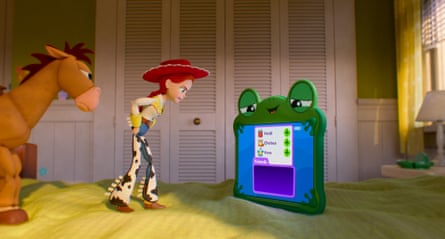
Beyond the technical aspects of voice acting, the cast articulated profound takeaways from the narrative of "Toy Story 5." Tom Hanks pointed to a specific storyline involving Jessie reaching out for help as a significant life lesson. "Story-wise, there is something to the fact that Jessie [the cowgirl ragdoll] contacts us and says she needs our help. I am not good at asking for help. So I could use that as a life lesson in this world of ours: we’re not in this alone." This highlights the film’s potential to explore themes of interdependence and vulnerability, crucial aspects of human relationships.
Tim Allen drew parallels between the film’s themes and the pervasive influence of modern technology, particularly the internet and social media. He expressed concern about the algorithmic manipulation of information and the proliferation of misinformation. "In terms of tech, this new film is so fricking spot on. I feel like I could rob everybody at a coffee shop and they wouldn’t even know," Allen remarked, illustrating how detached people can become due to constant digital engagement. He continued, "I have a lot of phones and social media, and all of a sudden the algorithm manipulation to what I like got ridiculous. I’m looking at plane crashes that didn’t ever happen… It’s just making stuff up!" Allen lauded the film for shining a light on these issues, suggesting it will prompt viewers to reflect on their own digital consumption and its impact on perception.
Greta Lee, who voices Lilypad, a character representing the younger generation’s immersion in screens, shared her approach to managing technology with her own children. "We set a pretty clear boundary about how much time is acceptable and when and where that is appropriate," Lee stated. "And stepping back and refocusing and reprioritizing things like time spent outside in nature. Hiking and gardening and all the good old stuff that still proves so enjoyable for the kids. Even if it’s a fight. And accepting boredom – relishing boredom, and trying to counteract shrinking attention spans. It’s complicated and it’s a work in progress for everyone." Her perspective emphasizes the importance of intentional parenting in navigating the digital age and fostering a balanced lifestyle.
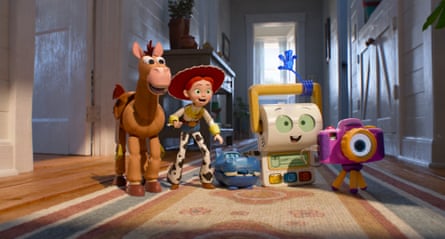
Joan Cusack, as Jessie, chimed in on the parental aspect, stressing the need for active engagement. "But you’re a parent that pays attention. And that’s the most important part. Otherwise you just let them have it because then you can do stuff." This sentiment underscores that while technology offers convenience, it should not replace genuine parental involvement in a child’s development and social interaction.
The Double-Edged Sword of Innovation
The conversation frequently returned to the dual nature of technological advancement. Tim Allen expressed concern about the accessibility of adult content to children through streaming services, drawing an analogy to the ethical dilemmas surrounding the development of dangerous technologies. "When I worked in TV there was a thing called ‘standards in practice’ which meant there’s things kids can’t access. Streaming has now opened that up to pornography 24 hours a day," he lamented. "You’re not allowed to drink alcohol in the US until you’re 21. I think we should let kids be kids as long as we can."
Tom Hanks echoed this sentiment, articulating the potential negative consequences of unchecked technological development. "So now we have developed a plaything that will devour the time and attention of everybody," he stated ominously. Allen further elaborated, drawing a parallel to the creation of the atomic bomb. "We are intoxicated by our own creativity. We don’t care if it’s a good or bad idea. It’s like in Oppenheimer when they ask how they know the atom bomb won’t set the atmosphere on fire and destroy the Earth. The guy pauses and says: ‘Well, it could…’" This powerful analogy highlights the unchecked pursuit of innovation without sufficient consideration for potential catastrophic outcomes.
However, the cast also acknowledged the undeniable benefits of technology. Tim Allen shared a personal anecdote about using YouTube to restore a complex 16th-century music box, demonstrating how the internet can be an invaluable tool for learning and problem-solving. "There isn’t anything that I haven’t fixed in the last 10 years without the help of YouTube," he asserted. Tom Hanks corroborated this, recounting how his son learned to make a wallet using gaffer tape by watching an online tutorial.

Childhood Fears and Toy Preferences
The discussion took a lighter turn as the cast members were asked about their childhood fears and toy preferences. Greta Lee found herself drawn to Forky, the unconventional character from "Toy Story 4," appreciating the idea of a reanimated household object. Joan Cusack expressed a desire to be something "cozy that a kid could love," like a blanket, though Lee playfully pointed out the potential disappointment of such a gift. Cusack then suggested a "soft vase" or a manatee, emphasizing comfort and uniqueness.
Tim Allen confessed a long-held desire to be a soldier, specifically a GI Joe, but with a focus on the equipment rather than the doll itself. Tom Hanks reminisced about a beloved rotorcraft toy, a boomerang that offered immense satisfaction until it was lost to a tree.
When asked about toys that scared them as children, Greta Lee recalled a battery-operated Mother Goose toy with "blinky eyes and a beak" that unnerved her with its persistent recitation and perceived sentience. Tom Hanks admitted a general unease with mannequins, likening them to "a corpse." Tim Allen humorously cited lawn darts as a dangerously hazardous toy from his youth, a sentiment echoed by Hanks who noted their current illegality.
The Enduring Impact of Toy Story
The conversation delved into why the "Toy Story" franchise continues to resonate so deeply with adult audiences. Greta Lee attributed this to the films’ profound exploration of the passage of time and the inherent emotional weight of beloved toys becoming obsolete. "Anything that touches on the idea of a child that is now an adult. A toy that used to be loved that is no longer loved. That really hits home with people trying to reckon with this idea of having one life to live."
Tim Allen described the premiere experience as witnessing a shared emotional connection across generations, likening the film’s honesty to the works of Dostoevsky. Tom Hanks recounted a particularly poignant moment from "Toy Story 3," where Andy’s mother grapples with his departure for college, a scene that deeply resonated with his personal experience. He noted that children’s films often serve as an initial introduction to complex emotions like grief, a powerful aspect of their enduring appeal.
Greta Lee further elaborated on the concept of in-yun, a Korean term signifying deep connections spanning generations, and how it applies to the relationships within the "Toy Story" universe. She suggested that the strong in-yun between Woody, Buzz, and Jessie is reflected in the multi-generational appeal of the franchise.
Tom Hanks also shared childhood memories of creating his own toys from found materials, highlighting the joy and satisfaction derived from imagination and hands-on creation, even if the methods were not entirely safe. Tim Allen similarly recalled building model airplanes, but admitted his creations often became too valuable to play with, leading him to hang them as display pieces.
The cast also offered advice for their characters’ younger counterparts. Tim Allen suggested keeping Buzz Lightyear away from water and sand, emphasizing his space-faring nature. Tom Hanks advised aspiring Woodys to use their authority with empathy, reminding them that leadership involves compassion.
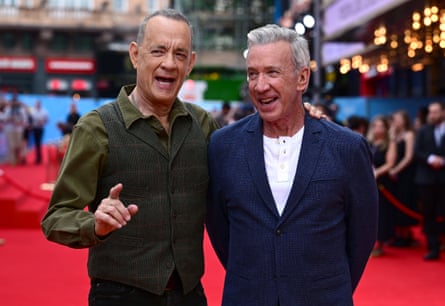
The enduring legacy of "Toy Story" is a testament to its ability to blend humor, adventure, and genuine emotional depth. As the franchise prepares for its fifth installment, the insights shared by its beloved voice actors suggest that "Toy Story 5" will continue to provoke thought and conversation, reminding audiences of the universal truths found in both the simplest of toys and the most complex of human experiences.