The cinematic landscape of cult narratives is often dominated by true crime documentaries, meticulously dissecting the psychosexual abuse, forced labor, and financial exploitation endemic to these insular communities. While these programs frequently delve into the darker facets of human psychology and societal vulnerabilities, the feature film treatment of such phenomena remains a less trodden path. This year’s Tribeca Film Festival premiere of Michael Gallagher’s The Leader offers a compelling, albeit tonally ambitious, examination of the genesis of the Heaven’s Gate cult, focusing on the profound and intensely platonic bond between its key figures, Bonnie Lu Nettles and Marshall "Herff" Applewhite.
Genesis of a Cult: A Platonic Love Story at its Core
The Leader eschews a straightforward horror or true crime approach, opting instead for a nuanced portrayal of how two individuals, driven by a shared search for meaning and spiritual enlightenment, inadvertently laid the groundwork for a tragedy. The film centers on Vera Farmiga’s portrayal of Bonnie Lu Nettles and Tim Blake Nelson as Marshall "Herff" Applewhite, charting their intellectual and spiritual partnership. Their relationship, characterized as intensely platonic yet deeply symbiotic, forms the emotional bedrock of the narrative, exploring the powerful human need for connection and belonging that can be so readily exploited within cult structures.
The film’s structure, framed by interviews with a retrospective Bonnie Lu recounting the movement’s early days to a journalist, creates a layered narrative. This approach, while echoing documentary techniques, is used not for outright suspense but as a narrative device to contextualize the unfolding events. The visual motif of a cassette recorder, reminiscent of the archival footage used in true crime productions like Conversations with a Killer: The Ted Bundy Tapes, serves as a subtle nod to the genre. However, The Leader distinguishes itself by using these elements less as suspense-building tools and more as architectural components of a story that seeks to understand the psychological underpinnings of radical belief systems.
A Disorienting Journey Through Shifting Tones
The directorial approach of Michael Gallagher in The Leader is marked by a deliberate eclecticism. The film navigates a spectrum of tones, shifting abruptly between moments of profound existential searching, darkly comedic absurdity, and chilling glimpses of the cult’s eventual trajectory. This tonal fluidity, while potentially disorienting for some viewers, can be interpreted as a reflection of the disorienting experience of cult indoctrination itself. As the reviewer notes, "The film feels like a taxi ride from hell – with abrupt twists and turns in tone, cinematography, and in whether the absurdism is played for laughs." This intentional lack of a singular, fixed tone may be the film’s way of mirroring the all-consuming, unpredictable nature of life within a cult, where reality can be fluid and subjective.
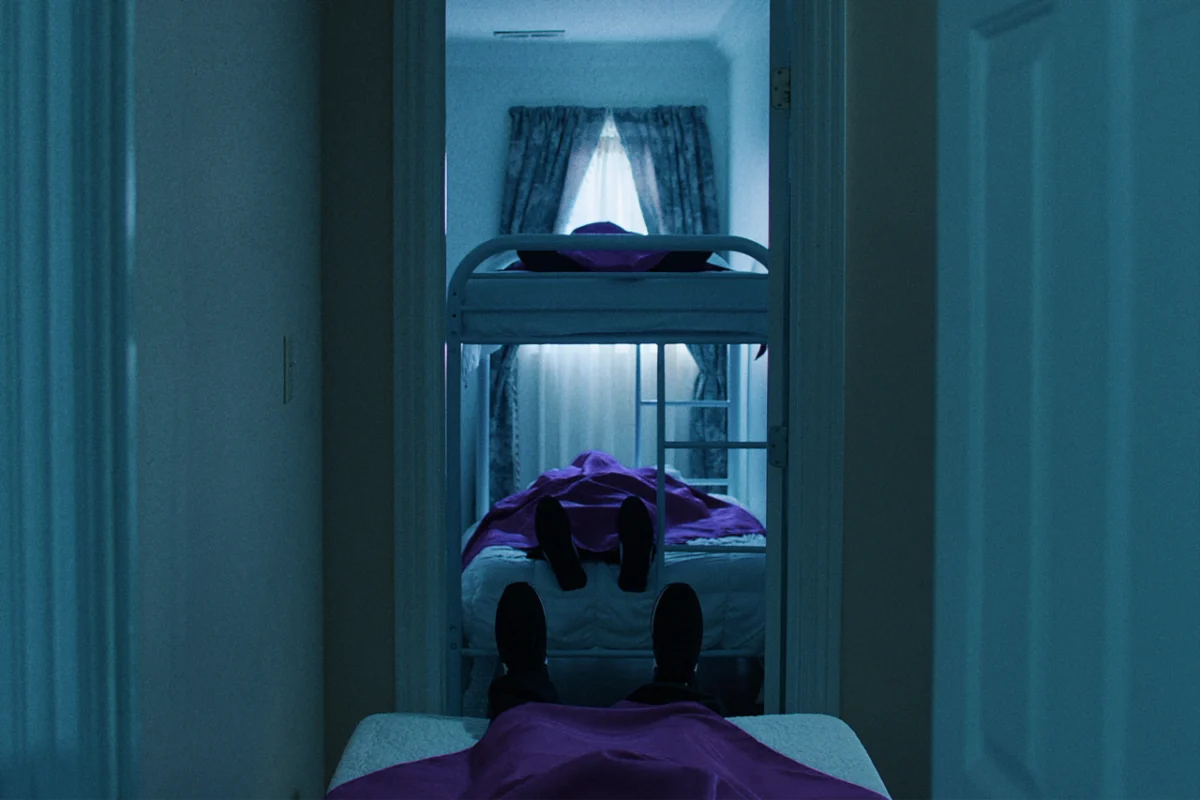
The film’s engagement with the more unsettling aspects of the Heaven’s Gate ideology is often subtle but impactful. Moments of "culty B-roll" and confessional interviews recorded by members preparing for their eventual "ascension" – a euphemism for their mass suicide – are particularly potent. These snippets offer a disquieting glimpse into the psychological state of individuals who have fully embraced a radical worldview. The reviewer’s observation that "If you’re looking for a V/H/S-style scare, The Leader will probably not be your cup of phenobarbital-laced apple sauce" highlights the film’s refusal to rely on conventional horror tropes. Instead, it positions itself as a darkly comedic exploration akin to the works of Yorgos Lanthimos, or a poignant examination of an extreme co-dependent relationship taken to its devastating conclusion.
Historical Context: The Rise of Heaven’s Gate
Heaven’s Gate, the cult at the center of The Leader‘s narrative, was a millennial religious group founded in the early 1970s by Marshall Applewhite and Bonnie Nettles. The group gained notoriety for its belief in extraterrestrial visitors and its adherents’ eventual mass suicide on March 26, 1997, in San Diego, California. The members believed that their souls would ascend to a spacecraft trailing the Hale-Bopp comet, leaving their earthly bodies behind. This belief system was deeply rooted in a blend of New Age spirituality, ufology, and Gnostic Christian concepts.
Applewhite and Nettles, who referred to themselves as "The Two" and later as "The Heavens Gate" or "The Commander" and "The Teacher" respectively, cultivated a devoted following. Their teachings emphasized a detachment from earthly possessions, relationships, and even one’s physical body, which they viewed as a mere vessel. This detachment was a core tenet, designed to prepare members for their ultimate "evolution" to a higher plane of existence. The group’s communal living, strict discipline, and isolation from the outside world were all part of this process of shedding the mundane to embrace the extraordinary. The tragic culmination of their beliefs underscores the profound impact that charismatic leadership and a compelling, albeit misguided, spiritual narrative can have on vulnerable individuals.
![Heaven’s Gate Horror ‘The Leader’ Never Feels Satisfying, But Maybe That’s the Point [Tribeca Review]](https://www.dreadcentral.com/wp-content/uploads/2026/06/THE-LEADER-BenMullen-1-e1780709411452.png)
Performances and Psychological Nuances
Vera Farmiga delivers a captivating performance as Bonnie Lu Nettles, imbuing the character with a disquieting intensity. Her portrayal transcends simple villainy, suggesting a complex individual driven by her own spiritual quests and a profound, albeit warped, sense of purpose. The reviewer notes that Farmiga’s gaze upon the cult’s followers is "endlessly unnerving – not like a predator sizing up prey, but the way your local priest looks at you to parse out your sins." This subtle distinction highlights the film’s interest in the psychological manipulation at play, where perceived divine insight can be both alluring and terrifying.
Tim Blake Nelson, as Marshall Applewhite, provides a grounding presence, embodying the charismatic yet enigmatic leader. His portrayal of "Herff" is crucial in understanding the appeal of his teachings and the deep connection he shared with Nettles, which served as the initial catalyst for the group’s formation. The dynamic between Farmiga and Nelson is central to the film’s success in exploring the human element behind the cult’s devastating ideology.
Moments of Visceral Impact and Unsettling Truths
Despite its eschewing of overt horror, The Leader does not shy away from moments of visceral impact. The film opens with a scene depicting Applewhite’s stomach being pumped, an unflinching depiction of physical distress that sets a tone of unvarnished reality. While not gratuitous, these moments serve to ground the narrative in the physical consequences of the cult’s beliefs and practices. The reviewer highlights a particularly unsettling castration scene, a punishment for a lapse in celibacy, which reportedly caused visible discomfort among male audience members. These instances, though brief, underscore the extreme control and physical repercussions that members faced within the cult’s hierarchy.
The film’s exploration of the psychological toll of cult membership is particularly resonant. Farmiga, in a post-premiere Q&A, revealed her deep dive into the real Bonnie Lu Nettles, even practicing her mannerisms during lockdown. This personal connection to the character allowed for a nuanced portrayal of the loneliness and yearning that can drive individuals to seek solace and belonging in such extreme environments. The Leader effectively excavates the underlying human need for connection, suggesting that the allure of a cult lies not just in its promises of salvation but in the initial moment of feeling truly "seen" and validated, regardless of the ultimate cost.
Director’s Intentions and Broader Implications
Director Michael Gallagher emphasized his commitment to portraying the Heaven’s Gate story with truthfulness and respect. In a Q&A following the premiere, he stated his intention was not to create a horror film but to present a "real-life horror film" and a "real-life tragedy." This perspective underscores the film’s aim to explore the human drama and psychological complexities inherent in the Heaven’s Gate narrative, rather than sensationalizing it. Gallagher’s desire to give the story the "respect and the moment that I think it deserves" suggests a filmmaker grappling with the profound ethical considerations of depicting such a sensitive and tragic event.
The film’s implications extend beyond a mere recounting of the Heaven’s Gate story. It prompts reflection on the enduring fascination with cults and the societal factors that contribute to their formation and proliferation. The ease with which individuals can become disaffected with mainstream society, coupled with the pervasive loneliness and search for meaning in the modern world, creates fertile ground for charismatic leaders to exploit these vulnerabilities. The Leader, by focusing on the intimate, human origins of the cult, offers a stark reminder that even the most extreme phenomena often begin with individuals seeking connection and purpose.
Conclusion: A Unique Take on a Tragic Phenomenon
The Leader is a film that defies easy categorization. While some viewers, particularly those with a predilection for overt horror, may find themselves wishing for more traditional scares or explicit gore, the film’s strengths lie in its nuanced character studies, its bold tonal shifts, and its insightful exploration of the psychological drivers behind cult formation. For audiences who appreciate dark, thought-provoking cinema that delves into the complexities of human behavior and belief systems, The Leader offers a compelling and ultimately affecting experience. It is a testament to the power of storytelling to illuminate the darkest corners of human experience, prompting viewers to consider the profound loneliness that can lead individuals down paths of unimaginable consequence. The film’s success at Tribeca 2026 suggests a growing appetite for narratives that tackle cult phenomena with intellectual rigor and emotional depth, moving beyond sensationalism to explore the human stories at their core.