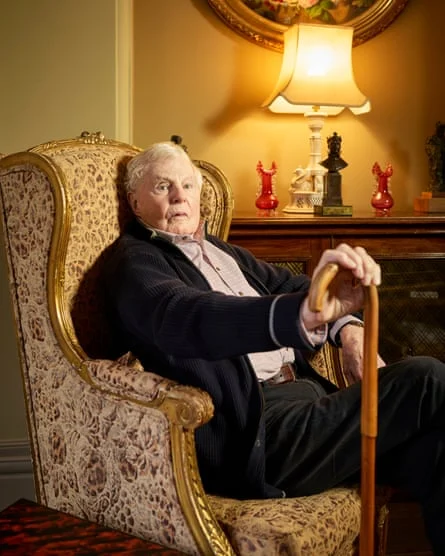
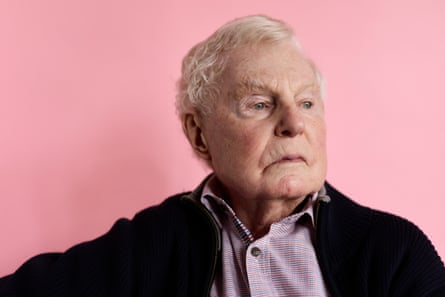
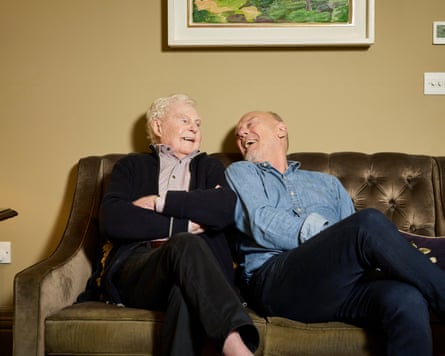
Derek Jacobi, the inimitable titan of stage and screen, is in a relaxed, convivial mood. The air in his and his husband Richard Clifford’s elegant home is filled with the aroma of freshly brewed coffee and the unmistakable timbre of Jacobi’s voice, a rich, buttered instrument that has captivated audiences for decades. He’s bantering with the photographer in the living room, while Clifford, a seasoned actor and director in his own right, quietly prepares coffee in the kitchen. They’ve been a devoted couple for an impressive 47 years, a testament to enduring love and partnership in an industry often characterized by transience. “We met when I was 22 and he was 39,” Clifford shares, a warm smile playing on his lips. From the lounge, Jacobi’s playful retort echoes, “I’m a child snatcher!”
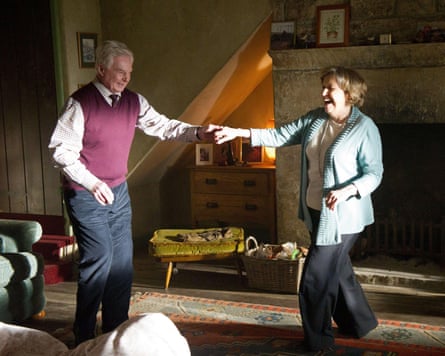
Jacobi’s career is a glittering tapestry woven with iconic performances. From his definitive portrayals of Shakespearean kings like Hamlet and Lear to his groundbreaking role as the stammering Emperor Claudius in the 1970s BBC series I, Claudius, he has consistently demonstrated an astonishing depth of empathy and sensuality. His voice, a character in itself, possesses a seductive power, famously showcased in his sublime Cyrano de Bergerac for the Royal Shakespeare Company in the 1980s. More recent television triumphs include the savagely witty Vicious, where he shared the screen with Ian McKellen as a barbed but devoted couple, and the heartwarming Last Tango in Halifax, where he found a tender romance with Anne Reid.

As Clifford brings the coffee, the conversation touches upon the state of the world, a shared concern for many. Jacobi, with his characteristic self-deprecating wit, dismisses his own anxieties with, “I’m too old and ugly to worry.” This prompts a gentle challenge about his recurring self-assessment of ugliness. “Ooh, yeassssss,” he insists with a fierce conviction, “as a kid, yes. A ginger-haired, freckled-faced…” “Acne-ridden,” Clifford interjects, adding to the vivid picture of a London boy. Jacobi, grateful for the detail, continues, “Acne-ridden, east London kid. Yes, absolutely. I can’t look in the mirror.”
This aversion to his own image extends to his reluctance to watch himself on screen. “It’s both,” he explains, referring to the acting and his appearance. “If I were honest, I’d have liked to have been a movie star. I think I can act. But I didn’t have the looks to go with my acting. If I had had the looks as well as my acting ability, I think my world would have turned out differently. But I didn’t. And I never wanted to look at myself because I didn’t like what I saw.” His youthful ideal? “Ooh, Rock Hudson,” he sighs, a wistful smile crossing his face. Clifford’s laughter rings out, a sound of shared history and affection.
A Life of Artistry and Enduring Partnership
The house itself is a reflection of their shared lives and individual personalities, a magnificent testament to their journey. Edward Beale’s impasto peonies adorn the walls, playfully juxtaposed with the toy chimps belonging to their Irish terrier, Daisy, scattered on the settee. Trompe-l’œil wallpaper ingeniously conceals a toilet, and a summer house in the garden has been transformed into a private cinema. A beautifully carved table, a masterpiece of craftsmanship, reveals a clever dual purpose: it opens to become two distinct boxes, one for Clifford, one for Jacobi. “One says: ‘The art in my life, Richard Clifford.’ The other says: ‘My life in art, Derek Jacobi,’” Clifford explains, encapsulating their distinct approaches.
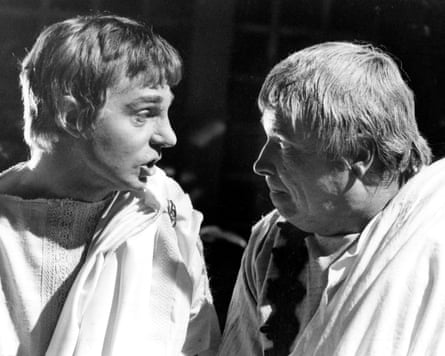
Jacobi, a celebrated figure in the theatrical world, has a career spanning over six decades. Born in Leytonstone, East London, his early life was marked by a bout of rheumatic fever at age nine, which confined him to bed for 18 months. This period of convalescence, spent listening to the radio and watching television, proved transformative, fostering a precocious vocabulary and a nascent ambition. He returned to school with a refined accent and a clear vision: to become an actor. This ambition led him to study history at Cambridge University, where he immersed himself in theatrical productions, honing his craft.
His professional debut at the National Theatre under the legendary Laurence Olivier in the 1960s was a pivotal moment. Olivier, a towering figure in 20th-century theatre, became a profound mentor. Jacobi recalls Olivier with immense reverence: “Oh, God. God. He loved the young actors and he nurtured us. Wonderful. Wonderful.” From Olivier, Jacobi claims to have learned the invaluable lesson of humility, a quality he found present in Olivier’s interactions with the company, despite his immense stature. “There was nothing starry about him at all. He would say, ‘Call me Larry.’” Jacobi shudders at the thought of actually addressing him by his first name, emphasizing the deep respect he held: “He was Sir Laurence.”
Navigating the Industry: From Stage to Screen and Back
Jacobi’s reflections on the industry reveal a nuanced perspective. While he often extols the virtues of stage work as more challenging than film, his early aspirations for Hollywood stardom are laid bare. “Probably, but I would have been rich. And, for an East End kid, that matters.” This pragmatic ambition, rooted in his working-class background, underscores a practical awareness of the material rewards of fame, even as his artistic soul gravitates towards the visceral demands of live performance.
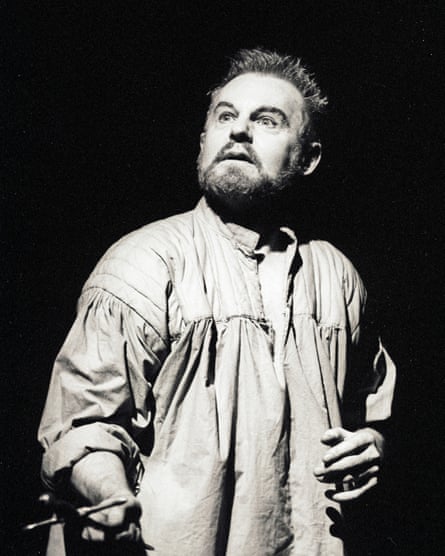
The dynamic between Jacobi and Clifford is a source of constant amusement and insight. When asked if a photograph of them together could be taken, Jacobi’s immediate, playful refusal – “No. Me, me, me, me, me” – elicits a dry observation from Clifford: “Me, Myself and I should have been the title of your biography.” Jacobi’s quick retort, “Wasn’t it?” further highlights their easy, witty rapport.
Jacobi’s career has not been without its challenges, including encounters with directors whose methods were less than nurturing. He recalls John Dexter, who directed him in numerous productions at the National Theatre, as “hateful.” Dexter’s approach, Jacobi describes, was to “bludgeon a performance out of an actor,” a method he believes would be unacceptable today. Similarly, Bill Gaskill, another director at the National, is remembered as being “slightly cleverer, but just as nasty.”
His brief foray into directing, notably guiding Kenneth Branagh in Hamlet, revealed his own strengths and limitations. Jacobi admits, “The best part was showing them what I thought they should do, and getting up and doing it. So, no. I suppose I’m not a director.” He acknowledges Branagh’s generosity as an actor, stating, “Every time I gave Ken a note, I demonstrated it.” Yet, he humorously suspects Branagh might have harbored some resentment, “But I think Ken might have gone away and stuck pins in effigies of me.”
A Life Shaped by Love, Loss, and Resilience
The conversation shifts to more personal territory, touching upon the profound impact of the AIDS epidemic. Clifford, who had a role in Russell T Davies’s impactful drama It’s A Sin, speaks poignantly of the era: “We lost so many friends. It was terrifying. When young people die, it’s so shocking. And you think of your own mortality.” Jacobi echoes this sentiment, describing it as a “terrible plague time” where they felt “punished for some reason.” Clifford adds a crucial distinction: “Well, only that we were told it was a gay thing, but of course it wasn’t.” Jacobi agrees, “Gay plague, yes.” This period of immense loss and fear undoubtedly shaped their perspectives and strengthened their bond.
Jacobi’s memoir, As Luck Would Have It, is a testament to his profound sense of gratitude. He repeatedly emphasizes his good fortune, not only in his career and his relationship with Clifford but also in his upbringing. “I had the most glorious parents who gave me everything they could,” he says, his voice thick with emotion, tears welling in his eyes. This open display of vulnerability is met with understanding and affection by Clifford. Jacobi attributes his emotional expressiveness to his profession: “Actors’ gift.”
The topic of coming out as gay at the age of 21 is approached with candor. His mother’s reaction, though perhaps not fully comprehending at the time, was one of acceptance, albeit with the notion that it was a “stage he was going through.” This early act of self-declaration was a brave step in an era where such openness was far from commonplace.
Jacobi’s recent decision to retire from live theatre, announced in 2022, was driven by the increasing difficulty of memorizing lines, a challenge for an actor who once possessed a near-photographic memory. However, he remains active, performing a two-man show with Clifford where he revisits his life’s experiences, with Clifford filling in any narrative gaps. His availability for film and television projects remains undiminished.
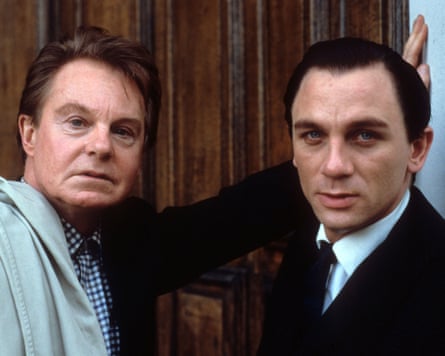
His portrayal of Francis Bacon in the 1998 biopic Love is the Devil is lauded as one of his most compelling roles. Jacobi’s performance captured the artist’s masochistic, cruel, and self-loathing nature with unnerving precision. He humorously recounts a playful rivalry with Anne Reid, who also played an older lover of Daniel Craig in The Mother, over who had more intimate encounters with the future James Bond. “Annie says, I went to bed with Daniel Craig. And I say, I went to bed with him twice,” Jacobi divulges with a mischievous glint in his eye.
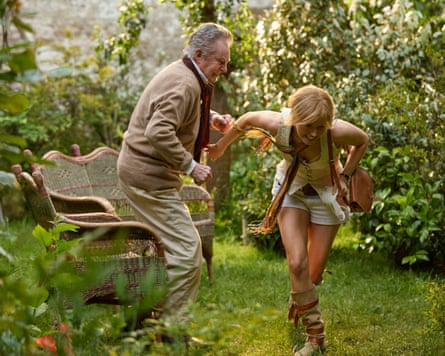
In his latest film, Moss and Freud, Jacobi takes on the role of Lucian Freud, Bacon’s contemporary and a figure equally consumed by his art. The film explores the unexpected friendship between Freud and supermodel Kate Moss. Jacobi finds himself drawn to both artists, admitting, “I probably admire Lucian Freud more. But I knew I’d feel more comfortable with and get on better with Frankie Bacon.” He acknowledges Bacon’s monkish persona, yet finds a personal resonance, suggesting it says much about his own inclinations.
Jacobi’s dedication to his craft is likened to Freud’s own philosophy: “The man is nothing; the work is everything.” He views acting as a lifelong compulsion, an obsession, and a vocation, a means of navigating and understanding the world. “Dedicating your life to imagination and pretence is an escape, I suppose. Choosing to create a world that is actually in your head in which you feel well and safe and well and able. It’s safety.”
The Unfolding Seasons of Life and Love
The couple’s dynamic is a masterclass in affectionate banter and mutual support. Jacobi readily admits Clifford is “much better at life than me,” a sentiment Clifford wholeheartedly confirms. Clifford, having learned self-reliance from an early age at boarding school, has often taken on the role of the practical anchor in their relationship, managing the household and social calendar. “I’m social secretary and cook and bottle washer,” he states, though he acknowledges the occasional feeling of being “underwater” with his many responsibilities.
Jacobi’s desire to reach 100 is a whimsical ambition, a wish to experience the full spectrum of human existence. Clifford, however, offers a more darkly humorous perspective on their future, proposing a joint venture into the afterlife should Jacobi reach 90 and they celebrate 50 years together. Jacobi, however, remains resolute in his goal of reaching the century mark, a testament to his enduring zest for life.
The conversation turns to the subtle markers of aging. Clifford gently teases Jacobi about his recent tendency to speak of “letting the old man in,” a phrase he’d previously attributed to Clint Eastwood’s philosophy of defiance against aging. Clifford perceives this as a shift, a potential relinquishing of that youthful defiance. Jacobi, however, frames it as an acceptance of the natural disparity in their ages, a reality that “hovers” over their relationship. Clifford expresses concern, viewing it as a form of surrender, but Jacobi firmly denies any sense of giving up, seeing it instead as an acknowledgment of life’s inevitable progression.
Their playful disagreement over the “old man” culminates in a moment of shared laughter and insight into the resilience of their relationship. “You’ve got to be able to take the piss out of each other,” Jacobi wisely observes, a principle that has clearly guided their nearly five-decade partnership.
As the interview draws to a close, Jacobi’s physical struggles to rise from his chair become apparent, a slight stoop and a bad leg contributing to a perceived shrinking. Clifford, with his characteristic wit, attributes it not to age but to “too much alcohol.” Jacobi’s preference for white wine, two glasses at lunch followed by a siesta, is a ritual he feels he has “earned.”
Their upcoming two-man show, a retrospective of Jacobi’s life, is met with his playful apprehension that Clifford might reveal too much, thus “ruining the show.” The interview concludes with Jacobi succumbing to a bout of uncontrollable sneezing, a spectacle that dissolves into shared laughter between the couple, a heartwarming display of enduring affection and humor that has clearly sustained them through a lifetime of shared experiences and artistic triumphs.