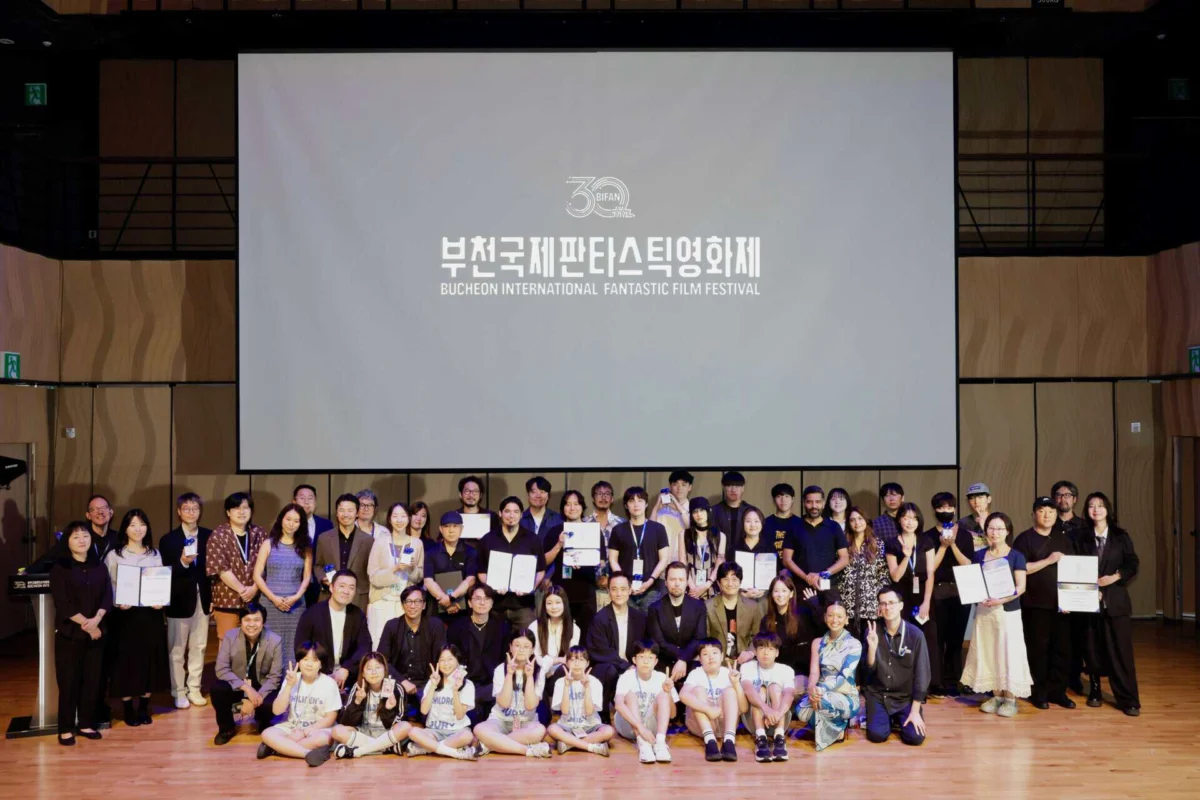
The 30th Bucheon International Fantastic Film Festival (BIFAN), a cornerstone event in the global genre cinema calendar, officially concluded its main awards ceremony on Thursday, July 9, marking a significant milestone in its three-decade history. The prestigious event, held in Bucheon City, South Korea, recognized outstanding achievements across its diverse competition sections, including Bucheon Choice World and Bucheon Choice Korean, distributing a total of 20 awards across feature and short films in both international and domestic categories. This landmark 30th edition reaffirmed BIFAN’s enduring commitment to showcasing and fostering fantastic cinema, from horror and fantasy to science fiction and thrillers, while also pioneering new frontiers with its dedicated AI film section.
A Night of Triumphs: International Feature Competition Highlights
In the highly competitive Bucheon Choice World: Features section, Adrián Chiarella’s "Leviticus" emerged as a dual victor, securing both the coveted Best of Bucheon Award and the Audience Award. This double recognition underscores the film’s profound impact, resonating with both critical juries and the wider festival attendees. The jury’s commendation highlighted "Leviticus" as a groundbreaking work that "opens up striking new possibilities for queer horror," signaling a significant evolution within the genre.
Further accolades in the international feature category included the Best Director Choice, which was awarded to Curry Barker for his compelling work on "Obsession." Jane Schoenbrun’s "Teenage Sex and Death at Camp Miasma" garnered the Jury’s Choice award, acknowledging its distinctive artistic vision. A Jury’s Choice Special Mention was bestowed upon Paul Urkijo Alijo’s "The Night (Gaua)," a film that also earned the esteemed FIPRESCI Award. The FIPRESCI (International Federation of Film Critics) Award is particularly significant as it represents recognition from a global panel of film critics, often a predictor of broader international success and critical acclaim. This diverse set of winners reflects BIFAN’s broad curatorial scope, embracing a variety of thematic approaches and directorial styles within fantastic cinema.
Korean Cinema Shines: Domestic Feature Accolades
The Bucheon Choice Korean: Features section saw significant triumphs for domestic productions, with Jeong Beom’s "Knock" standing out as one of the evening’s most decorated films. "Knock" clinched the Best of Bucheon Award, the SHOWBOX Audience Award, and the NETPAC Award. The NETPAC (Network for the Promotion of Asian Cinema) Award is a highly regarded prize, signifying excellence in Asian cinema and often facilitating international distribution and exposure for recipient films. This triple win for "Knock" underscores its powerful narrative and strong connection with both critical bodies and the South Korean audience.
Yoo Hyoung-joon was honored with the Best Director Choice for "The Only Child in the Butchery," recognizing his exceptional directorial prowess. Acting talents were also celebrated, with the KFAA Best Actor Awards in the Korean feature competition going to Yoon In-ah for her performance in "Knock" and Hong Seo-baek for his role in "Smile Charles." Special Mentions were also extended to Jung Yi-ju for "Savon" and Jeong Hyeong-seok for "The Only Child in the Butchery," acknowledging their notable contributions.
Beyond critical and audience recognition, BIFAN plays a crucial role in supporting the distribution of Korean films. The NongHyup Distribution Award was presented to Lee Yong-sun’s "Company Sports Day" and Oh Young-doo’s "Smile Charles," providing vital backing for their market reach. Similarly, the Hive Filmworks International Distribution Award went to Lee Jun-sup’s "Savon" and Nam Ji-eun’s "Psyche," facilitating their entry into the global film market. These awards are instrumental in bridging the gap between artistic creation and commercial viability, especially for independent and genre-specific productions.
Broader Horizons: Asian and Children’s Fantastic Cinema
The festival also recognized excellence beyond the main competition categories, emphasizing its role in promoting diverse cinematic voices. The Méliès International Festivals Federation Award for Best Asian Film was presented to Jeong Hyo-jung’s "The Fertilizer Home." This award, named after pioneering filmmaker Georges Méliès, celebrates the best in fantastic cinema from across Asia, linking BIFAN to a network of similar genre festivals worldwide and highlighting exceptional regional talent.
A unique and heartwarming aspect of BIFAN is its engagement with the younger generation. The Children’s Fantastic Choice Award, judged by a dedicated children’s jury from the Bucheon area, was awarded to Takebayashi Ryo’s "The Invisibles." This initiative not only introduces young audiences to the world of fantastic cinema but also empowers them to critically engage with storytelling, fostering future film enthusiasts and critics.
Spotlight on Short Films and Emerging Talents
Short films, often a fertile ground for experimental storytelling and emerging talent, received significant attention. In Bucheon Choice World: Shorts, Sandeep Francis’s "Switch Off" earned the Jury’s Choice, while Yu Chih-Chieh’s "The Last Jiangshi" captivated audiences, winning the Audience Award. The Korean short film section also saw notable wins, with Hong Seung-gi’s "Mungchi" named Best Film in Bucheon Choice Korean: Shorts. Han Yoo-yeon received the KFAA Best Actor Award for "Turning Girl," and Lee Soo-hyuk’s "Siren" was honored with the Audience Award, demonstrating the vibrant landscape of Korean short-form cinema.
Pioneering the Future: BIFAN+ and AI Cinema
A distinctive feature of the 30th BIFAN was its continued leadership in exploring the intersection of technology and art, particularly through its BIFAN+ Awards Ceremony, held earlier on Tuesday, July 7. This dedicated section for Bucheon Choice AI Films, the festival’s international competition for AI cinema, underscores BIFAN’s commitment to innovation and its willingness to embrace evolving cinematic forms.
Lim Ye-jun’s "Big Ball" received the TimeTree Best Technical Achievement Award, recognizing its innovative use of AI technology. Takahashi Hiromu’s "Let There Be Light" was honored with the TapNow New Wave Award, signaling its fresh and impactful approach to AI filmmaking. Lee Yong-seuk’s "Ask me anything" won the AIMMOVIE Audience Award, indicating its successful connection with viewers despite its experimental nature. Finally, Seo Tae-gyu’s "Prototype" received a Jury’s Special Mention, acknowledging its unique contributions to the burgeoning field of AI-generated or AI-assisted cinema. BIFAN’s pioneering efforts in this category position it as a forward-thinking festival that not only celebrates traditional filmmaking but also actively shapes the future of cinematic expression.
Festival Atmosphere and Community Engagement
The awards ceremony itself was a vibrant affair, opening with a dynamic celebratory performance by the acclaimed Korean avant-rock band Jambinai, setting an energetic tone for the evening. Hosted by veteran actor Kang Seok-woo, the ceremony seamlessly blended solemn recognition with engaging entertainment. In a move to further connect with local citizens and foster grassroots creativity, awards for the finalists of the BIFAN 30-Second Short-form Contest, "SHORT! FORM! FAN!", were also presented. This initiative exemplifies BIFAN’s commitment to community engagement, extending the festival’s reach beyond industry professionals to include local residents and aspiring filmmakers of all ages.
The Enduring Legacy and Global Reach of BIFAN
The Bucheon International Fantastic Film Festival has solidified its reputation over three decades as a vital platform for genre cinema. Established in 1997, BIFAN has consistently championed films that push boundaries, challenge conventions, and explore the fantastical elements of human experience. It has grown into one of Asia’s most significant film festivals, drawing international attention to both established and emerging talents in horror, fantasy, sci-fi, and cult cinema. Its strategic location in Bucheon, a city known for its cultural initiatives and proximity to Seoul, further enhances its accessibility and appeal.
The 30th edition, in particular, was an expansive showcase, featuring an impressive 321 works from 50 countries. This included a substantial lineup of 170 features, 85 shorts, 38 AI films, and 28 XR (Extended Reality) contents, demonstrating the festival’s comprehensive embrace of diverse formats and storytelling mediums. The festival’s physical footprint across Bucheon City included screenings and events at iconic venues such as Bucheon City Hall, the Korean Manhwa Museum, CGV Sopung, LOTTE Cinema Bucheon, Bucheon Art Bunker B39, and the Bucheon Astronomical Science Museum. This distributed approach ensures broad public access and integrates the festival experience throughout the city.
The success of the 30th BIFAN awards ceremony and the ongoing festival activities underscore the increasing global appreciation for genre cinema and the crucial role festivals like BIFAN play in its cultivation. By providing a platform for diverse voices, embracing technological advancements like AI cinema, and fostering community engagement, BIFAN continues to shape the landscape of fantastic film, promoting cultural exchange and discovering the next generation of cinematic visionaries. The festival’s programming reflects current trends, such as the rise of queer horror and the exploration of new narrative forms through artificial intelligence, positioning BIFAN not just as a retrospective but as a forward-looking entity in the global film industry. The 30th Bucheon International Fantastic Film Festival is scheduled to continue its screenings and events across Bucheon City until July 12, offering further opportunities for audiences to immerse themselves in the rich tapestry of fantastic cinema.