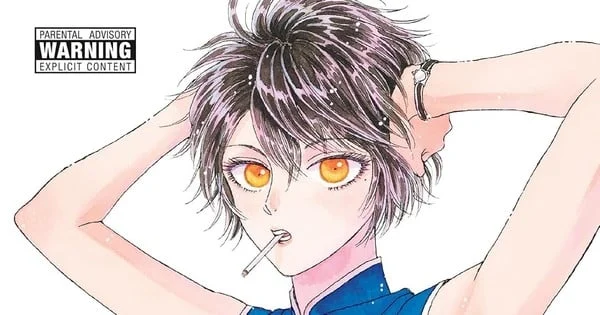
The protracted wait for new installments of Jun Mayuzuki’s critically acclaimed manga, Kowloon Generic Romance, continues to test the patience of its dedicated readership. Following the release of volumes 7 and 8 in November 2024, only two additional volumes have been published in English, with the eleventh anticipated in May 2026. This extended publication schedule has been punctuated by the recent anime adaptation, which concluded the series with an anime-original ending. Volumes 9 and 10 of the manga correspond roughly to episodes 10 and 11 of the anime. However, from volume 10 onward, significant narrative departures emerge, prompting a re-evaluation of the series’ trajectory and its relationship with its animated counterpart. With the manga still ongoing and the author, Jun Mayuzuki, yet to deliver a definitive conclusion, the current chapter count suggests volume 13 may serve as the series’ final installment. The emergence of the anime, while offering a seemingly resolved narrative, has undeniably altered the reading experience for fans, raising questions about the impact of this divergence on the interpretation of the manga’s central mysteries.
Pacing and Perspective: A Tale of Two Mediums
While the anime adaptation adopted a rapid-fire approach, accelerating towards its conclusion, Mayuzuki’s manga maintains its signature unrushed, almost contemplative pace. Each chapter typically zeroes in on a singular plot point or character development, allowing for a deeper exploration of the intricate world of Kowloon. A particularly compelling narrative thread within these recent volumes involves Kujirai A’s investigation into Kujirai B’s past life, facilitated by her unique spectacle lenses. Mayuzuki’s artistic prowess shines through in her innovative panel layouts and page compositions. Entire sequences are masterfully constructed from fragmented views observed through the spectacles, culminating in powerful imagery that starkly contrasts the former Hajime Kudou with his present self. The past Kudou is depicted with a natural, even joyful, demeanor when in the presence of the woman he loved. Kujirai A expresses her sorrow that he has never shown such an aspect of himself to her. This realization leads her to a logical and understandable decision to terminate their nascent relationship. The narrative posits that Kudou perceives Kujirai A not as herself, but as the spectral image of a deceased woman, a fixation that is detrimental to both his well-being and Kujirai’s future. Kujirai A, it is argued, deserves a partner who accepts her unconditionally, rather than one who remains tethered to an idealized past.
Unraveling the Fabric of Kowloon: Talismans and Digital Echoes
Another central motif explored by Mayuzuki is the pervasive presence of talismans affixed to the walls of Kowloon. Upon their removal, Kujirai discovers that many of these talismans bear markings resembling internet error codes on their reverse sides. This discovery serves as a significant clue, hinting at the synthetic, digital origins of this ersatz metropolis. A pivotal moment occurs when Kujirai uncovers a talisman inscribed with the phrase "don’t look for it any more." This sentiment is later echoed by Kudou when he advises Kujirai against pursuing the truth behind Kujirai B’s death, prompting her to begin piecing together the fragmented clues.
Kudou’s Influence: The City as a Reflection
Gwen, a supporting character, is also gradually coming to understand the fundamental source of Kowloon’s existence, with evidence strongly suggesting a direct correlation with Kudou’s consciousness. It appears that any aspect of past Kowloon that Kudou remains unaware of does not manifest in the present iteration of the city until he is informed. This phenomenon, while likely subconscious, offers the most potent indication to date that Kowloon functions as a manifestation of Kudou’s mental state. The precise nature of Kujirai A’s existence remains an unanswered question, even for Kudou. The recent disappearances of multiple residents are posited to be a consequence of their "originals" from outside Kowloon entering the city, causing their duplicate selves to vanish in a quantum-physics-like effacement of reality. Alternatively, these disappearances may be linked to attempts to leave the city, resulting in their cessation of existence.
Narrative Divergences: A Comparative Analysis with Trigun
A significant and emotionally impactful plot development from the latter half of the anime adaptation appears to be absent in the current manga narrative, raising questions about its inclusion in the animated version. While the overall narrative arc of the manga remains consistent with the anime, the pathways to reaching key events differ considerably. This divergence can be analogously compared to the distinct approaches taken by the 1998 Trigun television series and the later Trigun Maximum manga. Both adaptations explore similar themes and events, yet their execution and narrative progression are markedly different. It is still premature to definitively assess the extent of the divergence between the manga and anime versions of Kowloon Generic Romance. However, the recurring observation of events unfolding differently from the anime ("well, that didn’t happen in the anime") marks a departure from the pervasive sense of mystery that characterized the pre-anime experience of the earlier volumes.
The Shadow of Kujirai B: Tragedy and Unresolved Grief
Yaomay, the ditzy blonde best friend, continues to be a beloved character, and her separation from Kujirai A is portrayed as a source of heartbreak. While her pursuit of self-discovery and the desire to "become her absolute self"—a lesson learned from Kujirai—is understandable, it leaves Kujirai A in a state of increased isolation. A crucial distinction between Kujirai A and B lies in the absence of a figure like Yaomay in B’s life. The more information revealed about Kujirai B, the more apparent it becomes that her outwardly confident and happy demeanor concealed a soul teetering on the brink of despair. She is depicted as a woman who resisted novelty, preferring familiar restaurants and unable to envision a life beyond Kowloon, despite its impending demolition. Kudou’s surprise proposal as summer wanes is met with a decision from Kujirai B that results in profound tragedy and heartbreak.
The Weight of the Past: Motivations and Mental States
It is not difficult to attribute the current state of Kudou’s emotional brokenness to Kujirai B. The subplot involving Hebinuma and their withdrawn psychedelic/poisonous drug use feels, to some extent, like a narrative contrivance. Kujirai B’s decision to gamble her life away with such a substance is perplexing. However, this baffling choice may be central to the narrative’s intent. The author may not intend for readers to empathize with Kujirai B, and her motivations may remain perpetually elusive. Nevertheless, cowardice and a potential struggle with depression appear to have been significant facets of her personality. Kujirai A, in stark contrast, embodies a different spirit. The hope is that by the series’ conclusion, she will be able to transcend the shadows cast by her predecessor, her emotionally damaged ex-boyfriend, and the tomb-like city that seems to ensnare her very soul. While other inhabitants remain prisoners of their regrets, drawn into Kowloon like moths to a flame, Kujirai A deserves the opportunity to escape and find freedom beyond its confines.
Enduring Appeal and the Quest for Closure
Despite minor reservations regarding the background pharmaceutical conspiracy, volumes 9 and 10 of Kowloon Generic Romance stand as compelling additions to the series. The continued slow pace of publication for the manga presents a frustrating prospect for readers eager for their own version of the conclusion, potentially several years away. The significant narrative divergences observed in these later chapters, coupled with material from earlier volumes that was omitted from the anime adaptation, solidify the recommendation for fans to experience both mediums. This is a series that has rewarded multiple re-reads, with Mayuzuki’s hypnotic and beautiful artwork consistently drawing readers into her disorienting world of subtly unreal people inhabiting a city that exists on the fringes of reality. While the desire for the series to continue is strong, the longing for narrative closure is equally palpable. The only recourse for devoted fans is to cultivate an immense degree of patience, a virtue that Kowloon Generic Romance continues to test with every passing chapter.