Riz Ahmed was navigating the chaotic intersection of his professional and personal life, a scene he would later recount with a characteristic blend of exasperation and dark humor. It was a typical London February day, a whirlwind of commitments for the acclaimed actor. Mid-interview for a men’s magazine, en route to collect his child from school, Ahmed found himself ensnared in a familiar urban predicament: traffic. This wasn’t just a minor delay; it was a stark, almost slapstick illustration of the constant juggling act he performs.
"Here’s the reality," Ahmed declared, his palms hitting an imaginary table for emphasis. "I’m late for the school run. I’m stuck in traffic. I’m meant to be at my laptop, but I’m having to do it on my phone, in my car. I’m double-parked on a double yellow line, doing the interview, looking over my shoulder. The traffic warden’s coming, it’s rush hour. He tries to move me along. I try to get out of there while I’m talking on the phone to this guy."
The immediate consequence of this multi-tasking under duress was an unfortunate fender-bender. Ahmed’s vehicle made contact with another car, prompting the other driver to exit his vehicle, understandably incensed. "He’s like, ‘What the fuck are you doing?!’" Ahmed recalled, having attempted to maintain his composure and continue the interview. "I’m now going off video, like, ‘Oh, my signal’s a bit bad!’ while going on and off mute negotiating car insurance details. On the phone, I’m going, ‘Absolutely, it was just such an honour getting to tell my story with these amazing collaborators,’" he said, his voice shifting to a smoother, more practiced cadence.

He then muted the call, a temporary reprieve before the inevitable confrontation. "Take my licence plate, bro!" he yelled, his accent reverting to his native Wembley roots. "I’m not trying to fight you! Take my details, please!" The other driver, however, was unmoved by Ahmed’s explanation of his professional commitments. The encounter concluded with a pointed remark: "You drive like that? I hope you don’t get the job."
This incident, seemingly minor in the grand scheme, resonated deeply with Ahmed, highlighting the persistent chasm between the public persona he often embodies and the private individual navigating everyday life. It’s a feeling he’s intimately familiar with, a testament to his standing as one of Britain’s most versatile and sought-after actors. His recent endeavors underscore this versatility. The film adaptation of Hamlet, released in February, reimagines the Danish prince as the son of a wealthy South Asian property magnate in contemporary London, with Ahmed delivering Shakespearean verse with compelling gravitas. Later this year, he is slated to star alongside Tom Cruise in Digger, the latest offering from acclaimed director Alejandro G. Iñárritu. At 43, Ahmed possesses a rare blend of intensity, soulfulness, and wit that has even positioned him in discussions for a potential James Bond role, should the franchise consider a non-white 007.
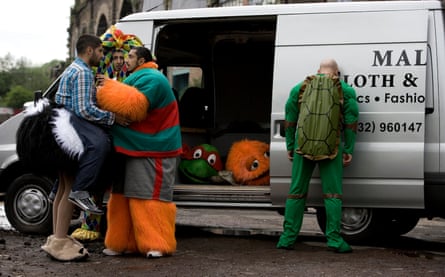
This exploration of identity and aspiration is also at the heart of Bait, a madcap TV comedy series Ahmed is set to release on Prime Video, a project he has been developing for nearly a decade. In the show, Ahmed portrays Shah Latif, a struggling actor who, after a botched Bond audition, inexplicably finds himself in contention for the coveted role. This opportunity is not just life-altering for Shah; it also presents a unique chance for his cousin Zulfi (played by Guz Khan), who sees it as a marketing coup for his new minicab business, Muber (a playful nod to Uber). His mother, brought to life by Bollywood veteran Sheeba Chaddha, also anticipates the social capital the role could bring.
The Multifaceted Artist: From Screen to Stand-up Aspirations
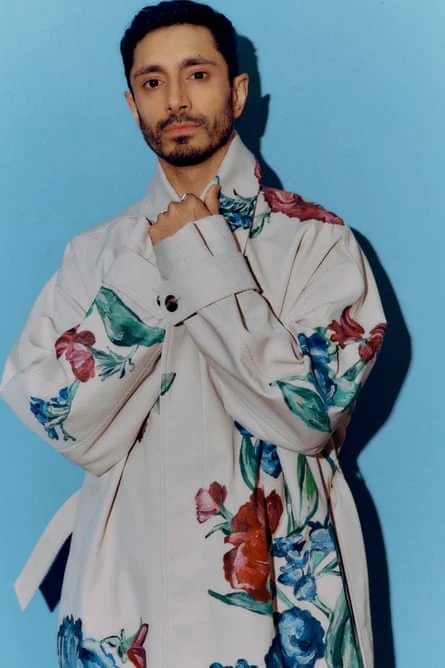
Meeting Ahmed on a sunny Monday afternoon in East London reveals a more casual persona. Dressed in comfortable black sweats, a grey t-shirt, and a burgundy jacket from Indian designer Kartik Research, he exudes an approachable demeanor. A worn 1950s aviator jacket from his favorite New York vintage shop, Front General Store, casually drapes over a bench. In person, his laughter is frequent and his listening attentive, his gaze sharp and thoughtful.
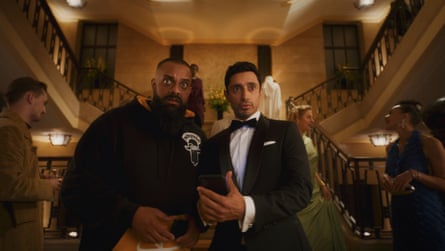
The decision to open his new TV show with an audition sequence is particularly significant, especially in light of his 2016 essay on being typecast as a terrorist. In it, Ahmed drew a poignant parallel between the interrogation rooms at airports and audition rooms, describing both as spaces where individuals are reduced to their perceived marketability or threat level, where even minor details like facial hair can be decisive, and where reductive labels often take precedence over nuanced identity. In Bait, Shah Latif grapples with this very sense of being confined by his roles, perpetually performing different versions of himself for those around him.
"Wow, this is like therapy," Ahmed playfully remarked, acknowledging the insightful connection. "You’re joining dots I’d never even thought to! Send me the invoice after, yeah?"
More seriously, Ahmed explained that Bait delves into the universal experience of life feeling like a continuous audition. "I hope that’s relatable to people outside of just actors," he clarified. "Even people who aren’t performers, we all have to perform in some sense or another, right? We’re all projecting this version of ourselves that’s usually quite different to who we really are, or how we really feel, in order to prove to people that we’re enough. It’s maybe been exacerbated by the age we live in, and social media. We’re made to feel as though we have to reassert our importance, our relevance, our likability, our very existence. Social media has rewired our brains in such a way where we’re all having to do that."
A Career of Calculated Diversification and Evolving Perspectives
Ahmed’s career, spanning two decades, is a masterclass in deliberate artistic evolution. His filmography is a rich tapestry, encompassing satirical comedies, Westerns, science fiction, and poignant, culturally specific dramas. When asked to delineate the different eras of his career, he responded with mock seriousness, "I really hoped I wouldn’t have to."

His early years saw him grappling with and subverting Muslim stereotypes in the post-9/11 era, with notable roles in films like The Road to Guantanamo (2006), Shifty (2008) as a drug dealer, and Chris Morris’s cult hit Four Lions (2010), a dark comedy about a quartet of bumbling jihadists.
His ascent into Hollywood began with a supporting role in the critically acclaimed thriller Nightcrawler (2014), followed by a significant part as a tormented taxi driver and murder suspect in HBO’s 2016 crime drama The Night Of, a performance that earned him an Emmy Award. Concurrently, he joined major franchises like Rogue One: A Star Wars Story (2016) and Marvel’s Venom (2018). He also delivered an understated yet memorable cameo as a surf instructor in Lena Dunham’s Girls. This period underscores Ahmed’s consistent refusal to be confined to a single genre or type of role. "I made a very deliberate choice to do Four Lions and Sound of Metal, to do Nightcrawler and The Night Of," he stated. "That’s due to my own restlessness."
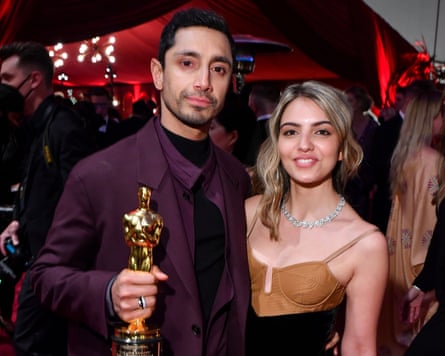
More recently, Ahmed has focused on telling stories from his distinct perspective. He co-wrote, produced, and starred in Mogul Mowgli (2020), a film about a British Pakistani rapper battling a mysterious chronic illness. In 2022, he and Aneil Karia garnered an Oscar for their powerful short film, The Long Goodbye, which depicts the jarring disruption of a South Asian family’s wedding preparations by a police raid. The Hamlet adaptation, also a collaboration with Karia, was a "15-year labour of love," and Ahmed expressed hope for a future era where projects can be realized more efficiently.
The stark contrast between his public successes and personal anecdotes remains a recurring theme. In 2015, the day after The Hollywood Reporter announced his casting in Rogue One, leading to a flurry of congratulatory texts, Ahmed recounts being banned from Tesco for suspected shoplifting. His explanation involved a broken washing machine, a dash to the launderette, and a quick stop for his brother’s birthday cake, all while clad in fluorescent cycle shorts, a padded jacket, and a string vest, dragging a tartan laundry bag. This story, delivered with comedic timing, highlights the often-absurd juxtapositions of his life.
The Power of Performance and the Search for Authenticity
Ahmed consistently emphasizes his desire to be seen as relatable, as "chaotic, fucked up, vulnerable, hilarious and messy," just like anyone else. The widening gulf between his polished public image and his behind-the-scenes reality, he admits, became so significant that it bordered on the absurd and eventually became a source of comedic inspiration. This led him to document such moments, including being mistaken for Dev Patel (an occurrence he notes happened again recently in a black cab) and a near-miss of almost fist-bumping the late Queen.
"I’ve always been a fan of comedy from stress," he explained. "I’ve always been able to see the funny side of it whilst I’ve been in these incongruous situations. As I started writing about it from a more and more personal place, I realised how universal that feeling is."
Ahmed’s natural comedic talent is evident, characterized by a lean physicality and impeccable timing. However, his more recent, critically acclaimed roles have leaned towards dramatic intensity. Despite this, his passion for comedy remains palpable. "Of course, the dream is to be a stand-up comedian, but everyone who knows me says, ‘Please don’t do that,’" he confessed, adopting a pleading tone. He views comedy as the purest form of performance, citing influences like Hasan Minhaj, Ramy Youssef, Bill Hicks, and Chris Rock, performers who operate with an unflinching honesty and direct connection to their audience. "It’s about truth, honesty, connection, performance. I mean, there’s a reason why my first ever rap song was a comedy rap song." His 2006 track "Post 9/11 Blues," featuring satirical lyrics about fundamentalism and consumerism, caught the attention of Chris Morris, directly leading to his role in Four Lions.
His early years at school were marked by a restless, disruptive energy, often leading to him being removed from class for making his peers laugh. Growing up alongside older boys, he developed a comedic persona as a way to gain attention, humorously recalling his large ears and his ability to impersonate Prince Charles.
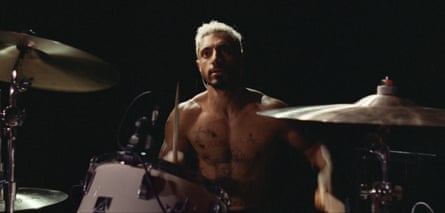
"The things that were my hobbies became my jobs, right?" he reflected. "Music and this acting stuff, and writing and producing, it can kind of grow and grow and not leave a lot of time for other stuff." He accepts this, prioritizing time with his wife, child, parents, and cousins.
Family, Fatherhood, and the Legacy of Sacrifice
In 2020, Ahmed married American novelist Fatima Farheen Mirza, whom he met in New York during his preparation for Sound of Metal. They are parents to a young child, a detail he guards closely. When asked about balancing his demanding career with fatherhood, he deflected with characteristic humor, "Great question. As my therapist, have you got any solutions for me about how we can work this out?"
He identified balance as a paramount concern in his life, encompassing not only his work but also the impact of constant relocation on his family. He articulated a distinction between "modeling" and "presence" in parenting. "There’s something powerful in just being present with a kid. Not doing anything, just literally spending time breathing the same air, making eye contact, hanging out. And that’s something so nourishing, particularly for kids. That’s what I mean by presence." Simultaneously, he aims to model a life dedicated to passion and aligned with his values. He shared a concern from an actor friend who regretted not working when their child was young, feeling a sense of missed opportunity.
As a second-generation Pakistani, Ahmed deeply appreciates the sacrifices of his parents. "They had a lot less resources and choices than I did. I think of their labor and love and sacrifice as really heroic." His father, a shipping merchant, was often away for extended periods, a reality that profoundly shaped Ahmed’s understanding of provision and presence. "My father worked on boats for a lot of his life, and so a lot of the time he had to be away." He admitted to missing his father "massively, of course. Hugely." This experience informs his own approach to fatherhood, seeking to balance the need to provide with the desire to be present, aiming to avoid the pitfalls of his father’s absence while still embodying the commitment to family. "In our adult lives, we’re all trying to climb back into that same treehouse we grew up in and fix it."
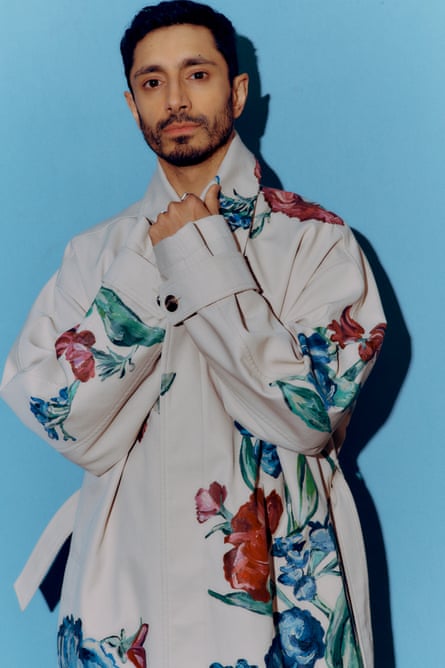
His relationship with his parents remains central. When playfully questioned about the frequency of visits, he quipped, "All right, Auntie. Jesus Christ! You’ve got me on the hook here. Lemme get my calendar out." He clarified, with a knowing look to his interviewer’s likely South Asian heritage, "I try to see them very regularly. At least every week. A few times a week."
Ahmed is also developing his culinary skills, though his wife, a naturally gifted cook, has yet to be fully convinced by his creations. He described his recent attempt at fish curry as a personal success, met with polite skepticism from his wife. He lauded Mirza as "a truly creative person" whose writing consistently impresses him, though they consciously limit work discussions at home, aiming to maintain a clear separation between their professional and personal lives.
Navigating the Establishment and Advocating for Justice
Ahmed’s academic background, a scholarship to Oxford to study Politics, Philosophy, and Economics, speaks to his intellectual prowess and ability to navigate established institutions. Despite not always feeling like a natural fit within them, he has consistently found his own path.
"There is a part of me, and I dare say a part of all of us, that is chasing external validation, and trophies and awards and accolades are obviously a tangible version of that," he acknowledged. However, the true value of his Oscar win, he revealed, was the joy of presenting it to his mother.
His recent public engagements have also highlighted his willingness to speak out on sensitive issues. During a Bafta ceremony, he was present when a campaigner with Tourette’s syndrome inadvertently uttered a racial slur. Ahmed described the incident as "a very confusing, awkward, tense, baffling moment for everyone," and expressed his disappointment with the handling of the situation by the BBC and Bafta. He also noted the subsequent Sag award win for Michael B. Jordan, seeing it as a gesture of "respect and solidarity from the creative community," emphasizing that "harsh words can land harshly" regardless of one’s position.
Furthermore, the BBC’s decision to censor the phrase "Free Palestine" from a winning acceptance speech at the same event underscored Ahmed’s long-standing commitment to advocating for Palestinian rights. He has publicly supported calls for a halt to arms sales to Israel and participated in fundraising events. When asked about potential repercussions in Hollywood for his outspokenness, he acknowledged the thought crosses his mind. "I’m sure there’s some people that maybe didn’t like what I’ve said… But I also just think that in life you have to make choices. And I’m a father, and I want to try and model a way of being in the world that aligns to my values. I don’t think I’m saying anything aggressive or controversial in calling for respect for international law, or human rights, or protection of civilians, women and children, or the Geneva convention."
Artistic Innovation and the Pursuit of Genre Transcendence
Ahmed’s enthusiasm reignites when discussing filmmaking, particularly the work of directors like Kaouther Ben Hania and Jafar Panahi. He admires their ability to create impactful films against considerable odds, their "speaking truth to power," and their innovative approaches to form and tone. He likens their artistic daring to "doing wheelies," a testament to his appreciation for boundary-pushing creativity.
This appreciation for artistic fluidity mirrors his own career trajectory. Ahmed has spent his life and career, consciously and subconsciously, defying categorization. His new show, Bait, embodies this ethos, blending comedy with psychological thriller elements, family drama with coming-of-age narratives, and ambition with satire. He describes his creative process as having a "maximalist sensibility," aiming to "kill categories" and have his work "smash through those genres."
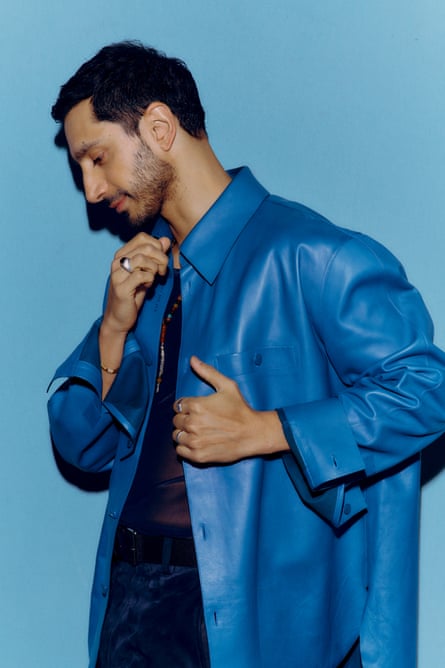
Ultimately, Riz Ahmed’s journey is one of constant evolution, marked by a refusal to be confined by expectations. Whether navigating the complexities of fatherhood, advocating for social justice, or pushing the boundaries of cinematic storytelling, he remains driven by a profound desire for authenticity and connection, finding meaning in the very "friction" that life inevitably presents. And for now, that includes the pressing task of navigating London traffic to collect his child from school, a daily reminder of the beautiful, chaotic equilibrium he continually strives to achieve.