A profound exploration into the intricate relationship between Indigenous Mexican women and the fungal kingdom, Otilia Portillo Padua’s documentary Daughters of the Forest offers a compelling narrative on the preservation of ancestral knowledge, the pursuit of scientific recognition, and the imaginative possibilities of a future shaped by ecological wisdom. The film, which made its simultaneous global premiere at SXSW and Copenhagen’s prestigious non-fiction festival CPH:DOX on March 13, delves into the lives of two remarkable women, Lis and Juli, who are striving to bridge the gap between traditional practices and modern academia while confronting significant societal and environmental challenges.
For countless generations, Indigenous communities across Mexico have cultivated a deep, nuanced understanding of mushrooms, recognizing their multifaceted roles—medicinal, culinary, spiritual, and even toxic. This invaluable mycological knowledge has been meticulously calibrated and transmitted through matrilineal channels, echoing the complex, interconnected mycelial networks that thrive beneath the forest floor, binding individual fungi into a vast, hidden web of life. It is this profound intergenerational legacy that forms the bedrock of Daughters of the Forest.
The Heart of the Forest: Matrilineal Knowledge and Mycology
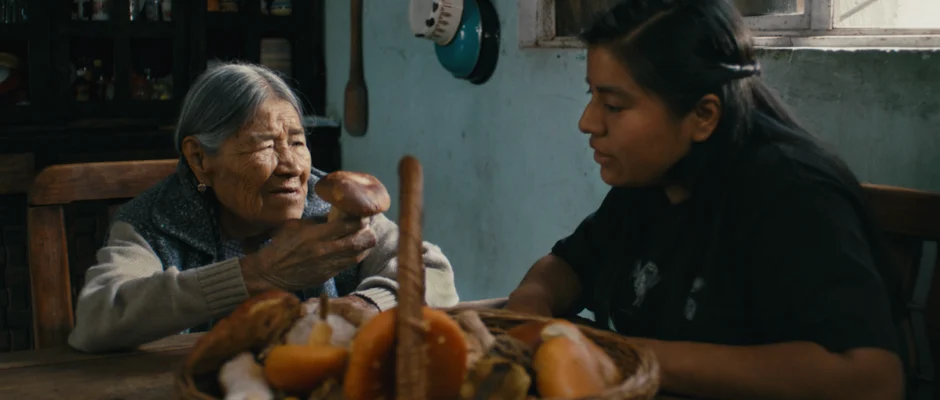
The film centers on Lis and Juli, two Indigenous women residing with their families in the verdant enclaves of Mexico, whose lives are intrinsically woven with the forest and its fungal inhabitants. They are custodians of an immense wealth of ancestral knowledge, passed down through oral traditions, observation, and direct experience. This traditional ecological knowledge (TEK) is not merely a collection of facts but a holistic understanding of ecosystems, incorporating cultural practices, spiritual beliefs, and practical applications that have sustained their communities for centuries. The emphasis on matrilineal transmission highlights the pivotal role of women in preserving and perpetuating this wisdom, often as primary gatherers, healers, and educators within their communities. This aspect resonates with a global pattern in many Indigenous cultures where women are often the primary stewards of agricultural and medicinal plant knowledge.
The film subtly argues that this deep-seated, community-held knowledge is a vital, yet often undervalued, form of science. It contrasts sharply with the Western scientific paradigm, which has historically marginalized or dismissed traditional wisdom. However, Lis and Juli are not content to simply maintain the status quo; they aspire to distinguish themselves within formal academic settings. Their ambition is not to abandon homeopathy or ancestral practices in favor of Western science, but rather to integrate and validate their communities’ contributions to mycology within a “legitimate” field of study. This pursuit aims to achieve broader recognition for the sophisticated mycological strides their ancestors have consistently made, often without formal acknowledgment from the dominant scientific establishment.
Bridging Worlds: Academia and Ancestral Wisdom
The journey of Lis and Juli is emblematic of a broader movement within Indigenous communities globally to reclaim and assert the validity of their knowledge systems. Their efforts to engage with academia represent a strategic endeavor to build bridges between traditional wisdom and contemporary scientific discourse. By pursuing formal education in agricultural sciences, including mycology, these women aim to become conduits through which ancestral knowledge can be translated, documented, and shared in ways that resonate with and are respected by scientific institutions. This process is crucial for ensuring the survival and relevance of TEK in an increasingly globalized world.
However, their path is fraught with immense challenges. Illegal logging practices continue to decimate the biodiverse forests that are the very source of their knowledge and livelihood. Mexico, home to some of the world’s most biodiverse forests, faces significant challenges from illegal deforestation, often driven by demand for timber, agriculture, and cattle ranching. According to reports from organizations like the World Wildlife Fund (WWF), Mexico loses thousands of hectares of forest annually, directly impacting Indigenous communities who rely on these ecosystems. This environmental degradation directly threatens the habitats of countless mushroom species, some of which are endemic and vital to Indigenous medicinal and spiritual practices.
Compounding these environmental threats are pervasive institutional discrimination and the rapid loss of Indigenous languages. Mexico is a multicultural nation with 68 recognized Indigenous languages, but many are critically endangered. The National Institute of Indigenous Languages (INALI) reports that a significant number of these languages are at risk of disappearing, taking with them unique cultural expressions, narratives, and, crucially, specific terminologies for plants, animals, and fungi that encapsulate generations of ecological understanding. The erosion of language directly impedes the intergenerational transmission of TEK, making Lis and Juli’s mission an uphill battle against powerful forces that often make their efforts feel futile. Yet, despite these formidable obstacles, filmmaker Padua masterfully gestures toward a future that, against all odds, remains ripe with possibility and resilience.
A Fungal Narrative: Otilia Portillo Padua’s Vision
Director Otilia Portillo Padua brings a distinctive perspective to Daughters of the Forest, shaped by her architectural background. She observes that both architecture and filmmaking are inherently collaborative practices, often challenging the romanticized notion of auteurist creation. "Somebody mentioned the other day that I make films that are a little bit like ecosystems," Padua recounts, noting that this organic, interconnected approach to storytelling emerged naturally from her understanding of how individuals and elements situate themselves within spaces. This ecological sensibility profoundly influenced the film’s structure and narrative approach.
Padua recognized the inherent structural interconnectedness of mushrooms, particularly their vast and often invisible mycelial networks. "Mushrooms defy a lot of conventions," she states. Her artistic intention was to make the invisible visible, to explore the unseen forces at play—spores, subterranean webs—that are always present but rarely observed. This led to a radical departure from conventional documentary filmmaking. Rather than imposing a linear, traditional hero’s journey or a rigid three-act structure, Padua allowed the fungi themselves to dictate the narrative. "The storytelling had to be in congruence with how mushrooms are, so fungi dictated the structure of the movie," she explains. This unconventional approach imbues the film with an organic flow that mirrors the life cycle and interconnectedness of its fungal subjects.
The Psychedelic Dimension and Visual Storytelling
One of the film’s most electrifying and distinctive sequences involves Juli’s consumption of a psychedelic "holy mushroom." This moment is not depicted as a mere recreational act but as a sacred ritual, a quest for guidance that echoes a similar experience undertaken by her late father many years prior. The film employs an unconventional "sci-fi" lens to give the mushrooms a voice of their own, allowing these organisms to meditate on their existence, whispering profound truths like "transforming death into life" to describe their divine purpose. This anthropomorphic element, while potentially controversial for some, serves a critical narrative function, allowing the film to delve into the subjective, spiritual dimensions of human-fungi interaction.
Padua meticulously crafted the visual representation of Juli’s psychedelic journey and the mushrooms’ perspective. She clarifies that "nothing is 3D-generated." Instead, the intricate visuals of spores and fungal networks were filmed in her garage using 2D composites—layered, projected, and then confined to a 3D space. The production team undertook "many attempts over many years," enduring numerous failures to capture the elusive "journey of the spore" from its own point of view.

The decision to give mushrooms a human voice was a contentious one during production. While acknowledging the risk of anthropomorphism, Padua found that "the human voice has this emotion that an abstract sound could have never given us." Furthermore, the experience of consuming a "holy mushroom" often involves an internal dialogue, where the mushroom is perceived to "talk to you." Recognizing that this perceived voice is often the individual’s own internal monologue, the filmmakers layered multiple voices—Juli’s, her grandmother’s, her brother-in-law’s, and her sister’s—to represent the collective consciousness and ancestral guidance inherent in such an experience. Juli’s validation after seeing the film—"That’s exactly what my journey was like! How did you know?"—served as powerful affirmation of Padua’s creative liberties and the universal resonance of her abstract visual language.
The Director’s Journey: From Foraging to Filmmaking
Padua’s fascination with mycology began serendipitously. Collaborating with producer Paula Arroio, the initial idea was to explore stories about the human relationship with the natural world, with Arroio suggesting foraging as a theme. The onset of the COVID-19 pandemic saw a surge in public interest in foraging, alongside widespread discussions about mushrooms’ potential to "save the planet" or act as antidepressants. However, Padua observed that much of this discourse was framed through a "capitalistic" lens: "how do they serve us?" This utilitarian perspective shifted their focus.
Their interest evolved from mushrooms themselves to "the people that take care of them." This led them to Indigenous women in Mexico, who have nurtured a profound, multi-generational relationship with fungi. Historically, these communities faced systemic racism and poverty, often relying on mushrooms as a vital food source when other options were scarce. The filmmakers were fortunate to connect with these women through academic channels, specifically Indigenous students from various parts of Mexico studying agricultural sciences, including mycology, who were committed to bringing their knowledge back to their communities. This academic connection provided a crucial entry point into a world of rich, yet often overlooked, traditional knowledge.
Padua initially did not explicitly set out to document a matrilineal transfer of knowledge. However, as the research progressed, "there was a lot of mentioning of grandmothers," a figure that universally evokes deep emotion and wisdom. Inspired by Ursula K. Le Guin’s assertion that she would send a grandmother to space for their innate wisdom, and having previously made a film about her own great aunt, Padua recognized the profound significance of elderly women as knowledge keepers. She discovered an intimate community of women who foraged together, solidifying the film’s focus on this powerful female lineage.
Redefining Futures: Sci-Fi as a Tool for Hope
Padua categorizes Daughters of the Forest as a work of science fiction, a classification that challenges conventional notions of both documentary and sci-fi genres. In a world often characterized by dystopia, cruelty, and violence, sci-fi offers "the possibility of rethinking the present and the future." Padua rejects the narrow perception of sci-fi as solely machine-driven or dystopian. Instead, she embraces its potential for "rupture, of imagining," drawing inspiration from theorists like Donna Haraway and Adrienne Maree Brown, who champion futurism and speculative fiction as tools to re-envision the world.
She distinguishes her approach from "magical realism," a term often applied to Latin American narratives that blend the fantastic with the mundane. For Padua, her film’s speculative elements are not about magic but about exploring "other forms of knowledge," aligning with Indigenous sci-fi and African futurism, which often prioritize ecological relationships and community wisdom over technological advancement. This perspective allowed her to explore non-human perspectives and challenge the limitations of traditional documentary storytelling.
Padua hopes that the film will inspire viewers, particularly young Indigenous women, to see that belief in traditional practices and scientific ambition are not mutually exclusive. "If a girl ever saw this film and thought, ‘I believe in the holy mushroom but I also want to be a scientist and those two things can coexist,’ I think that would be very beautiful for me," she articulates. This vision underscores the film’s core message: the urgent need to imagine and build alternative futures rooted in ecological harmony and respect for diverse knowledge systems.
Lessons from the Forest: The Perils and Profundities of Mycology
During the filmmaking process, Padua gained a profound appreciation for the intricate and often perilous nature of mycological knowledge. She recounts an incident involving the white Amanita mushrooms, which, while edible when prepared correctly, bear a striking resemblance to some of the world’s deadliest species, such as the Amanita phalloides (death cap). The key to rendering the edible variety safe lies in specific cooking techniques, knowledge that has been refined over countless generations through trial and error.
Padua and her team, in an attempt to experience this traditional practice firsthand, sampled these mushrooms without the extensive knowledge possessed by the Indigenous community. A scientist later cautioned them about the inherent risks, noting that the Indigenous people’s bodies are likely more accustomed to such substances, and that some varieties, even if deemed "edible," can still be toxic to the liver if not properly processed. This experience profoundly impacted Padua: "I realized that I was eating something that was… I don’t know if lethal, but definitely poisonous."
This harrowing realization highlighted the immense sacrifice and accumulated wisdom embedded in traditional mycological knowledge. "It struck me that a lot of people might have died for this knowledge," she reflects. The precise methods of identification, preparation, and consumption represent a delicate line between life and death, a testament to the generations of observation, experimentation, and transmission that have ensured the survival and well-being of these communities. It underscores the irreplaceable value of Indigenous knowledge systems, which are not merely cultural relics but vital repositories of practical, life-saving information honed over millennia.
Global Recognition and Broader Implications
The simultaneous premiere of Daughters of the Forest at SXSW, one of the premier film and interactive media festivals in North America, and CPH:DOX, a leading international documentary festival known for its artistic ambition and political engagement, signifies the film’s significant global appeal and critical relevance. This dual launch underscores the film’s ability to resonate with diverse audiences, from tech-savvy festival-goers to those seeking intellectually rigorous non-fiction cinema.
The film’s impact extends beyond cinematic achievement. It serves as a powerful advocacy tool for Indigenous rights, environmental protection, and the recognition of traditional ecological knowledge. By elevating the voices and experiences of Lis and Juli, Padua contributes to a global dialogue on decolonizing science, fostering intercultural understanding, and inspiring action towards more sustainable and equitable futures. Daughters of the Forest is not just a film about mushrooms; it is a profound meditation on interconnectedness, resilience, and the enduring power of ancestral wisdom in navigating the complexities of the modern world.