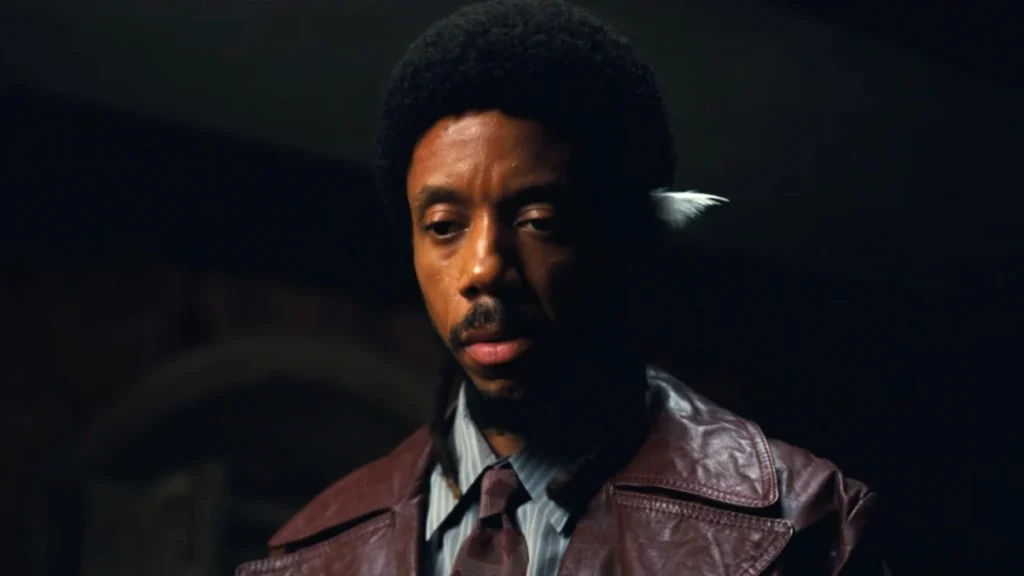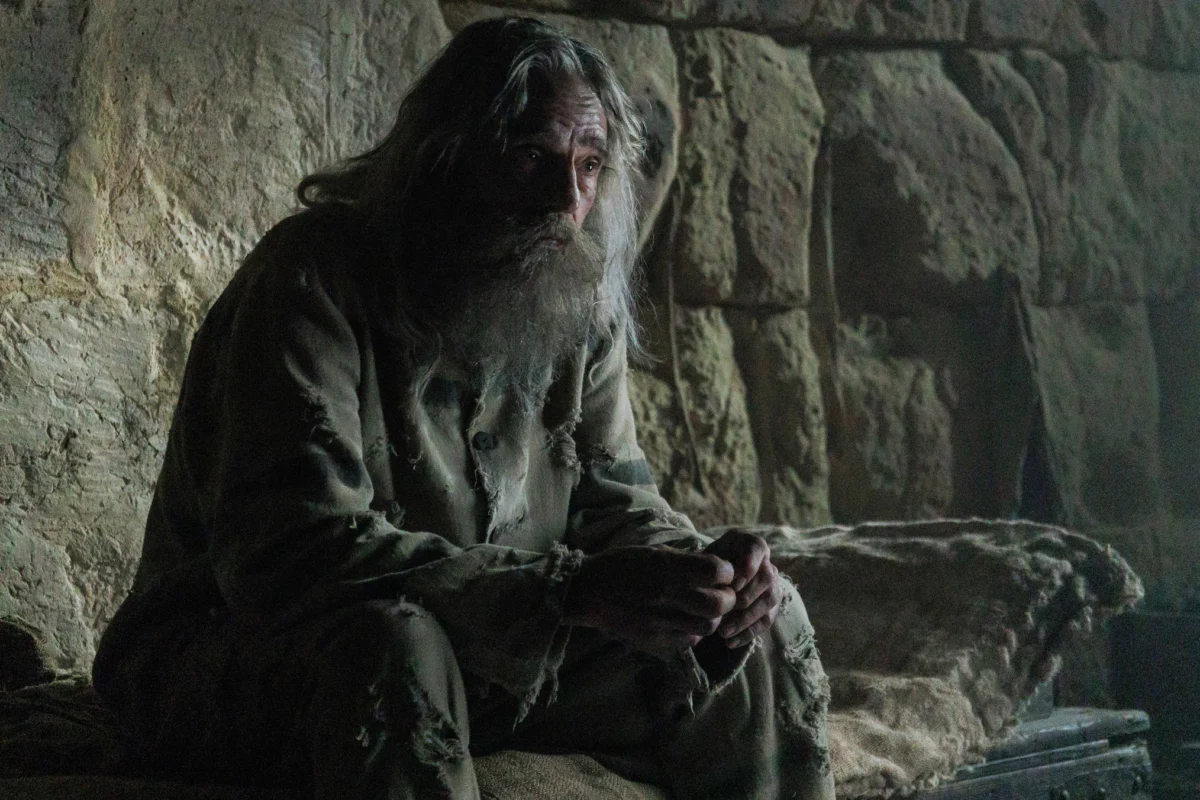
The second installment of the latest television adaptation of Alexandre Dumas’ literary classic, The Count of Monte Cristo, premiered on PBS on Sunday, March 29, marking a significant turning point in the narrative with the introduction of Academy Award winner Jeremy Irons. Starring opposite Sam Claflin, who portrays the wronged protagonist Edmond Dantès, Irons delivers a commanding performance as Abbé Faria, the "Mad Priest" whose mentorship transforms a broken prisoner into a sophisticated instrument of vengeance. This episode, titled The Castle, serves as the emotional and intellectual core of the eight-part limited series, spanning a grueling 15-year period that chronicles Dantès’ incarceration, his psychological evolution, and his eventual miraculous escape from the notorious Château d’If.
As a centerpiece of the PBS Masterpiece schedule, this production represents a high-stakes collaboration between Mediawan, Palomar, and DEMD Productions. The narrative structure of the second episode shifts from the maritime adventure and romantic tragedy of the premiere toward a claustrophobic, character-driven drama. By focusing on the decade and a half of Dantès’ imprisonment, the series allows for a methodical exploration of the bond between Dantès and Faria, a relationship that defines the protagonist’s transition from a naive sailor to the formidable Count of Monte Cristo.
The Psychological Toll of Isolation and the Deception of Villefort
The episode opens in the immediate aftermath of Edmond Dantès’ wrongful arrest during his wedding feast. Imprisoned in the Château d’If, a fortress situated on a small island off the coast of Marseille, Dantès is subjected to a decade of near-total isolation. The production emphasizes the sensory deprivation of the setting, using minimal lighting and a stark soundscape to convey the passage of time. During the first ten years of his sentence, Dantès’ only human contact is limited to brief, utilitarian interactions with prison guards and infrequent, formal visits from the prison governor.
A critical narrative thread involves the political machinations that keep Dantès behind bars. While in prison, Dantès attempts to negotiate his release by citing the political shift of Napoleon Bonaparte’s return to power. He remains unaware that the "Hundred Days" have already concluded and that Napoleon has been permanently exiled to Saint Helena. Unbeknownst to the prisoner, the prosecutor Villefort, played by Mikkel Boe Følsgaard, has systematically suppressed any evidence of Dantès’ innocence to protect his own political reputation. To further ensure Dantès is forgotten, Villefort orchestrates a lie, informing Dantès’ father and his fiancée, Mercédès (Ana Girardot), that the young sailor committed suicide shortly after his arrival at the fortress. This misinformation serves as a catalyst for the secondary characters to move on with their lives, unaware of the living ghost inhabiting the Château d’If.
The Arrival of Abbé Faria and the Five-Year Mentorship
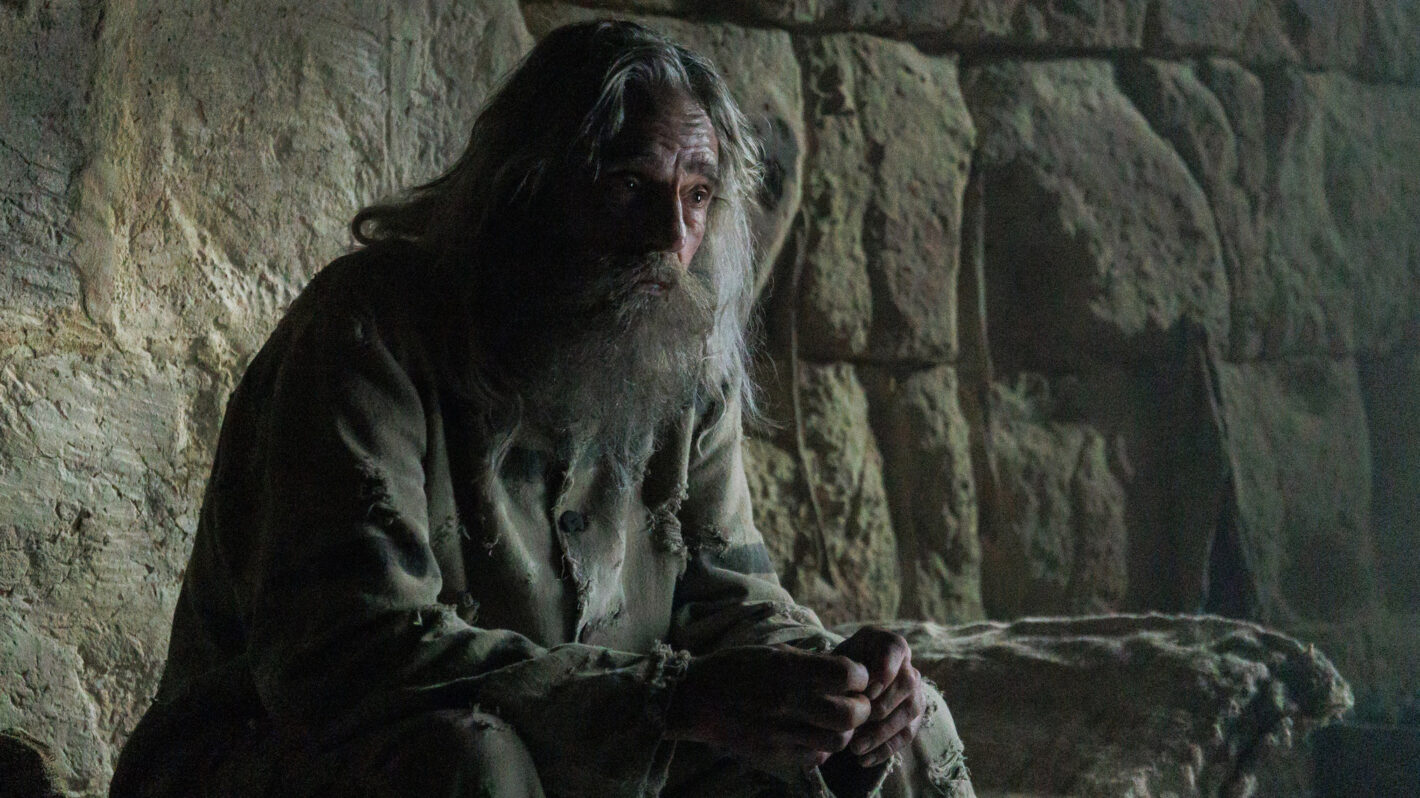
The trajectory of the episode changes when Dantès hears the sound of scraping within the stone walls of his cell. This leads to the introduction of Abbé Faria, portrayed by Jeremy Irons with a blend of intellectual vigor and physical frailty. Faria, an Italian priest and scholar, had spent years digging a tunnel with the intention of reaching the outer walls of the fortress to leap into the sea. However, a miscalculation in his subterranean path leads him directly into Dantès’ cell instead.
The arrival of Faria provides Dantès with a reason to live, halting a burgeoning hunger strike and ending his psychological descent. Over the course of the following five years, the two men form a clandestine bond that functions as an intensive academy of the mind. Faria, recognizing Dantès’ innate intelligence, spends half a decade teaching him several languages, history, philosophy, mathematics, and the arts of combat and strategy. This period is crucial for the series’ faithful adherence to Dumas’ themes of self-reinvention. The mentorship is not merely academic; Faria also helps Dantès deduce the identities of the men who betrayed him—Danglars, Fernand Mondego, and Villefort—thereby planting the seeds of the vengeance that will drive the remainder of the series.
The Revelation of the Monte Cristo Treasure
The narrative climax of the prison sequence occurs when Faria suffers a debilitating stroke or fall, rendering him partially paralyzed and ending their plans for a joint escape. Realizing his death is imminent, Faria entrusts Dantès with a secret that he had previously kept hidden to test the young man’s character: the existence of a massive hidden treasure.
Faria reveals that he was once the secretary to the last member of the wealthy Spada family. Before his death, the Count of Spada left a coded will revealing a cache of gold and jewels hidden in a cave on the uninhabited island of Monte Cristo. While Faria had been dismissed as a "madman" by the prison authorities for claiming to possess such wealth, he provides Dantès with the specific instructions and maps necessary to locate the fortune. The transfer of this information symbolizes the passing of the torch from the old world of scholarship and tragedy to the new world of wealth and retribution.
Death, Substitution, and the Iconic Escape
The episode concludes with the death of Abbé Faria, an event that provides Dantès with his only opportunity for freedom. In a sequence that mirrors the most famous scenes in the source material, Dantès discovers Faria’s lifeless body and realizes that the guards will soon come to remove it for burial. In an act of desperate ingenuity, Dantès moves Faria’s body to his own bed and sews himself into the priest’s burial shroud.
The guards, assuming the bag contains the deceased priest, carry Dantès to the top of the fortress battlements. In a harrowing scene, they attach a heavy iron weight to his feet and cast him into the Mediterranean Sea. The production utilizes underwater cinematography to capture Dantès’ struggle as he uses a sharpened tool—fashioned by Faria during his tunneling years—to cut himself out of the shroud and free himself from the weight. The episode ends with Dantès reaching the rocky shores of Marseille, a man physically aged and mentally transformed, ready to begin his quest for the treasure and his ultimate revenge.
Production Background and Cinematic Execution
Directed by Bille August, a two-time winner of the Palme d’Or, this adaptation of The Count of Monte Cristo aims for a cinematic scale rarely seen in television miniseries. The casting of Jeremy Irons was a strategic move by the production team to provide a gravitas that balances Sam Claflin’s more kinetic performance. Irons, known for his work in historical dramas such as The Mission and The Borgias, brings a layered complexity to Faria, portraying him not just as a victim of the state, but as a man of immense intellectual power who finds a final purpose in his pupil.
The series was filmed across various European locations, with the scenes of the Château d’If benefiting from authentic Mediterranean backdrops that highlight the isolation of the setting. The decision to dedicate an entire episode to the 15-year imprisonment allows the audience to feel the weight of time, a necessary component for justifying the extreme nature of the revenge that follows.
Historical Context and Literary Significance
The events depicted in Episode 2 are set against the backdrop of the Bourbon Restoration in France. The political instability of the era—marked by the tension between Napoleon’s supporters (Bonapartists) and the Royalists—is the engine that drives the plot. Edmond Dantès is a victim of this political crossfire, a collateral casualty in a game of power he does not understand until Faria explains it to him.
Alexandre Dumas’ novel, first published in 1844, was inspired by the real-life story of Pierre Picaud, a French shoemaker who was wrongfully imprisoned and later sought a elaborate revenge on those who framed him. By expanding the prison narrative, this Masterpiece adaptation honors the psychological depth of the original text, focusing on the concept of "Providence"—the idea that Dantès has been chosen by a higher power to deliver justice.
Analysis of Implications and Future Episodes
The death of Abbé Faria marks the end of Jeremy Irons’ physical presence in the main timeline of the series, though his influence remains the driving force for the protagonist. While IMDb credits Irons for all eight episodes, it is anticipated that any further appearances will occur through flashbacks or as a guiding voice in Dantès’ conscience.
The transition from Episode 2 to Episode 3 signals a shift in genre. The series will move from a "prison break" drama into a "treasure hunt" and eventually into a high-society thriller. As Dantès seeks the island of Monte Cristo, the supporting data from previous adaptations suggests that the acquisition of wealth will be portrayed as a double-edged sword, granting him the power to destroy his enemies while risking the loss of his own humanity.
Viewers can continue to follow the series weekly on PBS on Sundays at 10/9c, or stream the entirety of the limited series through the PBS Passport service. The upcoming episodes are expected to introduce the adult versions of the men who betrayed Dantès, setting the stage for a confrontation decades in the making.