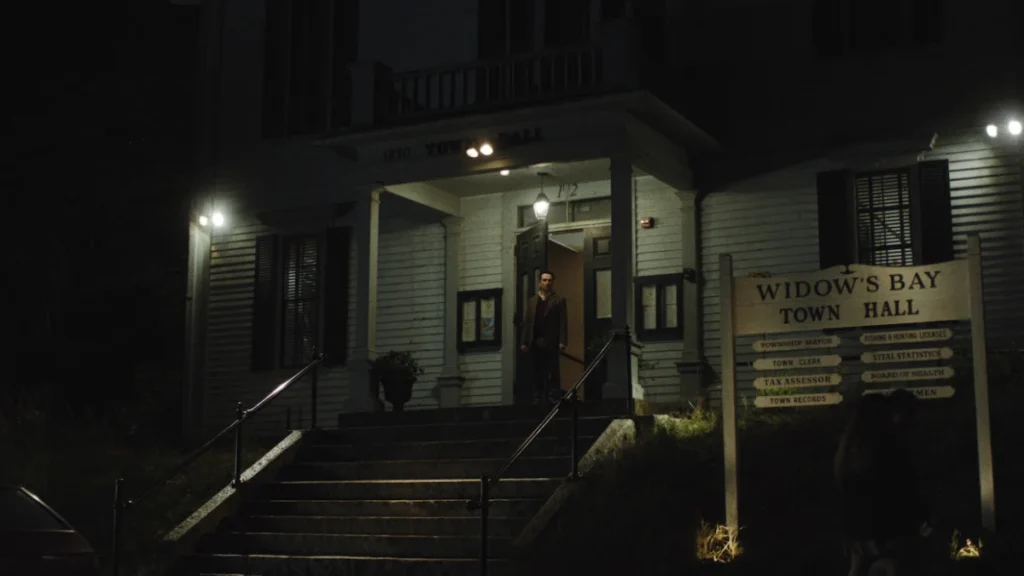
German auteur Christian Petzold’s latest cinematic offering, Miroirs No. 3, is now captivating audiences in select theaters, distributed by 1-2 Special. The film, starring Paula Beer and Barbara Auer, delves into themes of grief, identity, and the unsettling nature of reality following a tragic car accident in the German countryside. Petzold, a prominent figure of the "Berlin School" known for his intellectually rigorous yet emotionally resonant dramas, continues to explore the psychological landscapes of his characters, often through a lens informed by historical and cultural references. His work consistently garners critical acclaim, with past films like Phoenix, Transit, and Undine establishing his reputation for masterful storytelling and meticulous direction.
A Narrative Woven with Mystery and Grief
Miroirs No. 3 introduces Laura (Paula Beer), a visiting Berlin pianist, who survives a fatal car crash that claims her boyfriend’s life and leaves her injured. She is subsequently nursed back to health by Betty (Barbara Auer), a reclusive woman living near the crash site. Petzold masterfully employs subtle exposition to gradually unveil the profound extent of Betty’s need for Laura’s presence in her solitary existence. The narrative thrives on mystery, skillfully subverting both viewer and character expectations in ways that are both perplexing and profoundly moving. Both women, for distinct reasons, navigate their own intricate paths of grief, creating a complex emotional tapestry that is a hallmark of Petzold’s cinema. The film’s title itself, "Miroirs No. 3" (Mirrors No. 3), hints at its thematic preoccupation with reflection, perception, and potentially distorted realities, drawing the audience into a disorienting yet compelling psychological space.
Petzold’s Signature: Fairy Tales and Transformed Realities
Christian Petzold has frequently articulated the fairy tale elements embedded within his filmography, describing Miroirs No. 3 as his own Alice in Wonderland. This approach allows him to immerse viewers directly into a looking-glass world, where familiar realities are subtly warped. His 2020 film, Undine, which reimagined the mythical water nymph in modern Berlin, serves as another prominent example of this fantastical grounding. Petzold’s fascination with these archetypal stories stems from a desire to imbue ordinary German landscapes with the same kind of cinematic magic often associated with locations like Paris’s Jardin du Luxembourg, which have historically served as backdrops for classic French New Wave romances.
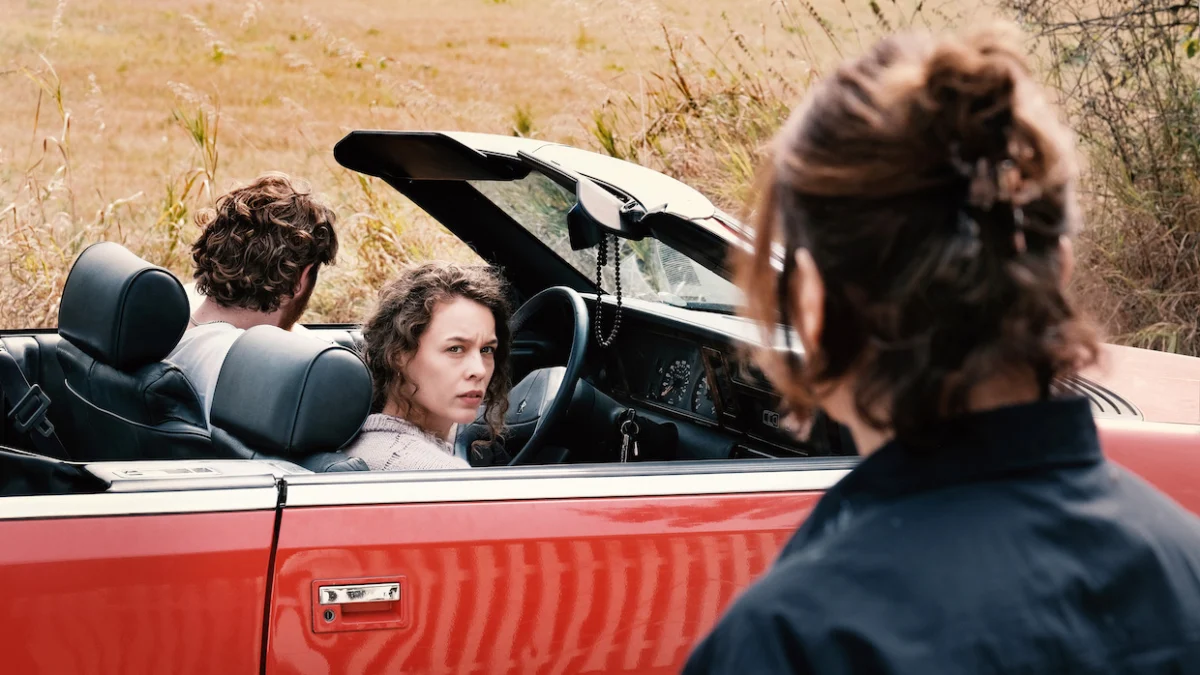
"When I was eight or nine years old, I was living amongst these ugly surroundings, and so I would go on an adventure and visit a small forest near the highway," Petzold recounted in a recent interview. "There was a fantastical atmosphere there, a mystical atmosphere, and I think cinema, when someone falls in love or is on the run or is being chased, changes their world too." He elaborates that in films like Undine or Miroirs No. 3, the world itself transforms for the characters, allowing the structures and inherent logic of fairy tales to permeate their reality. In Miroirs No. 3, a lost shoe from the car accident evokes the tale of Cinderella, while the red convertible itself is a deliberate homage to iconic vehicles from Jean-Luc Godard, François Truffaut, or Dustin Hoffman’s character in The Graduate. These are not mere quotations, Petzold clarifies, but rather declarations that signal a shift in reality: "This is the world now, for these people, and we are intruders into this world. We’re like a surveillance camera. We are watching what is happening in this world. That is the idea." This technique disarms the audience, drawing them into a world where the familiar becomes unsettlingly strange, mirroring the characters’ internal states.
The Morality of the Lens: Collaboration with Hans Fromm
Petzold’s distinctive visual style is deeply rooted in his collaborative process with longtime cinematographer Hans Fromm. Their discussions transcend technical specifications, delving into the philosophical implications of camera placement. Petzold cites French New Wave critics Éric Rohmer and Jacques Rivette’s assertion that "the camera position is a position of morality" as a guiding principle. This philosophy leads Petzold to eschew handheld or shoulder-mounted cameras, which he views as lacking a defined moral stance, merely "following something" akin to 1960s Direct Cinema.
His production methodology is notably meticulous. Petzold begins shooting days with extensive rehearsals involving only the actors and their costumes, sometimes lasting two or three hours without a camera present. "The producers want to commit suicide when they make a phone call to ask, ‘Are you shooting yet? It’s 11am.’ No, no, they’re just rehearsing," he quipped. Only after these rehearsals does Fromm join to observe the final run-through. Following this, Petzold and Fromm convene to meticulously storyboard and determine camera positions, dissecting the scene’s core essence. This rigorous approach was evident in Barbara (2012), where initial rehearsals revealed the film’s underlying theme of surveillance, forcing Petzold and Fromm to critically examine their own position as observers. For Miroirs No. 3, similar discussions about camera perspective, particularly concerning the opening car crash, were pivotal in shaping the film’s visual language and thematic depth.
Crafting Thematic Spaces: Betty’s Abandoned Home
The physical environment in Petzold’s films often serves as an extension of his characters’ inner worlds, and Betty’s house in Miroirs No. 3 is no exception. This rural dwelling, central to Laura’s recovery and the unfolding mystery, was entirely custom-built for the production. "Cinema loves abandoned places because abandoned places are projects that have failed," Petzold explained, drawing a parallel to the recurring cinematic theme of failure—be it in love, finance, or personal aspirations.
The constructed house, with its intentionally ruined elements like a broken dishwasher, a damaged fence, and a non-functional bicycle, symbolizes not just physical decay but also "broken minds and broken souls." Petzold envisioned the house as a failed "project" from years past, conceived by a family—presumably Betty’s—who desired an open, transparent connection to the world. Unlike typical German homes, often designed as insular "caves" with porches facing away from the street, Betty’s house is replete with windows and doors, inviting light and wind to flow through. This design choice, painstakingly captured through precise camera positions, highlights a profound, thwarted desire for an open, unshielded life—a metaphorical attempt to "refresh Germany" that ultimately ended in "total defeat." The transparency of the structure underscores the vulnerability and exposed psychological states of its inhabitants, both past and present.
Musical Echoes and Cinematic Lineage: Frankie Valli and The Deer Hunter
Music plays a significant, almost referential, role in Miroirs No. 3, particularly the inclusion of Frankie Valli and The Four Seasons’ "The Night." This choice resonates deeply with Petzold’s cinematic influences, specifically Michael Cimino’s seminal 1978 film, The Deer Hunter, which famously features Valli’s "Can’t Take My Eyes Off You." Petzold views The Deer Hunter as a profound commentary on the American working class, tracing their vibrant energy and love, as depicted in the wedding scene, into the crucible of the Vietnam War—a conflict he links to crises in capitalism.

He notes a specific parallel in The Deer Hunter where a barkeeper plays a nocturne by Frédéric Chopin, a piece Nina Hoss later performs in Petzold’s own film Barbara. For Petzold, these musical moments, even amidst a "world full of shit," offer fleeting instances of "relief and comfort." The final scene of Miroirs No. 3, depicting characters drinking coffee and eating eggs on a porch, directly references The Deer Hunter‘s ending. Both scenes portray traumatized groups choosing to live on, finding solace in shared rituals. Petzold’s discovery of "The Night" came unexpectedly at a film festival in Seville, watching Miguel Gomes’ The Tsuga Diaries (2021). He was astonished that such a powerful, yet different, song could come from the same artist as "Can’t Take My Eyes Off You," highlighting his keen ear for musical storytelling and its ability to evoke complex emotions.
The Evolution of an Ending: A Director’s Humility
A remarkable anecdote from the production of Miroirs No. 3 illustrates Petzold’s collaborative spirit and willingness to reassess his own creative decisions. Half a year before shooting, lead actress Paula Beer and actor Enno Trebs (who plays Max) expressed concerns about the script’s original ending. Petzold, initially confident in what he considered "the best sentence [he’d] ever written"—Laura returning to the family to live with them indefinitely—dismissed their reservations.
However, during the initial shoot of the scene, Petzold sensed something was amiss. The true realization came months later in the editing room, when his editor, Bettina Böhler, echoed Beer and Trebs’s criticisms. This led to a "four-week depression" for Petzold, as he grappled with the film’s perceived wrong direction. Fortunately, his producer secured the necessary funds for a reshoot. The final scene was re-filmed with Paula Beer, now eight months pregnant, lending a profound, new dimension to her character’s departure. This revised ending, depicting Laura leaving the family to forge her own adult life, transformed the film’s emotional core. "Perhaps they will meet and talk with each other again, but she’s not a daughter [to them] anymore. She’s an adult person. And this must be the final scene," Petzold concluded, acknowledging the actors’ crucial insight and the power of collaborative evolution in filmmaking.
Echoes Across Decades: Barbara Auer’s Return
Miroirs No. 3 marks a significant reunion for Petzold and actress Barbara Auer, their first collaboration since 2000’s The State I Am In, a span of 25 years. This gap underscores the unique resonance of Auer’s role in the new film, which Petzold views as an intriguing companion to her earlier character. Petzold believes actors carry a "muscle memory" of their past roles, influencing their current performances. Auer herself acknowledged this, feeling the echoes of the mother she played a quarter-century prior.
In The State I Am In, Auer portrayed a mother living clandestinely as a former Red Army Faction operative, unable to provide her daughter with a normal social life. In Miroirs No. 3, she embodies Betty, a woman who has lost a daughter and desperately attempts to "adopt" a new one in Laura. Petzold sees these as two sides of the same coin: a mother unable to provide for her child versus a woman seeking to replace a lost child. "It’s as if she’s playing the same character, and yet it’s totally different. It’s complex, but I think I understand how she worked," Petzold observed, highlighting the intricate psychological layering Auer brings to her performances under his direction. This thematic continuity, spanning decades, enriches the viewer’s understanding of both films and the enduring concerns within Petzold’s oeuvre.
The Continuous Thread of Inspiration: From Cassavetes to Chekhov
Petzold’s interviews are renowned for their intellectual generosity, replete with cultural and historical citations that illuminate his creative process. He frequently draws connections between real-world events, cinematic history, and other art forms, revealing how these influences coalesce in his films. He likens his post-production process to John Cassavetes’ experience with Husbands, where the director, unable to discern the story in the raw footage, retreated to write a "novel" based on the material, which then guided the editors. Petzold often discovers new layers and meanings in his own work during the editing phase, alongside Bettina Böhler.
Yet, other influences are more consciously integrated from the outset. He cites Alfred Hitchcock’s Rebecca (1940) and F.W. Murnau’s Nosferatu (1922) as inspirations for creating fear by subverting conventional movement. In these films, characters like Mrs. Danvers or Nosferatu appear suddenly, without the audience witnessing their approach, generating a primal sense of unease. "This is not human, right? It reminds you of when you were a child and did something wrong. In my memory, my mother or my father were always just there, watching me!" Petzold explained. He applied this technique in Miroirs No. 3, such as when Barbara Auer’s Betty abruptly appears in the room with Paula Beer’s Laura at the piano. This intentional disruption of spatial logic heightens the psychological tension and contributes to the film’s unsettling atmosphere.
Future Horizons: A Prolific Visionary’s Next Chapters
Christian Petzold’s creative momentum shows no signs of waning. He confirmed that he and Barbara Auer are slated to shoot another film together in the upcoming summer. Looking further ahead, approximately two to three years from now, Petzold envisions a project that will reunite him with both Paula Beer and Nina Hoss, two of his most frequent and acclaimed collaborators. This ambitious future film, for which Petzold is currently writing the fourth draft of the script, will center on a German theater group facing the imminent closure of their venue, threatened by a capitalistic takeover by a musical company.
The narrative will explore the dynamics within this "bad ensemble" of jealous actors as they prepare their final performance: Anton Chekhov’s The Cherry Orchard. This play, itself a poignant commentary on social change, loss, and the decline of an old order, provides a rich intertextual layer for Petzold’s exploration of artistic integrity versus commercialism. In a fascinating twist, Nina Hoss and Paula Beer, known for their often intimate and complex on-screen relationships in Petzold’s work, are cast as enemies in this forthcoming feature. Petzold, now 65, jokingly noted that he is "writing many, many things to at least have something for your last years," a testament to his enduring passion and prolific output. His continued exploration of profound human experiences, historical memory, and the boundaries of cinematic storytelling ensures that the landscape of contemporary European cinema will remain enriched by his distinctive vision for years to come.