The eagerly anticipated film "The Drama," directed by Norwegian auteur Kristoffer Borgli, has premiered, casting a spotlight on the fragility of modern relationships through the lens of a shocking pre-wedding revelation. Starring Zendaya and Robert Pattinson as the seemingly idyllic Boston couple Emma and Charlie, alongside Alana Haim and Mamoudou Athie, the film explores how an unforeseen confession can unravel the foundations of love and commitment. While lauded for its compelling premise and strong performances, particularly from Pattinson, early critical reception indicates a divergence between its ambitious thematic promise and its ultimate execution, leaving some reviewers to describe it as a "handsomely made, sharply performed letdown."
The Unraveling of a Picture-Perfect Romance
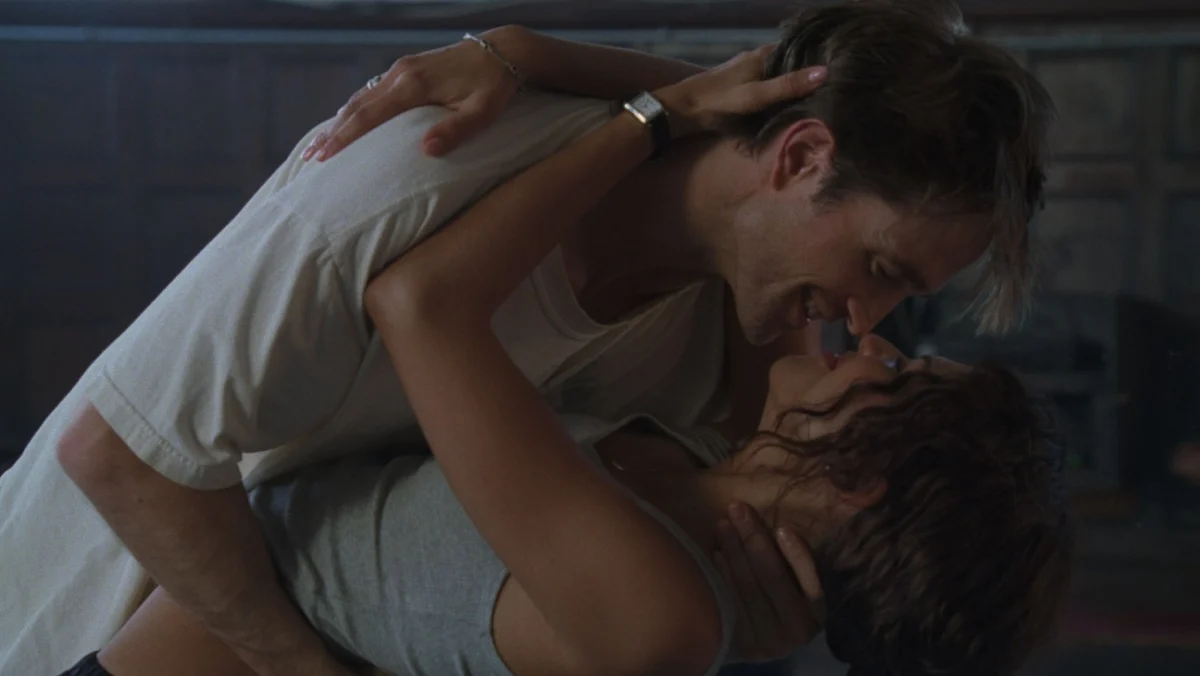
"The Drama" introduces audiences to Emma (Zendaya) and Charlie (Robert Pattinson), a couple embodying upscale bohemian-intellectual cool, deeply entrenched in a passionate romance. Their journey, punctuated by charming anecdotes of Charlie’s initial, fumbling attempts at courtship, is presented as a quintessential romantic success story. As the narrative opens, they stand on the precipice of marriage, with only minor logistical hurdles like finalizing the wedding reception menu and composing their vows remaining. The impending nuptials signify a finish line, a serene transition into a shared future, suggesting the rolling of end credits on their love story. This idyllic portrayal, however, serves as a deliberate setup for the disquieting narrative twists characteristic of Borgli’s cinematic universe.
The film’s initial scenes meticulously craft an atmosphere of pre-marital bliss, amplified by the couple’s chic Boston residence and their seemingly effortless rapport. This carefully constructed facade is central to Borgli’s method, often employed to highlight the inherent instability lurking beneath polished bourgeois lives. The choice of Boston, a city often associated with intellectualism and old-world charm, subtly reinforces the couple’s cultivated image, making their eventual descent into disarray all the more jarring.
Kristoffer Borgli’s Signature Style: Unsettling the Bourgeois
Kristoffer Borgli, known for his distinctive brand of uneasy, dark comedies, has carved a niche in contemporary cinema with his incisive explorations of identity, social anxiety, and the unraveling of conventional lives. His previous work, "Dream Scenario" (2023), starring Nicolas Cage, garnered significant attention for its surreal premise and biting satire on fame, public perception, and cancel culture. In "Dream Scenario," a mild-mannered professor inexplicably appears in everyone’s dreams, transforming him into an overnight sensation before a darker turn in his dream appearances leads to social ostracization. This film showcased Borgli’s talent for taking a high-concept premise and using it to probe the absurdities and anxieties of modern existence.
With "The Drama," Borgli appears to apply a similar methodology, albeit to the more intimate realm of personal relationships. The expectation for Borgli’s films is never a straightforward happily-ever-after; his narratives thrive on discomfort and the subversion of audience expectations. This directorial signature primes viewers for the inevitable disruption of Emma and Charlie’s seemingly perfect union, suggesting that their wedded bliss, if achieved at all, will be hard-won. Borgli’s penchant for dark humor often emerges from the juxtaposition of profound discomfort with mundane social interactions, a technique he reportedly deploys throughout "The Drama" to punctuate moments of awkwardness and embarrassment.
The Catalyst: A Party Game Gone Awry
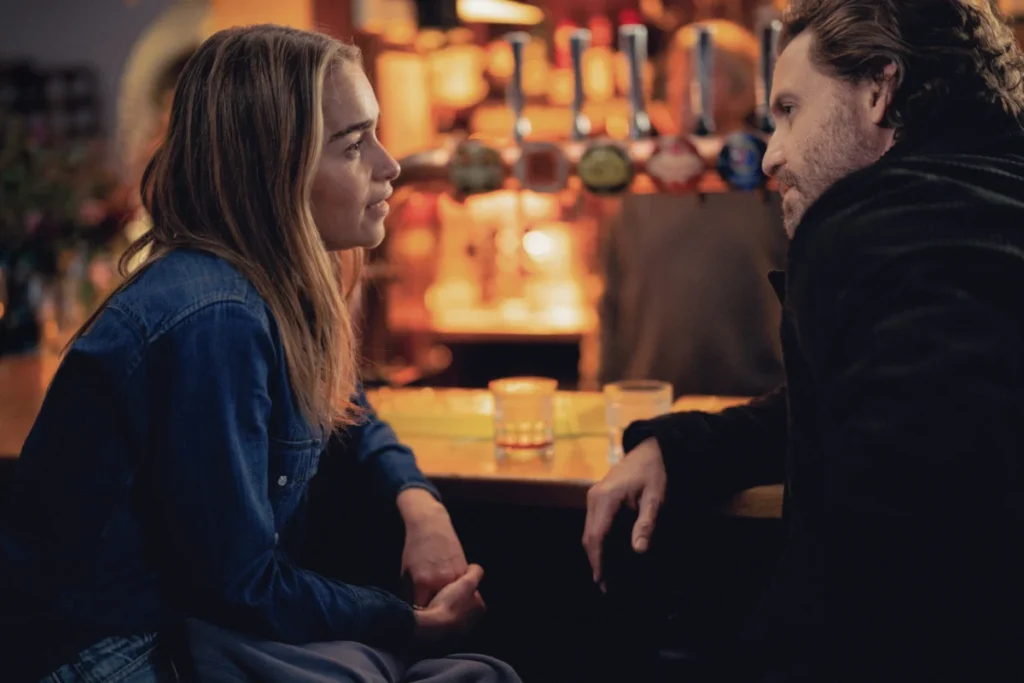
The turning point in "The Drama" arrives during a seemingly innocuous, if somewhat charged, party game. Emma and Charlie, indulging in their caterer’s skin-contact wine samples, host their best friends, Rachel (Alana Haim) and her husband Mike (Mamoudou Athie). Rachel, acting as the instigator, playfully coaxes the group into divulging the "worst thing" they’ve ever done. Her rationale is to foster deeper bonding and clear the air before Emma and Charlie take their marital plunge.
The initial confessions are relatively benign: Mike admits to a failure of chivalry, Rachel recounts a childhood act of cruelty, and Charlie reveals an anodyne internet misadventure. These disclosures, while minor, serve to build a false sense of security and intimacy within the group. The deliberate contrast with Emma’s subsequent revelation is crucial to the film’s dramatic structure. While the original review abstains from detailing the exact nature of Emma’s confession to avoid spoilers, it strongly suggests a disclosure of shocking proportions, hinting at a past self drastically different from the woman Charlie believes he knows. This moment is designed to be the film’s central bombshell, a narrative fulcrum around which the subsequent drama revolves.
Fallout and Fractured Perceptions
Emma’s revelation, hinted to involve a "threat of violence born of a troubled mind," sends shockwaves through the group. Charlie and Mike are reportedly "flabbergasted," while Rachel is "horrified." The film, from this point forward, primarily charts the fallout of this bombshell, focusing on Charlie’s escalating insecurity and profound doubts about his impending commitment. His perception of Emma shifts dramatically; she transforms from his quirky dream girl into a stranger possessed of "unfathomable grim secrets."
This narrative choice positions Charlie as the primary conduit for the audience’s experience, making his emotional journey central to the film. Pattinson’s portrayal of Charlie, a man working in the back office of an art museum in Cambridge—a detail suggesting a latent creative passion that the film reportedly leaves largely unexplored—is described as natural and appealing. He effectively embodies the "relatively normal guy" grappling with the sudden destabilization of his comfortable, preconceived life. The film leverages Charlie’s perspective as a "stand-in for us in the audience," inviting viewers into a "what-would-you-do" thought experiment as he navigates this unprecedented personal crisis.
Thematic Ambition Versus Narrative Execution
"The Drama" initially promises an "edgy, provocative look at how a relationship might weather the intrusion of a distinctly American pathology." This framing suggests an exploration of deeper societal anxieties, potentially linking personal trauma to broader cultural issues. However, a significant point of contention in critical reviews centers on the film’s perceived failure to fully deliver on this ambitious premise.
Despite its compelling setup, the film reportedly devolves into a "differently dressed rehash of very familiar material" – essentially a conventional story about pre-wedding jitters and cold feet, albeit stained with a veneer of "higher-minded, more piercing social inquiry." Critics argue that Emma’s specific disclosure, while shocking, ultimately becomes "weightless" as the story unfolds, reducing it to a programmatic plot device rather than a catalyst for profound thematic exploration. The film’s reluctance to delve deeply into the implications of Emma’s past, particularly concerning the nature of violence and its place in the American psyche, is highlighted as a missed opportunity. Borgli, as a Norwegian director interpreting an "American pathology," is critiqued for a "frustratingly simplistic, un-nuanced" approach to such a complex topic.
Character Depth and Performance Nuances
While Robert Pattinson’s performance as Charlie is lauded for its naturalism and relatability, the film’s characterization of Emma, despite Zendaya’s top billing and "delicate" portrayal, remains a point of critical discussion. Emma is described as a "cipher," a character whose profound impact on the narrative is not matched by an equally deep exploration of her inner world. This lack of detailed character development for Emma, coupled with the film’s programmatic feel, leads to a perception that Borgli prioritizes his "precious concept" over breathing individual life into his characters and the world they inhabit.
Zendaya, known for her versatile roles in "Euphoria," "Dune," and "Spider-Man: No Way Home," brings a compelling presence to Emma, but even her talents are seemingly constrained by the script’s limitations. The challenge for an actor in such a role is to convey depth and internal struggle when the narrative itself keeps the character at a certain remove. Similarly, Alana Haim and Mamoudou Athie, as the friends Rachel and Mike, play crucial roles in setting up the central conflict and observing its aftermath, contributing to the ensemble’s fluid comic timing that is noted as one of the film’s strengths.
Technical Craft and Aural/Visual Language
Despite the thematic and narrative critiques, "The Drama" is acknowledged for its strong technical merits. The film is described as "handsomely made," suggesting high production values in cinematography, set design, and overall aesthetic. The actors’ "fluid sense of the film’s comic timing" is praised, indicating strong directorial guidance in performance. Furthermore, Borgli and editor Joshua Raymond Lee are credited for "deft cuts that deftly punctuate a moment of incongruity or embarrassment," contributing to the film’s dark comedic sensibility.
The film’s runtime of 1 hour and 45 minutes, while standard, is noted as feeling heavier post-reveal. This suggests a pacing issue where the narrative struggles to maintain momentum, falling into a "plodding heaviness" rather than escalating the inherent drama. The potential for the film to delve deeper into either full comedy or profound drama is reportedly unfulfilled, leaving it "stuck in the mud of no man’s land."
Broader Implications and Industry Context
The casting of Zendaya and Robert Pattinson, two of Hollywood’s most prominent and bankable stars, naturally elevates "The Drama"’s profile. Their involvement signals a film with significant artistic ambition and commercial potential, drawing audiences who might not typically gravitate towards Borgli’s independent, darker fare. For both actors, choosing "The Drama" represents a continuation of their respective efforts to diversify their filmographies beyond blockbuster franchises, seeking roles that offer complex characters and collaborate with distinctive directorial voices. Pattinson, post-"Twilight," has notably carved a path through indie and arthouse cinema, while Zendaya consistently balances commercial hits with critically acclaimed dramatic roles.
However, the film’s mixed critical reception raises questions about the execution of high-concept premises in contemporary cinema. The critique that "The Drama" is "yet another example of a far too common occurrence: a kicky logline premise having no real structure behind it" points to a broader industry challenge. In an era where unique concepts are crucial for standing out, translating those concepts into fully realized, thematically resonant narratives remains a significant hurdle. For Kristoffer Borgli, following the critical success of "Dream Scenario," "The Drama" represents a crucial second feature under intense scrutiny. Its reception will undoubtedly influence his future projects and his standing as an international director with a unique voice.
Conclusion: A Promising Invitation, A Disappointing Soiree
"The Drama" arrives as a film with immense potential, bolstered by a captivating premise, strong directorial vision from Kristoffer Borgli, and compelling performances from its stellar cast. The initial setup of Emma and Charlie’s perfect Boston romance, shattered by a dark secret revealed during a party game, provides a fertile ground for exploring the complexities of identity, trust, and the true meaning of commitment.
Yet, despite these strengths, the film struggles to fully capitalize on its provocative foundation. Critics have observed that it ultimately retreats from its bolder thematic promises, settling instead for a more conventional narrative arc about pre-wedding jitters. The exploration of "American pathology" and the profound implications of Emma’s past are reportedly handled with a surprising lack of nuance, leaving audiences and critics wanting a deeper, more incisive interrogation of its central conflict. While technically proficient and featuring commendable acting, "The Drama" hovers uncomfortably between genres, failing to fully commit to either the satirical bite of a dark comedy or the emotional resonance of a profound drama.
The film, which premiered on Friday, April 3, with a runtime of 1 hour and 45 minutes, starring Zendaya, Robert Pattinson, Alana Haim, and Mamoudou Athie, ultimately leaves a lingering sense of unfulfilled potential. As one critic aptly summarized, it feels like a "great invite, shame about the party," offering a glimpse into a compelling narrative world that, in the end, doesn’t quite live up to its initial promise. Borgli’s latest endeavor serves as a poignant reminder of the inherent challenges in translating a brilliant concept into a fully realized cinematic experience that resonates with both intellectual depth and emotional impact.