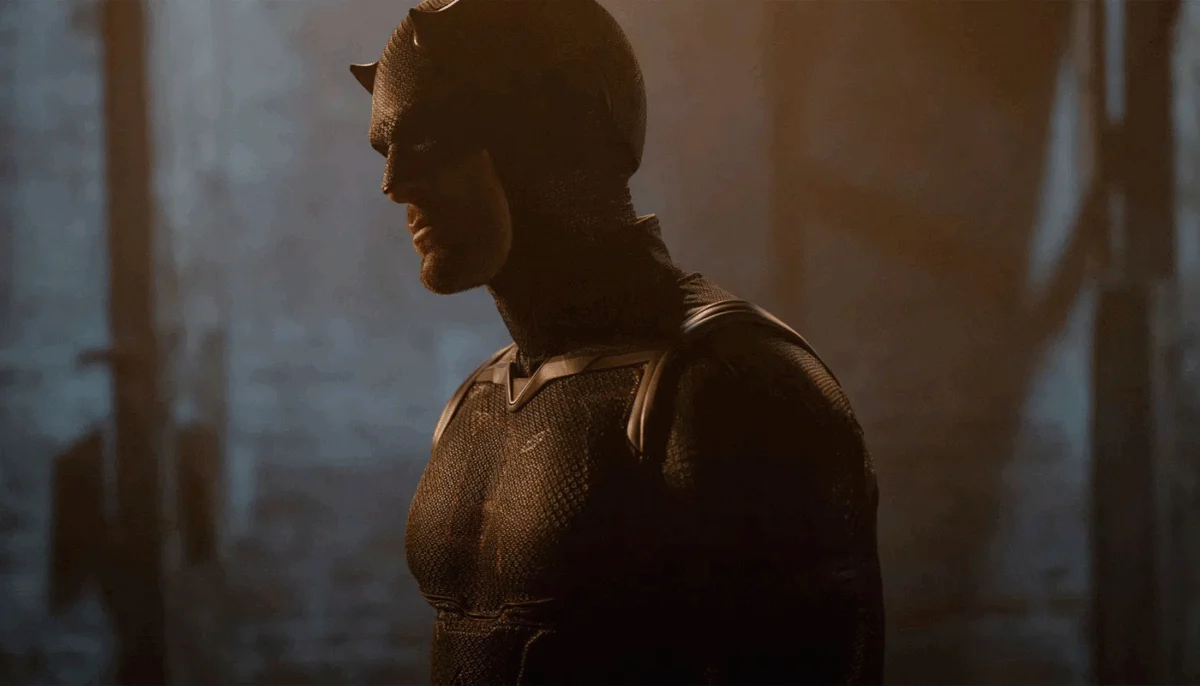
The latest installment of Daredevil: Born Again has arrived, delivering two episodes this week that delve deeper into the escalating conflict between Wilson Fisk’s burgeoning authoritarian regime and the fractured remnants of the city’s protectors. "Shoot the Moon," penned by Dario Scardapane and helmed by directors Aaron Moorhead and Justin Benson, and "The Scales & the Sword," written by Heather Bellson and directed by Solvan "Slick" Naim, present a narrative tapestry woven with both compelling action and frustrating narrative pacing. While certain sequences shine with the series’ characteristic grit and thematic depth, others suffer from a rushed execution and a curious lack of focus on its titular hero.
Fisk’s Grip Tightens: A City Under Siege
The two episodes effectively illustrate the pervasive reach of Wilson Fisk’s influence, showcasing his strategic manipulation of public perception and his ruthless suppression of any dissent. "Shoot the Moon" opens with a stark visual: Cherry being loaded into an ambulance as Daredevil observes from above, a scene that immediately establishes the collateral damage of Fisk’s machinations. This is underscored by the chilling return of Poindexter, whose unsettling church confession under a stark blue light signals his re-emergence as a key player, albeit one seemingly wrestling with his own demons.

Fisk’s control extends to the highest echelons of the city’s power structure. His interactions with his boxing coach, whose impending demise is a foregone conclusion given Fisk’s volatile nature, and his swift understanding of Bullseye’s involvement in the attack on the AVTF (anti-vigilante task force) thugs, highlight his acute awareness and ruthless efficiency. The violent confrontation with his coach, culminating in a shattering impact against a mirror wall, serves as a potent metaphor for the fractured state of the city and the violent reflection of Fisk’s own inner turmoil.
Meanwhile, Matt Murdock and Karen Page find themselves perpetually a step behind. Their attempt to aid Ariana is thwarted by the AVTF’s preemptive arrest, a recurring theme that emphasizes the protagonists’ struggle against an omnipresent and well-informed adversary. Fisk, advised by Buck, masterfully pivots to a public relations strategy, framing Matt Murdock as a hero who saved his life and has now been targeted by Bullseye. This narrative gambit floods the city with wanted posters of Matt, forcing Karen to spirit him away from Astoria, further highlighting their precarious existence and Fisk’s strategic foresight.
The Shadow of Bullseye and the Rise of a New Resistance
Bullseye’s presence looms large, marked by his chillingly efficient dispatch of AVTF thugs in a hospital scene. His theatrical appearance in a stained-glass lit church, followed by the gruesome execution of the thugs in an elevator, showcases his signature blend of psychopathy and deadly skill. The visual contrast between the stylized blue light of his perceived reality and the stark, grim aftermath in the elevator serves as a powerful commentary on his fractured psyche.

The episodes also introduce the concept of an organized resistance, albeit one struggling to gain traction. A BB Report featuring a citizen questioning the "Resistance" and praising the perceived improvements under Fisk’s rule, juxtaposed with another masked "Phisk" resistance video, illustrates the propaganda war being waged. Fisk’s meeting with Powell, promising Matt Murdock and Daredevil’s head, underscores the high stakes and the unwavering determination of the city’s new kingpin.
The bodega incident, where Angela del Toro and her Tia Soledad are caught in the crossfire of AVTF brutality, serves as a microcosm of the city’s descent. The casual violence of the AVTF, their arbitrary arrests, and the passive observation of bystanders, paint a grim picture of societal decay. This event directly leads to Angela receiving Hector Ayala’s White Tiger suit and talisman from Kristen McDuffie, signaling the emergence of a new potential hero.
"The Scales & the Sword": Trials, Tribulations, and Shifting Alliances
"The Scales & the Sword" shifts focus to the legal and political machinations orchestrated by Fisk. Kristen McDuffie, grappling with the moral implications of vigilante justice and Matt Murdock’s perceived deception, finds herself entangled in the trial of Duquesne. Her escort by Powell through the grim corridors of the holding facility highlights the oppressive atmosphere. Duquesne, portrayed as an intelligent and composed figure, articulates the underlying motive behind his trial: Fisk’s desire to seize his criminal assets through a politically motivated conviction. The scene, underscored by the distant screams of other prisoners, evokes a chilling parallel to the authoritarian tactics seen in historical regimes.

Karen Page, meanwhile, crafts an "unhinged red thread conspiracy wall," a visual representation of her desperate search for answers and her increasing embrace of more extreme methods. Her comparisons of Matt to Frank Castle and her internal struggle with Foggy’s memory reveal the profound psychological toll of their fight. The debate between Karen and Matt regarding lethal versus non-lethal force continues to be a central thematic conflict, highlighting their differing approaches to achieving justice.
The trial of Duquesne itself is presented as a travesty of justice, a political spectacle rather than a genuine legal proceeding. The three judges, one visibly distressed and two older men making disparaging remarks, underscore the lack of impartiality. BB’s presence among the press, exhibiting overt emotional distress, raises questions about her allegiances. Duquesne’s ironic commentary and composed demeanor throughout the proceedings suggest a man aware of the game being played. The broadcast of the trial to the public, seen by Fisk, Karen, and Matt, signifies Fisk’s intent to control the narrative and garner public support.
The Prison Break: A Glimpse of Daredevil’s Prowess and Narrative Stumbles
The prison break sequence, a pivotal event, unfortunately suffers from a rushed execution. While Daredevil’s infiltration of the vigilante holding facility is a significant plot point, the show telegraphs this event too early, diminishing the suspense. The ease with which Daredevil navigates the facility, overcoming minimal resistance, undercuts the perceived threat of Fisk’s security apparatus. The intercutting of his infiltration with Kristen’s recounting of her experience further fragments the narrative, preventing the action from landing with its full impact.

The discovery of a room full of caged prisoners, a stark depiction of suffering, is presented with a surprising lack of sensory detail. The absence of visceral descriptions of the prisoners’ condition—the filth, the wounds, the despair—detracts from the emotional weight of their plight. Duquesne’s pristine appearance and Matt and Karen’s seemingly stable living situation behind a Hell’s Kitchen bar raise questions about the practical realities of their resistance.
The escape itself, while featuring some action, feels somewhat disorganized. The sudden reappearance of Angela del Toro, now equipped with the White Tiger suit and supplies, feels convenient rather than earned. The near-absence of substantial opposition during the escape and the hurried departure of the prisoners, including Soledad who prioritizes a reunion over immediate evacuation, leave the audience questioning the effectiveness of Fisk’s security and the logical coherence of the sequence. The subsequent explosion of a ship on the East River, with Fisk implying the escaped prisoners are to blame, sets a dangerous precedent for future propaganda, further demonizing those seeking freedom.
Analysis of Implications and Remaining Questions
The dual episodes of Daredevil: Born Again have successfully established Fisk’s iron grip on New York City, showcasing his mastery of both brute force and psychological manipulation. The introduction of the "Phisk" videos and the public trial of Duquesne highlight Fisk’s strategic use of media to control public perception and consolidate power. The narrative is effectively building towards a larger confrontation, with Daredevil and his allies operating under extreme duress.

However, the pacing and focus of these episodes raise significant questions. The lack of sustained focus on Daredevil himself, with significant screen time dedicated to subplots and supporting characters, dilutes the impact of the series’ central protagonist. Furthermore, the show’s reluctance to delve into the visceral realities of the resistance movement, opting for more aestheticized trauma, undermines the gravity of their struggle. The cost of resistance, both physically and psychologically, needs to be more fully explored to resonate with the audience.
The effectiveness of the "Resistance" as a credible force is also in question. While they demonstrate moments of courage and resourcefulness, their actions often appear reactive rather than proactive, constantly playing catch-up to Fisk’s machinations. The introduction of new vigilantes like Angela del Toro, while promising, requires more development and integration into the core narrative to feel impactful.
The episodes leave several threads dangling: the true allegiance of BB, the extent of Fisk’s control over law enforcement and political figures, and the long-term consequences of the prison break. The burning of the ship, a clear act of retribution by Fisk, will undoubtedly be used to further vilify the escaped prisoners and strengthen his narrative control over the city. The upcoming episodes will need to address these narrative shortcomings and capitalize on the established stakes to deliver a truly compelling conclusion to this arc. The series’ success hinges on its ability to balance its ambitious thematic explorations with a clear and focused narrative centered on its iconic hero.