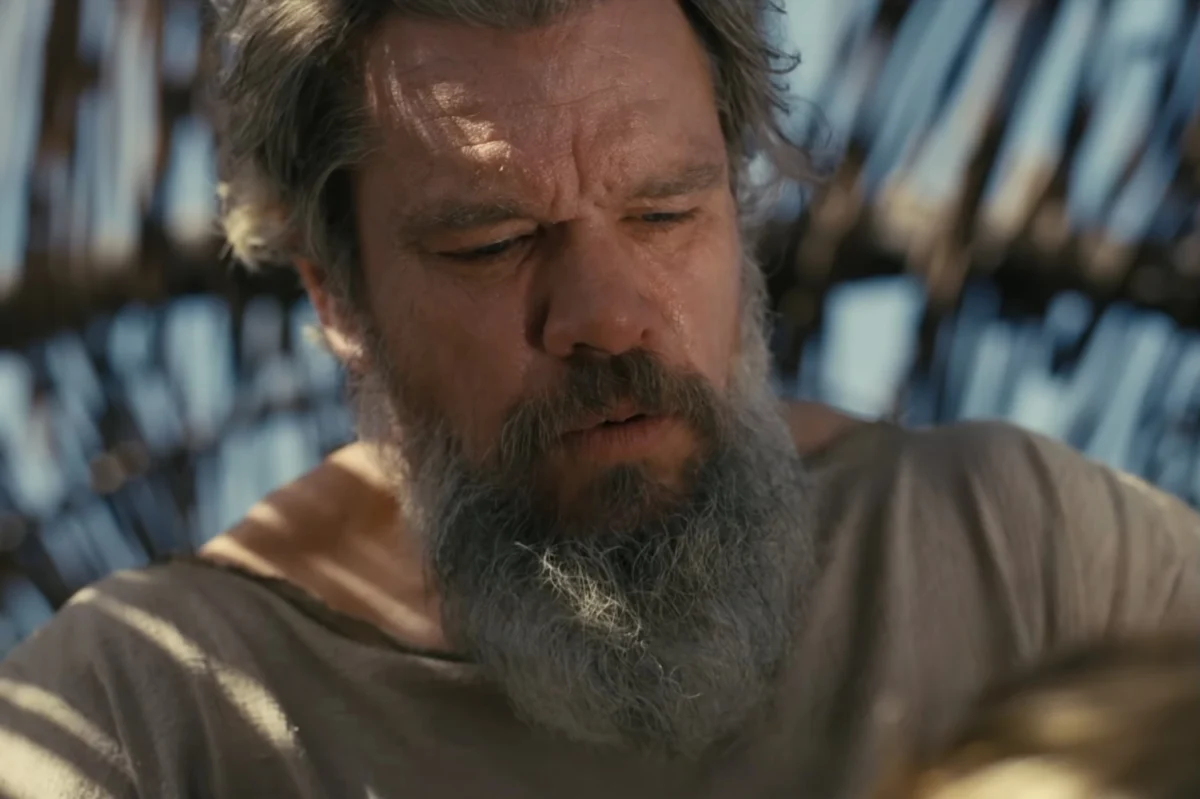
The highly anticipated trailer for Christopher Nolan’s adaptation of Homer’s epic poem, The Odyssey, has been released, offering a glimpse into a visually ambitious reimagining of the ancient Greek tale. While the trailer has sparked considerable excitement among cinephiles and classical literature enthusiasts, it has also ignited a nuanced discussion surrounding its distinctive visual aesthetic and narrative choices, particularly its deliberate use of subdued lighting in key sequences. The film, slated for a July 17 release and shot entirely on IMAX cameras, promises a grand-scale cinematic experience, transporting audiences to the perilous world of Odysseus as he strives to return home after the arduous Trojan War.
A Visual Palette: The Nuances of Nolan’s Darkness
One of the most striking aspects of the trailer is Nolan’s commitment to allowing night scenes to retain their natural darkness, a directorial choice that aligns with historical accuracy, acknowledging that ancient civilizations did not possess the pervasive electric illumination of modern times. This dedication to verisimilitude is commendable, aiming to ground the fantastical elements of The Odyssey in a tangible reality. However, the trailer also reveals extended sequences bathed in a predominantly yellow, dimly lit aesthetic, a choice that has raised questions about its impact on storytelling and viewer engagement.
Filmmaking, at its core, is a series of deliberate choices, and the decision to render significant narrative moments in a muted, yellow-tinged darkness presents a specific artistic vision. While this approach might be intended to evoke a specific mood or historical atmosphere, its pervasiveness in purportedly crucial story beats has led to debate. Critics and viewers alike are evaluating whether this stylistic decision enhances or detracts from the emotional resonance and clarity of the unfolding events.
Conversely, the trailer’s transition to daylight scenes consistently amplifies the sense of epic scope and visual grandeur. Moments such as Odysseus alone on a sun-drenched beach, or a seemingly casual yet significant conversation between Odysseus, portrayed by Matt Damon, and Circe, played by Charlize Theron, are rendered with striking clarity and allure. The depiction of Odysseus and his men confronting formidable adversaries, clad in imposing armor, is particularly impactful, showcasing the film’s potential for visually stunning action sequences. These brighter, more dynamic scenes suggest that Nolan is leveraging the full spectrum of visual storytelling to convey the varied emotional and physical challenges faced by the protagonist.
Expanding the Epic Narrative: New Glimpses of Homer’s World
This latest trailer provides a more comprehensive look at the iconic elements of Homer’s epic. Audiences are treated to glimpses of the treacherous whirlpool, a manifestation of the divine wrath or natural fury Odysseus must overcome. The terrifying visage of the cyclops, a formidable monster that tested Odysseus’s cunning, is also hinted at, promising a confrontation that will undoubtedly be a cornerstone of the film’s action.
A particularly intriguing and potentially contentious addition is the inclusion of Robert Pattinson in a role that appears to be a suitor vying for the hand of Penelope, portrayed by Anne Hathaway. His character is depicted in a manner suggesting an assertive, perhaps even aggressive, claim to Penelope and the throne of Ithaca, regardless of her wishes or the presence of her son, Telemachus, played by Tom Holland. This interpretation of the suitors’ motivations and the political landscape of Ithaca adds another layer to the narrative, focusing on the domestic and political turmoil that mirrors Odysseus’s external struggles.
The ensemble cast is further enriched with the confirmed appearances of John Leguizamo as Eumaeus, a loyal swineherd who plays a crucial role in Odysseus’s eventual return and restoration to power, and Jon Bernthal as Menelaus, the king of Sparta and brother of Agamemnon, whose experiences at Troy are intertwined with Odysseus’s own. The extensive roster of talent also includes Lupita Nyong’o, Zendaya, Benny Safdie, Himesh Patel, Will Yun Lee, Mia Goth, Jimmy Gonzales, Elliot Page, and Jovan Adepo, suggesting a sprawling cast capable of embodying the numerous characters that populate The Odyssey.
The Enduring Power of The Odyssey: A Timeless Tale of Perseverance
As is widely known, The Odyssey chronicles the decade-long, arduous journey of Odysseus, the king of Ithaca, as he attempts to return to his wife, Penelope, and his kingdom following the conclusion of the Trojan War. The epic poem itself is a testament to the enduring human spirit, depicting a hero’s resilience against overwhelming odds. The Trojan War, a conflict that lasted ten years, was merely the prelude to Odysseus’s even more prolonged and perilous voyage home. This journey is fraught with supernatural encounters, divine interventions, and monstrous challenges, serving as a powerful allegory for life’s own unpredictable trials.
Simultaneously, in Ithaca, a desperate situation unfolds. While Odysseus is absent, a throng of persistent suitors, driven by ambition and greed, converge upon his palace, seeking to marry Penelope and usurp his throne. This domestic crisis creates a parallel narrative of vulnerability and impending loss, amplifying the stakes of Odysseus’s return. The poem, therefore, masterfully weaves together themes of heroism, loyalty, divine justice, and the fundamental human desire for home and family. The implication is clear: during Odysseus’s absence, no one in Ithaca is experiencing tranquility, a stark contrast to the potential motivations of the more aggressive suitors, such as the character portrayed by Robert Pattinson.
IMAX Immersion: A Vision for Grand Scale Viewing
The decision by Christopher Nolan to shoot The Odyssey entirely on IMAX cameras underscores a clear intention for the film to be experienced on the largest possible screen. IMAX technology, renowned for its immersive quality and breathtaking visual fidelity, is designed to envelop the viewer, offering a scale and detail that standard cinema formats cannot replicate. This approach suggests that the film’s visual artistry, from its sweeping landscapes to its intimate character moments, is meticulously crafted to be appreciated in a communal, theatrical setting, rather than diminished on smaller, personal devices.
The trailer’s visual cues, particularly the contrast between the dimly lit and brightly illuminated scenes, are likely amplified in their impact when viewed in the expansive IMAX format. This technical choice aims to maximize the audience’s sensory engagement, allowing them to fully appreciate the meticulously crafted world and the emotional weight of Odysseus’s journey.
Historical Context and Nolan’s Cinematic Legacy
Christopher Nolan has established a reputation for tackling complex narratives and pushing the boundaries of cinematic technology. His previous works, such as Inception, Interstellar, and Dunkirk, are characterized by ambitious scope, intricate storytelling, and a pioneering use of IMAX cinematography. This adaptation of The Odyssey marks a significant departure into the realm of ancient mythology, a genre he has not extensively explored before.
Homer’s The Odyssey is not merely a story; it is a foundational text of Western literature, shaping storytelling conventions for millennia. The epic poem, believed to have been composed in the 8th century BCE, has been a subject of countless interpretations across various art forms. Nolan’s approach, therefore, enters a long tradition of adapting and reinterpreting this timeless narrative. His decision to ground the visual experience in a more historically plausible depiction of ancient lighting conditions, while simultaneously employing cutting-edge IMAX technology, signifies a desire to offer a fresh perspective that is both aesthetically bold and thematically resonant.
The Trojan War, the backdrop against which The Odyssey begins, was a conflict shrouded in myth and legend, but also believed by many to have historical roots in the Late Bronze Age. The protracted siege of Troy, as depicted in Homer’s Iliad, set the stage for the epic journeys and struggles of the Greek heroes, with Odysseus’s return being the most celebrated and enduring of these tales. The poem’s narrative spans ten years of perilous travel for Odysseus, encountering mythical creatures like the Sirens, Scylla and Charybdis, and the sorceress Circe, while also dealing with the wrath of Poseidon and the temptation of the Lotus-Eaters.
Broader Implications and Audience Expectations
The release of the trailer for Nolan’s Odyssey has significant implications for the film industry and for audiences. It signals a continued investment in large-scale, visually spectacular filmmaking, particularly within the IMAX format. The film’s success could further embolden studios to greenlight ambitious projects that prioritize cinematic immersion and artistic vision.
For fans of classical literature, the adaptation represents an opportunity to re-engage with a foundational text in a dynamic, modern cinematic language. The cast’s impressive caliber, coupled with Nolan’s directorial prowess, sets a high bar for audience expectations. The debate surrounding the film’s visual style, while ongoing, also suggests a heightened level of critical engagement with the artistic choices being made, indicating a sophisticated audience that is invested in the nuances of cinematic storytelling.
The film’s July 17 release date places it in a competitive summer movie season, but its unique premise and renowned director position it as a potential standout. As audiences prepare to embark on Odysseus’s legendary journey, the visual choices made by Christopher Nolan will undoubtedly be a focal point of discussion, contributing to the ongoing dialogue about how classic narratives can be reinterpreted for a contemporary cinematic landscape. The promise of an epic, visually arresting, and thematically rich adaptation of The Odyssey continues to captivate, inviting viewers to witness a tale as old as time unfold on a scale never before imagined.