A New Vision for a Classic Legend
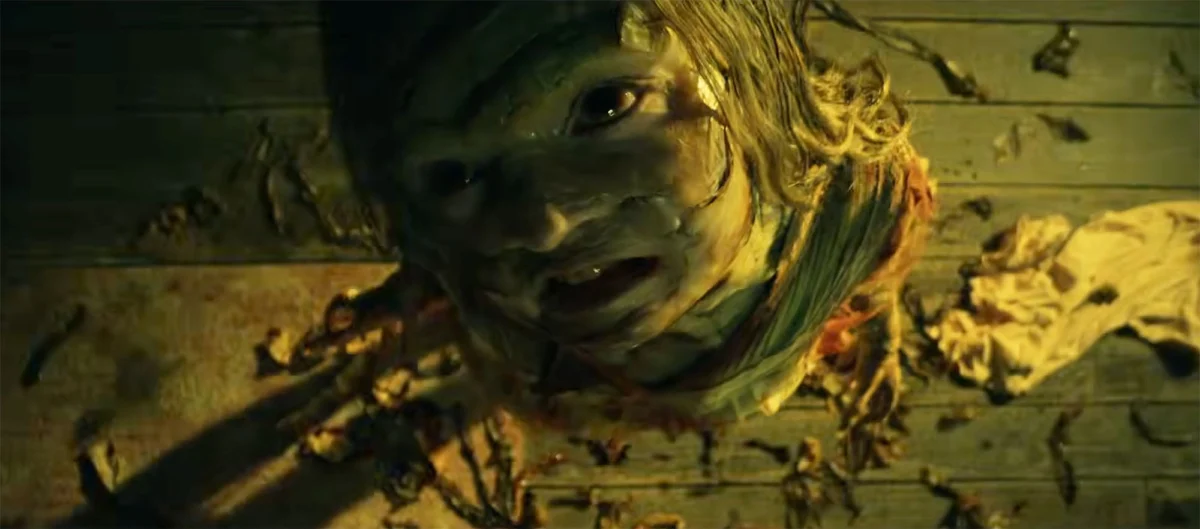
The narrative of Lee Cronin’s The Mummy diverges sharply from the adventure-focused iterations popularized by the Stephen Sommers films of the late 1990s or the action-heavy 2017 attempt at a "Dark Universe." Instead, Cronin appears to be leaning into the visceral, body-horror elements that defined his previous work. The story centers on a journalist whose young daughter, Katie, disappears into the desert without a trace. The plot picks up eight years after the initial disappearance, when the family—still reeling from the unresolved trauma—is suddenly reunited with the girl. However, the joy of her return is immediately eclipsed by the realization that she has been transformed into a "freaky mummy," a biological anomaly that remains inexplicably alive despite her state of physical decay.
The promotional material emphasizes a tone of "utter depravity," with early reactions to the trailer suggesting a "gross-out" horror experience that favors practical effects and unsettling transformations. By framing the story as a family drama turned nightmare, the production team aims to evoke the psychological dread of Pet Sematary while maintaining the high-octane gore associated with the Evil Dead franchise.
Production Pedigree and Creative Leadership
The involvement of Lee Cronin as both writer and director serves as the primary creative engine for the project. Cronin first gained international attention with the 2019 Irish horror film The Hole in the Ground, but it was his work on Evil Dead Rise that solidified his status as a premiere genre filmmaker. That film, which moved the Deadite possession to a Los Angeles apartment building, earned over $147 million at the global box office against a modest production budget, proving Cronin’s ability to modernize established intellectual properties for a contemporary audience.
The production is further bolstered by the "Titans of Terror" pairing of James Wan and Jason Blum. Following the formal merger of their respective companies, Atomic Monster and Blumhouse, the duo has sought to consolidate their influence over the horror market. While Blumhouse is known for its high-efficiency, low-cost production model, the collaboration with Warner Bros. and the inclusion of IMAX-formatted releases suggest that The Mummy is being positioned as a tentpole event for the 2026 spring season.

Cast and Ensemble Performance Expectations
The film features a diverse cast led by Jack Reynor and May Calamawy. Reynor, known for his roles in Midsommar and The Peripheral, brings a history of navigating complex, high-concept horror and science fiction. May Calamawy, who saw a breakout performance in Marvel’s Moon Knight, is expected to play a pivotal role in the emotional core of the film, likely portraying the mother or a close relative of the returned child.
The supporting cast includes Laia Costa, Natalie Grace, Verónica Falcón, and Emily Mitchell. Falcón, a veteran actress known for Queen of the South and Ozark, often brings a commanding presence to her roles, which may serve as a grounding force against the film’s supernatural elements. The casting of Emily Mitchell, presumably as the younger or returned version of Katie, suggests a focus on the "uncanny child" trope, a staple of horror that Cronin previously explored in The Hole in the Ground.
Chronology of Development and Marketing
The development of Lee Cronin’s The Mummy followed a rapid trajectory following the release of Evil Dead Rise. Warner Bros. secured the rights to Cronin’s next project in late 2024, with filming reportedly taking place throughout 2025 in various desert locations to provide the necessary atmospheric backdrop for the story’s central mystery.
- April 2024: Initial rumors of Cronin’s involvement in a "classic monster" project surfaced.
- Late 2024: Warner Bros. and Blumhouse officially greenlit the project under the working title The Resurrected.
- 2025: Principal photography commenced, utilizing a mix of location shooting and studio sets for the film’s elaborate gore sequences.
- January 2026: The first "First Look" teaser was released, establishing the desert setting and the "missing child" hook.
- March 2026: A full-length trailer debuted, showcasing the film’s practical makeup effects and the transformation of the Katie character.
- April 1, 2026: The "Tickets On Sale" promo and IMAX poster were unveiled, signaling the final three-week countdown to the theatrical premiere.
Supporting Data and Industry Context
The decision to release a major horror title in mid-April reflects a shifting trend in theatrical scheduling. Traditionally, horror films were reserved for the "spooky season" of October or the late-summer doldrums. However, the success of titles like A Quiet Place and Evil Dead Rise has proven that the spring window—specifically the period following the Easter holiday—is a fertile ground for R-rated genre fare.
From a data perspective, the horror genre remains one of the most reliable sectors of the film industry. In 2023 and 2024, horror films consistently over-indexed in terms of Return on Investment (ROI). By leveraging an established brand like The Mummy, Warner Bros. and Blumhouse are mitigating the risks associated with original horror, while Cronin’s "disgusting and depraved" aesthetic serves to differentiate the film from more sanitized, PG-13 monster movies. The inclusion of IMAX screenings further indicates a desire to capture a premium ticket price, a strategy usually reserved for high-budget action spectacles.

Analysis of Implications
The release of Lee Cronin’s The Mummy has broader implications for how classic movie monsters are handled in the modern era. For decades, these characters were the exclusive domain of Universal Pictures. However, the expiration of certain copyright elements and the move toward creator-driven "reimaginings" have allowed other studios to experiment with these archetypes.
By stripping away the "mummy" from its traditional Egyptian tomb setting and placing it within a contemporary desert-missing-person narrative, Cronin is attempting to strip the character of its campy associations. This "grounded" approach to the supernatural mirrors the successful path taken by Leigh Whannell’s The Invisible Man (2020), which reframed a classic monster as a metaphor for domestic abuse and gaslighting. If The Mummy succeeds, it may encourage further collaborations between major studios and independent horror auteurs to strip-mine classic tropes for more visceral, psychological explorations.
Official Responses and Anticipation
While official statements from the cast have been kept behind standard non-disclosure agreements regarding specific plot twists, Lee Cronin has been vocal on social media and in brief interviews about his desire to "scare the bejesus out of everyone." Production notes from Blumhouse emphasize that this is not a film for the faint of heart, specifically highlighting the "Evil Dead-esque" gore that has become Cronin’s signature.
Early tracking for the film suggests a strong opening weekend, particularly among the 18-34 demographic that has traditionally supported Blumhouse releases. The "Tickets On Sale" announcement has already generated significant traction on social media platforms, with the IMAX poster—featuring a haunting, sand-blasted aesthetic—receiving praise for its departure from traditional "floating head" movie marketing.
As the April 17th release date approaches, the industry will be watching closely to see if Cronin can achieve a "two-for-two" streak in revitalizing legendary horror properties. If the film delivers on its promise of being a "living nightmare," it could set a new standard for how the "Mummy" character is perceived by future generations of horror fans, moving it firmly out of the realm of adventure and back into the darkness of pure, unadulterated terror.