Ninety years after its last legal screening in January 1936, the infamous and controversial 1932 MGM film Letty Lynton, starring Hollywood icon Joan Crawford, is set to make a triumphant return to the public eye. This cinematic resurrection, facilitated by the efforts of Crawford’s grandson, Casey LaLonde, promises to reintroduce audiences to a film that once pushed the boundaries of decency and ignited a firestorm of legal and social controversy. Letty Lynton tells the compelling narrative of a Manhattan socialite entangled in a dangerous triangle with her fiancé and a vengeful ex-lover, a story that proved to be a significant box-office success, albeit one that left critics perplexed by its audacious themes and its ability to circumvent the stringent censorship of the era.
The Shadow of the Hays Code and Creative Endeavor
The genesis of Letty Lynton is deeply intertwined with the prevailing moral climate of Hollywood during its Golden Age, particularly the pervasive influence of the Hays Code, officially known as the Motion Picture Production Code. This set of industry self-regulation guidelines, established in 1930 and rigorously enforced from 1934 onwards, dictated what was permissible in American films, strictly prohibiting depictions of explicit sexuality, excessive violence, and morally ambiguous characters.
MGM initially sought to adapt the Broadway hit Dishonored Lady, a play by Edward Sheldon and Margaret Ayer Barnes that had captivated audiences in 1930. However, the play’s mature themes—explicitly referencing alcohol, drugs, and sexual relationships—had already placed it firmly on the Hays Office’s blacklist, rendering it “unfit for motion picture adaptation.” The studio’s pursuit of this material was further thwarted when the authors demanded a hefty $30,000 for the rights, a price point that, combined with the Hays Office’s unwavering stance against a story depicting a woman deemed a “nymphomaniac,” proved insurmountable.
Undeterred, MGM pivoted, acquiring the rights to Marie Belloc Lowndes’ novel Letty Lynton for a comparatively modest $3,500. This literary source, much like Dishonored Lady, drew inspiration from a sensational real-life case that had captivated Victorian England: the trial of Madeleine Smith in 1857. Smith, a Scottish socialite, stood accused of poisoning her lover, Pierre Émile L’Angelier, with arsenic. The prosecution alleged that Smith, fearing exposure of their illicit affair through love letters she had penned, resorted to murder to protect her impending marriage to a respectable gentleman. This historical drama provided fertile ground for a cinematic exploration of forbidden desires and deadly consequences, themes that would resonate powerfully with audiences of the early 1930s.

Joan Crawford’s Audacious Portrayal and Artistic Freedom
The task of bringing Letty Lynton to the screen fell to director Clarence Brown, a filmmaker with whom Joan Crawford shared a fruitful and collaborative working relationship. Crawford, then a burgeoning star at MGM, embraced the role of the glamorous and morally complex protagonist. She later recounted her deep satisfaction with the material, describing it as “one hell of a story and script and character I could really get to grips with, thanks to Clarence Brown.” Brown’s previous collaborations with Crawford on films like Possessed (1931) and Chained (1934) had established a rapport that allowed for nuanced performances.
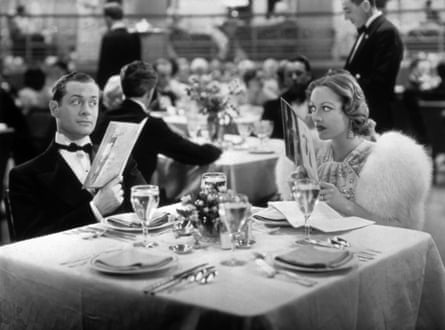
While Crawford reportedly had reservations about her leading man, Robert Montgomery, her on-screen chemistry with Nils Asther, who portrayed her jilted lover, was undeniable. Their interactions generated a palpable tension that became a hallmark of the film, presenting the censors with their most significant challenges. A particularly striking scene depicts Crawford’s character coldly observing her former lover as he drinks poisoned champagne, a moment that underscored the film’s daring exploration of darker psychological territory. Throughout her career, Crawford cultivated an image of a woman unafraid to tackle challenging roles. Her candid admission in a 1973 interview, “I love playing bitches,” reflected a broader understanding of human nature: “There’s a lot of bitch in every woman — a lot in every man.” This willingness to embody complex, often unsympathetic characters cemented her status as a cinematic icon capable of pushing artistic boundaries.
Legal Repercussions and the Plagiarism Lawsuit
The film’s release, however, was not without its immediate fallout. Within a month of Letty Lynton premiering, Sheldon and Barnes initiated legal proceedings against MGM, alleging plagiarism. They contended that the film was a direct adaptation of their play, Dishonored Lady, and not the novel Letty Lynton. This legal battle proved protracted and arduous, with MGM vigorously defending its creative choices. The dispute escalated when the playwrights began seeking to recoup profits from theaters that had screened the film. Faced with mounting legal costs and the potential erosion of its revenue streams, MGM made the significant decision to withdraw Letty Lynton from circulation in 1937. This withdrawal effectively relegated the film to obscurity for decades, a casualty of its own provocative narrative and the legal ramifications it engendered.
The year following the film’s withdrawal, 1938, saw Joan Crawford herself famously branded as “box office poison,” a label that threatened to derail her career. Yet, both Crawford and the film Letty Lynton would, in time, prove resilient, their stories continuing to unfold beyond this period of enforced silence.
Fashion’s Enduring Fascination: The Letty Lynton Dress
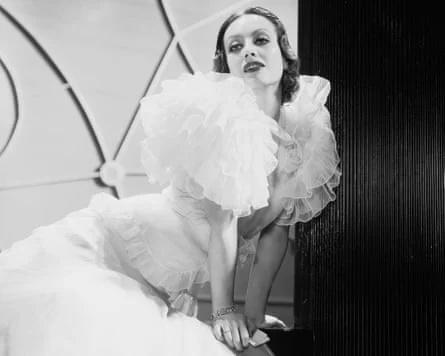
Even as Letty Lynton vanished from public view, its influence persisted, particularly within the realm of fashion. The film’s Art Deco aesthetic and Crawford’s sophisticated portrayal contributed to a significant sartorial trend. A particular costume, designed by the legendary Adrian, captured the imagination of audiences: a striking white organdy dress characterized by its voluminous, frilled sleeves. This iconic design was swiftly replicated by Macy’s department store in a more accessible version, leading to its widespread adoption and immense popularity.
The "puffed and embellished sleeve" became an immediate fashion sensation. British Vogue documented the fervent desire among women to emulate Crawford’s style, reporting on those who “felt they would die if they couldn’t have a dress like that. With the result that the country was flooded with little Joan Crawfords.” The impact of this single garment was so profound that acclaimed Hollywood costume designer Edith Head later declared the Letty Lynton dress to be cinema’s most significant contribution to fashion. This trend continued to dominate the fashion landscape even as the legal disputes surrounding the film’s origins raged in the courts, a testament to the potent cultural force of Hollywood imagery.
Legacies and Later Adaptations
The narrative of Madeleine Smith, the real-life inspiration for Letty Lynton, also continued to inspire creative endeavors. Producer Hunt Stromberg, who had been involved with Letty Lynton, eventually acquired the rights to the play Dishonored Lady. He later produced a film adaptation of the same name in 1947, starring Hedy Lamarr in the lead role. For British audiences, the original case was perhaps most vividly recalled through Madeleine, the acclaimed 1950 gaslight noir directed by David Lean and starring his then-wife, Ann Todd. This film adhered more closely to the historical facts of the Smith case, offering a stark contrast to the melodramatic interpretations seen in the Hollywood adaptations.
The Path to Rediscovery: A Grandson’s Dedication
The resurgence of Letty Lynton is largely attributable to the dedicated efforts of Joan Crawford’s grandson, Casey LaLonde. In a heartfelt Instagram post, LaLonde shared his long-held secret and his excitement at finally being able to announce the film’s imminent return: “I have been keeping this secret for months, so it is wonderful to share the news with Joan fans around the world.”
LaLonde’s advocacy gained traction as the copyright on the play Dishonored Lady was set to expire on December 31, 2025. He astutely argued that this expiration would pave the way for the legal exhibition of the film. Warner Bros., the current custodian of numerous MGM films produced before 1986, has undertaken a meticulous 4K restoration of Letty Lynton. This significant undertaking ensures that the film will be presented with enhanced visual and auditory quality, honoring its historical importance.
The film’s premiere after a 90-year hiatus will take place at the TCM Film Festival in Los Angeles, a fitting venue for a cinematic rediscovery of such magnitude. Furthermore, Letty Lynton is slated for release on Blu-ray and DVD, making it accessible to a new generation of film enthusiasts and devoted fans of Joan Crawford. LaLonde expressed profound gratitude to Warner Bros. and its library historian, George Feltenstein, acknowledging their pivotal role in this endeavor. “Without them, we wouldn’t have this fabulous film to see again on big and small screens,” he stated, emphasizing the collaborative spirit that brought this lost cinematic treasure back to life. The reappearance of Letty Lynton is not merely the screening of an old film; it is a significant event in film history, offering a rare glimpse into the artistic daring and cultural complexities of early Hollywood, and a testament to the enduring power of cinematic legacy.