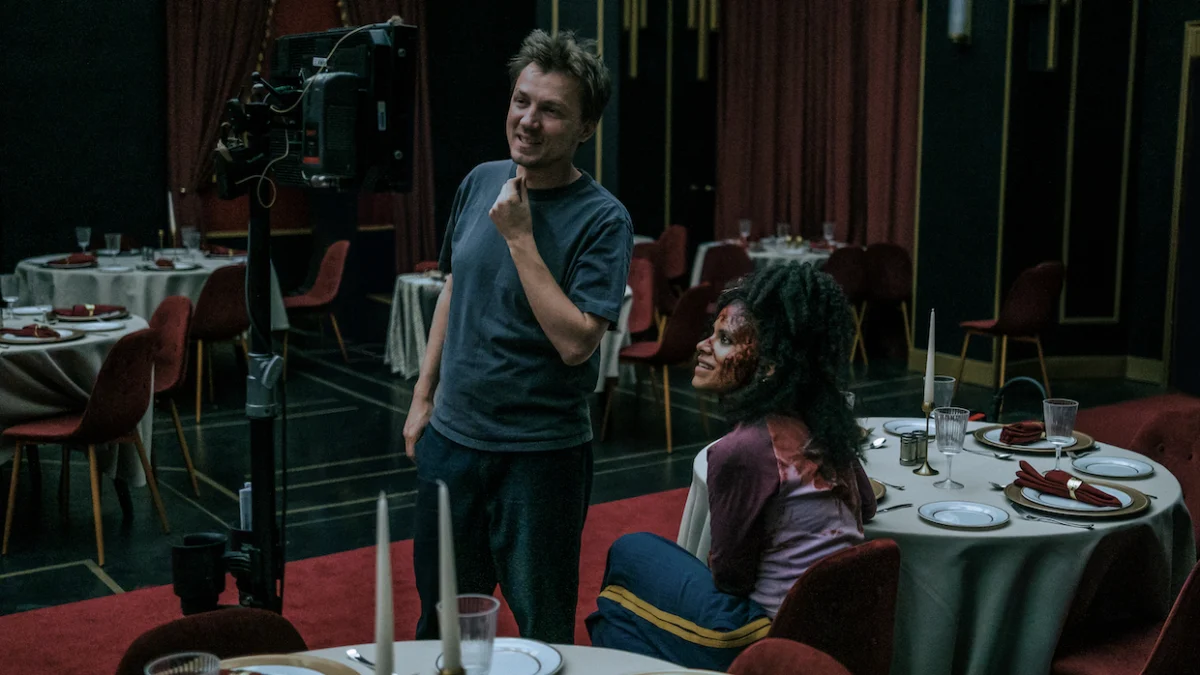
The 2026 SXSW Film Festival concluded with a resonant premiere at Austin’s historic Paramount Theatre, as director Kirill Sokolov unveiled his ambitious new film, They Will Kill You. The closing night event, typically a brief affair of acknowledgements and thanks, transformed into a deeply personal and expansive moment for Sokolov, who held multiple pages detailing every collaborator he wished to honor. His impassioned address preceded the screening of his bloody action-horror mashup, a narrative centered on Zazie Beetz’s character, Asia, as she fights her way through a perilous, labyrinthine New York apartment building inhabited by a cult of the ultra-wealthy, all while desperately searching for her sister, Maria. This significant moment for Sokolov arrived after years of relentless effort and a profound personal journey, including his departure from Russia following his outspoken opposition to the war in Ukraine.
A Director’s Defiance and a New Beginning
Sokolov’s public stance against the war, as reported by The New York Times in 2022, involved signing online petitions opposing the conflict – an act fraught with severe risks in Russia, where such dissent can lead to political retaliation and even imprisonment under stringent laws against "discrediting the armed forces." Thousands have faced arrest for similar protests, underscoring the gravity of Sokolov’s decision and the personal sacrifice he made for his convictions. His subsequent relocation to America marked not only a personal exile but the beginning of a new professional battle: navigating the complex American studio system as an international filmmaker without prior credits within its framework.
The director’s extended, heartfelt speech at SXSW was a testament to the arduous process of filmmaking. "When people watch a movie, it’s ninety minutes, and they leave the movie. In the best-case scenario, they will have a nice ninety minutes, maybe not that nice, then they leave and forget about it," Sokolov reflected, his phone famously programmed with the Wilhelm scream as its ringtone. "But as people who are making the movie, you are spending two years, at least, to make it." This sentiment fueled his desire to acknowledge not just the principal cast and producers, but also his co-writer and friend Alex Litvak, with whom he penned the spec script, and the numerous unsung below-the-line crew members whose dedication brought the vision to fruition. This comprehensive acknowledgment stood in stark contrast to typical festival Q&As, highlighting the deep personal investment Sokolov had in every facet of the production.
The Allure of Passion: Cast Reactions and Creative Vision
For Zazie Beetz, the acclaimed star known for her breakout role in FX’s Atlanta and now the formidable action lead in They Will Kill You, it was Sokolov’s palpable and infectious enthusiasm that initially drew her to the project. "I wasn’t surprised. I think he is a very sincere, very genuine person," Beetz remarked, praising his commitment. "He’s so passionate about filmmaking, so passionate about this film, and the way he talked about it was just so excited, so engaged, which was really nice for me as an actor to see and feel. His vision, everything around it, he was so clear about what he wanted to do, and he is just very profuse in his emotions, to be honest." Beetz, whose career has spanned critically acclaimed independent films and major blockbusters, sought a project that offered both artistic challenge and a compelling narrative, finding both in Sokolov’s vision.
This sentiment was echoed by Myha’la, the breakout star of HBO’s Industry, who portrays Asia’s sister in the film. Myha’la expressed immense pride and happiness for Sokolov, particularly in light of the film’s reported $20 million budget, a substantial leap from his previous, more modestly financed Russian productions like Why Don’t You Just Die! and No Looking Back. "I was honestly just so proud of Kirill and so happy for him. I was supporting him taking every single moment on that stage. This is his first major big-budget American film as an immigrant, and he’s so passionate about this particular moment and about us," she shared, adding lightheartedly, "I was like, ‘Take all the time you need, king!’" The significant increase in budget not only signifies a major career milestone for Sokolov but also reflects the confidence placed in his unique vision by the American studio system and its investors. For a foreign director making his U.S. debut, securing such a substantial budget is a rare feat, often indicative of a powerful script, compelling creative leadership, and a strong market appeal, especially within the horror-action genre that often performs well commercially.
Mentorship and the Power of Paying It Forward
Sokolov’s transition into American filmmaking was significantly aided by the support of two other prominent immigrants: Argentine-born siblings and producers Andy and Barbara Muschietti. Known for their work on hit horror franchises like It and Mama, the Muschiettis recounted their commitment to "paying forward" the invaluable mentorship they had received from acclaimed director Guillermo del Toro. Del Toro, a fervent champion of diverse voices in cinema, had famously backed Andy Muschietti’s feature directorial debut, Mama, a decade prior, recognizing his unique talent and helping him navigate the industry’s complexities.
"When we finished Mama and that came out, [del Toro] said, ‘Now you have to do this for someone else,’" Barbara Muschietti recalled, highlighting the ethos of communal support within the film industry. Andy Muschietti added, "It took us 10 years, but we did it." Their involvement provided Sokolov with crucial access, resources, and guidance, transforming a challenging industry entry into a more navigable path. This cross-cultural collaboration underscores a growing trend in Hollywood where established international talent actively fosters the next generation of global filmmakers, creating a more inclusive and diverse cinematic landscape. The Muschiettis, having navigated similar challenges as foreign-born directors making their mark in Hollywood, understood the unique hurdles Sokolov faced. Their belief in Sokolov’s talent, coupled with their own immigrant success story, made them ideal champions for his ambitious project, providing not just financial backing but also strategic production expertise and a crucial network within the industry.
Crafting Visceral Thrills: The Art of Practical Effects
Myha’la further lauded Sokolov’s dynamic energy on set, particularly during demanding night shoots. She recounted instances where his excitement was palpable, notably during the intensely challenging "fire scene," a standout action sequence in the film. "The fire scene was a big one. Zazie is running and jumping and smashing in take after take. There’s actual people being extinguished because there’s actual people on fire," Myha’la described, emphasizing the practical nature of the effects. "When they got that one right, he was pretty excited." This commitment to authenticity, however, came with inherent risks, causing understandable apprehension among the production team. "All of the producers were shitting and sweating because they were so afraid of everyone’s safety and well-being. Obviously, there was every precaution taken, but Kirill insisted on real fire, and it really paid off."

The scene in question features Beetz’s character, Asia, wielding a flaming axe to dispatch a room full of shadowy adversaries – a meticulously choreographed and executed sequence. To ensure both dramatic impact and safety, the production team "ran it to death," rehearsing tirelessly with specialized stunt coordinators and fire safety experts. Actors, including Beetz, utilized extensive flame retardants, though the intensity of the real fire was undeniable. Beetz described feeling the fire "sucking up the oxygen," an experience that profoundly influenced her performance and added a layer of raw realism to the sequence.
"I’ve never worked with fire in that way before; it was really exciting. I just think the real fire helps with performance and with this feeling of danger, which is something I miss in films," Beetz shared, advocating for the immersive power of practical effects. "I think that the overuse of CGI has eliminated a very visceral feel that we can get." She cited Akira Kurosawa’s epic Ran, a masterclass in practical effects and large-scale warfare, as a profound inspiration, illustrating how real elements can elevate cinematic storytelling. "The way I react to the fire and the way I engage with it, the energy and respect of it, is different than if it were just a little lamp at the end of the stick." This dedication to practical effects, a hallmark of many revered genre films from the classic Alien to recent successes like Mad Max: Fury Road, not only distinguishes They Will Kill You in an era dominated by digital wizardry but also grounds the fantastical elements of its narrative in a palpable sense of reality and danger, enhancing the audience’s immersion and the authenticity of the performances.
Thematic Depth: Battling Greed and Systemic Oppression
Beyond the blood and fire, They Will Kill You delves into resonant thematic territory, a core aspect that appealed to Myha’la. While her character Harper in Industry navigates and eventually embraces the world of exploitative wealth and corporate machinations, her role as Maria in Sokolov’s film takes a starkly different, oppositional path. "Spiritually and politically, I align a bit more with Maria and Asia in fighting the rich than I do with Harper being a part of the elite class," Myha’la explained, highlighting the film’s critique of systemic inequality. "The film is about exposing what greed does to this one percent and what they do to the rest of us, the rest of the world." This thematic undercurrent adds significant weight to the action, transforming the visceral battles into allegories for real-world struggles against power imbalances and the exploitation inherent in unchecked capitalism.
Sokolov confirmed his intention to ground the film in these contemporary conflicts, stating, "People with power and money abuse people who can’t fight back. That’s how a cult in real life works, and, basically, it’s a very common situation all around the world. We all face it and that doesn’t need any extra explanation." He articulated the core moral dilemma presented through the two sisters: "What was more exciting for me and important for me to think about was how people react in those situations when they face them. In the center of the story, we have two sisters, two different personalities, who made very different choices when they faced this kind of system. One of them tried to find a deal to try to find a way to collaborate to save herself. One chose to go against it and fight and maybe destroy it. In real life, you have the same choices."
This exploration of individual agency and resistance in the face of overwhelming power reflects Sokolov’s own experiences. While he acknowledges the personal resonance, he emphasizes the film’s broader applicability. The director also drew inspiration from a diverse array of genre influences, rattling them off with the same infectious enthusiasm he displayed on stage. These include the anime series Afro Samurai, from which he specifically fought to secure the rights to the song Bloody Samurai, alongside enduring classics of genre cinema such as Park Chan-wook’s Lady Vengeance and Quentin Tarantino’s Kill Bill. The works of Sam Raimi, celebrated for his dynamic filmmaking and horror sensibilities, and Sergio Leone, known for his epic Westerns and stylized violence, further informed Sokolov’s cinematic language. His ultimate goal, he stated, was to create an enjoyable, heartfelt ride with a relatable, impactful message, wearing its influences and its emotional core openly, thereby offering both thrilling entertainment and food for thought.
The Personal and the Universal: Art as Reflection
The implicit connection between Sokolov’s personal choices—speaking out against an oppressive regime and enduring the consequences—and the film’s narrative themes of fighting against powerful, abusive systems is undeniable. When asked about this reflection, Sokolov acknowledged the internal dialogue. "It’s the thing that you think about. You question yourself, ‘Was it the right choice?’" he mused. "Of course, I was thinking about it, I’m still thinking about it. When we wrote the script, we talked about it a lot. It’s there, but at the same time, the general intention was to make a fun movie."
He also articulated a nuanced perspective on the role of cinema: "I don’t think that the movie should be teaching you something. If you think about it after, awesome. If you don’t, it’s also okay." This philosophy suggests that while art can provoke thought and reflection, its primary purpose is not didacticism but rather to offer a compelling experience that allows for individual interpretation. The fact that They Will Kill You can function both as a thrilling genre piece and as a commentary on socio-political issues speaks to its layered construction and Sokolov’s skill in blending entertainment with substance. This approach allows the film to engage a broad audience, some of whom may primarily seek genre thrills, while others may delve into its deeper societal critique, making it a versatile and impactful cinematic offering.
Looking Ahead: A Promising Future
The premiere of They Will Kill You at SXSW 2026 marks a significant triumph for Kirill Sokolov, signaling his successful entry into the American film landscape under challenging personal circumstances. The film’s ambitious scope, critical themes, and high-caliber performances, coupled with the director’s unique vision and resilience, position it as a noteworthy release. Industry observers anticipate that the film’s blend of action, horror, and social commentary, alongside its strong ensemble cast and the Muschietti siblings’ backing, will resonate widely with audiences and critics alike, potentially launching Sokolov as a significant new voice in Hollywood. Early buzz from SXSW suggested that the film successfully delivered on its promise of visceral action and thought-provoking themes, marking it as a strong contender for genre awards and box office success in the coming year.
The collaboration with the Muschietti siblings is set to continue, a clear indicator of their satisfaction with Sokolov’s work and their belief in his future. Barbara Muschietti confirmed, "We’re already working on another script that he’s written. It’s a new original written by Kirill. We just got it in the inbox and we’re figuring out a path." This immediate continuation of their partnership underscores the mutual respect and creative synergy established during the production of They Will Kill You. It suggests that Sokolov’s journey, marked by courage and artistic dedication, is only just beginning, promising further compelling cinematic ventures from a director unafraid to confront both fictional monsters and real-world injustices. His story serves as an inspiring testament to the power of artistic expression and the enduring human spirit in the face of adversity, reinforcing SXSW’s reputation as a launchpad for innovative and courageous cinematic voices.