Produced for under $3 million, starring Gregory Peck and directed by a then-unknown Richard Donner, The Omen was one of the seminal horror hits of the 1970s. Riding on the coattails of films like The Exorcist and Rosemary’s Baby, as well as the end-times prophecies of authors like Hal Lindsey and the burgeoning Satanic Panic hysteria, the 1976 film about the birth of the Antichrist into a wealthy political family was a tremendous hit, earning a then-staggering $61 million at the worldwide box office. The film tapped into a cultural zeitgeist preoccupied with the perceived supernatural undercurrents of the era, amplified by anxieties surrounding geopolitical instability and a growing distrust of established institutions.
Critics at the time were cool to the film, often dismissing its supernatural themes as sensationalist. However, over the years, The Omen has been reappraised as one of the more effective Hollywood horror thrillers of its era, lauded for its suspense, unsettling atmosphere, and memorable, often gruesome, death sequences. Its success, a testament to its potent blend of theological dread and visceral shock, led, of course, to a sequel.
The Ascent of Damien Thorn: A Franchise Unfolds
In 1978, Damien: Omen II was released, featuring a teenaged Antichrist discovering his true identity and beginning to embrace it. While the film aimed to expand the narrative and delve deeper into Damien’s burgeoning power, it was met with an even harsher critical reception and less turnout at the box office. Despite this, its $46 million gross (on a budget of under $7 million) was sufficient to convince 20th Century Fox to move forward with a third film, initially titled The Final Conflict and later retitled Omen III: The Final Conflict for home video release.
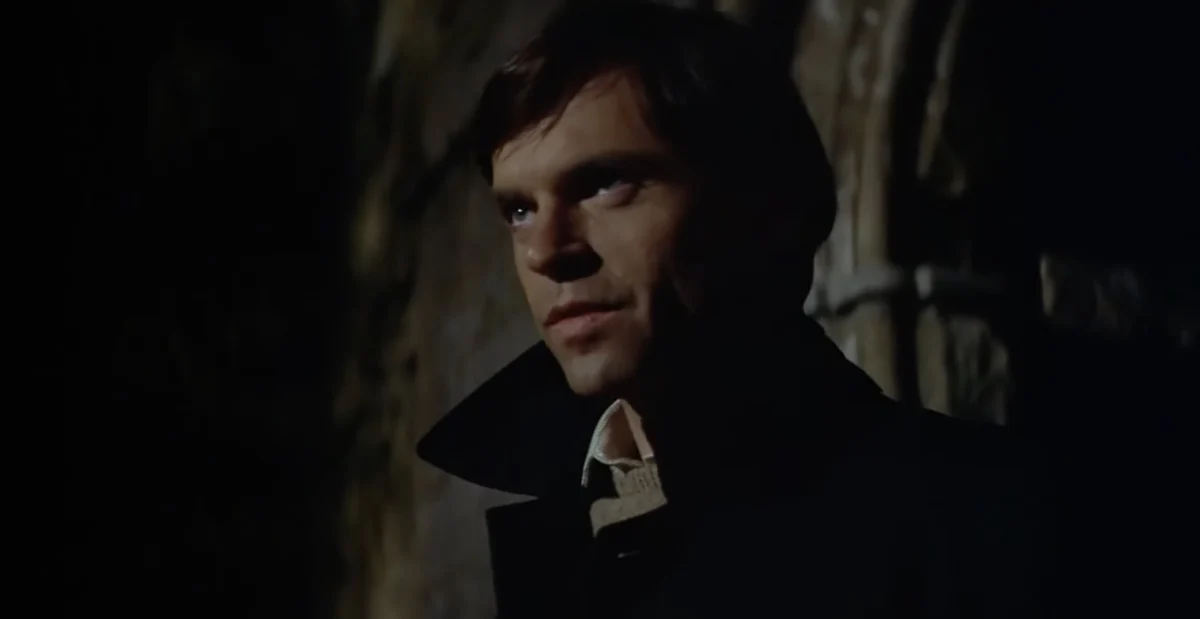
The Final Conflict, directed by Graham Baker and starring a young Sam Neill as the now-adult Damien Thorn, was released in 1981. As its title implied, it was billed as the concluding chapter in the Omen saga, depicting Damien’s ultimate rise to power and the world falling under his dominion unless halted by the forces of good, embodied in this installment by the prophesied second coming of Christ. Yet, the film earned even less money, a little over $20 million, and critics were especially negative, a reception that seemingly put an end to the series.
The Producer’s Vision and the Script’s Divergence
Producer Harvey Bernhard, the driving force behind the Omen movies, had initially envisioned a franchise that could yield as many as seven films. David Seltzer, who penned the screenplay for the original Omen, expressed a lack of interest in writing further installments but indicated he would have provided a bible of ideas for six additional films if requested. However, Bernhard ultimately decided to cap the series at three movies. In the documentary 666: The Omen Revealed, Bernhard stated, "We had to kill [Damien] sometime. He had to die."
The thematic core of the first two Omen films explored a novel question for its time: what if the Antichrist, initially unaware of his destiny, was placed into an environment carefully curated by Satanic forces who manipulated themselves into key positions around him? This setup allowed for his gradual assimilation of political and economic power, with his unseen father subtly clearing his path through a series of bizarre, seemingly accidental deaths designed to eliminate any obstacles.
This narrative framework was rooted in the mythology of the Book of Revelation, the final chapter of the New Testament. According to the story’s lore, the Antichrist would garner immense worldwide power as he prepared for a final, apocalyptic battle with a resurrected Jesus Christ. Their confrontation was foretold to either end the world or cleanse it of evil. Consequently, one might have reasonably expected The Final Conflict to deliver an epic, climactic clash between the devil’s son and his divine opposite. However, the series concluded on a desultory note in an abandoned church, a far cry from the prophesied battlefield of Armageddon.
The Final Conflict: A World on the Brink
As The Final Conflict opens, a 32-year-old Damien Thorn is consolidating his power. He is now the head of Thorn Industries, a global corporation controlling a significant portion of the world’s food supply. His influence extends further as he is appointed U.S. ambassador to Great Britain, mirroring the post his adoptive father, Robert Thorn (Gregory Peck), once held, following the mysterious suicide of the previous ambassador. With his financial, global, and political leverage steadily growing, Damien is nevertheless haunted by signs that the second coming of Christ is imminent.
Meanwhile, seven priests, each armed with one of the Seven Deadly Daggers of Megiddo—the only weapons purportedly capable of destroying Damien—make multiple attempts to assassinate him. Each attempt ends with the priest’s gruesome demise, highlighting the futility of direct confrontation against the Antichrist’s growing power. As it becomes clear that Christ has been reborn somewhere in England, Damien mobilizes his worldwide legion of followers. This includes a young boy whose journalist mother, Kate Reynolds (Lisa Harrow), with whom Damien has become romantically involved, is unaware of his true nature. Damien’s ultimate goal is to eliminate every male child born in the U.K. on the date of Christ’s rebirth, thereby preventing the prophesied savior from ending his reign.
Legacy of the "Accident" and Character Arc Issues
The first two Omen films are now best remembered for their elaborate and shocking death sequences, a narrative device later popularized by the Final Destination film series. The trope involved individuals who discovered the truth about Damien or threatened his family being eliminated through inexplicable "accidents." The first film famously depicted the decapitation of a photographer played by David Warner and the impalement of a priest portrayed by Patrick Troughton. The second movie featured a doctor sliced in half by an elevator cable and Lew Ayres drowning horrifically under a frozen lake, among numerous other graphic demises.
Halfway through Damien: Omen II, a minion of Satan informs the 12-year-old Damien (Jonathan Scott Taylor) of his true lineage. While initially rejecting this revelation, he eventually comes to accept it. This transition marks a significant divergence for The Final Conflict. The first film centered on the mystery of Damien’s birth and uncanny nature, while the second explored his struggle with his identity. In contrast, The Final Conflict positions Damien himself as the ostensible protagonist, a plot point that reportedly caused consternation among executives at 20th Century Fox.
Screenwriter Andrew Birkin recalls in the Omen Revealed documentary, "Fox said, ‘We realized that Damien is the hero of the piece. We don’t know if that can work.’" Birkin’s solution was to bolster the role of Father DeCarlo (Rossano Brazzi), the leader of the Christian contingent tasked with eliminating Damien using the Seven Deadly Daggers. This adjustment also provided an opportunity to stage more of the macabre set pieces for which the series was known. However, by the third film, these elaborate deaths had arguably lost some of their impact and inspiration, and their integration into the occult/political thriller narrative penned by Birkin felt strained, particularly given the ineptitude of DeCarlo’s team.
A Controversial Climax and Unfulfilled Prophecy
Even more contentious was the third-act scenario where Damien orders the murder of all newborn male babies in the U.K. to prevent the birth of Christ. The film depicts a montage of five such killings (out of a supposed total of 31), though not in graphic detail. One sequence, involving the child of one of Damien’s own henchmen (Don Gordon), is staged so strangely, featuring the mother’s vision of the baby as a mummy, that it borders on unintentional dark humor.
However, The Final Conflict‘s most disappointing aspect is the absence of the anticipated final battle. Instead, the "Christ child" is safely hidden by Father DeCarlo. DeCarlo then collaborates with Kate Reynolds to lure Damien to an abandoned church. There, Kate hopes to retrieve her son from the Antichrist’s influence, and Father DeCarlo intends to use a Deadly Dagger. Tragically, Kate’s son takes the dagger meant for Damien, but Kate manages to retrieve it and stab Damien herself. He dies as a glowing image of Christ appears amidst the church’s ruins, uttering, "You have won… nothing," before collapsing. Biblical verses fill the screen as the music shifts from ominous to triumphant.
The personal recollection of witnessing this ending for the first time often evokes a sense of anticlimax: "That’s it?" Making Damien the protagonist, while a distinct narrative choice, imbued the film with an off-balance structure from the outset. Building him up only to kill him off in a ruined church, with a holographic projection of the adult Christ (who is depicted as a newborn at this point) hovering above, was a far cry from the apocalyptic battles, the suffering of millions, and the ultimate face-off between Christ and the Antichrist foretold by the series’ prophecy.
Financial Realities and Studio Support
Considering its relatively modest budget of around $6 million, an actual large-scale "final conflict" between the armies of good and evil was likely never a realistic prospect for the film’s onscreen execution. Furthermore, 20th Century Fox, undergoing management upheavals at the time, reportedly refused to pay for Sam Neill’s airfare for his audition in England. His mentor, the famed actor James Mason, covered the cost himself to support his young protégé, although Mason was apparently later reimbursed. This detail alone suggests the studio’s waning commitment to the franchise’s grander ambitions.
Sam Neill’s Portrayal and the Film’s Visual Strengths
Sam Neill, appearing after his breakout role in My Brilliant Career, visibly grapples with finding the right tone for the Antichrist. At times, his performance is compelling; he can be charming, calculating, and even seductive, qualities the Antichrist might indeed employ. Neill delivers several chilling moments, but his monologues, often performed in a clandestine lair featuring a backward-facing crucified Christ statue, sometimes sound more hectoring than terrifying. A key issue remains the ambiguity of Damien’s role: is he the protagonist, meant to elicit empathy, or an antagonist whose actions are to be condemned?
Despite these challenges, Neill’s natural presence makes him watchable, though the rest of the cast is largely forgettable. The film’s other strong points include the direction by Graham Baker, who, after a career in commercials, imbues the film with a visual impressiveness that arguably makes it the most visually striking of the series. Jerry Goldsmith’s score, for which he won an Oscar for the first film, remains as haunting and portentous as ever, underscoring the pervasive sense of dread.
The Challenges of Depicting Armageddon
Even with a larger budget and full studio backing, portraying the ultimate Biblical battle between good and evil in a truly spectacular fashion is a monumental undertaking. The Left Behind film series, based on novels co-authored by evangelical minister Tim LaHaye and writer Jerry B. Jenkins, chronicles events hinted at in The Omen films, including the Great Tribulation, the Antichrist’s new world order, the Rapture, and the final victory of Jesus Christ. The Left Behind movies, including Left Behind: The Movie (2000) starring Kirk Cameron and the 2014 Left Behind with Nicolas Cage, were critically panned for their shoddy production values, cheap visuals, poor acting, and incoherent scripting.
The Enduring Legacy and Future of The Omen Franchise
20th Century Fox, now 20th Century Studios, has attempted to capitalize on the enduring appeal of The Omen with varying degrees of success. The universally panned TV movie Omen IV: The Awakening premiered in 1991. Fifteen years later, a direct remake of the original film was released, which critics dismissed as inert and pointless, though it achieved a worldwide gross of $120 million. More positively received, the 2024 prequel The First Omen concluded where the original movie began, seemingly bringing the series full circle. Perhaps the studio will revisit The Final Conflict one day, this time with the ambition to give Armageddon the grand, epic treatment it deserves, finally fulfilling the apocalyptic promise of the original prophecy.