The documentary film The Last Spy offers a definitive and unfiltered account of the life of Peter Sichel, a pivotal figure in the annals of American intelligence whose career spanned the transition from the Office of Strategic Services (OSS) to the height of the Cold War-era Central Intelligence Agency (CIA). Directed by acclaimed filmmaker Katharina Otto-Bernstein and distributed by Dogwoof, the film recently debuted its official trailer following a successful festival circuit run that included the 2025 Munich Film Festival and the 2026 Palm Springs Film Festival. The documentary serves as a historical corrective and a personal testament, focusing on Sichel’s decision to bypass CIA censorship to tell his life story exactly as he lived it.
Peter Sichel, who passed away in 2024 at the age of 102, was often referred to as the "Wunderkind" of espionage. His life story is one of dramatic survival and geopolitical influence, beginning with his escape from Nazi Germany as a Jewish refugee and culminating in his role as the CIA Station Chief in Berlin during the most volatile years of the early Cold War. The film’s narrative engine is driven by a central conflict with the U.S. government: when Sichel attempted to publish his memoirs, the CIA’s Publication Review Board returned a manuscript so heavily redacted that it obscured the essential truths of his service. In response, Sichel utilized the medium of film to provide an unredacted account of his covert actions and the moral complexities inherent in the "shadowy world" of international intelligence.
Biographical Origins and the Flight from Nazi Germany
The documentary meticulously traces Sichel’s origins back to a wealthy German-Jewish family in Mainz. Born in 1922, Sichel was an heir to a prestigious wine merchant dynasty. However, the rise of the National Socialist German Workers’ Party (NSDAP) under Adolf Hitler fundamentally altered the trajectory of his life. As the Third Reich implemented increasingly restrictive racial laws, the Sichel family faced the systematic seizure of their assets and threats to their safety.
In 1941, Sichel managed a harrowing escape from Europe, eventually arriving in the United States. His fluency in German and his intimate knowledge of European social and political structures made him an invaluable asset to the American war effort. He was recruited into the Office of Strategic Services (OSS), the precursor to the modern CIA, which was then under the leadership of General William J. "Wild Bill" Donovan. This period marked the beginning of Sichel’s transformation from a refugee into a high-stakes intelligence operative.
The Berlin Station and the Cold War Frontier
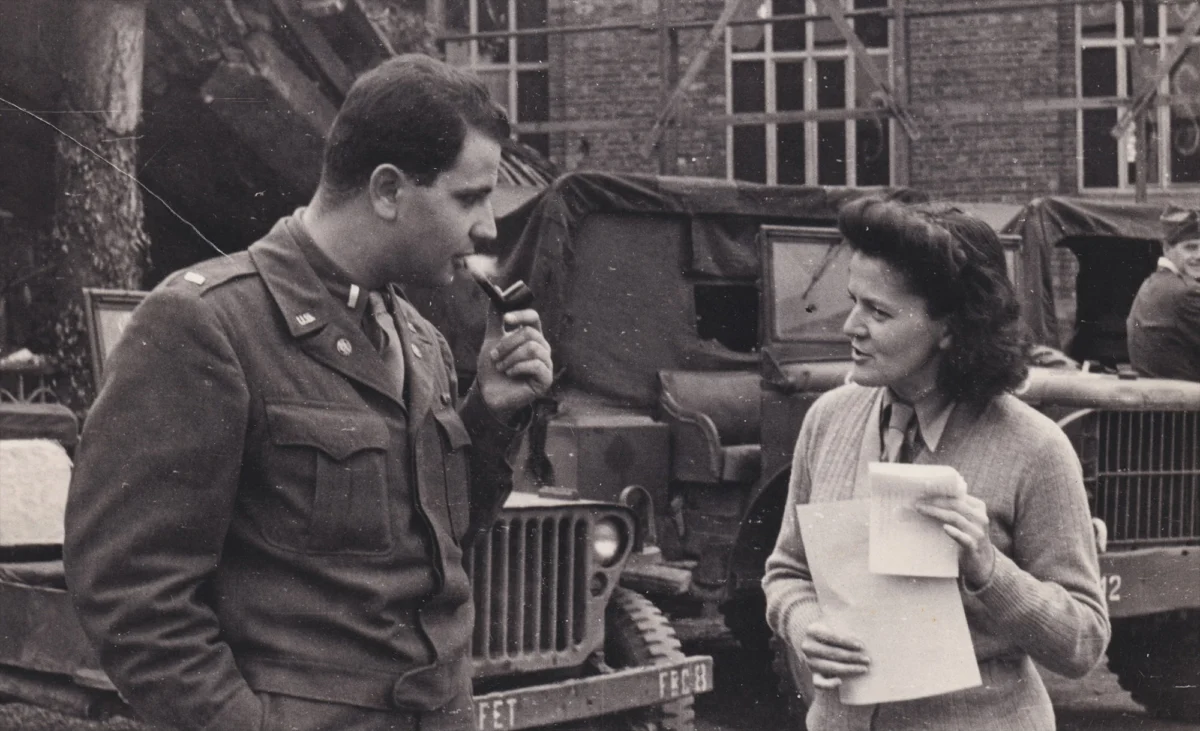
Following the conclusion of World War II, Sichel was dispatched to post-war Berlin. The documentary highlights this period as the most significant phase of his career. As the first CIA Station Chief in Berlin, Sichel operated at the epicenter of the emerging Cold War. Berlin was a city divided and a hotbed of espionage, where the burgeoning rivalry between the Western Allies and the Soviet Union manifested in a constant game of move and counter-move.

During his tenure, Sichel managed a vast network of informants and oversaw operations intended to monitor Soviet troop movements and political intentions in East Germany. The film explores the "Wunderkind" nickname he earned, a testament to his ability to navigate the complexities of a ruined city while maintaining a sophisticated intelligence apparatus. However, the film does not shy away from the darker aspects of this era. Sichel’s accounts include the moral dilemmas of employing former German officials with questionable wartime records to counter the Soviet threat—a pragmatic but controversial strategy that defined early American intelligence policy.
The Redaction Conflict and the Pursuit of Transparency
A primary focus of The Last Spy is the institutional friction between a retired operative and the agency he served for decades. Under federal law, former CIA employees must submit any writings related to their intelligence work to the Publication Review Board (PRB) to ensure that no classified information or "sources and methods" are compromised. When Sichel submitted his memoirs late in his life, the agency returned a manuscript that was reportedly stripped of its most critical historical insights.
Director Katharina Otto-Bernstein uses the documentary to fill these gaps. By interviewing Sichel at age 102, she captured his sharp, unfiltered recollections before his passing. The film argues that these redactions were not merely about protecting active assets, but about sanitizing history. Sichel’s unredacted testimony in the film reveals the root causes of geopolitical conflicts that continue to resonate today, from the division of Europe to the destabilization of regions where the CIA conducted covert interventions during the mid-20th century.
Directorial Vision and Production Background
Katharina Otto-Bernstein, an Emmy-nominated filmmaker known for her deep-dive character studies such as Absolute Wilson and Beautopia, brings a rigorous journalistic approach to The Last Spy. The production involved extensive archival research, sourcing never-before-seen footage of post-war Berlin and declassified documents that corroborate Sichel’s narrative.
The film is produced by a collaborative team including Oleg Dubson, Kathrin Lohmann, Sabine Schenk, and Frida Torresblanco. The production quality reflects the gravity of its subject matter, utilizing high-contrast cinematography to evoke the noir-like atmosphere of 1950s espionage. The decision to release the film through Dogwoof, a distributor known for prestige documentaries, underscores its anticipated impact on both the cinematic and historical communities.
Chronology of Key Events
To understand the scope of the documentary, it is essential to look at the timeline of Peter Sichel’s life and the film’s development:

- 1922: Peter Sichel is born into a Jewish wine-merchant family in Mainz, Germany.
- 1941: Sichel flees Nazi-occupied Europe and arrives in the United States.
- 1943: Joins the OSS, beginning his formal training in intelligence and psychological warfare.
- 1945–1952: Serves in post-war Berlin, eventually becoming the CIA Station Chief.
- 1959: Sichel leaves the CIA, disillusioned with certain aspects of agency policy and the rise of the "mole hunts" led by James Jesus Angleton.
- 1960–2000s: Sichel revitalizes his family’s wine business, famously turning "Blue Nun" into a global brand, while remaining a quiet observer of international affairs.
- 2016–2023: Sichel attempts to publish his memoirs; the ensuing legal and bureaucratic battle over redactions leads to the development of the documentary.
- 2024: Peter Sichel passes away at the age of 102.
- 2025: The Last Spy world premieres at the Munich Film Festival.
- 2026: The film screens at the Palm Springs Film Festival and prepares for a wider theatrical and VOD release.
Analysis of Implications and Geopolitical Context
The Last Spy is more than a biography; it is a critical analysis of the foundations of American foreign policy. By revealing the "obscured root causes" of modern conflicts, Sichel provides context for the current state of Eastern European relations. His insights into the Soviet mindset during the Cold War offer a historical mirror to contemporary tensions between NATO and the Russian Federation.
Furthermore, the film addresses the internal culture of the CIA during its formative years. Sichel’s experiences with suspicion—specifically the "whispers" of him being a Soviet spy—highlight the paranoia of the McCarthy era that permeated the intelligence community. These accusations often targeted those with European backgrounds or those who questioned the efficacy of aggressive covert actions. Sichel’s ability to maintain his integrity while under suspicion provides a rare look at the internal politics of the Langley headquarters during its most secretive years.
Official Responses and Industry Reception
While the CIA has not issued an official statement regarding the film’s specific claims, the documentary has sparked discussion among intelligence historians and former officials. Critics who viewed the film at its festival premieres have praised it for its intellectual rigor and its refusal to simplify the complexities of espionage.
Dogwoof has confirmed that The Last Spy will be released in UK cinemas and on Video on Demand (VOD) platforms starting April 24, 2026. While a specific U.S. theatrical date has not been finalized, the film is expected to follow a similar release pattern in North America shortly thereafter. The documentary is positioned to be a significant contender in the 2026 awards season, particularly in categories recognizing historical research and biographical storytelling.
In an era where the transparency of government institutions is under constant scrutiny, The Last Spy stands as a vital record. It captures the voice of a man who was present at the birth of the modern world order and who, in his final years, chose the truth over the comforts of silence. Through Sichel’s wit and wisdom, the film provides a bridge between the secrets of the past and the geopolitical realities of the 21st century.