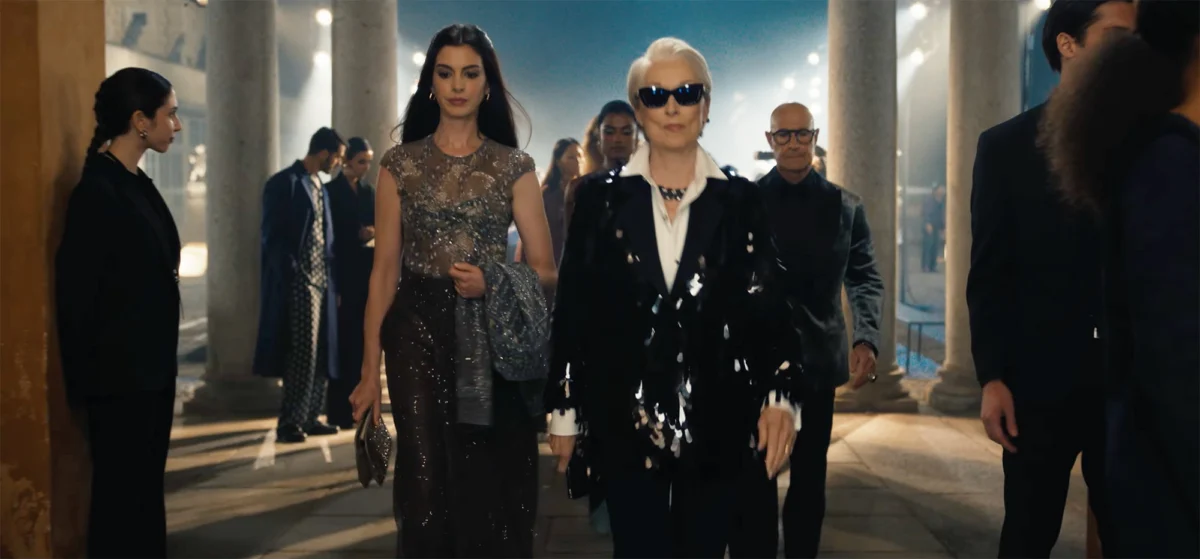
20th Century Studios has officially released the final trailer for The Devil Wears Prada 2, marking the definitive promotional push for one of the most anticipated legacy sequels of the decade. Scheduled for a theatrical debut on May 1, 2026, the film arrives exactly twenty years after the original 2006 production redefined the fashion-comedy genre and became a global cultural touchstone. The newly unveiled footage provides a comprehensive look at the evolved dynamics between the central characters, confirming the return of the original principal cast: Meryl Streep, Anne Hathaway, Emily Blunt, and Stanley Tucci. Under the direction of David Frankel, who helmed the first installment, the sequel seeks to bridge the gap between the traditional prestige of print journalism and the volatile landscape of the modern digital media era.
Narrative Overview and Character Evolution
The plot of The Devil Wears Prada 2 shifts the focus from the internal hierarchy of Runway Magazine to a broader corporate conflict. The narrative follows Miranda Priestly (Meryl Streep) as she navigates the twilight of her career. Faced with the stark reality of declining print media and a shifting advertising landscape, Priestly finds herself in direct professional competition with her former assistant, Emily Charlton (Emily Blunt). Charlton, who has transitioned from a subordinate to a high-powered executive at a rival media conglomerate, represents the new guard of the industry.
The conflict centers on the pursuit of dwindling advertising revenue, a move that forces Priestly to adapt her traditional methods to a market that no longer prioritizes the editorial gatekeeping she once mastered. Anne Hathaway reprises her role as Andy Sachs, though the trailer suggests her character now occupies a more nuanced position, potentially serving as a mediator or an independent force within the fashion world. Stanley Tucci returns as Nigel Kipling, the creative director whose loyalty and aesthetic sensibilities remain central to the visual identity of the franchise.

The Expansion of the Ensemble Cast
While the return of the core quartet serves as the film’s primary draw, 20th Century Studios has assembled a significant supporting cast to populate the modernized world of high fashion. New additions include Academy Award winner Kenneth Branagh, Simone Ashley, Justin Theroux, and Lucy Liu. The inclusion of these high-profile actors suggests a narrative that expands beyond the offices of Runway, incorporating international fashion weeks and corporate boardrooms.
The supporting roster is further bolstered by Patrick Brammall, Caleb Hearon, Helen J. Shen, Pauline Chalamet, B.J. Novak, and Conrad Ricamora. In a nod to the original film’s continuity, Tracie Thoms and Tibor Feldman will also return to their respective roles as Lily and Irv. This blend of original cast members and new talent is designed to appeal to both the nostalgic demographic that supported the 2006 film and a younger audience familiar with the newer cast members’ contemporary work.
Creative Continuity and Production Background
The production of The Devil Wears Prada 2 is characterized by a rare level of creative continuity for a legacy sequel. David Frankel returns to the director’s chair, bringing a familiar visual language to the project. Frankel’s post-2006 career, which includes titles such as Marley & Me and Hope Springs, has been defined by a focus on character-driven narratives and sophisticated comedy.
Aline Brosh McKenna, the screenwriter responsible for the original film’s sharp, satirical dialogue, has returned to pen the sequel. McKenna’s involvement is viewed by industry analysts as a critical factor in maintaining the specific tone that made the first film a critical and commercial success. The production is overseen by veteran producers Karen Rosenfelt and Wendy Finerman, the latter of whom was instrumental in the development of the original adaptation of Lauren Weisberger’s novel.

Historical Context: The 20-Year Legacy
The original The Devil Wears Prada was released in June 2006 and surpassed all commercial expectations. Produced on a budget of approximately $35 million, the film grossed over $326 million worldwide. It earned Meryl Streep an Academy Award nomination for Best Actress and is credited with elevating the careers of Anne Hathaway and Emily Blunt to A-list status.
In the two decades since its release, the film has maintained a persistent presence in popular culture, frequently cited for its costume design by Patricia Field and its commentary on workplace dynamics. The 20th-anniversary timing of the sequel’s release is a strategic move by 20th Century Studios to capitalize on this enduring legacy. The film’s transition from a Fox property to a Disney-owned 20th Century Studios project also reflects the broader consolidation within the film industry over the last twenty years.
Chronology of Development
The path to a sequel was long and marked by years of speculation. While Lauren Weisberger published a literary sequel, Revenge Wears Prada: The Devil Returns, in 2013, the film project remained in development hell for over a decade.
- 2006: The original film is released to critical acclaim and massive box office success.
- 2013: The publication of the sequel novel reignites interest, but cast members express hesitation about returning without a "perfect" script.
- 2023: Initial reports surface that 20th Century Studios has entered active development on a script that deviates from the sequel novel to focus on the decline of print media.
- 2024: Confirmation of the return of Streep, Hathaway, Blunt, and Tucci. Principal photography begins in New York City and Milan.
- 2025: Production wraps, and the first teaser materials are released to high engagement on social media platforms.
- April 2026: The "Grand Finale" trailer is released, confirming the May 1st premiere date.
Industry Implications and Market Analysis
The release of The Devil Wears Prada 2 on May 1st positions it as the "kick-off" film for the 2026 summer movie season. This is a high-stakes slot typically reserved for action blockbusters or superhero franchises. By placing a fashion-centric comedy-drama in this window, 20th Century Studios is signaling high confidence in the film’s four-quadrant appeal.

The film’s thematic focus on the struggle of traditional media is particularly relevant in 2026. The fashion industry has undergone a radical transformation since 2006, shifting from the absolute authority of monthly magazines to the decentralized influence of social media influencers and real-time digital content. The sequel’s narrative, which pits Priestly’s traditionalism against Charlton’s modern corporate strategy, serves as a meta-commentary on the state of the entertainment and publishing industries themselves.
Market analysts suggest that the film is poised to perform well internationally, particularly in fashion capitals such as Paris, Milan, and London. The original film’s success was global, and the sequel’s inclusion of international locations and a diverse, globally recognized cast is expected to drive strong foreign box office returns.
Technical Execution and Aesthetic Direction
The final trailer highlights a significant investment in production design and cinematography. Transitioning from the mid-2000s aesthetic to a sleek, 2026 visual style, the film appears to utilize high-contrast lighting and modern architectural backdrops to emphasize the cold, high-stakes nature of the contemporary corporate world.
Costume design remains a central pillar of the production. While Patricia Field served as the stylist for the original, the sequel’s wardrobe department has been tasked with capturing the current "quiet luxury" and "tech-integrated" trends of the mid-2020s. The trailer showcases a wardrobe that balances the classic elegance associated with Miranda Priestly with the sharper, more aggressive silhouettes favored by Emily Charlton’s executive persona.

Strategic Promotion and Audience Reception
The "Grand Finale" trailer launch was accompanied by the release of four new theatrical posters, each highlighting different facets of the power struggle. The marketing campaign has leaned heavily into the "legacy" aspect, utilizing iconic lines from the first film—such as the "groundbreaking" spring floral reference—to bridge the generational gap.
Early social media sentiment analysis indicates a high level of "nostalgia-driven intent" among audiences aged 30-50, while the inclusion of actors like Simone Ashley and Pauline Chalamet has generated significant interest among Gen Z demographics. The studio’s decision to release the film exclusively in theaters before its eventual transition to streaming platforms like Hulu and Disney+ underscores the belief that the title remains a "must-see" cinematic event.
As the industry looks toward the May 1st opening, The Devil Wears Prada 2 stands as a litmus test for the viability of the mid-budget legacy sequel in a market increasingly dominated by large-scale spectacles. With its original creative team and cast intact, the film is positioned not just as a sequel, but as a definitive conclusion to a narrative arc that began twenty years ago.