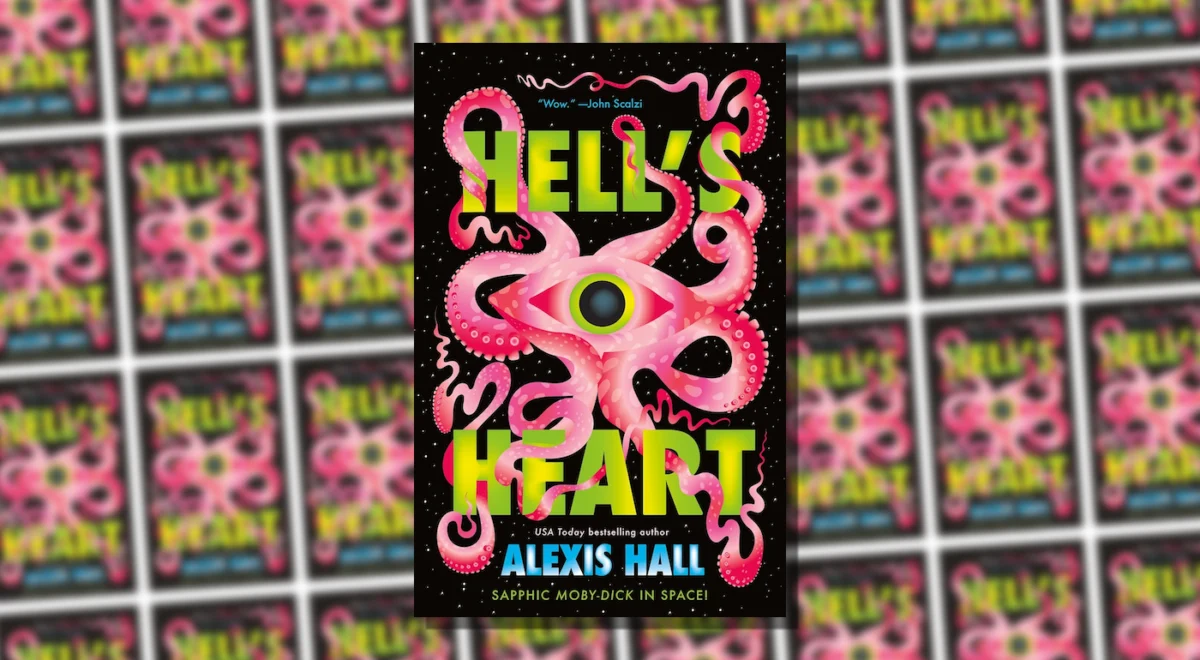
The literary world is abuzz with Alexis Hall’s latest offering, Hell’s Heart, a bold and ambitious retelling of Herman Melville’s classic seafaring epic, Moby-Dick. This science-fiction romance reimagines the obsessive hunt for the white whale as a perilous three-year space voyage, delving into themes of financial precarity, corporate greed, and the profound psychological impact of isolation. While Melville’s original work, published in 1851, grappled with man’s struggle against nature and the mysteries of the universe, Hall’s iteration firmly plants its narrative in the anxieties of our contemporary world, making it a surprisingly potent reflection of the pandemic era.
A Familiar Obsession, Reimagined in the Cosmos
At its core, Hell’s Heart mirrors the relentless pursuit that defines Moby-Dick. The protagonist, a disaster-prone bisexual individual known only as "I," signs aboard the starship Pequod, not out of a thirst for adventure, but out of sheer financial desperation. Burdened by substantial debts, primarily accrued for medical procedures to align her body with her identity, "I" finds herself ensnared by the magnetic, yet deeply troubled, Captain A. This captain, much like Ahab, is consumed by an all-encompassing obsession: the capture of the Möbius Beast, a colossal space whale of immense value.
The narrative unfolds against a backdrop where financial precarity is not merely a character trait but a systemic condition. The Pequod’s crew members are largely in similar dire straits, their lives dictated by the unforgiving economic realities of their universe. Aphrodite Pharma State, a powerful corporate entity, looms large, symbolizing the pervasive influence of capitalism. The protagonist’s own medical debt highlights the intersection of corporate power, healthcare, and individual autonomy – themes that resonate deeply in the 21st century.
The Echoes of Isolation and Societal Fracture
Hall’s genius lies in her ability to imbue this space odyssey with a palpable sense of isolation and societal fracture, making Hell’s Heart a compelling, if unintentional, "pandemic novel." The extended, claustrophobic voyage aboard the Pequod mirrors the collective experience of lockdown and quarantine. The crew’s simmering resentments, their extreme horniness born of prolonged confinement, and the constant threat of mutiny all evoke the psychological toll of isolation.
The novel further captures the disorienting nature of the pandemic era through its exploration of fractured belief systems. The protagonist’s background as an apostate from a Christian-adjacent church, characterized by its profit-driven interpretations of scripture, offers a darkly humorous commentary on the commodification of faith and the rise of fringe ideologies. This mirrors the real-world phenomenon of religious institutions grappling with, and sometimes exploiting, societal anxieties. The captain’s reliance on a sentient AI, which seems to encourage her worst impulses while simultaneously consuming vital processing power needed for crew entertainment (specifically, streaming porn), adds another layer of contemporary relevance, touching upon our complex relationship with technology and its impact on human desire and well-being.
Critique and Commentary: The Delicate Balance of Narrative
While lauded for its originality and thematic depth, Hell’s Heart is not without its critical points. The author’s penchant for breaking the fourth wall, while often amusing, occasionally borders on excessive. Occasional nods to popular culture, such as a meme reference or witty dialogue, can serve as effective garnishes to a narrative. However, when these elements become too frequent or too central, they risk detracting from the story’s emotional weight and structural integrity. The reviewer notes that a constant barrage of "sperm jokes," rather than genuinely witty observations, felt like a narrative crutch rather than a sophisticated comedic device. This critique highlights the fine line between playful meta-commentary and narrative indulgence.

A "Pandemic Novel" for the Ages?
Despite these minor reservations, the argument for Hell’s Heart as a defining "pandemic novel" is persuasive. The novel was conceived and written during the COVID-19 pandemic, with Alexis Hall herself acknowledging the inspiration drawn from a lockdown-era Moby-Dick read-a-long. This shared experience of global crisis has undeniably shaped the narrative’s underlying tone and thematic concerns.
The novel captures the feeling of being trapped, the societal divisions amplified by fear and misinformation, and the bewildering absurdity that characterized the early years of the pandemic. The crew’s collective frustration with their captain’s singular focus, their inability to access basic comforts, and the ever-present specter of financial ruin all resonate with the lived experiences of millions. The book’s depiction of a descent into preventable disaster, driven by the agendas of a few and the desperation of many, serves as a potent allegory for our current moment.
Background and Context: Herman Melville’s Enduring Legacy
Herman Melville’s Moby-Dick was a critical and commercial failure upon its release in 1851. Written during a period of burgeoning American industrialization and a fervent belief in manifest destiny, the novel challenged prevailing notions of heroism and the unbridled pursuit of ambition. Its dense philosophical digressions, extensive chapters on the technicalities of whaling, and complex symbolism were met with confusion and dismissal by a public accustomed to more straightforward narratives.
However, over time, Moby-Dick has been re-evaluated and celebrated as a masterpiece of American literature. Scholars now recognize its profound exploration of themes such as obsession, fate, free will, the nature of evil, and humanity’s place in the vast, indifferent universe. Its influence on subsequent literature and thought is undeniable, making it a fertile ground for modern reinterpretations.
The Implications of Hell’s Heart
Alexis Hall’s Hell’s Heart stands as a testament to the enduring power of literary classics to inspire new narratives that speak to contemporary audiences. By transplanting Melville’s epic quest into a science-fiction setting and infusing it with sharp social commentary, Hall has crafted a work that is both a loving homage and a radical departure.
The novel’s success in capturing the zeitgeist of the pandemic era, with its themes of isolation, economic anxiety, and societal fragmentation, positions it as a significant work of speculative fiction. It demonstrates how timeless narratives can be recontextualized to address the unique challenges and anxieties of our time, offering readers a mirror to their own experiences and a space for reflection. The book’s exploration of financial precarity and corporate overreach also serves as a timely reminder of the systemic issues that continue to shape our world, prompting discussions about economic justice and the human cost of unchecked capitalism.
Hell’s Heart is more than just a queer retelling of a classic; it is a vibrant, darkly humorous, and deeply human exploration of our current moment, proving that even in the vastness of space, the most compelling journeys are often those we take within ourselves and with each other.