The independent film circuit is poised for a significant premiere with Drinking and Driving, a raw and introspective "lo-fi hangout film" co-directed by and co-starring Avalon Fast and Jillian Frank. This much-anticipated feature is set to make its world debut at the Los Angeles Festival of Movies (LAFM) on Saturday, April 11, marking a new chapter for these burgeoning voices in contemporary cinema. Described by its creators as "the trip you didn’t ask for, to the hometown you didn’t grow up in," the film delves into the aimless, often self-destructive lives of young adults caught in a cycle of youthful nescience, where consequences seem perpetually deferred and lessons remain unlearned.
Director’s Vision and Thematic Exploration
Avalon Fast and Jillian Frank, both integral to the film’s direction and on-screen presence, have crafted a narrative that resonates with a specific, yet widely understood, period of post-adolescent limbo. Their joint statement succinctly captures the film’s essence: a journey into an unfamiliar, yet archetypal, hometown where characters grapple with stagnation and the elusive nature of growing up. This thematic core positions Drinking and Driving not merely as a narrative of specific individuals but as a poignant commentary on a generation navigating the blurry boundaries between youth and adulthood, often resorting to escapism and illicit activities to fill a void.
The film’s exploration of "youthful nescience" is central to its narrative and artistic intent. It portrays a reality where parties seem endless, consequences are often delayed or ignored, and the natural progression of learning from mistakes appears to be stalled. This deliberate portrayal of a prolonged adolescence, characterized by a lack of forward momentum and an inability to internalize lessons, offers a stark, unfiltered look at a particular segment of contemporary youth culture. The titular act of drinking and driving serves as a powerful, literal, and metaphorical representation of this recklessness, highlighting the dangerous disregard for future repercussions that can define this phase of life.
Avalon Fast’s Evolving Oeuvre: A Chronicle of Independent Filmmaking
Avalon Fast has rapidly emerged as a distinctive voice within the independent film landscape, cultivating a unique aesthetic and thematic focus that consistently pushes boundaries. Her earlier works, Honeycomb and CAMP, established her reputation for audacious, homespun features that explore the darker, often supernatural, aspects of girlhood. These films, characterized by their raw energy and willingness to confront unsettling themes, often delve into the psychological and social intricacies of young female identity, frequently juxtaposing the mundane with the macabre. Jillian Frank has been a close collaborator on these projects, indicating a deep creative synergy between the two filmmakers that extends across their filmographies.
Fast’s trajectory also includes significant collaborations with other boundary-pushing artists. Her work with Louise Weard on the transgressive Castration Movie series further underscores her commitment to exploring challenging and unconventional narratives. More recently, Fast took on a starring role in The Serpent’s Skin, a Buffy-inspired feature from prolific 21-year-old filmmaker Alice Maio Mackay, showcasing her versatility as both a director and an actress within the indie horror and genre-bending space.
The shift towards the "realistically raw" style of Drinking and Driving represents a notable evolution in Fast’s directorial approach. While her previous films often incorporated fantastical or supernatural elements to explore psychological states, her latest venture grounds its exploration of youth in an unvarnished, observable reality. This pivot demonstrates a maturation in her filmmaking, indicating a desire to tackle contemporary social dynamics with a directness that complements her earlier, more allegorical works. This progression suggests a filmmaker unafraid to experiment with genre and form, consistently seeking new ways to articulate the complex experiences of young people.
Production and Aesthetic Choices: Crafting Authenticity
Drinking and Driving distinguishes itself through its production methodology, which deeply informs its authentic and immersive feel. The film was shot in various hometowns of its Canadian 20-something cast and crew, a choice that inherently imbues the narrative with a sense of lived experience and genuine locality. This approach bypasses the artificiality of studio sets or generalized locations, rooting the story firmly in the specific, yet universally relatable, environments where these characters might actually exist. The result is a film that feels genuinely "entrenched in the stagnant, stubborn haze of youthful nescience," as described by the filmmakers, capturing the mundane realities and subtle textures of small-town existence for young adults.
The aesthetic of Drinking and Driving is firmly rooted in the "lo-fi" tradition, a stylistic choice that has gained considerable traction in independent cinema for its ability to convey authenticity and intimacy. This aesthetic is often characterized by minimal production budgets, naturalistic performances, and a visual style that eschews polished perfection in favor of a grittier, more immediate realism. Jacob Glickman’s handheld cinematography is a prime example of this approach, deliberately evoking "digital aesthetics of yore." This visual language, reminiscent of early digital video or home movies, creates a sense of immediacy and familiarity for viewers across multiple generations. It encourages audiences to project their own memories of reckless abandon, youthful indiscretion, and the often-unfiltered experiences of their formative years onto the screen, fostering a deep, almost nostalgic, connection to the characters’ journey. The deliberate imperfection of the visual style enhances the film’s raw, unpolished feel, making the characters’ struggles and triumphs feel more relatable and genuine.
The collaborative spirit inherent in independent filmmaking, particularly evident in a production like Drinking and Driving where cast and crew often wear multiple hats, further contributes to its unique texture. This collective effort, often driven by passion rather than large budgets, allows for a more personal and unfiltered storytelling process, where the voices of the creators are unmediated by extensive commercial pressures. This creative freedom is crucial for a film that seeks to explore sensitive and often uncomfortable aspects of youth culture with integrity.
Narrative Arc: A Descent into Unified Confusion
The plotline of Drinking and Driving, while described as loose, provides a framework for its character-driven exploration of youthful drift. The story centers on Iris (Jillian Frank) and Palmer (Avalon Fast), two early-twenties individuals who remain ensnared in the confines of their shared hometown. Their lives are characterized by a monotonous routine: working at the same restaurant, sharing the same bed, and, crucially, indulging in a habit of drinking and driving. This dangerous and illicit activity is not merely a plot device but a central motif, symbolizing their recklessness, their shared complacency, and their inability or unwillingness to break free from self-destructive patterns.
Their stagnant existence is disrupted by the re-entry of Levi (Ethan Hawksworth), a figure from their past. His presence introduces a new dynamic, leading to extended periods spent with him and his cousin, Phoenix (Henri Gillespi), across various familiar yet uninspired backdrops: cars, backyards, and other people’s bedrooms. These settings reinforce the film’s emphasis on the mundane and the claustrophobic nature of their social environment. The film meticulously charts the progression of their interactions, showcasing the languid pace of a summer defined by aimless wandering and superficial engagement.
A pivotal moment arrives when Levi shares a dream with Iris, an event that subtly yet profoundly alters the equilibrium between the four characters. This dream, likely symbolic or deeply personal, acts as a catalyst, shifting the group dynamic and introducing an element of introspection that had previously been absent. Following this, the once-vibrant, albeit reckless, reality of their summer begins to fade. The endless parties, a hallmark of their earlier existence, start to die out, replaced by a growing sense of disillusionment and introspection. The narrative culminates with the four characters ending up "in a field of unified confusion," a powerful image that encapsulates their shared state of uncertainty, emotional entanglement, and existential bewilderment. This ending suggests not a clear resolution, but a communal realization of their shared predicament, an acknowledgment of their unresolved feelings and the nebulous future ahead.
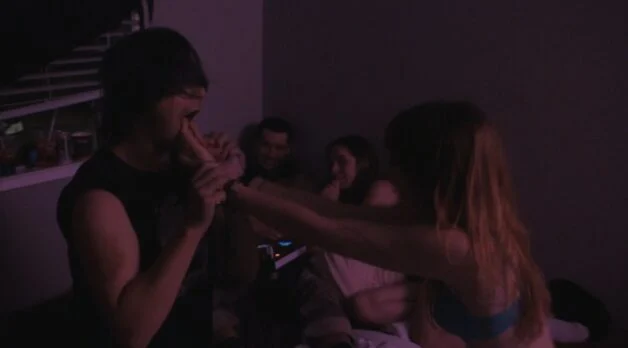
An exclusive minute-and-a-half clip shared by Filmmaker magazine offers a vivid snapshot of this world. In the clip, Palmer’s query, "Do you guys remember the first time you ever day drank?" sets the tone. As music blasts from a car, the friends share swigs from a quarter pint of liquor, their giggles and slurred words underscoring their inebriated state. The scene escalates to them performing donuts in a deserted dirt lot, a visual metaphor for their circular, unproductive existence and dangerous thrill-seeking. This sequence, captured through Jacob Glickman’s handheld cinematography, perfectly encapsulates the film’s raw energy and its commitment to depicting the unvarnished reality of youthful abandon.
The Los Angeles Festival of Movies: A Platform for Emerging Voices
The selection of Drinking and Driving for a world premiere at the Los Angeles Festival of Movies (LAFM) underscores the festival’s commitment to showcasing innovative and independent cinema. LAFM has cultivated a reputation as a vital platform for films that embody "personal storytelling, experimentation, and a DIY spirit," making it an ideal venue for a work like Fast and Frank’s. A world premiere at a respected festival such as LAFM is a crucial milestone for independent films, providing them with invaluable exposure, critical attention, and momentum as they embark on their festival run and seek broader distribution.
Festival organizers often seek out films that challenge conventional narratives, offer fresh perspectives, and resonate with contemporary social issues. Drinking and Driving, with its unflinching portrayal of youthful stagnation and its distinct lo-fi aesthetic, aligns perfectly with these criteria. Its selection signals LAFM’s recognition of Fast and Frank as significant emerging talents whose work contributes meaningfully to the independent film landscape. The festival’s role extends beyond mere screening; it serves as a crucial networking hub, connecting filmmakers with industry professionals, critics, and audiences, thereby fostering the careers of new artistic voices. For a film that explores the raw edges of human experience with such authenticity, a platform that celebrates artistic freedom and experimental approaches is indispensable.
The Broader Context of Youth Cinema
Drinking and Driving fits within a rich tradition of youth-centric cinema that explores themes of ennui, rebellion, and the search for identity. From the French New Wave’s restless protagonists to the American independent films of the 1990s and the mumblecore movement of the early 2000s, filmmakers have consistently turned to the experiences of young people to reflect broader societal anxieties and cultural shifts. This film contributes to this lineage by offering a distinctly contemporary perspective on the challenges faced by 20-somethings in an era marked by economic precarity, social media saturation, and often, a prolonged transition into adulthood.
The film’s focus on "stagnant, stubborn haze" and "youthful nescience" reflects a particular post-millennial condition, where traditional markers of adulthood are often delayed or redefined. This resonance with current socio-economic realities and the psychological states of young adults is likely to strike a chord with audiences who have either lived through similar experiences or are observing them in their own communities. The film’s willingness to depict dangerous and illicit activities, rather than glorifying them, serves as a form of social commentary, prompting reflection on the underlying causes and consequences of such behaviors. It invites viewers to consider the systemic factors that might contribute to this sense of aimlessness and the coping mechanisms, however self-destructive, that young people adopt.
Distribution and Future Outlook
Following its world premiere at LAFM, Drinking and Driving will embark on the next phase of its journey, with further festival screenings and release details to be announced by Muscle Distribution. For independent films, securing effective distribution is a critical step towards reaching a wider audience beyond the festival circuit. Muscle Distribution’s involvement suggests a strategic plan to position the film within the market, leveraging its unique artistic merits and the growing reputation of its directors.
The success of Drinking and Driving at LAFM and subsequent festivals will significantly influence its distribution strategy, potentially leading to broader theatrical releases, digital distribution deals, or partnerships with streaming platforms. For Avalon Fast and Jillian Frank, a successful reception will further solidify their positions as important independent filmmakers, paving the way for future projects and expanding their creative reach. Their ability to consistently deliver authentic, boundary-pushing narratives positions them as key figures in shaping the future of independent cinema, particularly for stories that resonate with the complexities of contemporary youth. The film’s trajectory will be closely watched by industry insiders and cinephiles alike, eager to see how this raw, honest portrayal of youthful stagnation finds its place in the broader cinematic landscape.