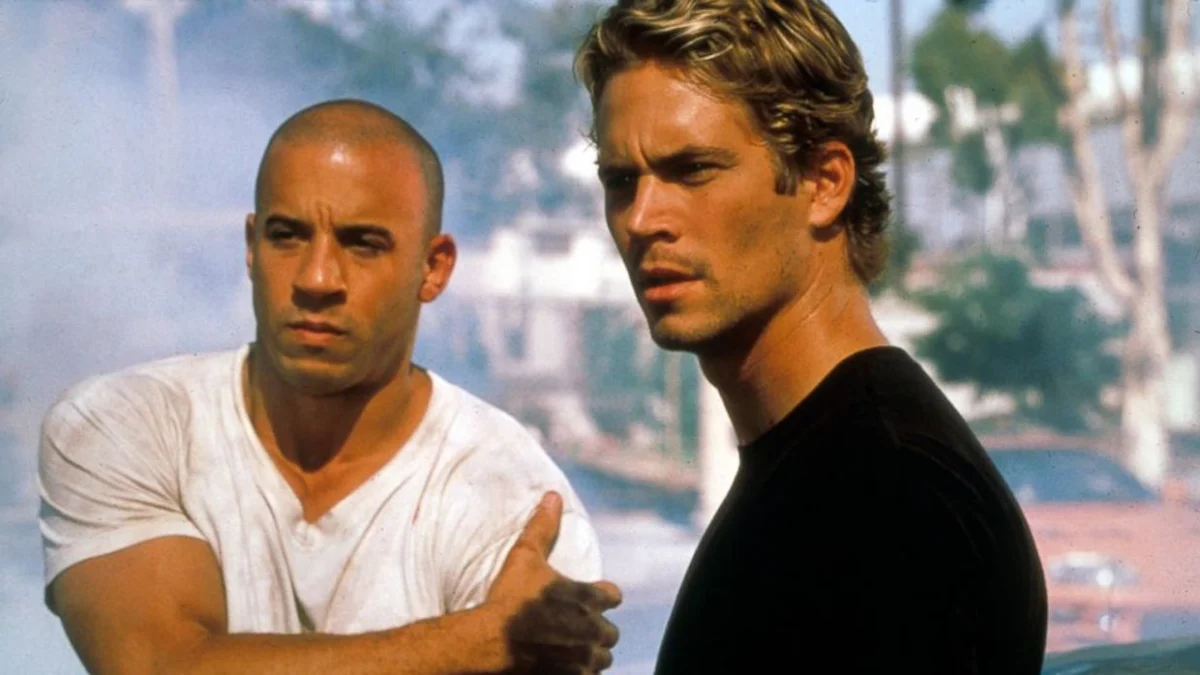
The Cannes Film Festival, a bastion of global cinematic art, recently hosted a notable midnight screening of Rob Cohen’s 2001 action blockbuster, The Fast and The Furious, marking its 25th anniversary. This unexpected inclusion in the Official Selection, particularly in an edition otherwise conspicuous for a notable absence of major Hollywood premieres, underscored a fascinating trend: the evolving dialogue between prestigious film festivals and mainstream popular culture. The event, held last Wednesday at the Grand Théâtre Lumière, saw an emotional return for franchise patriarch Vin Diesel, whose reflections on the film’s legacy and his late co-star Paul Walker resonated deeply with the 2,300 attendees.
An Unconventional Choice for the Croisette
For many festival veterans, the decision to feature The Fast and The Furious in such a prominent slot was initially met with a mix of surprise and mild incredulity. Cannes, historically dedicated to showcasing auteur cinema and groundbreaking international works, has, in recent years, shown an increased willingness to acknowledge the cultural impact and artistic merit, however unconventional, of popular genre films. This shift was evident in prior editions, such as the high-profile launches of Top Gun: Maverick in 2022 and Mission Impossible – Dead Reckoning Part One in 2023, both featuring Tom Cruise on the iconic Croisette. The inclusion of The Fast and The Furious, however, felt different, less about a contemporary blockbuster premiere and more about a retrospective acknowledgment of a cultural phenomenon that has profoundly shaped the action film landscape for over two decades.
The film, originally released on June 22, 2001, quickly became a sleeper hit, grossing over $207 million worldwide on a modest budget of $38 million. It wasn’t just a financial success; it tapped into a burgeoning subculture of street racing and car modification, transforming it into a global cinematic language. Its narrative, centered on themes of family, loyalty, and adrenaline-fueled rebellion, resonated with a broad audience, laying the groundwork for what would become one of the most commercially successful film franchises in history, with global box office revenues exceeding $7 billion across its ten main installments and a spin-off.
Vin Diesel’s Emotional Return and Cannes Connection
The evening’s spotlight firmly belonged to Vin Diesel, the actor synonymous with the character of Dominic Toretto. His arrival on the red carpet, delayed slightly as he savored the attention of photographers and fans, culminated in a triumphant group photo with co-stars Michelle Rodriguez and Jordana Brewster, alongside Meadow Walker, daughter of the late Paul Walker. Festival General Delegate Thierry Frémaux and President Iris Knobloch also joined, signaling the institutional endorsement of the event. Diesel, notably sporting a blazer emblazoned with "FAST FOREVER" in diamante, visibly soaked in the moment, a poignant testament to the franchise’s enduring power and his personal connection to its legacy.
Inside the Grand Théâtre Lumière, Diesel delivered an impassioned address, his slow, sonorous cadences lending a ceremonial weight to the proceedings. Despite The Fast and The Furious not being formally part of the festival’s "Cannes Classics" sidebar – a curated selection of restored films – Diesel frequently referred to its newfound "classic" status, a sentiment that resonated with the appreciative audience. He reminisced about his first visit to Cannes in 1995, then an unknown 28-year-old presenting his 20-minute short film, Multi-Facial. "You, Vin, were born in Cannes," Frémaux reportedly told him earlier that day, a sentiment that Diesel appeared to embrace wholeheartedly, visibly moved to tears by the occasion.
His speech invariably turned to Paul Walker, his co-star and friend, who tragically died in a high-speed single-car collision in 2013 during the production of Furious 7. Diesel spoke of their bond, referring to Walker by the pet name "Pablo," and proclaimed, "This is the film where brotherhood was introduced to our millennium by myself and my brother Pablo." This heartfelt tribute underscored the profound personal loss that continues to shape the franchise’s narrative and its connection with its audience, transforming the event into more than just a film screening; it became a communal moment of remembrance and celebration of a partnership that defined an era of action cinema.
The Genesis of a Billion-Dollar Franchise
The Fast and The Furious emerged from a Vibe magazine article titled "Racer X" by Ken Li, detailing the underground street racing scene in Los Angeles. Director Rob Cohen and screenwriter Gary Scott Thompson, along with subsequent writers Erik Bergquist and David Ayer, crafted a story that blended high-octane racing sequences with a classic undercover cop drama, reminiscent of films like Point Break. The plot, by today’s franchise standards, was remarkably grounded: LAPD officer Brian O’Conner (Paul Walker) infiltrates a street racing crew led by Dominic Toretto (Vin Diesel), suspected of orchestrating a series of daring high-tech heists involving VCRs and DVD players.

The film’s initial critical reception was mixed, with some praising its kinetic energy and star power, while others dismissed it as superficial. However, its raw, practical effects-driven action sequences, charismatic leads, and emphasis on a surrogate "family" quickly captivated audiences. It perfectly captured the zeitgeist of early 2000s car culture, providing a cinematic escape that was both thrilling and aspirational for a generation. The chemistry between Diesel and Walker was undeniable, establishing a dynamic that would become the emotional core of the entire franchise. Walker’s portrayal of Brian O’Conner, marked by a determined, often intense gaze, hinted at his earlier acting roots in soap operas like The Young and the Restless, showcasing an ability to convey complex emotions within a high-stakes narrative.
Over two decades, the franchise has undergone a dramatic evolution, moving from street-level crime to global espionage, incorporating increasingly fantastical stunts that have literally taken characters into space. This escalation, while thrilling for many, also led to a significant shift from the more grounded, practical effects of the original to a heavy reliance on CGI. The Cannes screening provided a unique opportunity to revisit the franchise’s roots, appreciating the highly calibrated, almost hypnotic quality of its first incarnation – a "Michael Mann for meatheads," as one observer aptly put it, highlighting its blend of gritty realism and stylized action.
Cannes and the Cultural Canon: A Shifting Paradigm
The inclusion of The Fast and The Furious at Cannes reflects a broader trend in how prestigious film festivals are engaging with popular cinema. Traditionally, these festivals have been seen as gatekeepers of high art, curating a selection of films that challenge, provoke, and push the boundaries of the medium. However, in an increasingly fragmented media landscape, and with the growing global influence of popular culture, festivals are beginning to recognize the importance of acknowledging films that, while not strictly "arthouse," have left an indelible mark on cinematic history and popular consciousness.
This "cool-mom conciliatory gesture," as it was described, is not merely an attempt to draw larger audiences or court Hollywood. It represents a subtle but significant re-evaluation of what constitutes a "classic" and how cultural impact can transcend traditional artistic classifications. By showcasing The Fast and The Furious, Cannes implicitly acknowledges its role as a franchise incubator, a cultural touchstone, and a film that, despite its genre trappings, delivered compelling characters and themes that have resonated across generations. It also serves as a reminder that cinematic excellence can be found in diverse forms, and that popular films can carry significant emotional and cultural weight.
The festival’s willingness to host such an event, juxtaposed with its more conventional programming, suggests a desire to bridge the gap between high culture and mass entertainment. It positions Cannes not just as a showcase for emerging talent and established auteurs, but also as a retrospective space for films that have shaped the global cinematic conversation, regardless of their initial critical reception or genre. This move can be seen as an effort to maintain relevance and appeal in a rapidly changing industry, demonstrating an understanding that the definition of a "classic" is dynamic and evolving.
The Enduring Power of "Family" and Future Horizons
As the credits rolled and Vin Diesel concluded his second, equally emotional address, it was well past 3 a.m. for the attendees. The experience, a blend of cinematic nostalgia, raw emotion, and festival pomp, left a lasting impression. The film’s core theme of "family," which Diesel so passionately referenced, has been the enduring bedrock of the franchise, evolving from a group of street racers to a global team of operatives bound by loyalty and an unbreakable code. This emphasis on found family, particularly poignant in light of Paul Walker’s passing, continues to resonate with audiences worldwide, contributing to the franchise’s remarkable longevity.
The future of the Fast & Furious universe remains robust. While the "final" installment of the main saga is reportedly slated for 2028, signaling the conclusion of Dominic Toretto’s primary narrative arc, the franchise is far from over. A staggering total of four spin-off television series are currently in development at Peacock, Universal’s streaming platform. This aggressive expansion strategy underscores the immense commercial value and brand recognition of The Fast and The Furious. These spin-offs aim to explore new characters, expand existing backstories, and delve into different facets of the universe, ensuring that the "FAST FOREVER" promise from Diesel’s blazer is not an idle one but a strategic roadmap for continued cultural presence and economic success.
The Cannes midnight screening of The Fast and The Furious was more than just a 25th-anniversary celebration; it was a powerful statement about the fluid boundaries of cinematic art, the enduring impact of popular culture, and the profound emotional connections forged through shared storytelling. It highlighted how a film once considered a genre entry can, over time, earn its place in a broader cultural canon, celebrated not only for its thrills but also for the "brotherhood" it introduced and the legacy it continues to build. The event served as a compelling reminder that in the grand tapestry of cinema, there is room for both the profound and the popular, each contributing uniquely to the rich narrative of film history.