Well Go USA has officially unveiled the North American trailer for Colony, the latest high-concept horror thriller from South Korean director Yeon Sang-ho, signaling a return to the visceral zombie narratives that first catapulted him to international stardom. Following its high-profile debut at the 79th Cannes Film Festival in the Midnight Screening section, the film is now slated for a wide theatrical release in the United States on August 28, 2026. This release marks a significant milestone for Yeon, who has spent the last several years expanding his creative portfolio into supernatural thrillers and science fiction, only to return to the "infected" subgenre with a premise that promises to redefine the biological mechanics of the cinematic undead.
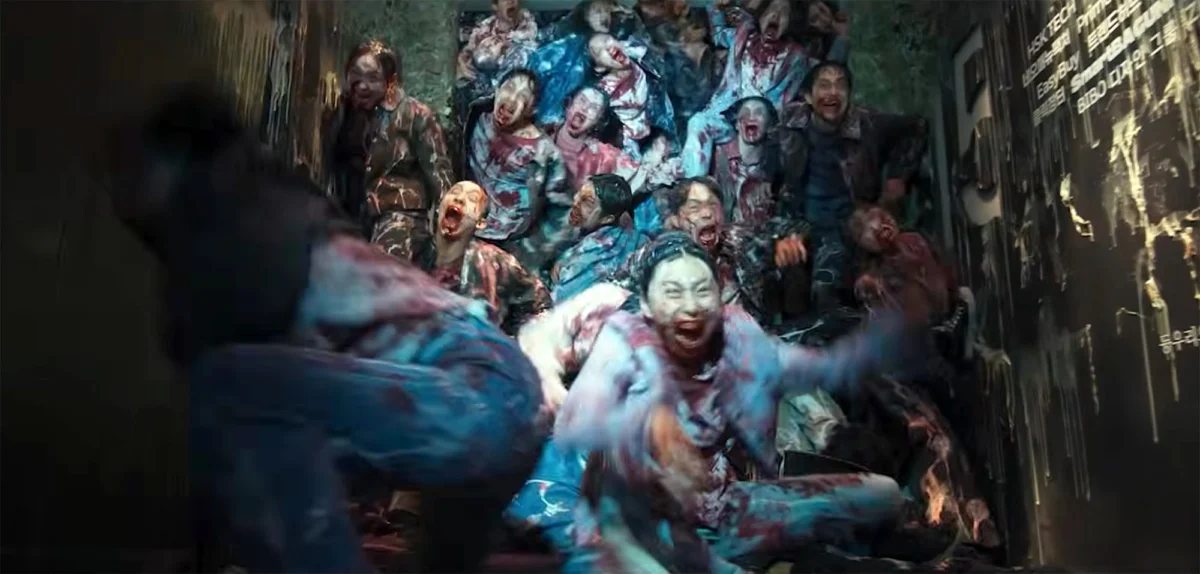
Colony introduces a chilling new iteration of the zombie trope, moving away from the purely instinctual predators seen in Train to Busan and toward a more sophisticated, interconnected threat. The film’s narrative is set against the backdrop of a high-stakes biotechnology conference, where a breakthrough in genetic engineering goes catastrophically wrong. When a rapidly mutating virus is accidentally unleashed within the facility, the attendees—ranging from world-renowned scientists to corporate executives—find themselves trapped within a sealed environment. As the infection spreads, the survivors realize that these are not standard zombies; the infected appear to be part of a "hivemind" or a "colony," connected by a grotesque biological network that facilitates what the trailer describes as an "information exchange."
The Evolution of the Yeon Sang-ho Cinematic Universe
To understand the weight of Colony’s upcoming release, one must look at the trajectory of Yeon Sang-ho’s career. Yeon first gained global recognition with the 2016 live-action hit Train to Busan, which grossed over $98 million worldwide and became a cultural phenomenon. Unlike the slow-moving zombies of Western tradition, Yeon’s creatures were fast, aggressive, and visually distinct, characterized by their contorted movements and collective momentum.
Since then, Yeon has been a prolific force in the South Korean film industry. He followed Train to Busan with the animated prequel Seoul Station and the 2020 high-octane sequel Peninsula. However, his work in the 2020s has seen him branch out into different thematic territories. Projects like the Netflix series Hellbound explored religious fanaticism and supernatural justice, while JUNG_E delved into artificial intelligence and post-apocalyptic warfare. More recently, his work on Parasyte: The Grey and the mystery thriller The Ugly demonstrated a continued interest in the intersection of biological horror and societal breakdown.

Colony appears to be a synthesis of these various interests. It combines the kinetic energy of his early zombie films with the sophisticated biological and philosophical questions explored in his more recent sci-fi endeavors. The "information exchange" element suggests a commentary on our modern interconnected world, where data and viruses—both digital and biological—spread with uncontrollable speed.
Narrative Framework and the Concept of the Hivemind
The screenplay for Colony, co-written by Yeon Sang-ho and his frequent collaborator Choi Gyu-seok (the artist behind the Hellbound webtoon), centers on Se-jeong, a biotechnology professor portrayed by Gianna Jun (Jun Ji-hyun). As the protagonist, Se-jeong is uniquely positioned to understand the horror unfolding around her. The trailer highlights her realization that the infected are not merely dying and reanimating, but are instead "evolving."
The visual language of the trailer emphasizes a "gross white stuff"—a fungal or fibrous biological matter—that connects the infected individuals. This physical link allows the creatures to act in unison, creating a "mega zombie" or a singular "colony" entity. This shift from individual threats to a collective organism heightens the stakes for the survivors, as the monsters are no longer just mindless husks but are part of a strategic, evolving force. This concept mirrors real-world biological phenomena like mycelial networks in fungi or colonial organisms like the Siphonophorae, bringing a grounded, albeit terrifying, scientific layer to the horror.
A Star-Studded Ensemble Cast
The film’s potential for success is bolstered by an elite cast of South Korean talent. Gianna Jun, one of the most recognizable faces in the Hallyu wave, leads the film. Known for her iconic roles in My Sassy Girl and the Netflix series Kingdom: Ashin of the North, Jun brings a level of "prestige" to the horror genre. Her involvement signals that Colony is intended to be more than just a "creature feature," aiming instead for a character-driven narrative with high emotional stakes.
Supporting Jun is Koo Kyo-hwan, who has become a staple in Yeon’s filmography after standout performances in Peninsula and Parasyte: The Grey. Koo’s ability to portray complex, often eccentric characters provides a necessary counterpoint to the film’s intense atmosphere. The cast is further rounded out by Ji Chang-wook, a major star in the world of K-dramas, Shin Hyun-been, Kim Shin-rock, and Go Soo. The assembly of such a high-caliber ensemble suggests a significant production budget and high expectations from the producing studio, Yoomin Hailey Yang’s production house.

Cannes 2026 and the Critical Landscape
Colony’s journey to the US market began in May 2026 at the Cannes Film Festival. The Midnight section at Cannes has historically been a launchpad for South Korean genre films that go on to achieve global cult status; Train to Busan itself famously premiered in this slot.
Initial reactions from the Cannes screening were notably polarized, a common occurrence for Yeon’s more experimental works. Some critics praised the film for its innovative take on body horror and its relentless pacing, noting that the "colony" concept adds a fresh layer of dread to a genre that some feel has become oversaturated. Others, however, found the film’s focus on "gross-out" visuals and its high-concept biotech jargon to be overwhelming. Despite the mixed reviews, the consensus remains that Yeon’s technical mastery of action sequences and suspense is as sharp as ever. The polarized reception may actually work in the film’s favor in the US, where "elevated horror" and "extreme genre" audiences often gravitate toward divisive, conversation-starting cinema.
Distribution and the North American Market
Well Go USA’s acquisition of Colony is a strategic move, continuing their long-standing relationship with Yeon Sang-ho. The distributor has been instrumental in bringing Asian action and horror to North American audiences, and they have timed the release of Colony to capitalize on the "late summer" horror window.
The August 28 release date positions the film as a final summer blockbuster for genre fans before the transition into the traditional "spooky season" of September and October. By releasing the film in late August, Well Go USA avoids the crowded mid-summer tentpole season while still capturing the audience’s appetite for high-concept thrills. The marketing campaign, as evidenced by the newly released trailer and posters, leans heavily into the "evolving zombie" hook, utilizing the tagline "First they crawled… now they seem to be evolving" to pique the curiosity of viewers who may feel they have seen everything the zombie genre has to offer.
Broader Implications for the K-Horror Genre
The release of Colony comes at a time when South Korean cultural exports continue to dominate global streaming and box office charts. The success of series like Squid Game and films like Parasite has paved the way for genre-specific works like Colony to find mainstream success in the West.

Furthermore, the film represents a shift in how zombie narratives are constructed. In the 2000s and 2010s, the "fast zombie" was the primary innovation. In the 2020s, as seen in Colony and other recent media like the television adaptation of The Last of Us, the innovation is moving toward biological complexity and ecological horror. By focusing on "information exchange" and "mutation," Yeon Sang-ho is tapping into contemporary fears regarding pandemics, biotechnology, and the loss of individual autonomy to a collective or networked entity.
Technical Execution and Production Value
From a technical standpoint, Colony showcases the evolution of South Korean visual effects (VFX). The "mega zombie" and the hivemind visuals require a sophisticated blend of practical effects and CGI. Yeon has often favored a gritty, grounded aesthetic, and the trailer suggests that Colony will maintain this look, despite the fantastical nature of its antagonists. The use of a single, sealed location—the biotech facility—allows for a claustrophobic atmosphere that maximizes the tension, a technique Yeon previously perfected in the train cars of his 2016 masterpiece.
The screenplay’s focus on a biotech conference also allows for a satirical look at corporate hubris and the dangers of unregulated scientific advancement. This thematic layer provides a narrative backbone that supports the film’s more visceral moments, ensuring that the horror is grounded in human error and ambition.
Conclusion: Anticipation for the August Debut
As the August 28 release date approaches, the buzz surrounding Colony continues to grow. For fans of Yeon Sang-ho, the film represents a "homecoming" to the genre that defined his career. For general horror audiences, it offers a high-concept alternative to the standard slasher or paranormal fare.
Whether Colony will achieve the same legendary status as Train to Busan remains to be seen, but its ambitious premise and stellar cast ensure that it will be one of the most discussed horror films of the year. As the trailer concludes with the haunting image of the "colony" taking shape, one thing is certain: the K-zombie subgenre is far from dead; it is simply, as Yeon Sang-ho suggests, evolving.