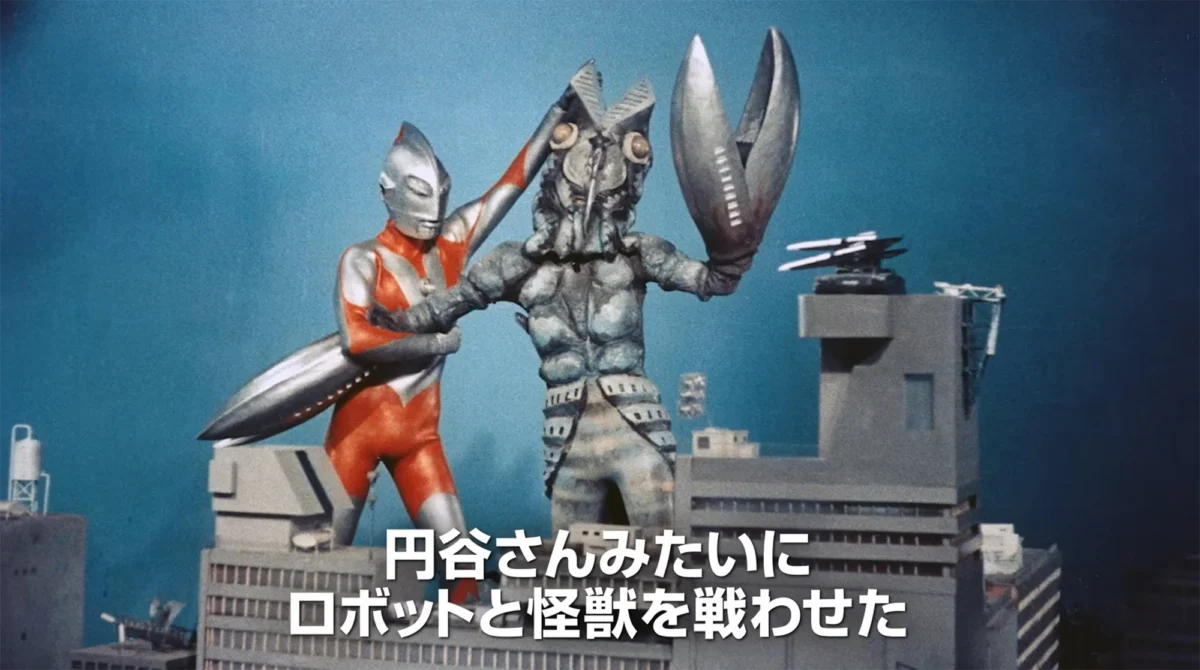
Toho Next and Tsuburaya Productions have officially unveiled the trailer for The Origin of Ultraman, a feature-length documentary designed to chronicle the sixty-year evolution of one of the most significant intellectual properties in the history of global science fiction. Directed by Yu Nakamura and Kazuki Yoshida, the film is scheduled for a theatrical release in Japan on July 3, 2026, marking a pivotal moment in the celebration of the franchise’s 60th anniversary. This documentary seeks to provide a definitive account of the series’ inception, its revolutionary impact on the Tokusatsu genre, and its enduring influence on contemporary filmmakers and artists worldwide. By integrating archival footage with modern interviews, the production aims to deconstruct the "Ultra" phenomenon from its post-war origins to its current status as a multi-generational global brand.
The documentary features an unprecedented assembly of cinematic talent and cultural commentators, including Academy Award winner Guillermo del Toro, Palme d’Or recipient Hirokazu Koreeda, acclaimed game designer Hideo Kojima, and the creative duo behind Shin Ultraman, Hideaki Anno and Shinji Higuchi. These contributors offer technical and philosophical insights into how a television program about a giant alien protector and a team of scientific investigators managed to capture nearly half of the Japanese viewing audience during its original run. The film also delves into the craftsmanship of Eiji Tsuburaya, the "God of Special Effects," whose innovations in miniature work and suit-based performance defined the visual language of Japanese genre cinema for decades.
Historical Context and the Legacy of Eiji Tsuburaya
To understand the significance of The Origin of Ultraman, one must examine the landscape of Japanese media in the mid-1960s. Eiji Tsuburaya, already a legend for his work on the original Godzilla (1954), sought to bring cinematic-quality special effects to the small screen. After founding Tsuburaya Special Effects Productions in 1963, he launched Ultra Q in early 1966, a supernatural anthology series that laid the groundwork for what would become the "Ultra Series." However, it was the premiere of Ultraman in July 1966 that fundamentally altered the trajectory of Japanese television.

The documentary highlights the staggering statistical success of the original series. At its height, Ultraman achieved a peak viewership rating of 42.8%, a figure that remains almost unthinkable in today’s fragmented media environment. This meant that nearly one in every two households in Japan was tuned in to watch the "Giant of Light" battle various Kaiju (monsters). The Origin of Ultraman explores how this saturation was not merely a matter of entertainment but a social phenomenon that reflected the country’s rapid modernization and its anxieties regarding nuclear technology, environmental change, and the balance between nature and progress.
A Chronological Evolution of the Ultra Franchise
The documentary provides a comprehensive timeline of the franchise, tracing its development across six decades. This chronology is essential for understanding how the series adapted to changing cultural tastes and technological advancements:
- 1966: The Birth of a Hero. The debut of Ultraman introduces the concept of a human host (Shin Hayata) merging with an extraterrestrial being to defend Earth.
- 1967–1981: The Showa Era Expansion. Following the success of the original, sequels such as Ultra Seven and Return of Ultraman expanded the lore, introducing the "Ultra Brothers" and the concept of a shared universe.
- 1996: The Heisei Revival. After a period of relative dormancy in domestic television, Ultraman Tiga revitalized the brand with updated special effects and more complex narrative structures, winning over a new generation.
- 2013–Present: The New Generation and Reiwa Eras. Tsuburaya Productions modernized the production pipeline, utilizing digital effects while maintaining the "Suitmation" tradition. This era saw the franchise expand aggressively into international markets.
- 2022: Shin Ultraman. The release of the theatrical film reimagined by Hideaki Anno and Shinji Higuchi brought the character back to its roots while applying a modern, high-concept lens, grossing over 4.4 billion yen at the Japanese box office.
- 2024: Global Animation. The release of Ultraman: Rising on Netflix, a collaboration between Tsuburaya and Industrial Light & Magic, signaled the franchise’s intent to become a staple of Western animation.
The Origin of Ultraman uses this timeline to illustrate how the core themes of the series—hope, courage, and the coexistence of different life forms—have remained constant despite shifts in visual style.
Technical Artistry and the Philosophy of the Kaiju
A significant portion of the documentary is dedicated to the "Tokusatsu" style of filmmaking. Unlike Western science fiction of the era, which often relied on stop-motion or early blue-screen techniques, Tsuburaya’s team perfected the use of detailed miniature cityscapes and "Suitmation"—actors in high-quality rubber suits. The documentary features interviews with design historians who analyze the work of Tohl Narita, the lead designer responsible for the iconic look of Ultraman and his early adversaries. Narita’s philosophy combined classicism with avant-garde sculpture, resulting in creatures that were not just "monsters" but entities with distinct biological and artistic identities.

Furthermore, the film examines the narrative complexity of the Kaiju. In the Ultraman universe, monsters are rarely depicted as purely evil. Many are ancient guardians of the Earth, victims of human pollution, or tragic figures caught in the crossfire of progress. The Origin of Ultraman argues that this moral ambiguity is what separates the franchise from traditional "superhero" tropes. By giving the monsters backstories as meaningful as the hero’s, the series forced its young audience to consider the consequences of conflict and the importance of empathy toward the "other."
Perspectives from Global Visionaries and Industry Leaders
The inclusion of directors like Guillermo del Toro and Nicolas Winding Refn underscores the documentary’s premise that Ultraman’s influence is not confined to Japan. Del Toro, who has frequently cited Japanese monster cinema as a primary influence for films like Pacific Rim, provides a Western perspective on why the "Giant of Light" resonates globally. He emphasizes the "poetry of the scale"—the specific way in which the battles are choreographed to emphasize the weight and power of the combatants.
Hideaki Anno, the creator of Neon Genesis Evangelion, offers a more localized but equally profound analysis. Anno has often stated that Ultraman was the single most influential work of his childhood. His participation in the documentary provides a link between the original 1960s craftsmanship and the modern "Shin" movement, which seeks to restore the sense of awe and terror inherent in the original concepts. The documentary also features Hideo Kojima, who discusses how the series’ visual storytelling and creature design have permeated the world of video games and digital interactive media.
Production Specifications and Official Responses
The Origin of Ultraman is produced by Toho Next and Tsuburaya Productions, with Hirokazu Kore-eda serving as a key planner. Kore-eda, known for his humanistic dramas such as Shoplifters, brings a sophisticated narrative sensibility to the project. The film is co-directed by Yu Nakamura and Kazuki Yoshida, with production duties handled by Masahiro Onda and Tomoko Izuta of Slow Hand.

In a statement regarding the film’s intent, Tsuburaya Productions emphasized that this documentary is a "commemorative landmark" intended to honor the visionary concepts of the original production team. The studio noted that while the franchise has expanded into animation and high-budget features, the documentary is a necessary return to the "source material" to ensure that the craftsmanship of the past is not forgotten by future creators. The film’s tagline, "Children need to be shown something real," reflects Eiji Tsuburaya’s original conviction that special effects should possess a tactile, physical quality to truly engage the imagination.
Broader Impact and Implications for the Global Market
The release of The Origin of Ultraman comes at a time when Japanese intellectual property is experiencing a resurgence in global popularity. The "Shin Japan Heroes Universe"—a collaboration between Toho, Tsuburaya, Khara, and Toei—has successfully cross-pollinated the fanbases of Godzilla, Ultraman, Evangelion, and Kamen Rider. This documentary serves as a foundational text for this expanded universe, providing context for international viewers who may only be familiar with the modern iterations.
For the international market, particularly the United States, the documentary represents a bridge between niche fandom and mainstream recognition. While a North American release date has not yet been confirmed, the presence of figures like del Toro suggests that the film is being positioned for international film festivals and streaming platforms. Analysts suggest that the documentary could serve as a precursor to more aggressive licensing and theatrical distribution of the Ultra series in the West, following the success of Godzilla Minus One and various anime properties.
By documenting the transition from 1960s television to a 21st-century multimedia powerhouse, The Origin of Ultraman provides a roadmap for how legacy franchises can maintain their soul while evolving for a global audience. The film concludes that the enduring appeal of Ultraman lies not in the spectacle of the battles, but in the aspirational nature of the hero—a figure who represents the best of humanity’s potential to protect and understand the world around them. As the July 3, 2026, release date approaches, the film stands as a testament to the fact that the "Giant of Light" continues to cast a long shadow over the landscape of modern cinema.