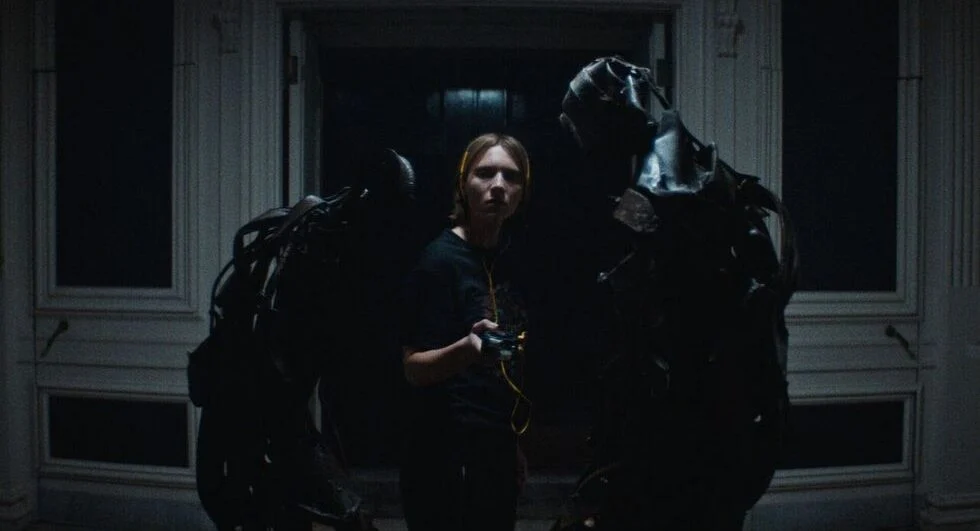
The independent film landscape has recently seen a resurgence in genre-specific homages, but few have attempted the specific stylistic rigors of the Italian Giallo as pointedly as Josh Heaps’ latest feature. City Wide Fever, a 74-minute descent into the macabre, functions simultaneously as a mystery thriller and a meta-commentary on the evolution of cinematic aesthetics. Written and directed by Heaps, the film centers on a young film student named Sam, portrayed by Diletta Guglielmi, whose discovery of a discarded hard drive leads her into a labyrinthine conspiracy involving a forgotten horror director and a series of grisly, real-world events.
The production emerges at a time when film critics and industry analysts have increasingly scrutinized the visual "flatness" of contemporary studio releases. By intentionally adopting the "features and bugs" of the Giallo subgenre—a movement defined by its lurid colors, convoluted plotting, and psychological intensity—Heaps positions City Wide Fever as a counter-narrative to the desaturated, high-contrast digital standards that have dominated Hollywood for the past decade.
The Narrative Core: A Mystery of Missing Archives
The plot of City Wide Fever is anchored in the discovery of a lost history. Sam, an aspiring documentarian and student of cinema, happens upon a USB drive while traversing the streets of New York City. The drive contains archival materials related to Saturnino Barresi, a fictionalized director described within the film’s lore as the "true father of Italian horror." The narrative establishes that Barresi directed three cult-classic films before vanishing under mysterious circumstances in Times Square while scouting locations for his fourth project, which shares its title with the film itself: City Wide Fever.
Captivated by the legend of the "missing auteur," Sam embarks on a journey to uncover the truth behind Barresi’s disappearance. Her investigation quickly transcends academic curiosity. As she navigates the depths of Manhattan, she finds herself ensnared in a conspiracy that mirrors the violent tropes of the very films she studies. The narrative structure follows a traditional investigative arc that gradually dissolves into a surrealist nightmare, where the boundaries between Sam’s reality and the hyper-stylized world of Italian horror begin to blur.
Chronology of Production and Aesthetic Choices
The development and execution of City Wide Fever reflect a deliberate choice to prioritize visual texture over polished realism. The production timeline and technical strategy reveal a focus on recapturing the "sensory overload" characteristic of 1970s cinema.
- Conceptualization: Josh Heaps sought to create a film that served as an "ode to Giallo," focusing on the genre’s tendency to prioritize visual presentation and atmosphere over linear logic.
- Cinematography and Principal Photography: Director of Photography Ethan Johnson utilized low-quality digital cameras to achieve a "home-video" aesthetic. This choice was intended to create an uncanny feeling, suggesting that the audience is viewing found footage or private, forbidden material.
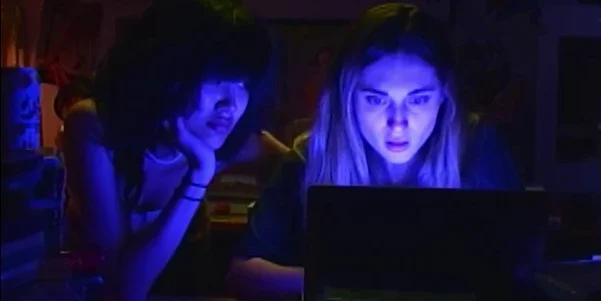
- Color Grading and Post-Production: Unlike modern blockbusters that utilize neutral tones to facilitate CGI integration, City Wide Fever employs extreme color saturation. Scenes are frequently bathed in monochromatic washes—vibrant blues, deep greens, and piercing reds—designed to evoke the works of Mario Bava and Dario Argento.
- Editing Techniques: The film utilizes "archaic" editing styles, including double exposures, slow-motion sequences, and crossfades. These techniques reinforce the "dreamlike" and "disorienting" nature of the story, intentionally breaking the immersion of standard continuity editing.
Supporting Data: The Giallo Influence and Industry Context
To understand the significance of City Wide Fever, it is necessary to examine the historical data surrounding the Giallo genre. Originating in Italy, "Giallo" (meaning "yellow," referring to the yellow covers of cheap mystery novels) peaked in the late 1960s and 1970s. These films were characterized by:
- Stylized Violence: Elaborate set-pieces involving masked killers.
- Aesthetic Overload: High-contrast lighting and experimental scores.
- The Amateur Sleuth: Often featuring a protagonist who is an outsider (an artist, a writer, or, as in this case, a student) pulled into a mystery.
Industry analysts note that the "desaturation" trend mentioned in relation to modern Hollywood is a byproduct of the "Digital Intermediate" (DI) process. Since the early 2000s, many studios have favored a "grayer" look to hide the seams between live-action footage and digital effects. City Wide Fever stands in direct opposition to this trend. By utilizing a 74-minute runtime—significantly shorter than the modern 120-minute average—the film also mimics the lean, fast-paced production cycles of mid-century European genre cinema.
Cast and Creative Collaboration
The film features a notable ensemble of independent cinema veterans, lending the project a degree of "indie" credibility that resonates with its New York City setting. The cast includes:
- Diletta Guglielmi (Sam): The lead actress provides a performance that bridges the gap between modern realism and the "camp" sensibilities of classic horror.
- Angelica Kim (Chloe): Serving as the pragmatic foil to Sam’s obsession, Kim’s character provides moments of levity that ground the film’s more surreal elements.
- Larry Fessenden: A titan of independent horror, Fessenden’s involvement signals the film’s alignment with the "Glass Eye Pix" school of low-budget, high-concept filmmaking.
- Supporting Ensemble: The cast is rounded out by Onur Tukel, Ian Fidance, Carolyn Farina, and Rutanya Alda, many of whom are staples of the New York independent film scene.
The presence of these actors suggests a collaborative environment where the history of independent film is celebrated. The inclusion of Carolyn Farina (known for her role in Whit Stillman’s Metropolitan) and Rutanya Alda (Mommie Dearest, The Deer Hunter) adds a layer of cinephilic depth to the production.
Technical Analysis: Sound and Vision
While the visual elements of City Wide Fever have been praised for their boldness, the auditory landscape presents a more complex technical profile. The film’s score was sourced from preexisting tracks by multiple musicians, including Dressel Amorosi. While individual tracks have been noted for their quality, the lack of a singular, unified composer results in a fragmented soundscape.
However, some critics argue that this fragmentation contributes to the film’s "disorienting" energy. In Giallo tradition, the music is often as "loud" as the visuals, utilizing progressive rock or jazz-fusion to heighten the viewer’s sense of unease. The use of double exposures and crossfades in the editing suite further emphasizes the narrative’s themes of fractured memory and hidden histories.
Broader Implications for Independent Cinema
The release of City Wide Fever highlights several growing trends within the independent film industry. First, it demonstrates the viability of "micro-budget" genre films that prioritize a specific aesthetic "vibe" over traditional narrative coherence. In an era where streaming platforms are saturated with high-budget content that often lacks a distinct visual identity, films like Heaps’ work appeal to a niche audience of "cinephiles" who crave stylistic experimentation.
Furthermore, the film serves as a critique of modern metropolitan life. By setting the mystery in New York City—specifically areas like Gowanus and Times Square—the film contrasts the gritty, "lost" New York of the 1970s (the era of Saturnino Barresi) with the gentrified, contemporary city inhabited by Sam. This "temporal friction" is a key component of the film’s atmosphere, suggesting that the ghosts of the past are still present beneath the surface of the modern urban landscape.
Official Responses and Market Reception
While City Wide Fever is designed for a specific subset of genre enthusiasts, its reception within the film festival circuit and indie circles indicates a demand for "unapologetic" filmmaking. Statements from the production team suggest that the film was never intended to satisfy "typical narrative structures" or "modern filmmaking standards." Instead, it was conceived as a "loving ode" to a bygone era of cinema.
Market analysts suggest that the film’s success will likely be measured not by box office returns, but by its "cult" longevity. The 74-minute runtime makes it an ideal candidate for midnight screenings and specialized genre platforms. For audiences looking for a reprieve from the "bland, washed-out gray" of mainstream cinema, City Wide Fever offers a vibrant, if bizarre, alternative.
In conclusion, City Wide Fever is more than a simple horror mystery. It is a technical exercise in style, a tribute to the "father of Italian horror," and a defiant statement against the visual homogeneity of the 21st century. By embracing the "fever" of its title, Josh Heaps has created a work that challenges viewers to look closer at the colors, the shadows, and the forgotten histories of the medium.