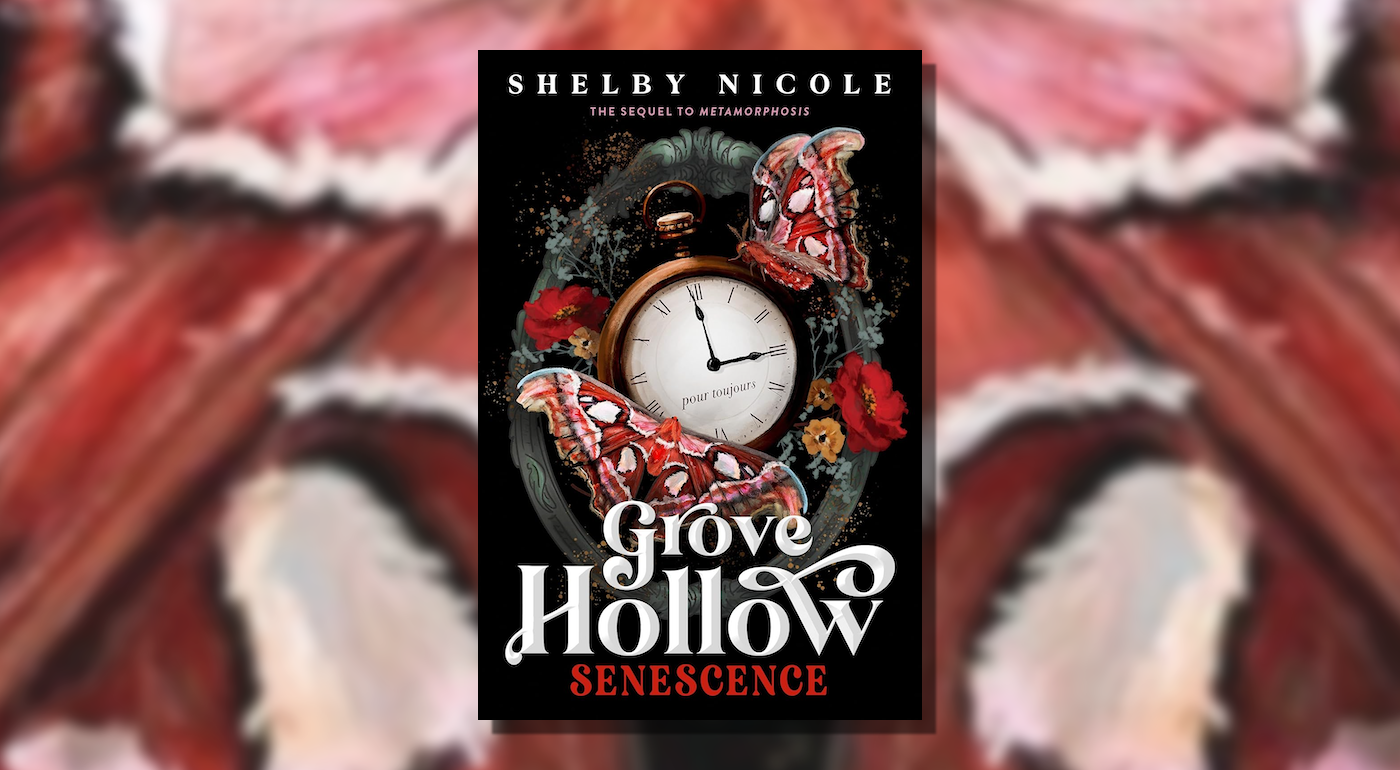
The literary world is abuzz with anticipation for the release of "Senescence," the highly awaited second installment in Shelby Nicole’s Young Adult paranormal romance series, Grove Hollow. Published by Delacorte Press and slated for release on December 1st, the novel delves into complex themes of love, fate, and the enduring power of identity, as evidenced by a poignant excerpt shared with readers.
The narrative centers on Jade and Will, a couple whose love story is tested by the supernatural. Will, who Jade believed was lost forever, makes a startling return through a magical mirror, no longer a spectral presence but a tangible entity. His reintegration into the world involves enrolling at Grove Hollow Academy alongside Jade and their group of friends, known as "the Misfits." However, Will’s reappearance is fraught with the secrets of his past, including lingering connections to past loves. The excerpt hints at a pivotal moment where ancient gods deliver a life-altering message, forcing Jade to confront the true nature of her heart’s desires and the possibility of rewriting destiny itself.
A Perilous Journey Through Blackhill Cemetery
A significant portion of the provided excerpt unfolds within the somber confines of Blackhill Cemetery, a setting that amplifies the novel’s exploration of mortality and existence. The scene opens with a tense conversation between Wes and Will, questioning the implications of Will’s corporeal return. The absence of a grave for Will raises profound existential questions: if he was never officially declared deceased, did he truly exist? This uncertainty weighs heavily on Will, who grapples with the potential erasure of his past identity.
"As if I was never murdered?" Will asks, his voice laced with a dawning dread. "That I maybe never existed at all before now. My identity… erased completely…" His words hang in the frigid air, a chilling testament to the precariousness of his regained existence. The group, sensing his distress, instinctively draws closer, offering a silent, supportive presence. Jade’s reassurance, "You’re still you, Will. Whatever the locket did or didn’t do, it doesn’t change who you are," underscores the novel’s central theme: identity is not solely defined by external validation or historical records, but by intrinsic selfhood and the bonds forged with others.
Will’s internal struggle intensifies as he articulates his fear: "That’s not what I’m concerned about. It’s that if I never existed… then who am I?" This existential crisis resonates with Jade, who reflects on her own cherished memories and familial connections, particularly her grandfather’s sea shack. The thought of those formative experiences being invalidated is deeply unsettling. The narrative explores the human need for a past, a foundation upon which to build one’s present and future. Without memories, without recognition from loved ones, Will faces a profound void.
The group’s objective in the cemetery becomes clear: to find evidence of Will’s past existence, specifically his grave. Yet, the prospect is fraught with anxiety. The possibility of discovering a grave that should not be there – a testament to a past they are trying to transcend – or, conversely, finding no grave at all, which would solidify Will’s existential crisis, creates a palpable tension. The weight of this discovery, and its potential to either affirm or shatter Will’s fragile sense of self, presses down on Jade.
Chronology of Loss and the Weight of History
The excerpt offers glimpses into the history of Blackhill Cemetery and its connection to the characters. The narrative suggests that the cemetery is a place Will frequented in his past life, particularly to visit his mother. He recounts coming "almost every day just to talk to my mother," highlighting a deep filial bond. This personal connection to the cemetery underscores its significance as a repository of memory and grief.
Will also shares a harrowing observation about the cemetery’s recent history, noting the influx of young men who died fighting in Vietnam. "The funerals," he murmurs, "So many young men… so many sons, all of them too close to my age, dying fighting in Vietnam. Every time I came here, there was another grieving family. Another boy buried too young. I couldn’t bear it. The sight of them broke me. All of their lives and dreams were taken before they even had a chance to begin. Like me." This poignant reflection places Will’s personal tragedy within a broader historical context of loss and sacrifice, emphasizing the universal pain of unfulfilled potential. The camaraderie among the group is evident as Julian places a comforting hand on Will’s back, acknowledging the shared weight of their collective experience.

Unearthing Family Legacies and Lingering Shadows
The narrative shifts as the group ventures into a more elaborate section of the cemetery, where tombs signify greater wealth and social standing. This area houses the resting places of the Ashmore and Whitney families, introducing a layer of ancestral mystery and familial history into the plot. The discovery of the Whitney family tombs, including that of Bruce Whitney and the prominent tomb of Octavius Whitney, prompts Jade to confront her own lineage.
Bruce Whitney’s tombstone reveals his birth year as 1862 and death in 1931, with his parents named as Octavius and Tabatha Whitney. This information connects to Aunt Ruth’s earlier mention of Octavius Whitney, Jade’s great-great-great-grandfather, who co-founded Whitney & Whitney Oil Company with his twin brother Augustus. The opulent tomb of Octavius Whitney, adorned with intricate carvings and designed to command attention, stands as a stark symbol of his family’s wealth and influence.
Jade’s contemplation of these ancestors reveals a complex relationship with her family’s past. While acknowledging the material success, she also alludes to hints from Mr. O’Connor about her family’s "shady business history" and "greed and deceit." She reflects, "It feels odd, standing here next to the tombs of people connected to me, yet I know nothing about who they were." This sentiment underscores the disconnect between inherited legacy and personal knowledge, raising questions about accountability and the ethical underpinnings of inherited wealth. Jade’s internal monologue about Octavius’s potential judgment in the afterlife ("If the Egyptian goddess Ma’at were to weigh his heart against her feather, I’m certain it would sink like a boulder from all the corruption.") suggests a deep-seated concern about the moral compromises that may have underpinned her family’s prosperity.
The discovery of Maura Whitney’s grave, identified as the wife of Augustus Whitney and mother of "Poppet Whitney," takes a dramatic turn. The absence of a gravestone for Poppet, coupled with Will’s assertion that Poppet was the ancestor who "murdered me and my family," ignites a new crisis. Jade explains, "No. There would be no grave. Maybe a memorial, but there wouldn’t be a body to bury… Poppet went missing after she killed Will. The Whitney family covered it up after she ran away." This revelation introduces a direct link between Jade’s family history and Will’s past trauma, suggesting that the "Whitney family covered it up" implies a collective responsibility or complicity in the events surrounding Will’s death. Julian’s interjection, "Assuming Will was even murdered. Assuming he has a past," further emphasizes the precariousness of their situation and the blurred lines between reality and spectral existence.
The Ultimate Revelation: William Montgomery’s Final Resting Place
The group’s search culminates in the Montgomery family plot, a section of the cemetery characterized by the close proximity of headstones, symbolizing an unbroken familial bond. They pass the graves of Will’s mother, Cornelia Montgomery, and his father, Albert Montgomery, each offering a poignant glimpse into Will’s past and the family dynamics that shaped him. Cornelia’s grave, though aged, retains an elegant simplicity, while Albert’s is a commanding marble obelisk, described as a "humbling humility" that distinguishes him from the perceived greed of Jade’s own ancestors.
The journey reaches its somber conclusion at the grave of William Montgomery. Aubrey reads the inscription: "William Montgomery. Loved deeply by father Albert Montgomery and mother Cornelia Montgomery. Born July 13, 1864. Died December 23, 1885." The stark reality of Will’s gravestone, marking his death over a century ago, strikes Jade with profound force. The paradox of holding the man she loves while he is simultaneously buried beneath her feet creates an emotional maelstrom.
The collective shock is palpable. "I don’t get it," Julian mutters, voicing the central question that grips them all: "How are you here… if you’re down there?" This moment encapsulates the novel’s exploration of the supernatural, the enduring power of love, and the possibility of defying even the finality of death. The excerpt ends on this precipice, leaving readers to ponder the mechanisms of Will’s return, the secrets of the magical mirror, and the ultimate fate of Jade and Will as they navigate a reality where the boundaries between life and death have been irrevocably blurred.
The narrative arc suggests that "Senescence" will delve deeper into the supernatural lore of Grove Hollow, unraveling the intricate connections between ancient entities, familial legacies, and the enduring strength of the human heart. The exploration of identity, the weight of history, and the potential for love to transcend mortality are central to the compelling promise of this new installment.