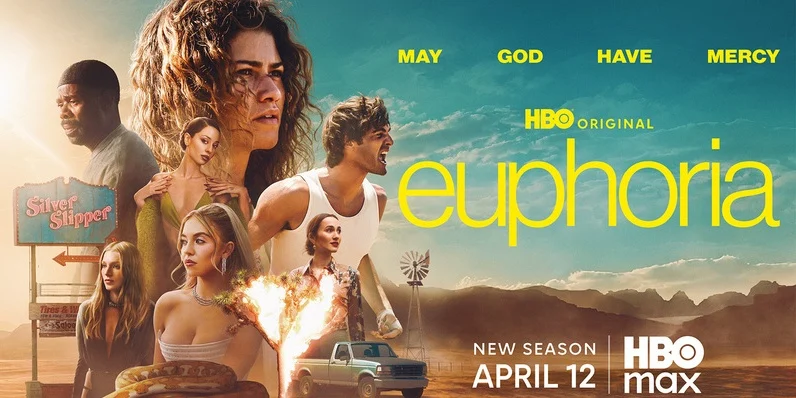
The return of HBO’s Emmy-winning drama Euphoria for its third season arrives after a protracted four-year hiatus, a period that saw the series’ central cast transition from rising talents to some of the most recognizable faces in global cinema. Since the conclusion of the second season, lead actress Zendaya has solidified her status as a box-office powerhouse with the Dune franchise and Challengers, while Sydney Sweeney and Jacob Elordi have become staples of the silver screen in projects ranging from Anyone But You to Priscilla and Saltburn. This monumental shift in the professional standing of the cast has created a unique tension surrounding the new season: the question of whether a series built on the volatile emotions of adolescence can survive the maturation of both its performers and its narrative scope. Under the continued direction of showrunner Sam Levinson, Season 3 attempts to pivot away from the familiar confines of East Highland High School, venturing instead into a gritty, crime-laden landscape that explores the darker fringes of the American dream.
A Drastic Shift in Narrative Scope and Setting
The third season of Euphoria marks a significant departure from the suburban melodrama that defined its first two installments. The narrative no longer centers on the hallways of high school or the immediate fallout of teenage heartbreak. Instead, Levinson expands the world into the California and Mexican deserts, a setting described as a "Wild West" for a disillusioned generation. This new environment is populated by rivaling drug cartels, strip clubs, and a sense of lawlessness that stands in stark contrast to the stylized, neon-lit aesthetics of previous years.
At the center of this transition is Rue Bennett, played by Zendaya. Following the events of Season 2, Rue finds herself entangled in the dangerous web of Laurie (Martha Kelly), the soft-spoken but lethal drug lord to whom Rue owes a significant debt. The storyline sees Rue forced into the role of a drug mule, transporting substances across the border in an attempt to settle her accounts. This arc introduces Adewale Akinnuoye-Agbaje as Alamo, a purveyor of illegal weapons and the head of a strip club dynasty. While the shift into a crime thriller format is a jarring leap for a show that began as a character study on addiction and recovery, Zendaya’s performance remains a grounding force. Her ability to inhabit Rue’s idiosyncratic mannerisms and internal conflict provides a semblance of continuity in a season that otherwise feels disconnected from its origins.
The Evolution of the Main Ensemble
The "Gen Z-ified American dream," as interpreted by Levinson this season, takes a cynical turn for the rest of the ensemble. Nate Jacobs (Jacob Elordi) has moved beyond his role as a high school antagonist to become an overachieving real estate developer. His primary conflict involves a retirement home development project, a venture that brings him into contact with high-stakes donors and legal jeopardy. Elordi, who has received critical acclaim for his recent film work, is tasked with delivering dialogue that leans heavily into the "prestige" tropes of modern television, though critics have noted a certain hollowness in the character’s new direction.
Parallel to Nate’s professional struggles is the arc of Cassie Howard (Sydney Sweeney). In a move that reflects the modern digital economy, Cassie is depicted as an aspiring OnlyFans creator, desperate to find a "big break" in an increasingly saturated market. The dynamic between Nate and Cassie, once the central engine of the show’s melodrama, has evolved into a transactional and often degrading partnership. Meanwhile, Jules Vaughn (Hunter Schafer) appears to have been sidelined in the early episodes, serving more as a lingering object of desire than a fully realized protagonist, a creative choice that has already sparked debate among the series’ long-term audience.
Production Timeline and Development History
The road to Euphoria Season 3 was marred by numerous external challenges that contributed to its four-year production cycle. The series, which premiered its second season in early 2022, faced immediate delays due to the global pandemic and the subsequent industry-wide strikes by the Writers Guild of America (WGA) and the Screen Actors Guild (SAG-AFTRA) in 2023.

- June 2019: Euphoria Season 1 premieres to critical acclaim and high viewership.
- January 2022: Season 2 premieres, becoming the second most-watched show in HBO history behind Game of Thrones.
- February 2022: HBO officially renews the series for a third season.
- 2023: Production is halted due to labor disputes in Hollywood and the creative refocusing of Sam Levinson following the controversial reception of his other HBO project, The Idol.
- 2024: Filming finally commences with a revamped script and a significant time jump to accommodate the aging cast.
The long gap between seasons has fundamentally altered the viewing experience. In 2022, Euphoria averaged 16.3 million viewers per episode, fueled by a massive social media presence and a "watercooler" effect. However, the lengthy delay has led some industry analysts to wonder if the show’s core demographic—primarily Gen Z—has outgrown the series’ specific brand of provocation.
Technical Execution and Aesthetic Rebranding
One of the most notable changes in Season 3 is the shift in its visual and auditory identity. For the first two seasons, the series was synonymous with the work of composer Labrinth, whose synth-heavy, ethereal score defined the "Euphoria aesthetic." In a surprising move, Labrinth’s presence has been significantly reduced, with legendary composer Hans Zimmer stepping in to provide a more traditional, motif-based score. While Zimmer is a titan of the industry, the change has been described as a loss of the show’s unique sonic heartbeat.
Visually, however, the series remains a masterclass in cinematography. Working with Marcell Rév, Levinson has opted to shoot on a combination of 35mm and 65mm film. This choice dispenses with the "candy-coded" neon palette of the high school years in favor of a grander, more cinematic look that suits the desert landscapes and the darker tone of the narrative. The use of 65mm film, in particular, lends a sense of scale to the production that is rarely seen in television, ensuring that the show remains one of the most visually stunning offerings on the air. This technical prowess makes the series a strong contender for the Outstanding Cinematography category at future Emmy Awards.
Critical Reception and Industry Implications
Early reactions to the first three episodes of the season have been polarizing. While the performances of Zendaya and Colman Domingo (who reprises his role as Ali) continue to draw praise for their depth and emotional resonance, the writing has come under fire. Critics have pointed toward a "creative and moral bankruptcy" in the storytelling, suggesting that Levinson has leaned too heavily into sleaze and shock value at the expense of character development.
The show’s transition into a "guilty-pleasure" crime drama represents a significant risk for HBO. Historically, Euphoria was lauded for its unflinching, if stylized, look at the realities of modern youth. By moving into the realm of drug cartels and real estate schemes, the series risks losing the relatability that made it a cultural phenomenon. Furthermore, the shadow of The Idol—Levinson’s previous project which was widely panned and canceled after one season—hangs heavy over this new iteration of Euphoria. For many, Season 3 is viewed as a "return to form" test for Levinson as a solo creative force.
Broader Impact and the Future of the Franchise
The trajectory of Euphoria Season 3 reflects a broader trend in the "Prestige TV" era, where showrunners are given immense creative autonomy, sometimes resulting in projects that drift far from their original premise. The series remains a vital asset for HBO and its streaming platform, Max, due to its ability to drive subscriptions and dominate social media discourse. However, the 4/10 critical score mentioned in early reviews suggests a growing disconnect between the creator’s vision and the audience’s expectations.
As the season progresses, the industry will be watching closely to see if the star power of its cast can overcome the narrative hurdles of a reinvented world. With Zendaya, Sweeney, and Elordi now among the most bankable stars in Hollywood, the future of Euphoria beyond this season remains uncertain. If the series cannot recapture the "magic" that defined its early years, it may serve as a cautionary tale about the difficulties of maintaining a zeitgeist-defining show amidst long delays and radical creative shifts. For now, Euphoria stands as a visually beautiful but narratively fractured exploration of a generation trying to find its way in a world that has grown much larger and more dangerous than the hallways of East Highland.