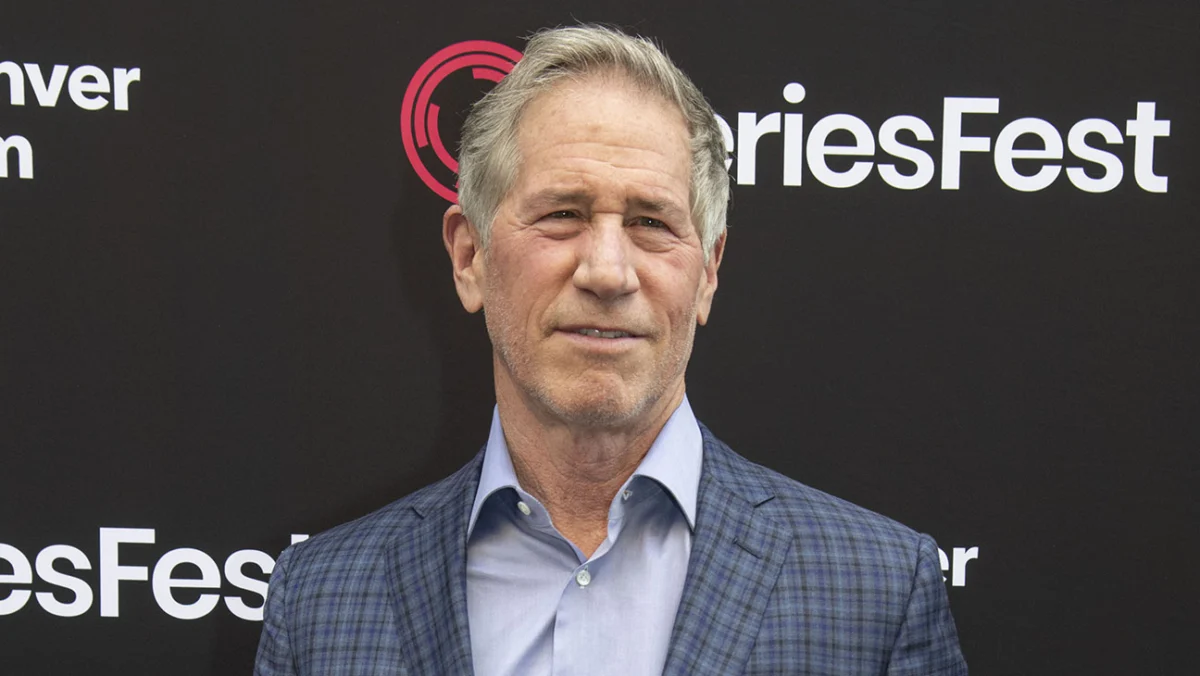
In a decisive move to ensure executive continuity during a transformative period for the entertainment industry, Lionsgate has officially extended the contract of its longtime Chief Executive Officer, Jon Feltheimer. According to a regulatory filing with the Securities and Exchange Commission (SEC) on Wednesday, the studio’s compensation committee approved a new employment agreement on April 13, securing Feltheimer’s leadership through July 31, 2031. This extension adds two years to his previous commitment and reinforces the board’s confidence in the veteran executive as the company navigates its newly minted status as a standalone studio entity.
The decision comes at a critical juncture for Lionsgate, which recently completed a complex separation from its media networks business, Starz. By decoupling the content production and distribution arms from the premium cable and streaming platform, Lionsgate has repositioned itself as a "pure-play" content shop, a move designed to unlock shareholder value and make the company a more flexible participant in the ongoing wave of Hollywood consolidation. Feltheimer, who has been at the helm of Lionsgate since March 2000, is now tasked with steering this streamlined organization through a rapidly evolving digital landscape and an increasingly competitive global box office.
Terms of the Agreement and Executive Compensation
The newly finalized employment agreement maintains a level of consistency in Feltheimer’s direct compensation while introducing performance-based incentives tied to the company’s future market valuation. Feltheimer’s base salary is set to remain at $1.5 million per annum, a figure that has remained unchanged for the past decade. This stability in base pay is notable in an era of escalating executive compensation, suggesting a focus on long-term equity growth rather than immediate cash outlays.
The primary vehicle for Feltheimer’s future compensation lies in a sophisticated management incentive package. The agreement grants the CEO stock options with strike prices ranging between $17 and $22 per share. Given that Lionsgate’s shares closed on Wednesday at $10.66—representing a 4 percent daily decline—these options are currently "out of the money." This structure serves as a clear performance mandate; for Feltheimer to realize significant financial gains from these options, the company’s stock price must nearly double from its current levels.
Market analysts view this incentive structure as a alignment of interests between the CEO and the shareholders. By setting the option floor at $17, the board is signaling its belief that the company’s intrinsic value is significantly higher than its current trading price, particularly following the Starz split. Last week, the stock reached a 52-week high of $11.40, indicating a gradual upward trend that the board hopes Feltheimer will accelerate through 2031.
A Legacy of Growth and the "Mini-Major" Evolution
Jon Feltheimer’s tenure at Lionsgate is one of the longest in the history of modern Hollywood. Alongside Vice Chairman Michael Burns, Feltheimer has spent nearly a quarter-century transforming Lionsgate from a small independent distributor into a "mini-major" powerhouse capable of competing with legacy giants like Disney, Warner Bros., and Universal.
Before joining Lionsgate, Feltheimer spent nine years at Sony Pictures, where he served as President of TriStar Television and later Sony Pictures Television. During his time at Sony, he oversaw the development and production of several iconic television series that defined the 1990s, including Mad About You, The Nanny, Dawson’s Creek, and Party of Five. This background in television production proved instrumental when he transitioned to Lionsgate, as he championed a diversified business model that balanced high-octane theatrical releases with a robust television production division.
Under Feltheimer’s guidance, Lionsgate has curated one of the industry’s most valuable intellectual property (IP) libraries. The studio is the architect behind the John Wick franchise, which has grossed over $1 billion globally across four films, and The Hunger Games series, which remains a cornerstone of the young adult cinematic landscape. The studio’s ability to nurture mid-budget films into global phenomena has become its trademark, providing a blueprint for survival in an industry increasingly dominated by massive superhero blockbusters.
Strategic Realignment: The Starz Separation
The contract extension is inseparable from the broader corporate restructuring that has defined Lionsgate’s recent history. For years, the company operated as a vertically integrated entity following its $4.4 billion acquisition of Starz in 2016. However, as the "streaming wars" intensified, the market began to favor specialized companies over conglomerates with conflicting priorities.
In early 2024, Lionsgate finalized the spin-off of its studio business into a separate entity, Lionsgate Studios, via a merger with a special purpose acquisition company (SPAC), Screaming Eagle Acquisition Corp. This move effectively separated the film and television production assets—the "content engine"—from the Starz networks. The goal was to provide investors with a clear choice: invest in the steady, subscription-based revenue of Starz or the high-growth, IP-driven potential of the studio.
By securing Feltheimer through 2031, the board is ensuring that the architect of this separation remains in place to execute the next phase of the strategy. As a standalone entity, Lionsgate Studios is now more agile, able to license its content to a wider array of streaming platforms—including Netflix, Amazon, and Apple—without the conflict of interest inherent in owning a direct competitor like Starz.
Current Momentum and the 2024-2025 Slate
Lionsgate enters this new era with significant momentum at the box office and on the small screen. The studio recently saw success with the psychological thriller The Housemaid, and anticipation is building for its upcoming theatrical releases. Perhaps the most significant project on the immediate horizon is Michael, the high-profile Michael Jackson biopic directed by Antoine Fuqua. Set to open next week, the film is expected to be a major cultural event and a significant driver of theatrical revenue.
On the television side, Lionsgate continues to punch above its weight. Recent successes include The Studio, a comedy series starring Seth Rogen, and the drama The Hunting Wives. These projects underscore the studio’s strategy of partnering with top-tier talent and maintaining a prolific output across multiple genres. The television division remains a reliable source of cash flow, often producing shows for third-party networks and streamers, which mitigates the inherent volatility of the theatrical film business.
Consolidation and the "First Domino" Theory
Perhaps the most compelling reason for the contract extension is the looming prospect of further industry consolidation. Lionsgate is frequently cited by industry insiders and financial analysts as a prime acquisition target. In the current climate, where tech giants and legacy media companies are desperate for "world-class IP," Lionsgate’s library of 17,000 titles is a rare and valuable asset.
Vice Chairman Michael Burns articulated this perspective during a call with analysts in February, stating, “We think that recognizable world-class IP has never been more valuable, and you’re certainly seeing a validation of premium content when you have those well-heeled players pursuing Warner Bros. We don’t know who’s going to end up with that, but we do believe that is the first domino to fall.”
The reference to Warner Bros. Discovery highlights the volatility of the current market. As larger players like Skydance Media, Paramount Global, and Sony Pictures Entertainment engage in merger discussions, Lionsgate occupies a unique position. It is large enough to be a significant player but small enough to be swallowed by a larger entity looking to bolster its content library. By keeping Feltheimer at the helm for the next seven years, the board has ensured that a seasoned negotiator is in place should a lucrative buyout offer materialize.
Timeline of Key Milestones Under Jon Feltheimer
To understand the significance of this contract extension, one must look at the trajectory of the company over the last two decades:
- March 2000: Jon Feltheimer and Michael Burns take leadership of Lionsgate, then a fledgling Canadian-based film company.
- 2004-2005: The studio finds massive success with the Saw franchise and the Oscar-winning Crash, establishing itself as a serious contender in Hollywood.
- 2012: Lionsgate acquires Summit Entertainment for $412 million, bringing The Twilight Saga into its portfolio and launching The Hunger Games.
- 2014: The John Wick franchise begins, eventually becoming one of the most successful action series of the decade.
- 2016: Lionsgate acquires Starz for $4.4 billion, a move intended to provide a guaranteed platform for its content.
- 2021-2023: The company begins the process of exploring a separation of Starz and the studio to address a lagging stock price and shifting market dynamics.
- Early 2024: Lionsgate Studios officially becomes a standalone entity via the Screaming Eagle SPAC merger.
- April 2024: The board extends Feltheimer’s contract to 2031, signaling a commitment to long-term strategic goals.
Future Outlook and Strategic Implications
The extension of Jon Feltheimer’s contract suggests that Lionsgate is not looking for a quick exit, but rather is focused on building a sustainable, high-value content engine. The next seven years will likely see the studio leaning more heavily into its established franchises while seeking out new "tentpole" opportunities.
The industry will be watching closely to see how Feltheimer handles the challenges of the post-strike environment in Hollywood. With production costs rising and the theatrical window continuing to evolve, the ability to manage budgets while attracting A-list talent will be paramount. Feltheimer’s reputation as a "talent-friendly" executive will be a key asset in this regard.
Furthermore, the "pure-play" studio model will be tested. Without the cushion of a subscription-based network like Starz, Lionsgate’s financial health will be more directly tied to the performance of its individual film and TV projects. However, this also removes the "conglomerate discount" that often plagues media stocks, potentially allowing the share price to reach the $17-$22 targets set in Feltheimer’s incentive package.
In conclusion, the decision to keep Jon Feltheimer in the CEO chair through 2031 provides Lionsgate with a steady hand at a time of unprecedented industry flux. Whether the company remains an independent powerhouse or eventually becomes the "final domino" in a series of industry-shaking mergers, Feltheimer’s leadership will be the defining factor in its ultimate valuation and legacy in the annals of Hollywood history.