The career of Harrison Ford represents one of the most significant trajectories in the history of American cinema, spanning over five decades and encompassing some of the most recognizable archetypes in pop culture. From the cynical heroism of Han Solo in the Star Wars franchise to the rugged intellectualism of Indiana Jones and the noir-inflected grit of Rick Deckard in Blade Runner, Ford has remained a pillar of the Hollywood establishment. However, as the actor enters his 83rd year, a notable shift has occurred in his professional output. While his legacy was built on the silver screen, his most recent and perhaps most critically nuanced work is taking place within the landscape of prestige television. Specifically, his portrayal of Dr. Paul Rhodes in the Apple TV+ series Shrinking has sparked a renewed conversation regarding his standing with major awards bodies, particularly the Television Academy.
The Cinematic Legacy and the Awards Disparity
To understand the current momentum behind Ford’s television career, one must first examine the historical context of his recognition by major industry institutions. Despite being one of the highest-grossing actors of all time—with his films earning billions of dollars globally—Ford’s shelf of competitive individual acting awards is uncharacteristically sparse for a performer of his stature.
Ford’s primary recognition from the Academy of Motion Picture Arts and Sciences remains his 1986 Best Actor nomination for Peter Weir’s Witness. In that race, he lost to William Hurt for Kiss of the Spider Woman. Beyond that singular nomination, Ford’s formal accolades have largely been limited to the Golden Globes, where he received four nominations for performances in Witness, The Mosquito Coast, The Fugitive, and Sabrina. He also earned a single BAFTA nomination for Witness.
In the latter half of his career, the industry has pivoted toward honoring Ford with lifetime achievement awards rather than competitive trophies. He received the Cecil B. DeMille Award at the 2002 Golden Globes and, more recently, was honored with the Screen Actors Guild (SAG) Life Achievement Award in early 2026. This trend suggests an industry that views Ford as a monumental figure of the past, yet his current work in television argues for a re-evaluation of his present-day craft.
The Strategic Pivot to Television
The transition of A-list film stars to television has become a hallmark of the "Platinum Age" of streaming, but Ford’s entry into the medium was notably late. Aside from minor guest appearances early in his career, Ford did not take a leading role in a scripted series until 2022. His television debut came via the Taylor Sheridan-produced western 1923, a prequel to the Yellowstone saga. In the role of Jacob Dutton, Ford utilized his established "rugged competence" persona, providing a bridge for audiences between his cinematic history and the demands of episodic storytelling.
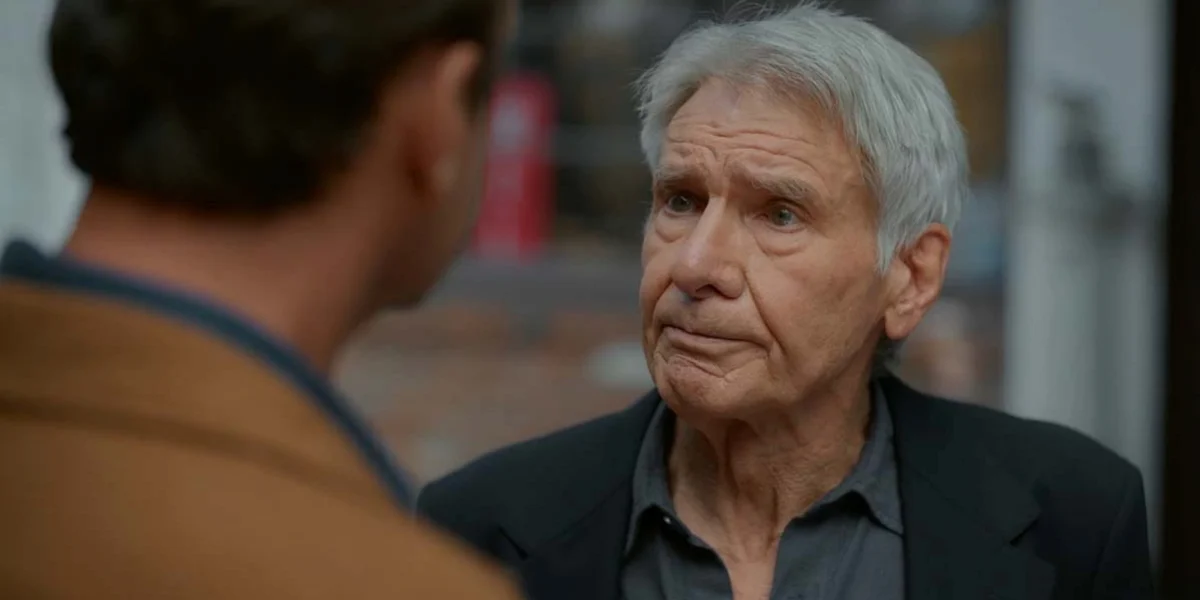
However, it was his 2023 move into the half-hour comedy-drama format with Shrinking that signaled a departure from his traditional typecasting. Developed by Bill Lawrence, Jason Segel, and Brett Goldstein, Shrinking follows a grieving therapist (Segel) who begins to tell his clients exactly what he thinks. Ford plays Dr. Paul Rhodes, a senior therapist grappling with a Parkinson’s disease diagnosis and a strained relationship with his adult daughter. This role required Ford to balance his trademark dry wit with a vulnerability rarely seen in his blockbuster film roles.
Chronology of the Emmy Campaign: Seasons One and Two
The awards trajectory for Ford’s performance in Shrinking has been a study in escalating critical acclaim. During the show’s freshman season in 2023, the competition in the Outstanding Supporting Actor in a Comedy Series category was exceptionally dense. The field was dominated by established hits such as Ted Lasso and Barry, alongside the emergence of The Bear as a critical juggernaut. Ultimately, Ford did not secure a nomination in the first year, as the Television Academy favored actors like Ebon Moss-Bachrach, James Marsden, and Tyler James Williams.
By the second season, however, the narrative surrounding Ford’s performance shifted from "legendary actor in a sitcom" to "career-best dramatic work." The writing for Season 2 expanded Paul Rhodes’ arc, moving him from a mentor figure into a central protagonist dealing with the accelerating decline of his health. Critics noted Ford’s emotional precision, particularly in scenes depicting Paul’s anticipatory grief and his struggle to maintain professional boundaries while his personal life unraveled.
This led to Ford’s first-ever Emmy nomination in 2025. While he was considered a frontrunner, the category delivered a significant upset. The award went to Jeff Hiller for his role in the HBO series Somebody Somewhere. Hiller’s win was characterized by industry analysts as a victory for "quiet, under-the-radar" performances over high-profile star turns. Despite the loss, the nomination solidified Ford’s status as a serious contender in the television space, setting the stage for the third season of the series.
Supporting Data: The Impact of Shrinking on Apple TV+
The success of Shrinking and Ford’s involvement has had measurable impacts on Apple TV+’s brand identity. According to industry data, the series has consistently ranked among the platform’s top-performing comedies, alongside Ted Lasso and Loot.

| Metric | Detail |
|---|---|
| Series Creators | Bill Lawrence, Jason Segel, Brett Goldstein |
| Critical Rating (Avg) | 85-91% (Rotten Tomatoes) |
| Ford’s Nominations | 1 Emmy, 1 Golden Globe (for Shrinking) |
| Platform | Apple TV+ |
Market research indicates that Ford’s presence acted as a significant "subscriber magnet," drawing older demographics to the streaming service who were previously more inclined toward traditional cinema or cable television. Furthermore, the show’s portrayal of mental health and Parkinson’s disease has been praised by advocacy groups for its realism, adding a layer of social relevance to Ford’s performance that often influences Emmy voters.
Analysis of Season Three and the "Overdue" Narrative
As Shrinking enters its third season, industry insiders suggest that Ford’s performance has reached a new peak. The narrative for Season 3 focuses on Paul Rhodes’ total surrender of control—both over his medical condition and his professional identity. Analysts point to a specific tonal shift where Ford’s character accepts a surrogate father role for the show’s lead, Jimmy (Segel).
The "overdue" narrative is a powerful force in Hollywood awards campaigning. Much like Al Pacino’s win for Scent of a Woman or Martin Scorsese’s Oscar for The Departed, there is a growing sentiment within the Television Academy that Ford’s contribution to the medium warrants a definitive accolade. However, the competition remains fierce. Potential nominees for the upcoming Emmy cycle include:
- Nick Offerman: Margo’s Got Money Troubles (Freshman season buzz)
- Paul W. Downs: Hacks (Final season sentiment)
- Ebon Moss-Bachrach: The Bear (Incumbent winner)
- Michael Urie: Shrinking (Internal competition)
Analysts suggest that Ford’s advantage lies in the "evolution of character." Unlike many sitcom characters who remain static, Paul Rhodes has undergone a transformative three-season journey. This progression provides a "body of work" argument that often resonates with the acting branch of the Academy.
Official Responses and Industry Sentiment
While Harrison Ford has remained characteristically humble regarding awards, often stating in interviews that his primary motivation is the "utility of the work" and the "joy of collaboration," his co-creators have been more vocal. In a recent press junket, Jason Segel remarked, "Working with Harrison is like a masterclass in economy. He does more with a blink or a half-smile than most actors do with a five-minute monologue."
The Television Academy has faced criticism in recent years for "lazy voting," often rewarding the same shows and performers repeatedly. The surprise win of Jeff Hiller in 2025 was seen as a rebuttal to this criticism. However, for 2026, the sentiment seems to be shifting back toward recognizing the "grand masters" of the craft. Ford’s portrayal of a man facing his own mortality mirrors the reality of a legendary actor in the twilight of a historic career, creating a meta-narrative that is often irresistible to voters.
Broader Impact and Implications
The success of Harrison Ford in Shrinking has broader implications for the industry. It proves that veteran "movie stars" can successfully pivot to character-driven, episodic comedy without losing their gravitas. It also highlights the growing importance of the "dramedy" (comedy-drama) genre, which allows for a range of performance that traditional 22-minute sitcoms rarely afforded.
Furthermore, Ford’s Emmy campaign is a bellwether for Apple TV+’s standing in the streaming wars. As the platform seeks to position itself as the home for "prestige" content, securing a major acting win for a figure as iconic as Ford would be a significant branding victory. It would validate their strategy of pairing legendary talent with modern, high-concept storytelling.
Conclusion: The Path to the Emmy
The case for Harrison Ford winning an Emmy for Shrinking rests on more than just his legendary status. It is supported by a three-year trajectory of character development, a shift in industry voting patterns, and a performance that balances technical skill with deep emotional resonance. While the Supporting Actor category remains one of the most competitive in the Television Academy’s roster, the confluence of Ford’s age, the quality of the Season 3 writing, and the "lifetime achievement" momentum makes him the central figure of the current awards season.
Whether the Academy chooses to "give the man his flowers" remains to be seen, but the consensus among critics and industry analysts is clear: Ford’s work as Paul Rhodes represents a rare instance where a legendary actor has found a role that perfectly distills their decades of experience into a single, poignant character. For Harrison Ford, the journey from the cockpit of the Millennium Falcon to a therapist’s chair in Pasadena may be his most rewarding voyage yet.