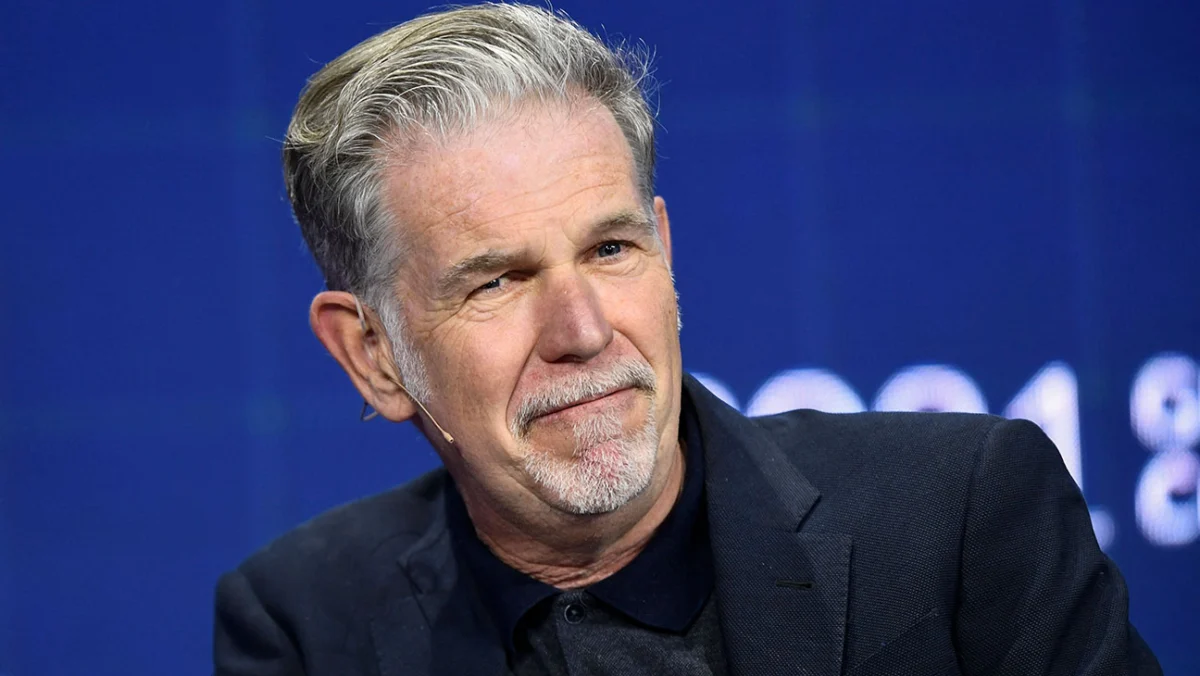
The announcement that Reed Hastings, the visionary co-founder of Netflix, will not stand for reelection to the company’s board of directors in June marks the formal conclusion of one of the most influential leadership tenures in modern corporate history. After nearly three decades at the helm of the company he helped build from a niche DVD-by-mail service into a global entertainment powerhouse, Hastings is transitioning away from the streaming giant to focus on his extensive philanthropic endeavors and personal business ventures. This move follows his January 2023 decision to step down as co-Chief Executive Officer, at which time he assumed the role of Executive Chairman. His departure from the board signals a complete passing of the torch to his hand-picked successors, Ted Sarandos and Greg Peters, who have served as co-CEOs during a period of significant strategic pivots for the company.
The End of a Founding Era
Reed Hastings’ decision to leave the board was confirmed by the company in a regulatory filing on Thursday, noting that his term will conclude at the Netflix annual shareholder meeting scheduled for June. While the move was not entirely unexpected given his gradual withdrawal from daily operations over the past year, it represents a symbolic milestone for Silicon Valley and Hollywood alike. Hastings is widely credited with not only disrupting the traditional video rental industry but also fundamentally altering how the world consumes media through the invention and scaling of subscription-based streaming.
In a statement reflecting on his tenure, Hastings emphasized that his journey with Netflix was defined by more than just business milestones. "Netflix changed my life in so many ways, and my all-time favorite memory was January 2016, when we enabled nearly the entire planet to enjoy our service," Hastings stated. He further noted that his primary contribution was the cultivation of a unique corporate culture—one characterized by "radical transparency" and a "keeper test" for employees—designed to outlast any single leader. "My real contribution at Netflix wasn’t a single decision; it was a focus on member joy, building a culture that others could inherit and improve, and building a company that could be both beloved by members and wildly successful for generations to come," he added.
A Chronology of Innovation and Disruption
To understand the weight of Hastings’ departure, one must look at the timeline of Netflix’s evolution under his guidance. Founded in 1997 by Hastings and Marc Randolph, the company initially sought to challenge the dominance of Blockbuster Video by utilizing the then-new DVD format and the efficiency of the U.S. Postal Service.
- 1997–2002: The Formative Years. Netflix launched as a pay-per-rental service before pivoting to the monthly subscription model that would become its hallmark. The company went public in 2002, with an initial offering price of $15 per share (pre-split), valuing the company at a fraction of its current multi-billion-dollar market capitalization.
- 2007: The Streaming Pivot. In a move that was initially met with skepticism by Wall Street, Hastings launched "Watch Now," a streaming service that allowed subscribers to view content on their computers. This decision effectively cannibalized his own DVD business but positioned Netflix as the first mover in the digital distribution space.
- 2011: The Qwikster Controversy. One of the few major missteps in Hastings’ career occurred when he attempted to split the DVD and streaming businesses into two separate entities, Netflix and Qwikster. The move resulted in a massive loss of subscribers and a plummeting stock price. However, Hastings’ public apology and rapid reversal of the decision became a case study in crisis management and corporate humility.
- 2013: The Birth of Originals. With the debut of House of Cards, Netflix transitioned from a distributor of others’ content to a major studio. This shift was a defensive necessity as traditional media companies began to claw back their licensing rights to launch their own competing services.
- 2016: Global Expansion. As Hastings noted in his farewell statement, 2016 was the year Netflix went live in 130 additional countries simultaneously, making it a truly global network available in almost every nation except China.
- 2023–2024: The Leadership Transition. Hastings stepped down as CEO in early 2023, elevating Greg Peters (formerly COO) to join Ted Sarandos (formerly Content Chief) as co-CEO. This period has been defined by a focus on profitability, the introduction of an advertising-supported tier, and a crackdown on password sharing.
Financial Performance and Market Impact
The data underlying Netflix’s growth during the Hastings era is staggering. When Hastings took the company public in 2002, Netflix had approximately 600,000 subscribers. As of the first quarter of 2024, the company reported a global subscriber base exceeding 325 million. This growth has been accompanied by a transformation in the company’s financial profile. For years, Netflix operated with significant negative free cash flow as it borrowed heavily to fund its massive original content budget, which peaked at over $17 billion annually.
Under the current leadership of Sarandos and Peters, the company has pivoted toward a "maturation phase," focusing on free cash flow and diversified revenue streams. The introduction of the "Standard with Ads" tier has proven to be a significant driver of growth, attracting price-sensitive consumers and creating a new high-margin advertising business. Market analysts note that Netflix’s stock has remained resilient despite the "streaming wars" and increased competition from Disney+, Max, and Amazon Prime Video, largely due to the foundational infrastructure and global reach established during Hastings’ tenure.
Corporate Culture as a Legacy
Perhaps the most discussed aspect of Reed Hastings’ leadership is the "Netflix Culture Memo." Originally a 125-page slide deck that went viral in the late 2000s, the document outlined a philosophy of "freedom and responsibility." Hastings championed the idea that high-performing "stunning colleagues" should be given immense autonomy, provided they act in the company’s best interests.
This culture included controversial but effective policies, such as unlimited vacation days and the "keeper test," where managers are encouraged to ask themselves: "If this employee wanted to leave, would I fight to keep them?" If the answer is no, the employee is given a generous severance package and let go. This high-pressure, high-reward environment is credited with the company’s ability to pivot quickly in the face of technological shifts, a trait that many legacy media companies struggled to replicate.
Official Responses and Internal Sentiment
The departure has elicited high praise from the current leadership team. Ted Sarandos, who has worked with Hastings for a quarter-century, described him as a "singular source of inspiration." In a statement, Sarandos said, "I’ve had the privilege of working for, and alongside, a true history maker and I look forward to marveling at all he will do next. He has modeled for Greg and me a selfless, disciplined leadership style that will continue to shape how we lead Netflix in the exciting times ahead."
Greg Peters echoed these sentiments, highlighting Hastings’ role as the company’s "DNA." Peters noted, "Reed will always be Netflix’s founder and biggest champion. His vision, entrepreneurship, and steadfast commitment to our values have shaped every stage of our journey and continue to shape how Ted and I lead Netflix today."
Philanthropy and the "Skiing Mogul" Phase
As Hastings steps away from the boardroom, his focus has increasingly shifted toward large-scale philanthropy and niche business interests. He has long been a proponent of education reform, donating hundreds of millions of dollars to charter schools, the KIPP Foundation, and Historically Black Colleges and Universities (HBCUs). In 2020, Hastings and his wife, Patty Quillin, made a landmark $120 million donation to support student scholarships at Spelman College, Morehouse College, and the United Negro College Fund.
Beyond education, Hastings has recently emerged as a significant player in the luxury hospitality and outdoor recreation sector. He recently acquired a majority stake in Powder Mountain, a massive 8,464-acre ski resort in Utah. Since stepping away from the CEO role, he has reportedly invested more than $100 million into the property, which he refers to as "PowMow." Hastings, an avid snowboarder, is currently overseeing a transformation of the resort into an exclusive destination that blends public access with private, luxury residential enclaves. This transition from "streaming mogul" to "skiing mogul" characterizes his desire to apply his entrepreneurial energy to physical spaces and community-building.
Implications for the Future of Streaming
The total exit of a founder from a board often raises questions about a company’s future direction. However, industry analysts suggest that Netflix is perhaps better prepared for this transition than most of its peers. The "co-CEO" model, while often criticized in corporate America, appears to be functioning effectively at Netflix, with Sarandos managing the creative and Hollywood relationships while Peters oversees technology, product development, and the burgeoning advertising business.
The challenges ahead for the post-Hastings board include navigating the integration of live sports—evidenced by the recent $5 billion deal with WWE Raw—and the continued expansion into the gaming industry. Furthermore, as the streaming market reaches saturation in North America and Europe, the company’s ability to monetize its massive user base through ad-tech and merchandise will be the primary metrics by which the new leadership is judged.
Reed Hastings leaves behind a company that is no longer a "disruptor" but the "incumbent." His departure from the board of directors is the final formality in a transition that has been years in the making, ensuring that while his presence will be missed in the boardroom, his philosophy remains embedded in the company’s operational core. As the June annual meeting approaches, shareholders will look toward a future where the foundation laid by Hastings serves as the springboard for the next generation of digital entertainment.