Filmmaker Kane Parsons, a mere 20 years old, is poised to make cinematic history as A24’s youngest feature director with the upcoming release of Backrooms. Slated for a May 29 theatrical debut, the film marks a significant transition from its origins as a viral YouTube phenomenon to a highly anticipated horror feature backed by a studio renowned for its distinctive genre offerings. Parsons recently provided a comprehensive look into his creative process and the film’s unique vision at CCXP Mexico, offering attendees a glimpse into the ambitious undertaking of translating internet lore into a feature-length cinematic experience. The film boasts a notable ensemble cast, including Academy Award nominee Chiwetel Ejiofor, breakout star Renate Reinsve, indie cinema stalwart Mark Duplass, and rising talents Finn Bennett and Lukita Maxwell. Adding further weight to the production are acclaimed producers James Wan, known for his mastery of the horror genre; Shawn Levy, a prolific producer and director of high-concept entertainment; and Osgood Perkins, a director with a distinct voice in contemporary horror. The screenplay was penned by Will Soodik.
The Genesis of a Digital Nightmare: From Urban Legend to Viral Sensation
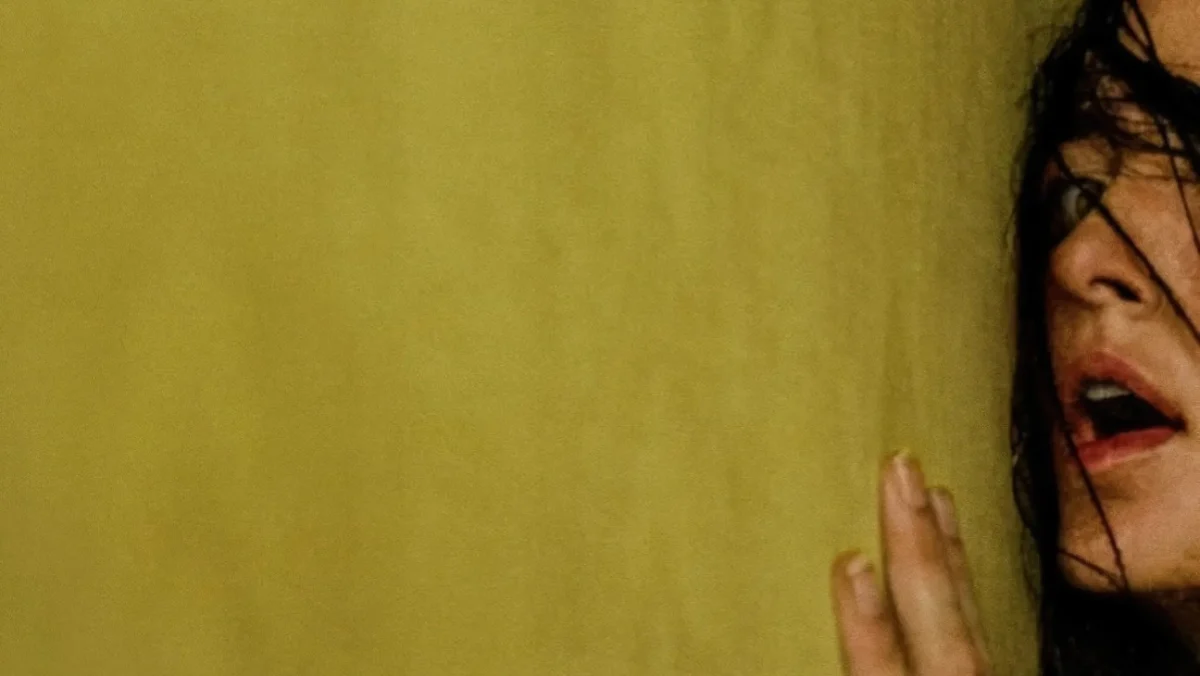
The Backrooms phenomenon originated not from a meticulously crafted studio concept, but from the ephemeral and collaborative landscape of the internet. Its roots trace back to a 2019 4chan post, which featured an eerie, dimly lit image of an empty, yellow-wallpapered room. The accompanying text described a sensation of "noclipping" out of reality and finding oneself in "The Backrooms," an endless maze of desolate, fluorescent-lit spaces characterized by their unsettling normalcy and an underlying sense of dread. This initial spark quickly ignited the collective imagination of online communities, evolving into a pervasive urban legend known as a "creepypasta."
The concept resonated deeply with audiences due to its evocative imagery and the inherent psychological terror of liminal spaces – transitional areas that feel unsettling because they are stripped of their usual context and purpose, evoking feelings of familiarity mixed with profound unease. These spaces, often depicted as empty corridors, deserted malls, or disused offices, tap into a primal fear of isolation and disorientation. The internet, particularly platforms like Reddit, Wikidot, and Fandom, became a fertile ground for expanding the Backrooms lore, with users contributing layers of narrative, creature concepts, and environmental details, transforming it into a complex, sprawling mythology.
It was into this burgeoning digital landscape that Kane Parsons, then a teenager, introduced his groundbreaking YouTube series in early 2022. Parsons’ series, often categorized under the "analog horror" subgenre, distinguished itself with its found-footage aesthetic, lo-fi visual quality, and masterful use of atmospheric tension. His short films depicted individuals inadvertently falling into the Backrooms, capturing their increasingly desperate and terrifying encounters within the infinite yellow maze. The series quickly went viral, attracting millions of views and solidifying Parsons as a prodigious talent in digital filmmaking. His meticulous attention to detail, particularly in recreating the uncanny atmosphere and maintaining narrative consistency within the established lore, captivated a global audience and elevated the Backrooms from a niche internet curiosity to a mainstream cultural touchstone. The success of Parsons’ work underscored the power of YouTube as an incubator for new creative voices and a platform where independent creators can cultivate massive followings with innovative, low-budget productions.
A Visionary at the Helm: Kane Parsons’ Unconventional Journey to Hollywood
Kane Parsons’ trajectory from self-taught YouTube creator to A24 feature film director is a testament to the evolving dynamics of the entertainment industry and the potential of digital platforms to scout and cultivate raw talent. At just 20 years old, Parsons represents a new generation of filmmakers who have honed their craft outside traditional film school structures, leveraging accessible technology and online communities to develop their unique artistic voices. His journey began much earlier, as he recounted starting to post videos to YouTube as early as age 9 or 10, demonstrating a lifelong passion for visual storytelling.
A cornerstone of Parsons’ creative process, both for his viral YouTube series and the upcoming feature film, has been his mastery of Blender, a free and open-source 3D graphics software. This proficiency allowed him to independently create the intricate and unsettling environments of the Backrooms, bypassing the need for extensive studio resources typically associated with such visually complex projects. His ability to conceptualize and execute sophisticated visual effects on a shoestring budget is a hallmark of his innovative approach. During his presentation at CCXP Mexico, Parsons elaborated on the meticulous effort to ensure continuity between his web series and the feature film, emphasizing the importance of maintaining the aesthetic and atmospheric integrity that captivated his original audience. This commitment extended to seemingly minor details, such as conducting "50 wallpaper tests to get the right shape of yellow," highlighting his dedication to authenticity and the specific uncanny visual language of the Backrooms.
Parsons’ directorial vision for the Backrooms film departs from a simple chronological narrative of survival. Instead, he aims for a deeply psychological and character-driven exploration of isolation. "It does take more of a specific approach, where you’re seeing it through the lens of these specific characters — these individuals living these atomized, lonely lives," Parsons explained. This focus on individual experience means that the film will rarely feature more than one or two characters on screen at a given time, reinforcing the pervasive sense of solitude. "It’s a pretty lonely film," he candidly admitted, underscoring the existential dread at the heart of his adaptation. This narrative choice aligns perfectly with the inherent isolation of the Backrooms concept, where endless, identical spaces serve to disorient and psychologically break down those trapped within.
Crafting the Infinite: Production Design and Technical Details
Bringing the infinite, unsettling corridors of the Backrooms to life for a feature film presented a unique set of challenges and opportunities for Parsons and his production team. The original YouTube series, crafted with 3D software, established a distinct visual identity that the filmmakers were keen to translate faithfully to the big screen while simultaneously enhancing its immersive qualities. Parsons revealed that his process involved a fascinating blend of digital pre-visualization and large-scale practical set construction. "I was working in Blender, modeling the sets, and then we would literally go and build them in real time," he described, highlighting a hands-on approach that bridges the gap between digital artistry and tangible filmmaking.
The scale of the practical set was monumental, a testament to the production’s ambition and commitment to realism. Parsons shared behind-the-scenes footage illustrating the construction of a massive, labyrinthine environment. He recounted a particularly memorable experience: after guiding the initial stages of set construction, he had to temporarily step away to film exterior scenes. Upon his return two weeks later, the completed set was an overwhelming sight. "The set was huge. We built 30,000 square feet of actual backrooms that we could walk around in," he exclaimed, adding, "Actually, some people were getting lost. It felt like being there, which was really weird." This anecdote underscores the profound sense of immersion achieved through practical effects, a deliberate choice that aims to create a more visceral and unsettling experience for both the cast and the audience. Cinematographer Jeremy Cox and the team were instrumental in ensuring that the film’s visual language meticulously maintained continuity with the web series, from the precise hue of the yellow wallpaper to the eerie hum of the fluorescent lights.

Parsons also articulated a crucial aspect of the Backrooms‘ inherent logic that informed the film’s design: its unchanging yet unmappable nature. "I always try to stay away from the idea that the backrooms is somehow a dreamy headspace thing where, if you turn around, the room could have changed," he explained. Instead, the horror derives from its relentless, monotonous consistency. "It preys on the human brain’s ability to map spaces and understand them. The hard part for that is, if you go back the way you came, you will go back the way you came, but it just keeps going and going and going. That’s where the confusion and the convolution goes. So eventually, you just have to give up trying to map it, whereas if it were constantly changing, you would be giving up a lot faster." This philosophy highlights a sophisticated understanding of psychological horror, where the terror stems not from constant shifts but from an inescapable, unchanging reality that defies human comprehension and spatial navigation.
Star Power and Industry Backing: A24’s Signature Touch
The involvement of a distinguished cast and a team of seasoned producers signals A24’s significant investment in the Backrooms project and its confidence in Kane Parsons’ unique vision. The ensemble, featuring Chiwetel Ejiofor, Renate Reinsve, Mark Duplass, Finn Bennett, and Lukita Maxwell, brings a blend of dramatic gravitas and fresh talent to the film. Chiwetel Ejiofor, an actor lauded for his profound emotional depth in films like 12 Years a Slave and Children of Men, is expected to ground the film’s psychological intensity. Renate Reinsve, who garnered international acclaim for her captivating performance in The Worst Person in the World, takes on a central role as a therapist tracking a missing patient, suggesting a narrative anchored in human connection amidst profound disorientation. Mark Duplass, a veteran of independent cinema known for his work in both acting and directing in the mumblecore and horror genres, adds another layer of credibility and experience. The casting choices reflect a deliberate effort to imbue the film with strong character performances, crucial for a narrative focused on individual experiences of isolation.
The producing team further underscores the film’s serious cinematic ambitions. James Wan, a veritable titan in modern horror with franchises like Saw, Insidious, and The Conjuring to his name, brings an unparalleled understanding of genre mechanics and audience scares. Shawn Levy, known for helming blockbusters like Free Guy and producing the hit series Stranger Things, lends expertise in crafting compelling narratives with broad appeal, often blending genre elements with strong character arcs. Osgood Perkins, a director with a distinct and often chilling style in films such as The Blackcoat’s Daughter and Gretel & Hansel, contributes a sensibility for atmospheric and psychological horror. This confluence of experience provides Parsons with invaluable guidance, marrying his innovative digital-native approach with established industry acumen.
A24, the independent entertainment company behind Backrooms, has cultivated a reputation for championing distinctive, artist-driven projects, particularly within the horror genre. The studio has been instrumental in the success of critically acclaimed and commercially impactful horror films like Hereditary, Midsommar, The Witch, and Talk to Me. A24’s model often involves identifying unique directorial voices and providing them with the platform and resources to realize their visions, even if unconventional. Parsons’ Backrooms fits squarely within this ethos, representing a bold move to elevate internet-born IP into high-concept cinema while retaining its creator’s authentic voice. The studio’s backing not only provides financial and logistical support but also lends significant artistic validation to Parsons’ work, signaling to both critics and audiences that this is more than just a novelty adaptation.
Thematic Depth and Psychological Resonance
Beyond its visual spectacle and genre thrills, Kane Parsons’ Backrooms delves into profound thematic territory, tapping into anxieties that resonate deeply with contemporary audiences. Parsons himself offered a compelling analysis of the Backrooms‘ widespread appeal, attributing its resonance to a "collective anxiety around the system — economic, industrial or otherwise — that has been building for the past few centuries." This interpretation frames the infinite, sterile corridors not merely as a physical space but as a metaphor for the impersonal, overwhelming, and often dehumanizing structures of modern life. The feeling of being lost in a vast, indifferent system, with no clear exit or purpose, mirrors the sense of alienation many experience in increasingly complex and interconnected societies.
Parsons further explored the psychological underpinnings of the Backrooms by drawing an analogy to sensory deprivation. "The backrooms, to me, has felt aligned with what happens when someone goes through sensory deprivation on the individual level — and you go out in an empty room — and the body, the nervous system needs stimulation so badly [when] it’s deprived of it," he elucidated. In such an environment, the human brain, starved of external stimuli, begins to create its own meaning, finding "noise and information in the pattern of the walls" and lowering its "threshold of what it’s willing to accept." This phenomenon explains why the seemingly benign features of the Backrooms – the yellow wallpaper, the humming lights – become sources of intense psychological distress. The mind, desperate for input, projects fear and significance onto an otherwise mundane environment, transforming it into a personal hell. This approach moves beyond conventional jump scares, instead fostering a deep-seated dread that preys on the viewer’s own psychology.
The concept of liminality, inherent to the Backrooms, plays a crucial role in its thematic depth. These "in-between" spaces, devoid of typical human activity or clear function, evoke a sense of transition and uncertainty. They represent the anxieties of being stuck, of lacking direction, and of existing in a state of perpetual anticipation without resolution. This aligns with Parsons’ vision of characters living "atomized, lonely lives," suggesting a societal condition where individuals feel disconnected and adrift, searching for meaning in an increasingly abstract world. The film, therefore, promises to be more than just a horror movie; it aims to be a potent commentary on modern alienation, existential dread, and the human mind’s fragile relationship with reality when confronted with the uncanny and the unknown.
Anticipation and Broader Implications
As the release date for Backrooms approaches, anticipation is building, particularly within the vast online community that nurtured its origins. The film represents a pivotal moment for both Kane Parsons and the broader landscape of digital-to-traditional media adaptations. For Parsons, it signifies a remarkable leap from independent YouTube creator to a recognized cinematic voice, validating his unique artistic vision and technical prowess. His success story is likely to inspire countless other aspiring filmmakers who are leveraging online platforms to develop their skills and showcase their talents.
For A24, Backrooms is another strategic move in its continued efforts to identify and cultivate unique genre content. The studio’s reputation for delivering intelligent, unsettling horror aligns perfectly with the psychological depth and atmospheric tension inherent in Parsons’ vision. The film’s performance will be closely watched as an indicator of how successfully internet-native horror concepts can translate to the mainstream theatrical market, potentially paving the way for more adaptations of viral creepypastas, analog horror series, and other digital phenomena. The involvement of established names like Wan, Levy, and Perkins, combined with A24’s marketing acumen, is expected to bridge the gap between the existing online fanbase and a broader cinematic audience.
Beyond its immediate impact, Backrooms stands to contribute to the ongoing evolution of the horror genre. Its emphasis on psychological dread, atmospheric tension, and existential themes over overt gore or reliance on jump scares reinforces a trend towards more sophisticated and thought-provoking horror narratives. The film’s unique blend of digital artistry and practical set design also showcases innovative production methodologies, demonstrating how indie filmmakers can achieve high production values through creative resourcefulness. Ultimately, Kane Parsons’ Backrooms is poised to be a landmark film, not just as A24’s youngest directorial debut, but as a compelling example of how a viral internet sensation, imbued with genuine artistic vision, can transcend its origins to become a significant cinematic event.