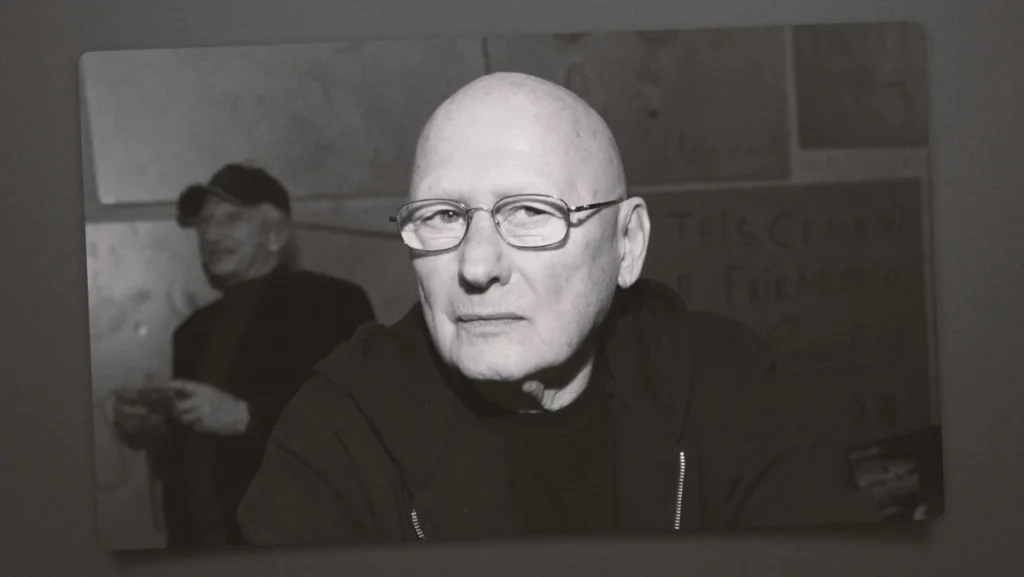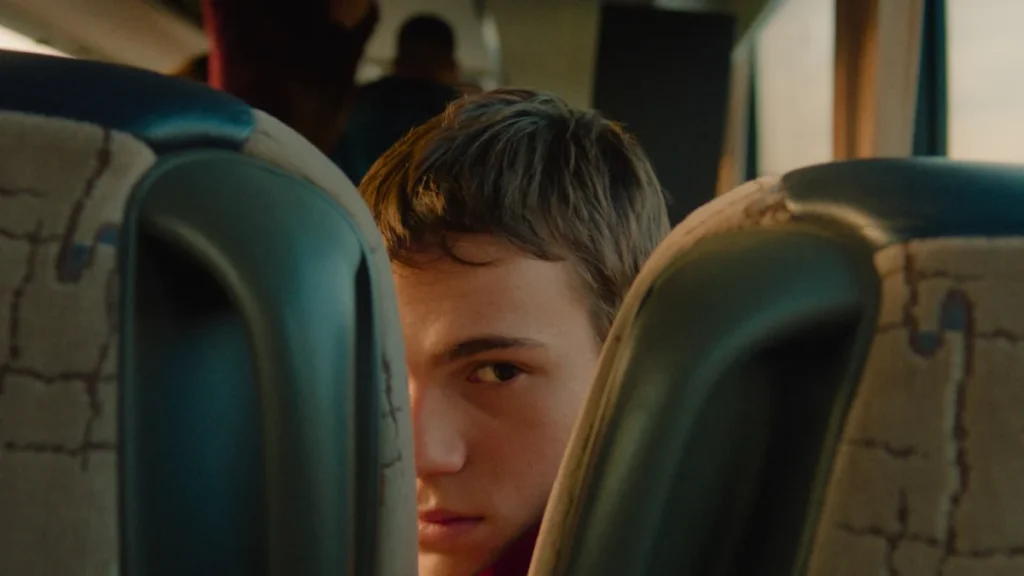
Nearly three decades after its theatrical release, director Barry Levinson revisits his acclaimed 1996 drama Sleepers, asserting that much of the contemporary discourse surrounding the film fundamentally missed its central themes. His reflections, prompted by the film’s new 4K/Blu-ray release, highlight how sensationalized debates about its veracity and a particular plot point overshadowed the movie’s profound message concerning institutional abuse and its devastating, long-term consequences. Levinson’s insights offer a poignant commentary not only on his own work but also on the evolving nature of cinematic reception and the broader challenges facing the film industry today, particularly the dwindling space for mid-budget productions.
The Genesis of a Gritty Urban Drama
Sleepers originated from Lorenzo Carcaterra’s 1995 semi-autobiographical novel, which quickly became a bestseller due to its harrowing narrative and claims of being a true story. The book captured the attention of Hollywood, with Steve Golin, co-founder of Propaganda Films, bringing it to Levinson’s notice. Known for his diverse filmography that spanned from comedies like Diner and Good Morning, Vietnam to critically acclaimed dramas such as Rain Man and Bugsy, Levinson possessed the storytelling prowess and sensitivity required to tackle such a dark and complex subject matter.
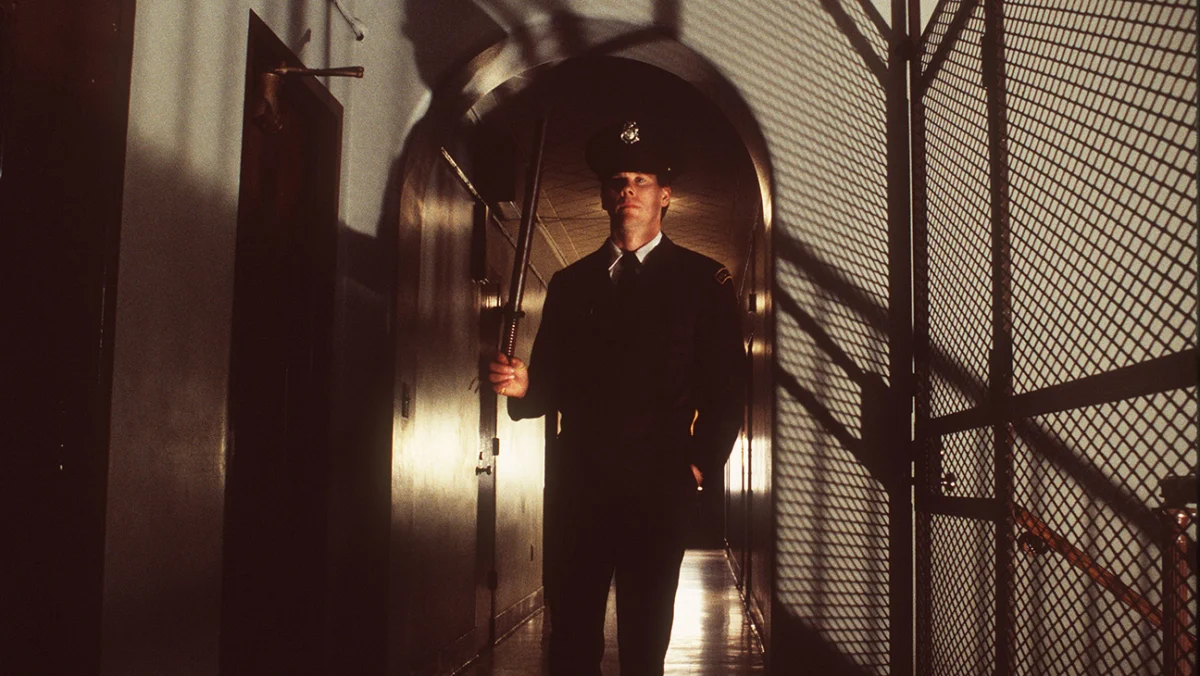
The film’s narrative unfolds in two distinct periods. It begins in the late 1960s in Hell’s Kitchen, New York, following four inseparable teenage friends: Michael, John, Tommy, and Shakes. Their youthful mischief takes a catastrophic turn when a prank involving a hot dog vendor leads to a serious accident, nearly killing an innocent bystander. This incident lands them in the notorious Wilkinson Home for Boys, a correctional facility where their lives are irrevocably scarred by months of brutal physical and sexual abuse at the hands of four sadistic guards, chief among them Sean Nokes.
The story then fast-forwards to 1981. The trauma of their past manifests in different ways for each friend. John Riley (played by Ron Eldard as an adult) and Tommy Marcano (Billy Crudup) have descended into a life of crime. During a chance encounter in a New York restaurant, they spot their primary abuser, Sean Nokes (Kevin Bacon), and, overwhelmed by their past torment, impulsively gun him down. This act of vigilante justice sets in motion the second half of the film. Their two childhood friends, Lorenzo “Shakes” Carcaterra (Jason Patric), now a low-level clerk at The New York Times, and Michael Sullivan (Brad Pitt), a promising Assistant District Attorney, covertly orchestrate a plan to exonerate John and Tommy while simultaneously exposing the systemic corruption and cover-ups at the Wilkinson Home that enabled the abuse.
The film boasted an exceptionally talented ensemble cast, including veteran actors Robert De Niro as Father Bobby, a conflicted priest who was also a childhood friend of the boys, and Dustin Hoffman as Danny Snyder, a down-on-his-luck lawyer brought in to defend John and Tommy. The meticulous casting extended to the younger versions of the characters, ensuring a seamless transition and maintaining the emotional through-line. John Williams, a maestro of film scores, was enlisted to compose the music, a choice Levinson felt would provide a "touch of Bernstein" appropriate for the New York setting, lending glimmers of hope and gravitas to the otherwise grim narrative. His score, nominated for an Academy Award, indeed provided a powerful emotional counterpoint to the film’s dark themes.

The "True Story" Conundrum: A Misdirected Scrutiny
Upon its release, Sleepers immediately ignited a fervent debate, largely centered on the veracity of Carcaterra’s claims that the events depicted were based on his own true-life experiences. While Carcaterra maintained that the core narrative—the abuse, the subsequent murders, and the orchestrated trial—was authentic, he admitted to fictionalizing names and dates to protect identities. However, this claim was met with significant skepticism from journalists and legal professionals, who found no public records or corroborating evidence for such a high-profile murder trial and subsequent cover-up. The New York Times and New York Daily News conducted extensive investigations, ultimately casting serious doubt on the story’s factual basis.
Levinson, reflecting on this period, expresses frustration that this "inquisition" overshadowed the film’s more crucial message. "Why does film get caught in this cycle of whether something happened or didn’t happen? It’s a story," Levinson remarked to The Hollywood Reporter. He emphasized that the fundamental plausibility of such institutional abuse, regardless of the specific details of Carcaterra’s account, should have been the focus. "It wasn’t the craziest, weirdest thing you’ve ever imagined," he stated, questioning the intensity of the "noise" that distracted from the film’s thematic depth.
This debate reached such a fever pitch that Warner Bros. felt compelled to include a legal disclaimer at the end of the film, stating: "The following is a true story. Names and locations have been changed to protect the innocent and to conceal the identities of those who might be implicated." This statement, however, only fueled further discussion, with some critics viewing it as an attempt to lend credibility to a potentially fabricated narrative, while others saw it as a necessary evil to navigate the controversy.
The impact of this "true story" debate was notably different between domestic and international markets. While American audiences and critics were heavily influenced by the authenticity questions, the film achieved significantly greater success and acclaim in Europe. Levinson notes, "In Europe, it was huge because it didn’t get caught up in any of the controversy." This disparity underscores how cultural contexts and media consumption habits can profoundly affect a film’s reception, with some audiences prioritizing narrative impact and thematic resonance over literal factual accuracy.
Father Bobby’s Ethical Quandary: Beyond Simple Perjury
Another significant point of contention for critics revolved around the character of Father Bobby, portrayed by Robert De Niro. A beloved figure in the community and a mentor to the boys, Father Bobby ultimately commits perjury on the witness stand, providing a false alibi for John and Tommy to aid in their acquittal. Many critics and viewers found it morally reprehensible and unbelievable that a Catholic priest would deliberately lie under oath, especially after swearing on the Bible.

Levinson, however, argues that this criticism, much like the "true story" debate, failed to grasp the character’s deeper motivations and the film’s broader thematic architecture. He points to an often-overlooked detail: Father Bobby himself, along with his best friend, had spent time at the Wilkinson Home for Boys in their youth. While the film implies that Father Bobby may not have been a direct victim of the most severe abuse, his close friend certainly was. This shared history, and the profound trauma witnessed or experienced, provides a crucial context for Father Bobby’s actions.
"It got caught up in whether or not a priest would ever lie on the stand. You can certainly have that, but that’s not the point of the movie. It was a much broader piece than that," Levinson explained. He emphasized that Father Bobby’s "reluctant commitment to perjury" was not merely about helping two men escape a murder charge; it was equally, if not more, about dismantling the corrupt institution that had ruined countless lives and covered up its ongoing abuse. His lie became an act of moral rebellion against a greater evil, a desperate measure to achieve justice where the legal system had failed them in the past. This nuance, Levinson contends, was largely lost in the initial critical assessments, which narrowly focused on the ethical transgression rather than the complex moral calculus driving the character.
Critical and Commercial Footprint
Despite the swirling controversies, Sleepers performed reasonably well at the box office, grossing over $165 million worldwide against a production budget of approximately $44 million. Domestically, it earned around $53 million, but its international appeal significantly bolstered its commercial success, validating Levinson’s observation about its European reception. Critically, reviews were mixed, with some praising the powerful performances, particularly from the stellar adult and child casts, and the film’s bold exploration of trauma and revenge. Others, however, struggled with the narrative’s ethical ambiguities and the unresolved "true story" questions. John Williams’ score received a Golden Globe nomination for Best Original Score, affirming the artistic quality despite the surrounding debates. The film’s ability to provoke intense discussion, even if misdirected in Levinson’s view, cemented its place as a memorable, albeit controversial, entry in 1990s cinema.
Barry Levinson’s Enduring Legacy and Collaborations
Sleepers also marked a significant point in Barry Levinson’s career, showcasing his continued ability to attract A-list talent and tackle challenging subject matter. It was his first of five collaborations with Robert De Niro, a partnership that would later yield films like Wag the Dog (1997), Analyze That (2002), and The Wizard of Lies (2017). Levinson noted that these collaborations developed organically rather than from a pre-planned strategy, often initiated by De Niro or his producing partner Jane Rosenthal bringing projects to him. Similarly, Sleepers was the second of four films Levinson made with Dustin Hoffman, following their monumental success with Rain Man in 1988. These long-standing creative relationships underscore Levinson’s reputation as a director who fosters strong bonds with actors and consistently draws out compelling performances.
The film also featured Brad Pitt, who was at the peak of his rising stardom, having just come off acclaimed performances in 12 Monkeys and David Fincher’s Seven. Levinson downplayed any direct connection between Pitt’s previous work with Propaganda Films co-founder David Fincher and his casting in Sleepers, attributing it more to the natural casting process for a role that required a blend of quiet intensity and moral conflict. Pitt’s portrayal of Assistant DA Michael Sullivan, characterized by subtle fidgeting and a restless physicality, effectively conveyed the character’s internal struggles with alcoholism and his reluctant involvement in the ethically fraught trial, a detail Levinson deliberately orchestrated to avoid overtly "spelling out" the character’s issues.

The Vanishing Mid-Budget Film: An Industry in Flux
Perhaps the most resonant aspect of Levinson’s contemporary reflections touches upon a crisis point within the modern film industry: the precipitous decline of the mid-budget film. Sleepers, with its stellar cast, complex narrative, and production values, fits squarely into this category—a type of film that major studios once routinely produced but now largely eschew in favor of high-cost blockbusters or micro-budget independent projects.
"What’s happening right now is that there’s too much emphasis on the blockbuster, as opposed to, This [smaller] movie can make some money for us, and we can keep moving along," Levinson lamented. He highlighted the industry’s pivot towards "extravagant pieces that cost $150 million or more," neglecting the "zone of movies around $40 million that can ultimately succeed." This trend, he argues, leads to a narrowing of the audience and a homogenization of cinematic offerings.
Industry data corroborates Levinson’s observation. Over the past two decades, Hollywood has increasingly focused on tentpole franchises, superhero sagas, and animated features, which offer greater potential for global box office returns and ancillary revenue streams like merchandise and theme park attractions. Films with budgets between $25 million and $100 million, once the bread and butter of studios for star-driven dramas, thrillers, and comedies, have become an endangered species. According to various film industry reports, the number of such films produced by major studios has declined by over 50% since the early 2000s. The economic logic is clear: a $40 million film, even if it performs well, often yields a smaller profit margin than a $200 million blockbuster that breaks a billion dollars worldwide. The perceived risk-reward ratio has shifted dramatically.
This economic restructuring has profound implications for the industry. Levinson notes that the disappearance of mid-budget films has created a void for the development of new movie stars. Historically, these films served as crucial proving grounds for emerging talent, allowing actors to hone their craft in complex roles before ascending to blockbuster status. Today, the "star" is often the intellectual property (IP) itself—a comic book character, a video game franchise, or a rebooted classic—rather than the actor embodying it. This shift limits opportunities for actors to build a diverse body of work and establish themselves as bankable leads based on performance rather than franchise association.
The Digital Age and Fragmented Attention
Beyond the budget crisis, Levinson also points to the broader impact of the digital age and the rise of streaming services and the internet. These platforms, while offering new avenues for content distribution, also contribute to a fragmentation of audience attention. "Those are two other entertainment areas where a lot of people spend hours and hours," he observed. He critically examined the pervasive use of cell phones, even during shared social experiences, noting, "You’re not going to get storytelling if you’re texting for hours at a time." This phenomenon, where individuals are physically present but mentally "elsewhere," poses a unique challenge to immersive storytelling, whether in a cinema or at home.

The sheer volume of content available across myriad platforms means that films, especially those outside the blockbuster realm, struggle to capture and hold audience attention. The traditional shared experience of cinema-going is increasingly competing with personalized, on-demand entertainment that caters to individual preferences and often demands less focused engagement. Levinson views this as a "breakdown of sorts" in how people consume and interact with narrative, ultimately impacting Hollywood’s ability to connect with audiences on a deeper level.
A Director’s Future: Ideas Over Age
Despite these industry-wide challenges, Barry Levinson, at 82, remains an active and passionate filmmaker. He rejects the notion that filmmaking is exclusively a "younger man’s game," asserting that "age is not the issue. It’s the ideas. What ideas do you want to do?" He currently has "two or three projects" ready for production, none of them particularly expensive, with estimated budgets ranging from $15 million to $20 million. His past work, such as The Humbling with Al Pacino (shot for $2 million in his own home) and The Bay (also $2 million), demonstrates his adaptability and willingness to work efficiently within tight budgetary constraints.
"I have no problem working in all ways as long as I know the story that I want to tell," Levinson affirmed, signaling his continued dedication to narrative and thematic substance over spectacle. As Hollywood navigates radical shifts, including ongoing corporate takeovers and evolving distribution models, Levinson remains optimistic about his ability to tell stories, emphasizing that the core motivation for any filmmaker should always be the compelling idea.
Conclusion: The Enduring Relevance of Sleepers
Barry Levinson’s reflections on Sleepers serve as a timely reminder of the complexities inherent in both filmmaking and film reception. While the controversies surrounding its "true story" claims and Father Bobby’s moral dilemma undoubtedly shaped its initial public image, Levinson’s perspective urges a re-evaluation, steering the focus back to the film’s powerful exploration of systemic abuse, trauma, and the pursuit of justice.
Beyond the specific film, his commentary resonates deeply with the current state of the film industry. His lament for the mid-budget film highlights a significant cultural and economic shift, one that impacts not only the types of stories told but also the very ecosystem of talent development. In an increasingly fragmented and attention-scarce media landscape, Levinson’s commitment to thoughtful storytelling, regardless of budget, stands as a testament to the enduring power of cinema to provoke, challenge, and ultimately, enrich human understanding. Sleepers, now available on 4K/Blu-ray, offers a fresh opportunity for audiences to engage with its potent themes, perhaps with a renewed appreciation for the broader narrative Levinson intended to convey.