Star Wars: The Mandalorian and Grogu, the highly anticipated cinematic continuation of the popular Disney+ series, is poised to make its theatrical debut with an estimated domestic box office opening in the $80 million range over the extended Memorial Day weekend. This projection, based on prerelease tracking data accessed by industry sources, aligns with internal expectations from Lucasfilm and its parent company, Disney, signaling a strategic pivot for the beloved franchise as it navigates a complex post-pandemic cinematic landscape. The film, directed by series creator Jon Favreau, marks the first Star Wars installment to hit the big screen since 2019’s Star Wars: The Rise of Skywalker, carrying the weight of revitalizing the saga’s theatrical presence while simultaneously testing the waters for a new breed of spin-off films.
Box Office Outlook and Strategic Comparisons
The $80 million opening weekend forecast positions The Mandalorian and Grogu firmly within a respectable, albeit not blockbuster-level, tier of recent releases. Crucially, this figure is being benchmarked against specific historical data points. For comparison, 2018’s Solo: A Star Wars Story, another spin-off prequel, launched to $84 million domestically over the three-day Memorial Day weekend and accumulated $104 million across the four-day holiday period. This direct comparison is particularly pertinent given Solo‘s status as a spin-off outside the main "Skywalker Saga" and its Memorial Day release slot, offering a valuable gauge for The Mandalorian and Grogu‘s potential performance. Furthermore, last year’s Memorial Day tentpole, Mission: Impossible – Dead Reckoning Part One (initially referred to with a placeholder title The Final Reckoning), debuted to $79 million, providing another contemporary touchstone for holiday weekend performance.
It is important to contextualize these figures within the broader Star Wars theatrical history. While an $80 million opening is solid, it is significantly lower than the behemoth openings of core saga films. Star Wars: The Rise of Skywalker, for instance, commanded a staggering $177.3 million in its opening weekend, reflecting the immense pressure and heightened expectations associated with a mainline installment. Lucasfilm insiders emphasize that The Mandalorian and Grogu faces a different kind of pressure. As a direct continuation of a streaming series, its primary goal is to leverage an established, highly popular narrative and character base to re-engage audiences with the theatrical Star Wars experience, rather than concluding an epic multi-generational saga. The film is not expected to rival the financial benchmarks of the Skywalker Saga finales, but rather to prove the theatrical viability of its expanding universe of stories.
The Memorial Day weekend, traditionally a strong period for film releases, presents a unique opportunity. Audiences often seek out high-profile genre films during this extended holiday. However, the box office landscape has undergone significant shifts since the pre-pandemic era. While major tentpoles can still draw massive crowds, audience habits have evolved, with streaming services offering abundant home entertainment options. A strong performance for The Mandalorian and Grogu would send a clear signal about the enduring appeal of the Star Wars brand on the big screen, particularly for stories that originated on streaming platforms.
The Strategic Shift: From Streaming Sensation to Silver Screen
The journey of The Mandalorian from a groundbreaking Disney+ launch title to a major theatrical film represents a significant strategic evolution for Lucasfilm and Disney. When The Mandalorian debuted in November 2019, it was hailed as a flagship series for the nascent Disney+ streaming service. Its innovative storytelling, stunning visual effects, and the introduction of "Baby Yoda" (Grogu) quickly turned it into a cultural phenomenon, driving subscriptions and earning critical acclaim. The series was instrumental in establishing Disney+ as a formidable player in the streaming wars, showcasing the power of exclusive, high-quality content derived from beloved intellectual properties.
However, despite its initial success, the series reportedly experienced a decline in momentum during its third season. While specific metrics on viewership decline are not publicly disclosed by Disney, industry analysis and fan discourse suggested a dip in consistent engagement and critical enthusiasm compared to its earlier seasons. This perceived softening in its streaming performance, coupled with Disney’s broader re-evaluation of its direct-to-consumer strategy and a renewed focus on theatrical releases for its biggest brands, likely contributed to the decision to pivot The Mandalorian narrative to the big screen.
The transition from a serialized streaming format to a standalone feature film presents both creative opportunities and challenges. On one hand, it allows for a grander scale of storytelling, higher production values befitting a cinematic release, and the potential to attract a wider audience beyond existing Disney+ subscribers. On the other hand, it requires condensing multi-episode arcs into a cohesive two-hour narrative, potentially alienating viewers unfamiliar with the series’ intricate lore, despite the filmmakers’ stated intentions to make it accessible. This strategic move is a test case for how Disney might leverage its successful streaming properties to bolster its theatrical slate, blurring the lines between traditional film and television content.
A New Era for Lucasfilm’s Cinematic Universe
The Mandalorian and Grogu arrives at a pivotal moment for Lucasfilm’s cinematic future. Following the conclusion of the Skywalker Saga with The Rise of Skywalker, the studio has been deliberately recalibrating its approach to feature films. The period since 2019 has seen numerous Star Wars film projects announced, developed, and subsequently delayed or quietly shelved, reflecting a cautious and iterative process to chart the franchise’s next big-screen chapter. This period has also seen a significant expansion of the Star Wars universe on Disney+, with multiple live-action and animated series like Andor, Obi-Wan Kenobi, and Ahsoka further enriching the post-Original Trilogy timeline.
A key development in this new era is the elevation of Dave Filoni, a long-time George Lucas protégé and co-creator of The Mandalorian series, to the influential role of Chief Creative Officer at Lucasfilm earlier this year. This move, which followed reports of Kathleen Kennedy’s potential shift in responsibilities (though she remains President), signals a potential strategic realignment towards a more unified creative vision, particularly one that leans into the established successes of the "Mando-verse." Filoni’s deep understanding of Star Wars lore, combined with his proven track record alongside Favreau, positions him as a central figure in shaping the franchise’s future direction across both film and television. His promotion is widely seen as a vote of confidence in the creative team that successfully revitalized Star Wars in the streaming space.
Beyond The Mandalorian and Grogu, Lucasfilm has several other cinematic projects on its docket. One notable upcoming film is Star Wars: Starfighter, with Shawn Levy (known for Free Guy and Stranger Things) attached to direct and Academy Award nominee Ryan Gosling rumored to star. Details on Starfighter are scarce, but its existence underscores Lucasfilm’s commitment to exploring diverse stories and eras within the Star Wars galaxy, moving beyond the direct descendants of the Skywalker family. Other projects, including films from Sharmeen Obaid-Chinoy (featuring Daisy Ridley’s Rey) and James Mangold (exploring the origins of the Jedi), further illustrate a concerted effort to broaden the narrative scope and introduce new entry points for audiences. The Mandalorian and Grogu‘s performance will undoubtedly influence the strategic prioritization and marketing of these future endeavors.
Creative Vision and Narrative Focus
At the helm of The Mandalorian and Grogu is Jon Favreau, who not only directs but also co-wrote the screenplay alongside Dave Filoni and Noah Kloor. Favreau, as the visionary creator of The Mandalorian series, has been instrumental in crafting its distinctive blend of Western and samurai film aesthetics within the Star Wars universe. His collaborative partnership with Filoni, which began with The Clone Wars animated series, has been widely lauded for its ability to honor established canon while introducing compelling new characters and storylines.
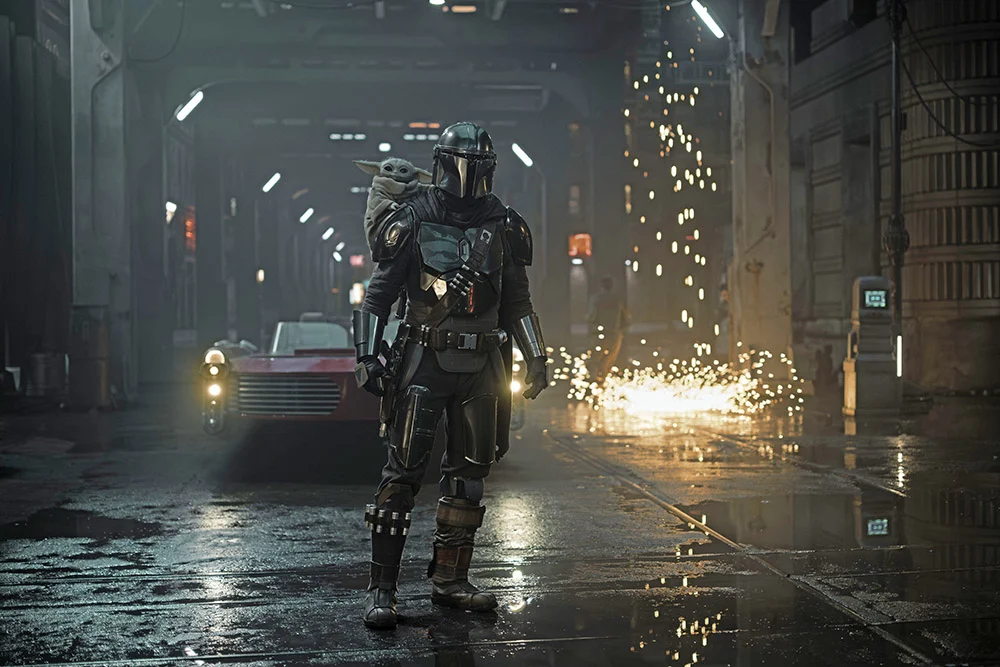
Both Favreau and Filoni have consistently stressed the film’s accessibility, emphasizing that moviegoers do not need to be deep Star Wars lore experts to appreciate The Mandalorian and Grogu. This approach is critical for a film that aims to attract both dedicated fans and general audiences. The narrative is designed to introduce new characters and concepts while building upon the established dynamic between Din Djarin (Pedro Pascal), the eponymous Mandalorian bounty hunter, and his young, Force-sensitive apprentice, Grogu. The film is set in the turbulent aftermath of the Galactic Empire’s collapse, a period where scattered Imperial warlords still pose a threat across the galaxy. As the fledgling New Republic endeavors to protect the peace and ideals fought for by the Rebellion, they enlist the unique skills of Din Djarin and Grogu, thrusting them into new adventures that promise to expand their saga. This premise, rooted in a beloved father-figure and child-like companion dynamic, has proven universally appealing and provides a clear entry point for newcomers.
The film’s cast also boasts notable additions alongside Pedro Pascal. While Pascal is known for his role as the voice and often the on-screen presence of Din Djarin, the film will feature other prominent actors. Legendary actress Sigourney Weaver and critically acclaimed Jeremy Allen White are confirmed to star, adding further star power and intrigue to the ensemble. Their roles, yet to be fully detailed, suggest an expansion of the Mando-verse’s character roster and potentially new narrative directions that could resonate with broader audiences.
The Power of Marketing: May the 4th and IMAX Previews
The marketing campaign for The Mandalorian and Grogu is set to kick into high gear on May the 4th, the unofficial global Star Wars holiday. This date, affectionately known as "May the Fourth Be With You," provides an ideal platform for Lucasfilm to amplify its promotional efforts and directly engage with the franchise’s passionate fan base. The strategic timing allows for a concentrated burst of marketing activities, leveraging the widespread enthusiasm and social media buzz surrounding the annual celebration.
A centerpiece of this marketing push will be the exclusive showcasing of 25 minutes of footage from The Mandalorian and Grogu in select IMAX theaters across the globe. This event is designed to generate significant anticipation and provide a premium, immersive sneak peek for fans. Offering a substantial portion of the film in a high-fidelity format like IMAX not only creates an event out of the preview but also underscores the filmmakers’ intent for The Mandalorian and Grogu to be experienced on the biggest possible screen. Such exclusive fan events are critical for building word-of-mouth, creating social media conversations, and driving early ticket sales, particularly for a franchise with such a dedicated following.
Beyond the IMAX preview, the May the 4th festivities are expected to include a full suite of promotional materials, including new trailers, posters, behind-the-scenes glimpses, and interviews with the cast and crew. Lucasfilm’s strategy appears to be a multi-pronged approach: to reignite enthusiasm among existing Mandalorian and Star Wars fans, while simultaneously positioning the film as a must-see cinematic event for general audiences. The success of this intensified marketing blitz will be crucial in translating prerelease tracking into tangible box office results.
Broader Implications for Disney and the Star Wars Franchise
The box office performance of The Mandalorian and Grogu will carry significant implications for Disney’s broader content strategy and the future trajectory of the Star Wars franchise. For Disney, it serves as a critical test of the viability of migrating successful streaming properties to the big screen. If the film performs strongly, it could pave the way for other Disney+ original series, particularly those with established fan bases and high production values, to receive theatrical releases, creating a hybrid content distribution model. This could offer a new revenue stream for Disney’s substantial investments in streaming content and allow certain narratives to achieve a grander scale that a television budget might not typically afford.
For the Star Wars franchise itself, The Mandalorian and Grogu represents a crucial step in re-establishing its cinematic identity post-Skywalker Saga. A successful run would demonstrate that audiences are eager for new Star Wars stories on the big screen, even those that originate outside the main saga. It would validate the creative direction spearheaded by Jon Favreau and Dave Filoni, solidifying their influence and potentially indicating a preferred path forward for future film projects. Conversely, a lukewarm reception could necessitate a further re-evaluation of Lucasfilm’s theatrical strategy, potentially leading to more cautious approaches or a renewed focus on streaming as the primary storytelling medium for new Star Wars narratives.
Furthermore, the film’s performance will offer insights into audience preferences regarding Star Wars content. Will spin-off films with beloved streaming characters prove more appealing than attempts to launch entirely new cinematic sagas? The success of The Mandalorian and Grogu could encourage Lucasfilm to lean more heavily into expanding the "Mando-verse" or other established streaming timelines onto the big screen, creating a more interconnected and multi-platform Star Wars experience. It’s a significant moment for a franchise that continues to evolve, seeking to balance its rich legacy with innovative new storytelling.
In conclusion, Star Wars: The Mandalorian and Grogu is more than just another film release; it is a strategic bellwether for Lucasfilm and Disney. With an anticipated $80 million opening over the Memorial Day weekend, the film is poised to reignite the Star Wars theatrical flame, testing the viability of a streaming-to-cinema model and setting a precedent for the franchise’s future direction in a rapidly changing entertainment landscape. The Force, it seems, is not just with Din Djarin and Grogu, but also with the evolving strategies of a galaxy far, far away.