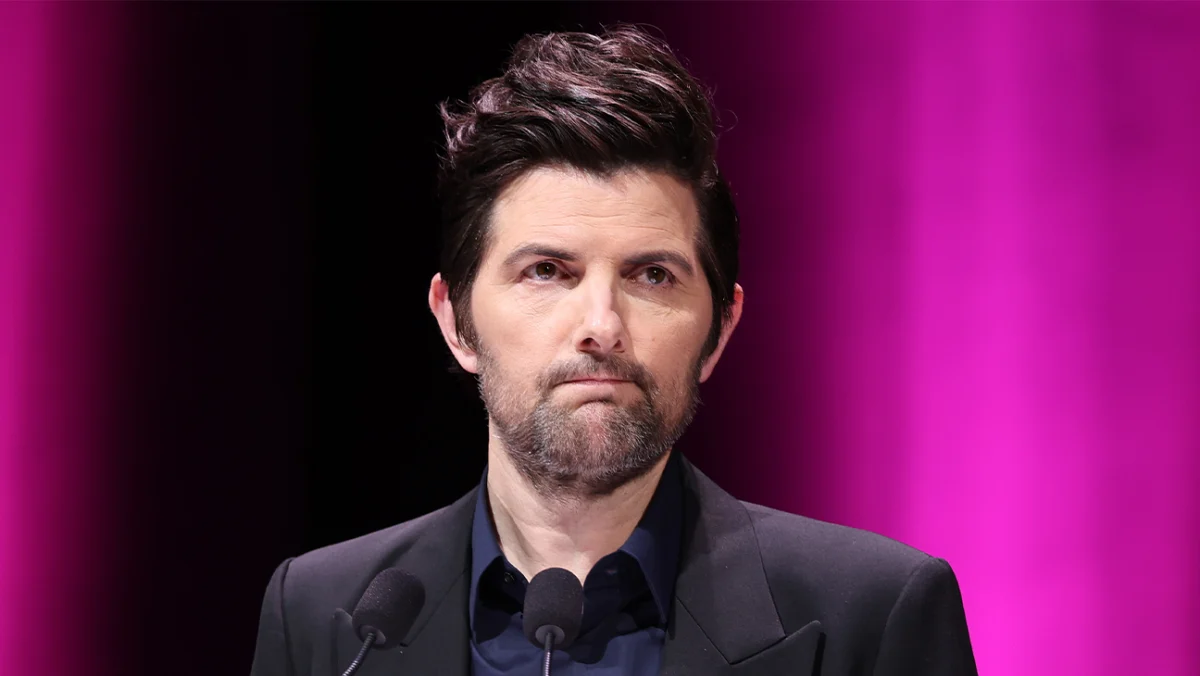
In a revelation that offers a humorous yet insightful glimpse into the often-unconventional paths of Hollywood careers, acclaimed actor Adam Scott recently shared an anecdote detailing his audacious attempt to rejoin the iconic Hellraiser franchise years after his character had been definitively killed off. The star of Apple TV+’s critically lauded series Severance recounted on Late Night With Seth Meyers how, early in his career and in need of work, he auditioned for 2002’s Hellraiser: Hellseeker, despite having met a grim end as the character Jacques in 1996’s Hellraiser: Bloodline. This candid admission not only highlights Scott’s early career struggles and ingenuity but also underscores the unique challenges and sometimes porous continuity inherent in long-running horror franchises and the competitive nature of the entertainment industry.
The Unlikely Audition: A Bid for Reanimation
Scott’s recollection painted a vivid picture of an actor’s pragmatic desperation. "My agent sends an audition for Hellraiser 6, and I’m like, ‘Wait a second… I was in Hellraiser 4,’" he told host Seth Meyers, recalling his initial confusion. Despite the clear narrative obstacle—his character, Jacques, a servant assisting an aristocrat in summoning a demon, had been dispatched with characteristic Hellraiser brutality in Bloodline—Scott decided to pursue the opportunity. "But I need a job. So I’m like, ‘Screw it.’ And I go to the audition just thinking, ‘Maybe they won’t notice that I was in Hellraiser 4.’" This sentiment encapsulates the relentless hustle often required in the nascent stages of an acting career, where the prospect of employment frequently outweighs concerns about logical narrative progression or even personal recognition by production staff.
The situation escalated when Scott recognized a familiar face during the audition process. "I remember being in the waiting room, kind of looking around and seeing a door ajar to someone’s office and seeing a producer from Hellraiser 4 in the office," he explained. His immediate reaction was to strategically obscure his identity. "And just like holding my papers up, just like, ‘OK, if he doesn’t see me, and they think I do a good job, maybe I’ll get in Hellraiser 6 as well.’" This anecdote, delivered with Scott’s characteristic deadpan humor, illustrates the actor’s quick thinking and determination. Unfortunately for Scott, his covert operation did not yield the desired outcome; he ultimately did not secure the role in Hellraiser: Hellseeker. Nevertheless, the experience stands as a memorable chapter in his journey from an aspiring actor to a prominent figure in Hollywood.
Adam Scott’s Trajectory: From Horror Minor to Acclaimed Lead
Adam Scott’s career ascent is a testament to perseverance and versatility, a journey that makes his early Hellraiser attempts all the more poignant. Born in Santa Cruz, California, Scott began his acting career in the mid-1990s, taking on a series of smaller roles across film and television. His appearance in Hellraiser: Bloodline in 1996, while minor, was one of these early credits, a crucial stepping stone for an actor eager to gain experience and build a resume. At the time, Hellraiser was a well-established, albeit increasingly direct-to-video, horror franchise, and any role within it represented a legitimate acting job. As Scott himself reflected, "I didn’t know about Hellraiser, but I was like, ‘Oh, this is an acting job?’ And so I was so excited." This simple statement underscores the fundamental drive of young actors: the desire for work, any work, to hone their craft and sustain themselves in a notoriously competitive industry.
Following Bloodline, Scott steadily built his portfolio with appearances in films like Star Trek: First Contact (1996), High Crimes (2002), and The Aviator (2004), alongside television roles in series such as Party of Five and Six Feet Under. However, his breakthrough into broader public consciousness began with his comedic roles. His portrayal of Kyle in the cult classic Step Brothers (2008) garnered significant attention, showcasing his talent for dry wit and comedic timing. This was followed by his iconic role as Ben Wyatt in the NBC sitcom Parks and Recreation (2010-2015), a character that solidified his status as a beloved comedic actor and brought him widespread recognition.
In recent years, Scott has seamlessly transitioned into more dramatic and complex roles, further demonstrating his range. His work in HBO’s Big Little Lies earned him critical acclaim, but it is his lead performance as Mark Scout in Apple TV+’s psychological thriller Severance that has truly elevated him to a new echelon of stardom. Severance has been a critical darling, praised for its unique premise, intricate storytelling, and exceptional performances, with Scott’s nuanced portrayal earning him an Emmy nomination. This trajectory from a minor role in a direct-to-video horror sequel to leading a globally acclaimed prestige drama provides a stark contrast and a full-circle moment to his Hellraiser audition story, illustrating how far his career has evolved.
The Enduring, Evolving Saga of ‘Hellraiser’
The Hellraiser franchise, the very universe Scott sought to re-enter, boasts a rich and complex history, originating from the fertile imagination of British author Clive Barker. Its genesis lies in Barker’s 1986 novella The Hellbound Heart, a dark, philosophical exploration of sadomasochism, desire, and transcendence. Barker himself adapted and directed the first film, Hellraiser, released in 1987. This seminal horror film introduced audiences to Pinhead, the articulate and terrifying leader of the Cenobites, extradimensional beings who perceive pain and pleasure as intertwined, offering extreme sensory experiences to those who solve the Lament Configuration puzzle box. The film was a critical and commercial success, carving out a unique niche in the horror genre with its sophisticated themes, visceral imagery, and memorable antagonist.
The franchise rapidly expanded with a series of sequels, though few reached the critical heights of the original. Hellraiser: Bloodline (1996), the fourth installment in the series and Scott’s debut within the universe, attempted to provide an ambitious origin story for the Lament Configuration and Pinhead himself, spanning several centuries. The film suffered from significant production troubles, including a directorial change from Kevin Yagher to Joe Chappelle, resulting in a compromised vision. Despite its troubled production, Bloodline is notable for being the last Hellraiser film to receive a theatrical release for many years, signaling a shift towards the direct-to-video market for subsequent entries. It was in this film that Adam Scott’s character, Jacques, met his untimely end, a definitive demise that, in most narratives, would preclude any future appearances.
Hellraiser: Hellseeker (2002), the film Scott auditioned for, was the sixth installment and marked a return of Ashley Laurence as Kirsty Cotton, the protagonist of the original two films. By this point, the franchise had firmly established itself in the direct-to-video realm, a common trajectory for many long-running horror series. Direct-to-video productions often operate with tighter budgets, shorter production schedules, and a different set of expectations regarding continuity and star power compared to theatrical releases. This context is crucial to understanding why Scott might have perceived an opening. In the direct-to-video landscape, creative teams can be more fluid, and the pressure to maintain strict narrative consistency, especially for minor characters, might be less intense. The sheer volume of sequels—the franchise now boasts 11 films, with the most recent being a 2022 reboot on Hulu—demonstrates its enduring, if sometimes uneven, appeal and its capacity to continually reinvent itself.
A Chronology of Scott’s ‘Hellraiser’ Endeavors
To fully appreciate the narrative arc of Adam Scott’s Hellraiser experience, a brief chronology is illuminating:
- Mid-1990s: Adam Scott, a burgeoning actor, secures the role of Jacques in Hellraiser: Bloodline. This represents a valuable early credit in his nascent career, fulfilling the pragmatic need for "an acting job."
- 1996: Hellraiser: Bloodline is released. Scott’s character, Jacques, meets his demise within the film’s narrative, a seemingly final end.
- Early 2000s (prior to 2002): Scott’s agent sends him an audition notice for Hellraiser 6, later titled Hellraiser: Hellseeker. Despite his character’s death in the fourth film, Scott, driven by the need for work, decides to pursue the opportunity, rationalizing that the production team might not notice or recall his previous involvement.
- The Audition: Scott attends the audition. During his time in the waiting room, he spots a producer from Hellraiser: Bloodline in an adjacent office. In an attempt to avoid recognition, he strategically attempts to obscure his face with his audition papers, hoping his performance alone would secure him the role.
- Post-Audition: Scott is not cast in Hellraiser: Hellseeker, bringing his second, albeit unofficial, attempt to join the franchise to an end.
- Present Day: Scott publicly recounts this memorable episode on Late Night With Seth Meyers, offering a humorous and insightful reflection on the tenacity required in the early stages of an acting career and the unique dynamics of the film industry.
Industry Implications: Resilience, Recasting, and Franchise Fluidity
Adam Scott’s Hellraiser anecdote, while humorous, carries several significant implications for understanding the entertainment industry. Firstly, it serves as a powerful testament to actor resilience and persistence. The journey to becoming a successful actor is fraught with rejection, self-doubt, and the constant need to hustle for work. Scott’s willingness to audaciously audition for a role in a franchise that had already killed off his character speaks volumes about the pragmatic mindset often adopted by actors, especially in their formative years. The focus shifts from strict narrative logic to the fundamental necessity of employment and the opportunity to act.
Secondly, the story highlights the fluidity of casting practices and franchise continuity, particularly within the horror genre. Long-running horror franchises like Hellraiser, Friday the 13th, or Halloween often contend with inconsistent timelines, characters returning from the dead (sometimes played by different actors), and a revolving door of creative teams. For direct-to-video sequels, which Hellseeker was, production teams might not always have comprehensive records or the institutional memory of every minor character from previous installments, especially those produced years earlier. This environment, while challenging for strict canon, can create unique opportunities, or at least the perceived possibility of them, for actors like Scott. The sheer volume of actors passing through auditions, combined with the often-fragmented nature of franchise production, could reasonably lead an actor to believe they might slip through unnoticed, or even be intentionally overlooked if they deliver a compelling performance.
Thirdly, the episode offers a glimpse into the dynamics of the direct-to-video market prevalent in the late 1990s and early 2000s. These films, often produced with smaller budgets and quicker turnarounds, frequently prioritized expediency over meticulous continuity. This environment could foster a "anything goes" mentality, where a good performance might indeed trump concerns about a character’s previous on-screen death, especially if the role was minor and the character could be easily reimagined. Scott’s attempt, therefore, wasn’t entirely far-fetched within the operational logic of that specific market segment.
Broader Impact and Enduring Legacy
Adam Scott’s candid sharing of this personal anecdote has a broader impact beyond its immediate entertainment value. For aspiring actors, it provides a relatable narrative about the grind and the sometimes-humorous lengths one must go to in pursuit of a career in acting. It normalizes the struggle and the occasional absurd situations encountered before achieving widespread recognition. It underscores that even highly successful actors like Scott started with humble beginnings and faced the same challenges of securing work.
For fans of Adam Scott and the Hellraiser franchise, the story adds another layer of appreciation. For Scott’s fans, it offers a charmingly self-deprecating look at his past, further endearing him to his audience by showcasing his humanity and resilience. For Hellraiser aficionados, it adds a fascinating, albeit minor, footnote to the franchise’s extensive history, revealing a behind-the-scenes moment that highlights the unique ecosystem of its production.
Ultimately, Scott’s failed attempt to resurrect his Hellraiser career serves as a delightful and insightful piece of Hollywood lore. It underscores the pragmatic realities of an actor’s journey, the often-unconventional nature of casting in long-running franchises, and the sheer tenacity required to navigate the unpredictable currents of the entertainment industry. From a hopeful, job-seeking actor holding up papers to avoid a producer’s gaze to a celebrated star leading acclaimed series, Adam Scott’s journey is a compelling narrative of perseverance, wit, and the sometimes-serendipitous path to success. The story reminds us that even in the cutthroat world of Hollywood, a little audacity and a lot of humor can go a long way.