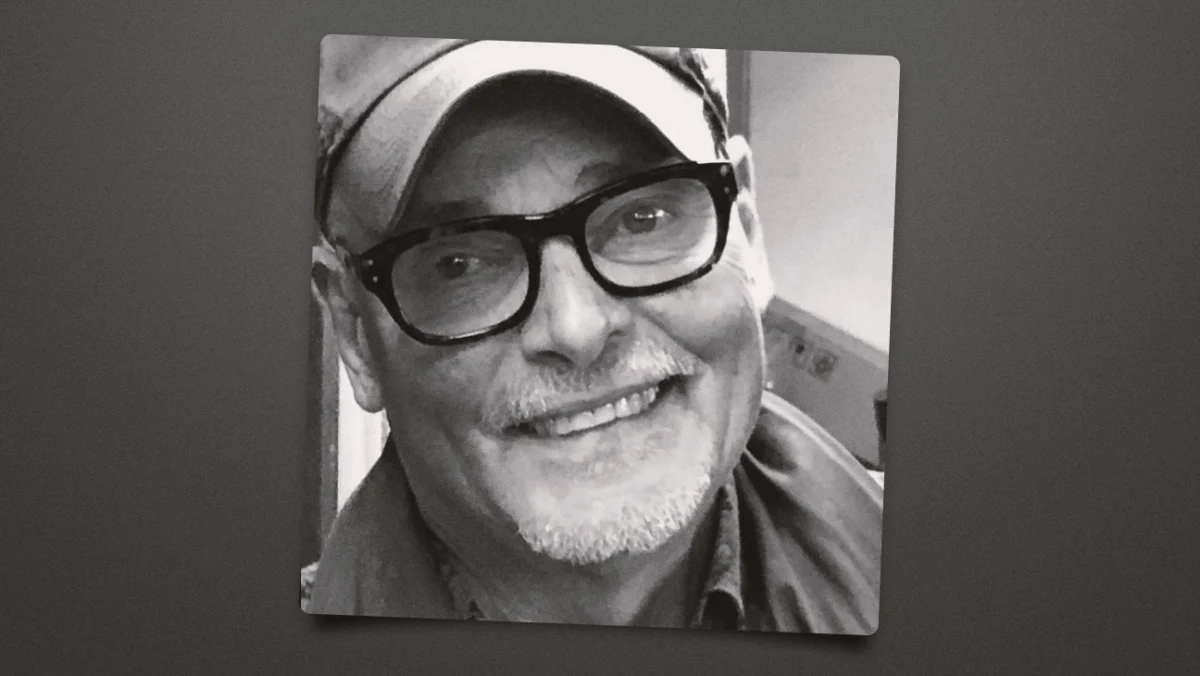
Tony Amatullo, a highly respected location manager and producer whose extensive credits include some of the most memorable films and television series of the past four decades, passed away on Sunday at the age of 76. Amatullo succumbed to acute myeloid leukemia at Memorial Sloan Kettering Cancer Center in Manhattan, his son Nico Amatullo confirmed to The Hollywood Reporter. His career, spanning from the bustling streets of New York to the intricate landscapes of Hollywood, exemplified a unique blend of logistical prowess, creative sensibility, and an unwavering dedication to the art of storytelling, making him a pivotal, albeit often behind-the-scenes, figure in numerous iconic productions.
A Foundation in New York: Early Life and Education
Born and raised in the vibrant, often gritty, environment of Hell’s Kitchen, Manhattan, Tony Eugene Amatullo Jr. developed a deep appreciation for the urban tapestry that would later feature prominently in his work. This formative period in one of New York City’s most storied neighborhoods instilled in him a keen eye for detail and an understanding of diverse communities. He attended Power Memorial High School, a significant institution in its time, before pursuing higher education. His academic path led him to the City University of New York, where he earned a bachelor’s degree in Film, Cinema, and Video Studies. This formal education provided him with a theoretical framework and a comprehensive understanding of the cinematic arts, laying the groundwork for a practical career that would soon take him to the epicenter of the entertainment industry.
Upon graduating, Amatullo made the significant cross-country move to Los Angeles, a common pilgrimage for aspiring film professionals. He began his career in the demanding role of a production assistant, a foundational position that offers an immersive introduction to the fast-paced and complex world of film and television production. This initial experience, characterized by long hours and diverse responsibilities, honed his organizational skills and provided him with invaluable insights into the logistical challenges inherent in filmmaking. His aptitude for problem-solving and his innate understanding of physical environments quickly propelled him into the specialized field of location management.
The Art of Location Management: Crafting Cinematic Worlds
Location management is a critical, yet frequently unsung, discipline in film production, demanding a unique blend of artistry, negotiation skills, and logistical expertise. A location manager is responsible for scouting, securing, and managing the physical spaces where a film or television show is shot, ensuring they not only serve the director’s creative vision but also meet complex budgetary, logistical, and legal requirements. Amatullo excelled in this role, working on a wide array of commercials, television series, and feature films.
His work as a location manager on two seminal films released in 1985 particularly stands out: Richard Donner’s adventure classic The Goonies and Steven Spielberg’s powerful drama The Color Purple. For The Goonies, Amatullo played a crucial role in bringing the fantastical world of Astoria, Oregon, to life. The film, a cultural touchstone for a generation, relied heavily on its distinct Pacific Northwest coastal settings, from the iconic "Goonie House" to the intricate cave systems. Amatullo’s responsibilities would have included navigating the challenges of filming with child actors in often rugged terrain, securing permits from local authorities and private property owners, managing the impact of a large film crew on a small town, and ensuring the safety and accessibility of diverse filming sites. The success of The Goonies in establishing a vivid, believable world owes much to the meticulous work of professionals like Amatullo, who transformed real-world locations into unforgettable cinematic landscapes.
Similarly, for The Color Purple, Amatullo’s expertise was vital in meticulously recreating the early 20th-century rural South. While some sets were constructed, much of the film’s authenticity derived from its chosen locations, primarily in the areas around Monroe and Marshville, North Carolina. This involved scouting for period-appropriate homes, fields, and landscapes that could transport audiences back in time, often requiring significant alteration and restoration to meet historical accuracy. The logistical complexities would have been immense, including coordinating with local communities, managing local crews, and ensuring the seamless operation of a major studio production in a rural setting. The critical acclaim and lasting impact of The Color Purple underscore the profound contribution of its location team in grounding its powerful narrative in a believable and evocative visual reality.
Transition to Producing: Orchestrating the Vision
Amatullo’s exceptional organizational skills and deep understanding of production logistics naturally led him to expand his responsibilities into various producing roles. The transition from location management to producing often signifies a broader involvement in the creative and financial oversight of a project. As an associate producer on the groundbreaking 1980s television series Fame and Miami Vice, Amatullo was instrumental in the day-to-day operations that brought these stylish and influential shows to the screen.
Fame, which spun off from the successful 1980 film, captured the aspirations and struggles of students at the New York City High School for the Performing Arts. The series, known for its blend of drama, music, and dance, required intricate coordination of diverse production elements, from large ensemble casts to complex musical numbers and location shoots that captured the essence of New York. Miami Vice, on the other hand, redefined television aesthetics with its vibrant visual style, pioneering use of pop music, and cinematic approach to storytelling. Amatullo’s role as an associate producer on these shows would have encompassed a wide range of duties, including managing budgets, schedules, personnel, and ensuring the smooth execution of the creative vision, demonstrating his capacity to handle large-scale, ambitious television productions. Both series garnered significant critical acclaim and cultural impact, pushing the boundaries of what was expected from episodic television.
His producing credits further expanded to include line producer on Above Suspicion (1995), a thriller starring Christopher Reeve and Joe Mantegna. A line producer is often the unsung hero of a film’s budget and schedule, responsible for managing the physical production from start to finish, ensuring the film is made on time and within financial constraints. Amatullo’s expertise in this area was crucial for navigating the practicalities of filming. He then served as an executive producer on John Herzfeld’s neo-noir crime thriller 2 Days in the Valley (1996), featuring a star-studded cast including Danny Aiello, James Spader, and Charlize Theron. As an executive producer, his involvement would have shifted to a more strategic and financial oversight, often encompassing securing financing, managing development, and protecting the creative integrity of the project. This film, known for its intricate plot and ensemble cast, showcased Amatullo’s ability to shepherd complex narratives through production. Later in his career, he also served as an executive producer for the Reelz reality series Beverly Hills Pawn in 2013-2014, demonstrating his versatility across different genres and formats within the evolving media landscape.
Leadership at Warner Bros.: A Television Powerhouse
From 2000 to 2005, Amatullo took on a significant executive role, serving as Vice President of Production at Warner Bros. Television. This period marked a crucial chapter in his career, placing him at the helm of production for some of the most acclaimed and commercially successful television series of the era. Warner Bros. Television was a dominant force in network programming during this time, and Amatullo’s responsibilities would have been immense, overseeing multiple concurrent productions.
His tenure saw him working on iconic series such as ER, The West Wing, and Third Watch. ER, a medical drama set in a Chicago emergency room, was a ratings juggernaut and a critical darling, known for its fast-paced storytelling and medical realism. The West Wing, a political drama depicting the inner workings of the White House, was celebrated for its sophisticated writing, complex characters, and rapid-fire dialogue, earning numerous Emmy Awards and cementing its place as one of television’s greatest shows. Third Watch, an action-drama focusing on the lives of police officers, paramedics, and firefighters in New York City, offered a gritty, realistic portrayal of first responders.
As VP of Production, Amatullo would have been responsible for the overall logistical, budgetary, and operational management of these high-profile series. This involved coordinating massive crews, managing multi-million dollar budgets for each show, overseeing production schedules that spanned months, and navigating the intricate demands of network television. His role would have been critical in ensuring that the creative visions of showrunners and directors were realized efficiently and effectively, maintaining the high production values that defined Warner Bros. Television during this golden age. This period showcased his leadership capabilities, his ability to manage large-scale operations, and his commitment to excellence across a diverse portfolio of critically and commercially successful programming.
A Return to Roots: Surviving on LES
In his final project, Amatullo returned to his New York roots, embracing a deeply personal and multifaceted role. He executive produced, directed, and co-wrote Surviving on LES (2021), a documentary that explored the profound impact of gentrification and the changing cultural landscape of Manhattan’s Lower East Side. This project allowed him to channel his lifelong connection to New York City and his keen observations of its evolving identity into a narrative that resonated deeply with his own experiences.
The Lower East Side, much like his childhood neighborhood of Hell’s Kitchen, has undergone dramatic transformation over the decades, transitioning from a working-class immigrant enclave to a trendy, high-rent district. Surviving on LES offered Amatullo a platform to examine these shifts, giving voice to the residents and businesses grappling with the displacement and cultural erosion that often accompany rapid urban development. His hands-on involvement as a director and co-writer, in addition to his producing role, highlights his enduring passion for storytelling and his commitment to tackling socially relevant themes. This project was a testament to his versatility and his willingness to engage with challenging subjects, reflecting a career-long dedication to bringing diverse and compelling narratives to the screen.
The Philosophy of a Producer: Balancing Art and Logistics
Amatullo’s family eloquently summarized his professional philosophy, stating, "Tony often compared producing to walking a tightrope – balancing creativity, logistics and big personalities. It was a challenge he embraced wholeheartedly, bringing both a passion for storytelling and a steady hand to every project throughout his career." This analogy perfectly encapsulates the essence of his work. A producer’s role is inherently a delicate act of balance, requiring an understanding of artistic vision, the practicalities of budget and schedule, and the nuances of managing diverse talents and temperaments. Amatullo’s consistent success across various roles and projects speaks volumes about his ability to navigate this complex terrain with grace and efficacy.
Professionals in the film and television industry often speak of the invaluable role played by individuals like Amatullo – those who possess the rare combination of creative empathy and pragmatic execution. His dedication ensured that directors’ visions could be realized, that writers’ stories found their visual expression, and that actors had the environment to perform their best. This "steady hand" was the bedrock upon which many memorable productions were built, allowing the more visible creative elements to flourish.
Beyond the Set: A Life Rich in Personal Passions
While his professional life was deeply immersed in the demanding world of film and television, Tony Amatullo cultivated a rich personal life filled with diverse passions. He found immense joy in the day-to-day moments, grounding himself away from the high-pressure environment of production. His family fondly recalled his love for gardening, a pursuit that demands patience, nurturing, and an appreciation for growth – qualities that likely mirrored aspects of his professional approach. He also enjoyed making the "perfect pizza" at his home in Pasadena, a testament to his meticulous nature and perhaps a nod to his Italian-American heritage.
His connection to urban environments, forged in Hell’s Kitchen, endured throughout his life. He cherished taking long walks through downtown Manhattan, observing its ever-changing landscape and perhaps finding inspiration in its ceaseless energy. An avid swimmer, he made daily swims a part of his routine, reflecting a disciplined and health-conscious lifestyle. His adventurous spirit also extended to fishing and hunting for antiques and hidden treasures in the many flea markets he visited around the world. These pursuits highlight a man who found beauty and value in discovery, whether it was a unique location for a film or a forgotten artifact.
Amatullo’s personal life was also marked by a beautiful cross-cultural connection. He met his wife, Mariana, the daughter of an Argentine diplomat, on a tour bus in Kyoto, Japan. Their international romance led to a lasting partnership and a family, including their two sons, Nico and Leonardo. This personal story underscores a life lived with curiosity and openness to new experiences, reflecting a global perspective that surely informed his work and worldview.
The Legacy of a Quiet Achiever
Acute myeloid leukemia (AML), the disease that claimed Amatullo’s life, is a rapidly progressing cancer of the blood and bone marrow. It is a severe diagnosis, and his passing at Memorial Sloan Kettering Cancer Center, a leading institution for cancer treatment, underscores the gravity of his illness. His battle, though private, reflects the challenges faced by many, and his family’s open sharing of the cause of death provides factual clarity.
Tony Amatullo’s career was a testament to the power of dedication, adaptability, and the quiet, indispensable work that underpins the magic of cinema. He was not a household name in the way a director or star might be, but his impact on the industry was profound and far-reaching. He represented the backbone of Hollywood – the experienced professionals who bridge the gap between creative ambition and practical execution. His ability to move seamlessly from the granular details of location scouting to the broad strokes of executive production, and his unwavering commitment to quality, left an indelible mark on the projects he touched.
His family’s final tribute encapsulates the sentiment of loss and enduring remembrance: “Tony found joy in the day-to-day moments of life… He will be deeply missed and forever remembered by all those who loved him.” Tony Amatullo’s legacy will endure through the countless hours of entertainment he helped bring to the screen, the careers he influenced, and the lasting impact he had on an industry that thrives on the very balance he mastered so completely. His life serves as a powerful reminder of the essential role of the behind-the-scenes architects in shaping our shared cinematic heritage.