The urgent plea from a meat packer in Barbara Kopple’s 1990 documentary, American Dream, "We better start pulling together or, by God, they’re going to bury us," resonates with a chilling prescience that has echoed through decades of labor disputes in the United States. The "they" in this desperate cry were the Hormel Foods Corporation, a powerful entity that, during a protracted strike in 1985-86, exploited internal union divisions to replace a significant portion of its workforce. Kopple’s seminal film, set against the backdrop of the labor crisis in Austin, Minnesota, transcends a single event, serving as a poignant and often starkly realistic examination of the precarious state of organized labor in America, functioning as an alternative State of the Union address for a struggling movement.
The 1980s, the era in which American Dream unfolded, was a period marked by a significant shift in the balance of power between labor and capital. This decade witnessed an increasingly confrontational stance towards organized labor, epitomized by President Ronald Reagan’s decisive action in 1981 to terminate striking air traffic controllers. This presidential action sent a clear signal to both workers and corporations. Throughout the decade, private sector companies, emboldened by this climate, increasingly resorted to replacing striking workers. Major corporations like Phelps Dodge and International Paper followed Hormel’s lead, contributing to a dramatic decline in union membership. Data from the Bureau of Labor Statistics reveals a staggering loss of 2.7 million members between 1980 and 1984 alone, a trend that continued to challenge union viability.
American Dream, now meticulously restored and re-released by Janus Films, represents Barbara Kopple’s powerful follow-up to her critically acclaimed 1973 documentary, Harlan County, USA. That earlier film chronicled the gritty realities of the Brookside strike in a Kentucky coal mine, a work that, while depicting immense hardship, often conveys a more empowering sense of solidarity and collective action. Both films employ Kopple’s signature roving, cinéma vérité style, immersing the viewer in the raw emotions of confrontation, frustration, and unwavering perseverance. Her camera captures the extended, condensed timelines of these labor crises, effectively illustrating the immense pressure that can forge solidarity among workers, even as internal dissent and weariness inevitably emerge.
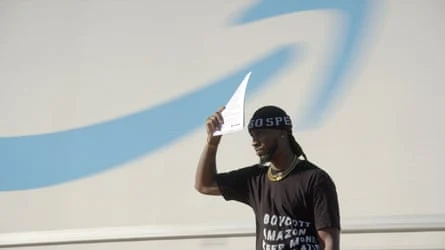
The DNA of Harlan County, USA is undeniably present in the lineage of subsequent union and strike documentaries. Films like Final Offer (1985), which examined the complex contract negotiations between General Motors and the United Auto Workers in 1984, and American Standoff (2006), detailing a contentious Teamsters strike against Overnite Transportation beginning in 2000, owe a significant debt to Kopple’s pioneering approach. More recently, the documentary Union (2024) provided an intimate look at the historic effort by the Amazon Labor Union to organize a Staten Island warehouse, while the forthcoming Who Moves America is poised to offer a nationwide perspective on UPS drivers preparing for potential strike action as Teamster negotiators push for an improved contract.
The Enduring Appeal of Strike Narratives
The inherent drama of labor disputes makes them fertile ground for documentary filmmaking. These narratives are often framed as underdog stories, imbued with a potent mix of tension, high stakes, and a profound sense of class struggle. Whether documenting the plight of meat packers, coal miners, delivery drivers, or warehouse workers, filmmakers gain unprecedented access to individuals who risk their livelihoods, their financial security, and sometimes even their safety for the sake of collective bargaining. The resulting films serve as critical temperature checks on the state of organized labor in the United States, offering granular insights into the challenges and triumphs of working people.
Certain scenes have become almost archetypal within the genre. The impassioned rallies where organizers galvanize the rank-and-file, the poignant expressions of concern from workers about the impact of a strike on their families, and the inevitable flare-ups of tension on the picket line are recurring motifs. These films typically feature the stoic pronouncements of corporate spokespeople, the unwavering dedication of union veterans, and the often-controversial presence of "scabs" or replacement workers. These recurring elements are not merely generic storytelling tropes; they reflect the established, rigorous processes of union action and the predictable, often adversarial, tactics employed by corporate entities. The consistent thematic and stylistic threads across these documentaries underscore the persistent nature of labor crises since Harlan County, USA, while their specific, ground-level focus illuminates the evolving landscape of American labor.

From "Bloody Harlan" to Modern Boardrooms
For some, the historical significance of union action has receded from shared community memory into the realm of historical anecdote, viewed by some as increasingly antiquated. The striking miners in Harlan County, USA are depicted against the stark backdrop of the Harlan County War, a period of intense labor conflict in the 1930s that resulted in numerous fatalities. The moniker "Bloody Harlan" is invoked throughout Kopple’s film, most powerfully through Florence Reece’s iconic protest anthem, "Which Side Are You On?", originally penned during earlier labor struggles in the region. These historical accounts, often presented through archival footage and interviews, form the core of more traditional historical documentaries such as With Babies and Banners: Story of the Women’s Emergency Brigade and The Wobblies. The recent release, American Agitators, delves into the life of organizer Fred Ross, whose early career leading a Dust Bowl migrant labor camp served as an inspiration for John Steinbeck’s seminal novel, The Grapes of Wrath.
In Who Moves America, the contemporary UPS contract negotiations in 2023 are juxtaposed with archival camcorder footage from the historic 1997 UPS strike. While many veteran UPS drivers recall the significance of the 1997 strike, a younger generation of workers may lack awareness of its historical impact. This generational gap reflects broader trends in the modern workforce. Contemporary corporations increasingly rely on part-time and short-term workers who may be less inclined or able to dedicate themselves to long-term organizing efforts. Furthermore, the economic landscape has shifted from a model where a single large company dominated a town’s economy to one where workers might hold multiple jobs across different industries, such as Amazon or UPS, diminishing the singular impact of any one employer. The recent wave of documentaries highlights a growing chasm between deeply committed union activists and a segment of the workforce that needs to be convinced of the tangible benefits and enduring power of solidarity – a vulnerability that unions can ill afford to ignore.
The Shifting Tactics of Corporate Opposition
American Dream foreshadows the sophisticated corporate strategies that would come to define the discourse surrounding unions in subsequent decades. In Harlan County, USA, company representatives and their hired security were often portrayed as overtly hostile, physically confronting filmmakers and union members, their resistance to scrutiny palpable. By the mid-1980s, as seen in American Dream, corporate executives had become more media-savvy, adopting a more polished, often disarmingly cheerful demeanor while readily dismissing union demands.
By the 2020s, the discourse emanating from corporate boardrooms regarding unions has evolved into a subtler, more insidious form of condescension. In Who Moves America, UPS CEO Carol Tomé’s attempt to placate shareholders during Teamster negotiations is likened to a domestic spat over acquiring a puppy, a comparison that trivializes the complex issues at stake for unionized workers. Similarly, the documentary Union exposes the meticulous, often psychological, methods employed by consultants hired by Amazon to dissuade employees from organizing. These consultants engage in captive audience meetings, utilizing PowerPoint presentations and persuasive rhetoric to undermine the perceived benefits of unionization. This is a stark contrast to the overt physicality and armed intimidation that characterized labor disputes in earlier eras, such as the guards at the mines in Harlan County, USA, who were implicated in assaults on picketers and the tragic death of miner Lawrence Jones.
The Evolving Landscape and Future of Union Documentaries
While it is increasingly challenging to critique the political efficacy of unions in documentaries that feature authentic, impassioned voices – especially as contemporary films more frequently amplify the perspectives of immigrant and undocumented workers who disproportionately bear the brunt of scapegoating and demonization – Hollywood itself is not an automatic savior for organized labor. Despite the existence of powerful guilds like SAG-AFTRA, the Writers Guild of America (WGA), and the International Alliance of Theatrical Stage Employees (IATSE), the fundamental dynamics of business interests often prevail.
Even after receiving critical acclaim on the festival circuit, the documentary Union faced significant hurdles. Its distributors, wary of jeopardizing lucrative working relationships with Amazon MGM Studios, ultimately declined to pick it up, forcing the filmmakers to pursue a self-distribution model. This decision, while not entirely preventing the film from reaching audiences, significantly hampered its promotional reach and denied it the widespread publicity and potential accolades, such as an Academy Award for Best Documentary, that could have amplified its message. Barbara Kopple, by contrast, has earned two such Oscars for her work.
However, viewing a half-century of these union documentaries reveals a consistent thread of tenacity and dogged determination. The collective project of documenting labor struggles is an ongoing, collaborative endeavor, capable of serving dual purposes: as a vital archive of past battles and a practical manual for future organizers. These films, in their unwavering commitment to capturing the human dimension of labor disputes, continue to offer invaluable insights into the enduring fight for workers’ rights and the ever-evolving strategies employed by both labor and capital.