The 28th edition of the Far East Film Festival (FEFF), held in the historic northern Italian city of Udine, concluded on Friday night, April 25, 2026, with Kimura Taichi’s poignant Japanese drama, Fujiko, securing the coveted Golden Mulberry Audience Award. This year’s festival, marking another significant milestone in its commitment to showcasing the vibrant tapestry of Asian filmmaking, drew record attendance and presented a slate of films that resonated deeply with both critics and the public, from intimate character studies to powerful political documentaries.
A Triumph of Empathy: Fujiko Captures the Golden Mulberry
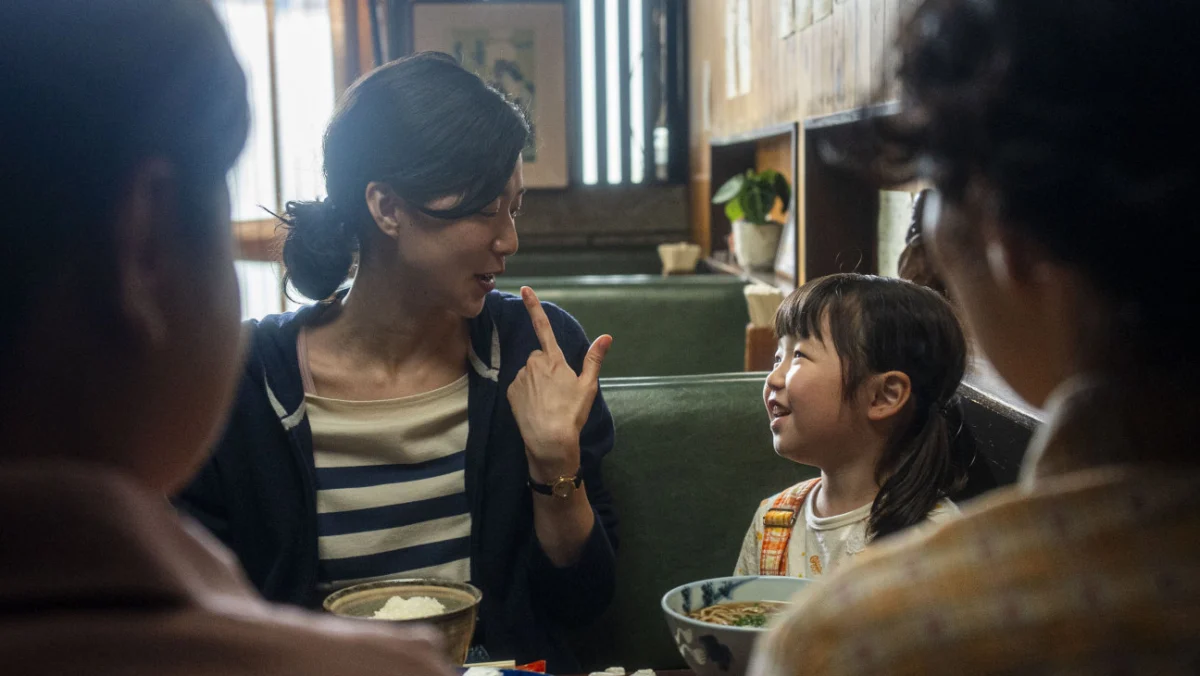
Fujiko, Kimura Taichi’s second feature film, emerged as the audience’s undeniable favorite, earning the festival’s top honor. The film is described as a tender family dramedy, masterfully weaving a narrative set against the backdrop of 1970s and 1980s Japan. It follows the arduous yet ultimately uplifting journey of a middle-aged single mother striving to forge her own path in a society still grappling with the nascent ideas of women’s liberation. This period in Japan, characterized by rapid economic growth and shifting social norms, provides a rich historical canvas for Fujiko‘s exploration of resilience, familial bonds, and the quiet revolutions occurring within everyday lives. The film’s nuanced portrayal of societal expectations versus personal aspirations struck a particular chord with the international audience in Udine, demonstrating the universal appeal of stories rooted in specific cultural contexts.
The ensemble cast of Fujiko received significant praise for their compelling performances. Yuki Katayama, in the titular role, delivered a performance critics lauded as both vulnerable and strong, embodying the struggles and triumphs of a woman navigating a patriarchal society. She was ably supported by industry veterans Lily Franky, Tsuyoshi Ujiki, Keiko Takeshita, Kayoko Kishimoto, and Issey Ogata, whose collective talent brought depth and authenticity to the film’s intergenerational narrative. Reviewers noted Fujiko‘s delicate balance of humor and pathos, a hallmark of the dramedy genre, which allowed the audience to connect emotionally with its characters without shying away from the era’s social complexities. The film’s success at FEFF underscores a growing international appetite for Japanese cinema that delves into social realism and human-centric storytelling beyond more commonly exported genres.
The Resonant Echoes of The Seoul Guardians
While Fujiko claimed the top audience prize, the Silver Mulberry, FEFF’s second most coveted audience award, went to the searing South Korean documentary, The Seoul Guardians. Directed by the collaborative trio of Kim Jong-woo, Kim Shin-wan, and Cho Chul-young, the film provided a gripping and immersive account of the surreal events that unfolded on December 3, 2024. On that day, the streets of Seoul witnessed massive public protests following the stunning declaration of martial law by the then-embattled President Yoon Suk Yeol.
The Seoul Guardians has been lauded by critics for its unflinching and immersive retelling of one of the most bizarre, yet ultimately uplifting, moments in recent South Korean history. The documentary skillfully compiles footage, testimonies, and archival material to reconstruct the rapid escalation of events, from the initial shock of the martial law declaration to the widespread civilian resistance that ultimately led to its swift revocation. Its power lies not just in documenting history, but in capturing the collective spirit of a populace defending its democratic principles. The film served as a stark reminder of the fragility of democratic institutions and the enduring power of civic action, resonating deeply with audiences who recognized the global relevance of its themes. The documentary’s critical acclaim was further cemented by sharing FEFF’s prestigious Black Dragon critics prize with Fujiko, a rare and significant dual recognition that highlighted the diverse strengths of the festival’s selections. The inclusion of a powerful political documentary like The Seoul Guardians alongside a tender drama like Fujiko reflects FEFF’s commitment to presenting a broad spectrum of Asian narratives, from the personal to the geopolitical.
A Multi-Faceted Crystal Mulberry and Other Accolades
In an unexpected turn, the third-place Crystal Mulberry audience award was shared between an unprecedented four films, reflecting the exceptionally strong and diverse lineup of the 28th FEFF. This unique outcome highlighted the difficulty audiences faced in choosing a singular favorite from a pool of highly acclaimed works. The films sharing this honor were:
- Blades of the Guardians: Wind Rises in the Desert by legendary Hong Kong action choreographer and director Yuen Woo-ping, a visually stunning martial arts epic that demonstrated his enduring mastery of the genre.
- My Name by South Korean director Chung Ji-young, a compelling drama that delved into complex human relationships and societal pressures.
- Tunnels: Sun in the Dark by Vietnamese filmmaker Bui Thac Chuyen, a critically acclaimed work that offered a unique perspective on contemporary Vietnamese society.
- The King’s Warden by South Korean director Chang Hang-jun, a historical drama that captivated audiences with its intricate plot and powerful performances.
Beyond the audience awards, a distinguished jury presided over several other key categories. The White Mulberry prize for Best Debut Film was awarded to Unidentified Murder by Hong Kong’s Kwok Ka-hei and Jack Lee, a testament to the burgeoning talent emerging from the region. The jury also granted a special mention in this category to The Seoul Guardians, acknowledging its exceptional quality and impact even as a documentary.
The Mulberry for Best Screenplay award was presented to Tunnels: Sun in the Dark, recognizing Bui Thac Chuyen’s exquisite storytelling and character development. A special mention for screenplay went to Anthony Chen’s We Are All Strangers, a Singaporean production that explored themes of alienation and connection in a globalized world, further demonstrating the narrative prowess present across Asian cinema.
Celebrating Legacies: Lifetime and Outstanding Achievement Awards
The 28th FEFF also served as a platform to honor the enduring legacies and significant contributions of luminaries in Asian cinema. The Golden Mulberry Award for Lifetime Achievement was bestowed upon two titans of the industry: legendary Japanese actor Koji Yakusho and the hugely influential Hong Kong filmmaker and martial arts choreographer Yuen Woo-ping.
Koji Yakusho, renowned for his versatile performances across a multitude of genres, has captivated audiences for decades with his profound depth and ability to inhabit diverse characters, from stoic samurai to complex modern individuals. His work has not only garnered critical acclaim but has also served as a global ambassador for Japanese cinema, making him a deserving recipient of this prestigious honor.
Yuen Woo-ping, a living legend in martial arts choreography and direction, has shaped the aesthetics of action cinema for over half a century. His innovative fight sequences have influenced countless filmmakers worldwide, and his directorial ventures have consistently pushed the boundaries of the genre. His impact on Hong Kong cinema, and indeed on global action filmmaking, is immeasurable.
Adding to the roster of distinguished honorees, acclaimed Chinese actress Fan Bingbing received the Golden Mulberry for Outstanding Achievement. Her career, marked by a powerful screen presence and a willingness to tackle challenging roles, has seen her rise to international stardom, cementing her status as one of Asia’s most recognizable and influential cinematic figures. These awards underscore FEFF’s role not just in discovering new talent but also in revering the masters who have paved the way.
The Festival’s Enduring Legacy and Growing Influence
The 28th Far East Film Festival proved to be a resounding success, solidifying its position as Europe’s premier showcase for Asian cinema. According to FEFF organizers, the 2026 edition screened an impressive total of 75 films, a diverse collection that included eight highly anticipated world premieres, 18 international premieres, 21 European premieres, and 20 Italian premieres, representing the rich cinematic output from 12 countries across Asia. This extensive program offered a comprehensive snapshot of contemporary Asian filmmaking, ranging from established masters to exciting new voices.
The festival also reported a significant uptick in visitors compared to the previous year, with approximately 70,000 people attending the various FEFF screenings, industry events, masterclasses, and cultural activities. This increase in engagement highlights the growing international interest in Asian cinema and FEFF’s increasing prominence on the global film festival circuit. The influx of cinephiles, industry professionals, and media from around the world brought a vibrant energy to Udine, transforming the city into a temporary hub for cross-cultural exchange. The economic impact on the local economy, from hospitality to local businesses, was substantial, further cementing the festival’s value to the Friuli-Venezia Giulia region.
Sabrina Baracetti, President of FEFF, expressed her immense satisfaction with the festival’s outcome. "We had superstars of Asian cinema and we had blockbusters. We had films that celebrate the diversity of talent the region continues to produce and we had full houses all festival long," Baracetti stated, her voice reflecting the enthusiasm of the event. "Tonight’s winners once again reflect the strength of Asian cinema, and our dedication to celebrating and promoting these filmmakers will continue." Her remarks underscore FEFF’s dual mission: to entertain and to educate, fostering a deeper understanding and appreciation of Asian cultures through the medium of film.
The festival also hosted several industry-focused events, including co-production forums, workshops, and networking sessions, aimed at facilitating collaborations between Asian and European filmmakers. These initiatives are crucial for the global dissemination of Asian films and for nurturing future cinematic projects. Experts noted that the strong showing of films like The Seoul Guardians and Fujiko at FEFF signals a healthy diversification within Asian cinema, moving beyond traditional genre exports to embrace more socially conscious and character-driven narratives. This trend is likely to open new markets and attract a broader international audience, further integrating Asian films into the global cinematic landscape.
Looking Ahead: The 29th Edition and a Focus on Hong Kong
As the curtains closed on the successful 28th edition, the FEFF organizers wasted no time in looking to the future. They officially announced the dates for the 29th edition of the Far East Film Festival, which will take place from April 23 to May 1, 2027. This early announcement allows for extensive planning and anticipation within the global film community.
Significantly, the organizers also revealed that the country in focus for the 29th edition will be Hong Kong. This decision promises a deep dive into the rich and diverse cinematic history and contemporary output of one of Asia’s most influential film industries. Hong Kong cinema, known for its dynamic action films, poignant dramas, and groundbreaking artistry, has a dedicated global following. The special focus will undoubtedly bring a curated selection of classics, hidden gems, and new releases from the territory, offering audiences a comprehensive exploration of its unique cinematic identity. This forward-looking approach ensures FEFF’s continued relevance and its commitment to spotlighting the dynamic evolution of Asian cinema for years to come.