A highly anticipated cinematic event is slated for release in summer 2026: a Japanese remake of the critically acclaimed South Korean film "The Outlaws" (2017). This new production plunges audiences into the gritty underbelly of Tokyo’s Shinjuku district, where a rookie Japanese detective and an elite Korean police officer must forge an unlikely alliance to confront a dangerous international crime syndicate. The narrative promises an explosive fusion of high-octane action, intricate police procedural, and a deep dive into the complex power dynamics of organized crime, set against the vibrant yet perilous backdrop of Kabukicho.
The Unlikely Alliance: Shinjuku’s Gritty Underbelly
At the heart of this unfolding urban drama is Shiro Aiba, portrayed by rising star Mizukami Koshi. Aiba is introduced as a rookie detective stationed at the Shinjuku Central Police Station, a character shaped profoundly by his upbringing in Kabukicho, Tokyo’s renowned entertainment and red-light district. His past as a leader of a bosozoku gang, a notorious Japanese motorcycle subculture, has endowed him with formidable physical strength and a notoriously quick temper. These traits, while invaluable in the often-brutal world of street crime, frequently land him in disciplinary trouble with his superiors. His intimate knowledge of Kabukicho’s labyrinthine alleys, hidden establishments, and intricate social hierarchies makes him an invaluable, albeit volatile, asset to the police force operating in the area.
His world collides with that of Detective Choi Si-woo, played by the internationally recognized artist and actor U-Know. Si-woo arrives in Japan as an envoy from the Korean National Police, tasked with a critical mission: to track down and neutralize a formidable international crime group believed to be operating within Japanese borders. His arrival marks a stark contrast to Aiba’s local, street-level approach. Si-woo represents the disciplined, systematic, and often globalized methodologies of modern law enforcement. From their initial encounter, the cultural and operational differences between the two detectives are palpable, leading to immediate clashes in personality and investigative strategy. Their struggle to establish a functional working relationship forms a core tension of the early narrative, mirroring the broader challenges of international cooperation in combating transnational crime. However, the escalating threat posed by the international syndicate, particularly the intelligence suggesting their operations are deeply embedded within Kabukicho, forces these disparate personalities to put aside their differences and embark on a joint investigation. This reluctant partnership is the crucible in which a unique form of justice will be forged.
Escalation in Kabukicho: A Battleground Emerges
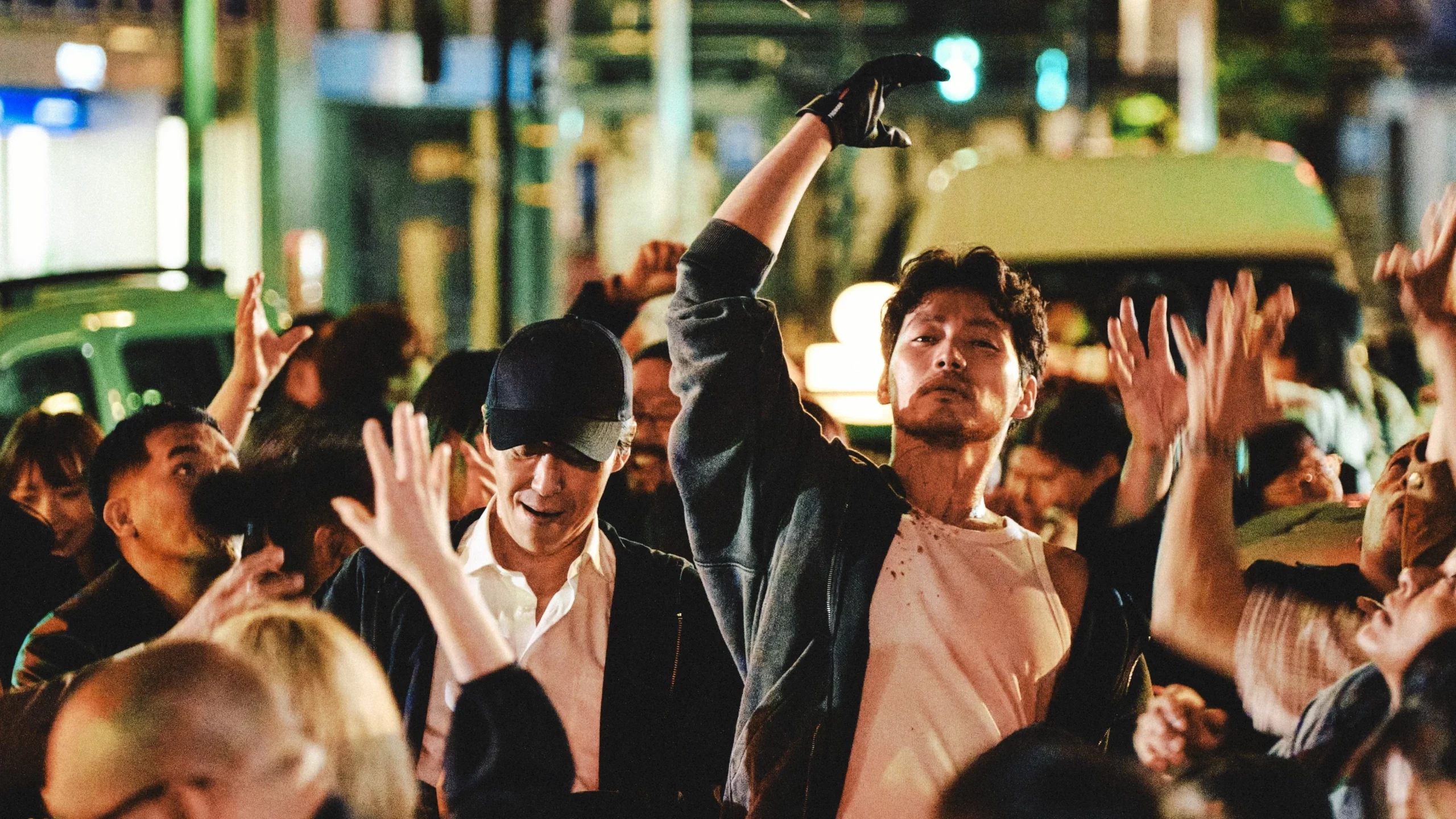
As Aiba and Si-woo tentatively begin their collaborative efforts, the criminal landscape of Shinjuku undergoes a dramatic and violent transformation. A meticulously planned gang robbery serves as the catalyst, igniting a brutal conflict that quickly spirals out of control. This incident triggers a fierce territorial war between a powerful yakuza syndicate, Japan’s traditional organized crime groups, and Kabukicho’s largest host club organization. Host clubs, a unique facet of Japanese nightlife, often operate in a grey area, and their large-scale operations frequently possess significant influence and, at times, connections to less savory elements. The clash between these two established criminal entities creates a volatile environment, further complicated by the insidious involvement of the international crime group that Si-woo is pursuing.
The confluence of these three formidable forces—the yakuza, the host club organization, and the international syndicate—transforms Shinjuku, particularly the densely populated and neon-lit district of Kabukicho, into an active battlefield. Public safety is compromised, and the intricate web of alliances and rivalries among these groups creates an unpredictable and dangerous situation for both law enforcement and ordinary citizens. The film is expected to graphically portray the chaos, violence, and desperation that grip the district as various factions vie for control, profit, and survival. The escalating violence serves not only as a backdrop but also as a critical driver for the narrative, pushing Aiba and Si-woo to their limits and forcing them to confront increasingly complex moral and ethical dilemmas.
Echoes of a Conspiracy: Beyond the Street Wars
Beneath the surface of the street brawls and territorial disputes, the film hints at a much larger, more insidious conspiracy. The initial gang robbery and the subsequent power struggle are revealed to be mere symptoms of a deeper, more pervasive network of corruption and influence. This conspiracy is said to involve "powerful figures," suggesting that the reach of this criminal enterprise extends far beyond the street-level enforcers and into the higher echelons of society. This element elevates the stakes significantly, transforming a localized crime drama into a story with national and potentially international implications. The uncovering of this conspiracy will likely challenge the protagonists’ understanding of justice and power, forcing them to confront adversaries who operate with impunity from behind a veil of legitimacy. This narrative layer adds depth and complexity, moving the story beyond simple good-versus-evil tropes to explore the systemic challenges of combating entrenched corruption.
The Genesis: Adapting a Korean Phenomenon
The decision to remake "The Outlaws" for a Japanese audience stems from the immense success and critical acclaim of the original South Korean film. Released in 2017, "The Outlaws" became a box office phenomenon, grossing over $53 million and attracting more than 6.8 million admissions in South Korea, making it one of the highest-grossing R-rated films in the country’s history. Starring Ma Dong-seok (Don Lee) and Yoon Kye-sang, the original film was lauded for its visceral action sequences, compelling characters, and a narrative loosely inspired by real-life events, specifically the "Garibong-dong incident" of 2007, where a local detective unit cracked down on a ruthless Chinese-Korean gang. Its blend of gritty realism, intense violence, and occasional dark humor resonated deeply with audiences and critics alike, establishing it as a benchmark in the Korean crime thriller genre.
The Japanese remake aims to capture the essence and raw energy of its predecessor while meticulously adapting the story to a distinctly Japanese cultural and urban context. Industry analysts suggest that adapting a proven success like "The Outlaws" minimizes financial risk while offering the opportunity to introduce a familiar yet fresh narrative to a new demographic. The choice of Shinjuku, particularly Kabukicho, as the primary setting is a deliberate one, as the district holds a similar symbolic weight and reputation for its complex criminal ecosystem as the areas depicted in the original Korean film. This localization is crucial for maintaining authenticity and relevance for the target audience.
Casting and Creative Vision
The selection of Mizukami Koshi and U-Know for the lead roles underscores the production’s commitment to both acting prowess and star power. Mizukami Koshi, while relatively new to leading roles, has garnered attention for his intense performances and physical presence, making him an ideal fit for the tenacious and hot-headed Shiro Aiba. His background in various television dramas and independent films has prepared him for the demanding physicality and emotional depth required for such a character. U-Know, celebrated globally as a member of the K-pop duo TVXQ and an established actor in his own right, brings an international appeal and a refined acting style that will complement Mizukami’s raw energy. His experience in action-oriented roles and dramas will undoubtedly inform his portrayal of the meticulous and determined Detective Choi Si-woo.
Speaking on the adaptation, a spokesperson for Horizon Films, the primary production company behind the remake, stated, "We are incredibly excited to bring the thrilling narrative of ‘The Outlaws’ to a Japanese audience. Our vision is to respect the original’s compelling story and character dynamics while infusing it with the unique cultural nuances and visual aesthetics of Shinjuku. The chemistry between Mizukami Koshi and U-Know is truly dynamic, promising a captivating portrayal of two very different individuals forced to unite against a common, formidable enemy." While specific director and writer details remain under wraps, the production team has indicated a strong emphasis on maintaining the original’s balance of intense action and character-driven drama, with a focus on delivering a visually stunning and emotionally resonant cinematic experience.
Production Timeline and Scope
The journey to bring this ambitious remake to the screen began with the acquisition of the intellectual property rights from its South Korean counterparts, a process reportedly concluded in late 2023. Following this, an intensive pre-production phase commenced, focusing on script adaptation, location scouting in Shinjuku and surrounding areas, and the meticulous casting of a diverse ensemble to populate the film’s intricate criminal underworld and police force. Principal photography is understood to have commenced in early 2025, utilizing a combination of on-location shoots in carefully controlled areas of Shinjuku and elaborate studio sets designed to recreate the district’s distinctive atmosphere. The production is reportedly employing state-of-the-art cinematic techniques, including advanced stunt choreography and special effects, to ensure the action sequences are both realistic and exhilarating. Post-production, involving extensive editing, sound design, visual effects, and musical scoring, is anticipated to extend well into early 2026, leading up to a strategic marketing campaign designed to build anticipation for its summer release. The significant investment in both talent and technical resources suggests a production budget rivaling some of Japan’s biggest blockbuster releases, indicative of the studio’s confidence in the film’s potential.
Shinjuku as a Character: Filming Locations and Authenticity
The choice of Shinjuku, and specifically Kabukicho, is not merely a backdrop but an integral character in the film’s narrative. Known globally for its vibrant nightlife, towering neon signs, and densely packed streets, Kabukicho also harbors a notorious reputation as a hub for various illicit activities. The film aims to leverage this duality, showcasing both the dazzling allure and the dangerous underbelly of the district. Filmmakers are reportedly working closely with local authorities and cultural consultants to ensure an authentic portrayal of the district’s complex social fabric, from the bustling entertainment venues to the shadowy alleys where clandestine operations unfold. This commitment to authenticity is expected to lend a raw, immersive quality to the film, drawing audiences into the heart of Shinjuku’s criminal landscape. The visual spectacle of Shinjuku, with its iconic landmarks and unique urban texture, will undoubtedly play a crucial role in setting the tone and atmosphere for the high-stakes narrative.
Industry Expectations and Broader Implications
The remake of "The Outlaws" is poised to be a significant release in the summer of 2026, with industry analysts predicting strong box office performance both domestically and potentially across Asia. Its success could further solidify Japan’s role as a key player in adapting successful foreign intellectual property, demonstrating the country’s capacity to localize and reinvent popular narratives for new audiences. Moreover, the film’s emphasis on international police cooperation, even within a fictional framework, could subtly resonate with contemporary discussions surrounding transnational crime and global security efforts. For the crime thriller genre, this remake represents an exciting fusion of Korean storytelling prowess and Japanese cinematic craftsmanship, potentially setting new benchmarks for cross-cultural adaptations. The film’s examination of organized crime, urban decay, and the relentless pursuit of justice against overwhelming odds is expected to provoke thought and discussion among viewers, extending its impact beyond mere entertainment.
Anticipation for Summer 2026
As summer 2026 approaches, anticipation for this high-stakes remake continues to build. The combination of a proven narrative, compelling lead actors, a rich cultural setting, and a promise of intense action and intricate conspiracy ensures that "The Outlaws" remake will be one of the most talked-about films of the year. It stands as a testament to the enduring appeal of gripping crime stories and the power of cinema to transcend cultural boundaries, offering a fresh perspective on a beloved tale while exploring universal themes of justice, loyalty, and survival in the urban jungle.