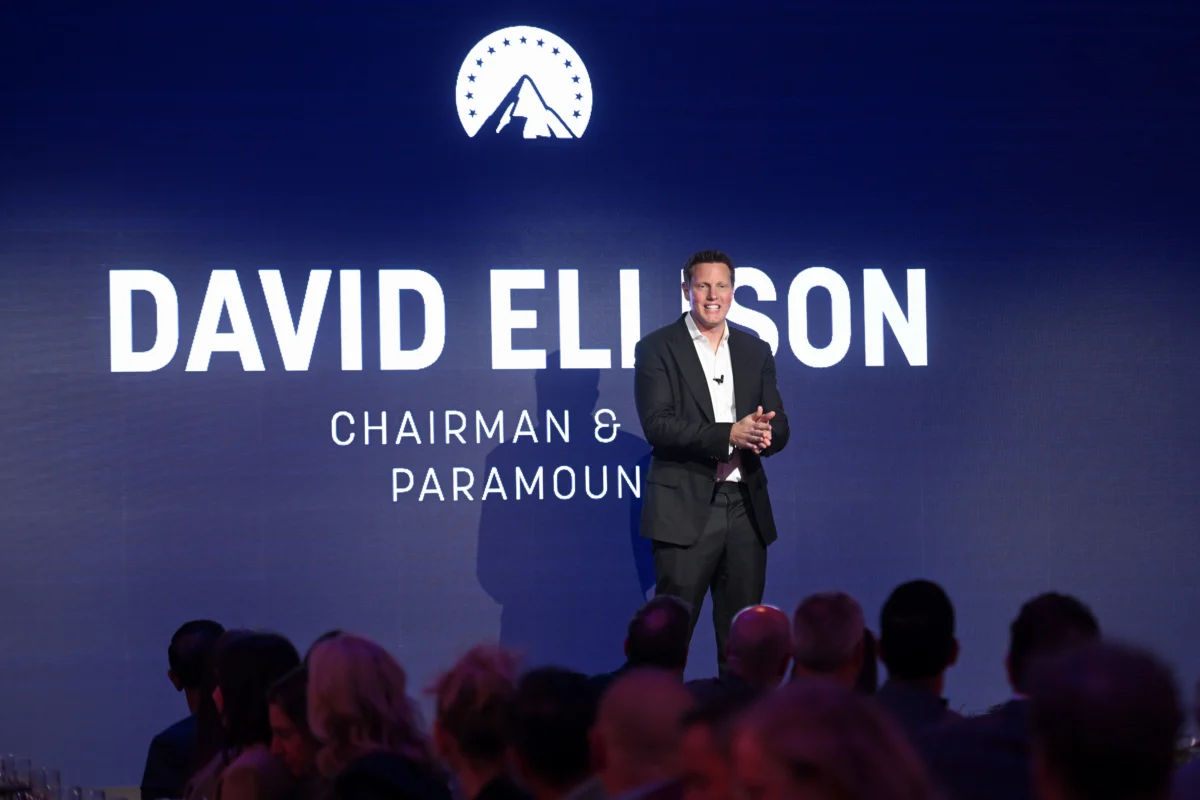
Paramount Global delivered a robust first-quarter earnings report on Monday, signaling a period of significant financial recovery and strategic transformation under the leadership of CEO David Ellison. The results, characterized by a substantial 59 percent year-over-year increase in adjusted EBITDA, arrive as the company navigates a complex transition period following its acquisition by Ellison’s team last summer. Central to the company’s forward-looking narrative is the pending acquisition of Warner Bros. Discovery (WBD), a move that Ellison describes as a "powerful accelerant" intended to reshape Paramount into a premier next-generation media and technology titan. With a target closing date set for late in the third quarter of this year, the company is balancing its current operational demands with the immense logistical and regulatory requirements of a merger that would fundamentally alter the landscape of the global entertainment industry.
Financial Performance and Revenue Drivers
For the first quarter, Paramount reported total revenue of $7.35 billion, representing a 2 percent increase compared to the same period in the previous year. While the revenue growth appears modest, the underlying profitability metrics suggest a more aggressive optimization of the company’s cost structure and asset utilization. Operating income reached $616 million, resulting in an operating margin of 8.4 percent. The most striking figure in the report was the adjusted EBITDA, which climbed to $1.16 billion. This 59 percent surge is largely attributed to narrowed losses within the direct-to-consumer (DTC) segment and a more disciplined approach to content spending and overhead.
The Direct-to-Consumer division, spearheaded by Paramount+, continues to be the primary engine of the company’s growth strategy. DTC revenue for the quarter totaled $2.4 billion, reflecting the increasing importance of streaming as the legacy linear television business faces continued secular headwinds. Paramount+ specifically saw a 17 percent year-over-year revenue increase. In terms of subscriber growth, the platform added 700,000 net new subscribers during the quarter. This figure is particularly noteworthy because it accounts for a one-million-subscriber "hit" resulting from the loss of a hard bundle agreement. Without this specific contractual expiration, the underlying subscriber growth would have exceeded 1.7 million, suggesting strong organic demand for the service’s content library.
The Warner Bros. Discovery Acquisition Timeline
The shadow of the Warner Bros. Discovery acquisition loomed large over the earnings call. David Ellison and his executive team confirmed that the deal is "making great progress," maintaining their confidence in a late Q3 2024 close. This acquisition is the cornerstone of Ellison’s vision to create an "entertainment behemoth" capable of competing with the likes of Disney and Netflix on a global scale.
The timeline of this transition began late last summer when Ellison’s group officially took control of Paramount. Since then, the focus has shifted from internal stabilization to external expansion. However, the current period is one of necessary restraint. Due to customary regulatory and antitrust rules, Paramount executives are currently restricted from engaging in deep-scale operational integration or sharing sensitive future strategies with WBD leadership. Consequently, Paramount is forced to operate on two parallel tracks: executing its current standalone business plan while simultaneously blueprinting the architecture of the combined entity.
Industry analysts suggest that the late Q3 target is ambitious but achievable, provided that regulatory bodies in the United States and Europe do not raise significant anti-competitive concerns. The merger would unite two of the most storied "Big Five" studios in Hollywood, bringing together the Paramount Pictures and Warner Bros. film libraries, as well as a massive portfolio of cable networks including CNN, HBO, MTV, and Nickelodeon.
Strategic Shift: Theatrical Commitment and Quality Control
A significant portion of David Ellison’s address to shareholders focused on a return to traditional cinematic roots combined with a modern emphasis on "premium" output. Ellison reiterated a bold commitment to the theatrical window, announcing a plan to release 30 films per year in theaters. This strategy marks a departure from the industry-wide trend of the early 2020s, which saw many studios prioritize direct-to-streaming releases to bolster subscriber counts.
"Zooming out to 30,000 feet, we really view our pending acquisition of Warner Bros. Discovery as a powerful accelerant to our strategy," Ellison stated during the earnings call. "It expands reach and enhances our ability to create the world’s most compelling stories and experiences, and it positions us really well to build a next-generation media and technology company."
Central to this theatrical push is Ellison’s "quality-first" philosophy. He argued that in an oversaturated market, high-quality content is the only sustainable business plan. "A core thematic for us has always been quality is the best business plan… really making sure you aim high and you don’t stop working until you get there," Ellison said. This philosophy is expected to be applied across the board, from blockbuster film franchises to prestige television dramas and the curation of streaming services. The emphasis on "quality over quantity" is likely a response to "peak TV" fatigue, where audiences have become increasingly discerning amidst an explosion of content choices.
Technological Infrastructure and the Pluto TV Overhaul
Beyond content, Paramount is placing a heavy bet on its technological infrastructure. A key component of this is Pluto TV, the company’s pioneer in the Free Ad-Supported Television (FAST) space. While much of the industry’s attention is focused on subscription models, the ad-supported tier remains a vital source of revenue and a top-of-funnel tool for customer acquisition.
Ellison announced that a comprehensive overhaul of Pluto TV is scheduled for later this year. The planned updates are expected to include improved user interface (UI) features, better personalization algorithms, and an expanded content lineup. This technical refresh is intended to keep Pluto TV competitive as rivals like Tubi and Freevee gain ground. By investing in the underlying technology, Paramount aims to improve ad-targeting capabilities and increase viewer retention, thereby maximizing the Average Revenue Per User (ARPU) within the free streaming ecosystem.
Industry Context and Competitive Landscape
The current trajectory of Paramount must be viewed within the broader context of a consolidating media industry. The shift from linear cable to streaming has decimated traditional revenue streams, forcing legacy media companies to seek scale through mergers. The proposed Paramount-WBD entity would possess a combined content library of unparalleled depth, spanning nearly a century of cinematic history.
However, the path forward is not without risks. The integration of two massive corporate cultures often leads to significant "merger friction," including redundant roles, conflicting executive visions, and the potential for creative brain drain. Furthermore, the debt load associated with such mega-mergers remains a concern for Wall Street. Investors will be watching closely to see how Ellison manages the balance sheet once the WBD assets are officially folded into the Paramount portfolio.
Reaction from market analysts has been cautiously optimistic. The Q1 earnings beat suggests that the "current" Paramount is a leaner, more efficient machine than it was a year ago. This operational efficiency provides a stronger foundation for the upcoming merger. Nevertheless, the entertainment industry remains in a state of flux, with ongoing concerns regarding the long-term profitability of streaming and the volatility of the global advertising market.
Broader Impact and Future Implications
The success or failure of the Paramount-WBD merger will likely set the tone for the next decade of Hollywood. If Ellison can successfully integrate these two giants while maintaining a high standard of creative output and theatrical relevance, it could provide a blueprint for other legacy players.
The focus on a 30-film theatrical slate is also a major signal to theater owners, who have struggled with a lack of consistent product in the post-pandemic era. A combined Paramount and WBD would become the most dominant force in the domestic and international box office, potentially giving the new company significant leverage in negotiations with exhibitors.
As the company moves toward the Q3 deadline, the industry will be looking for signs of how the combined DTC strategy will evolve. Will Paramount+ and Max be merged into a single "super-app," or will they continue to operate as distinct brands under a shared technological backbone? While executives remain tight-lipped due to regulatory constraints, Ellison’s comments about a "next-generation media and technology company" suggest a move toward a more unified, data-driven platform.
In conclusion, Paramount’s Q1 results demonstrate a company that is successfully "cleaning house" and preparing for a massive leap forward. With revenue growth holding steady and profitability metrics soaring, the Ellison-led team has demonstrated an ability to manage the existing business effectively while keeping their sights firmly set on the transformative acquisition of Warner Bros. Discovery. The coming months will be critical as the company navigates the final hurdles of the merger, aiming to emerge as a consolidated powerhouse in an increasingly competitive global market.