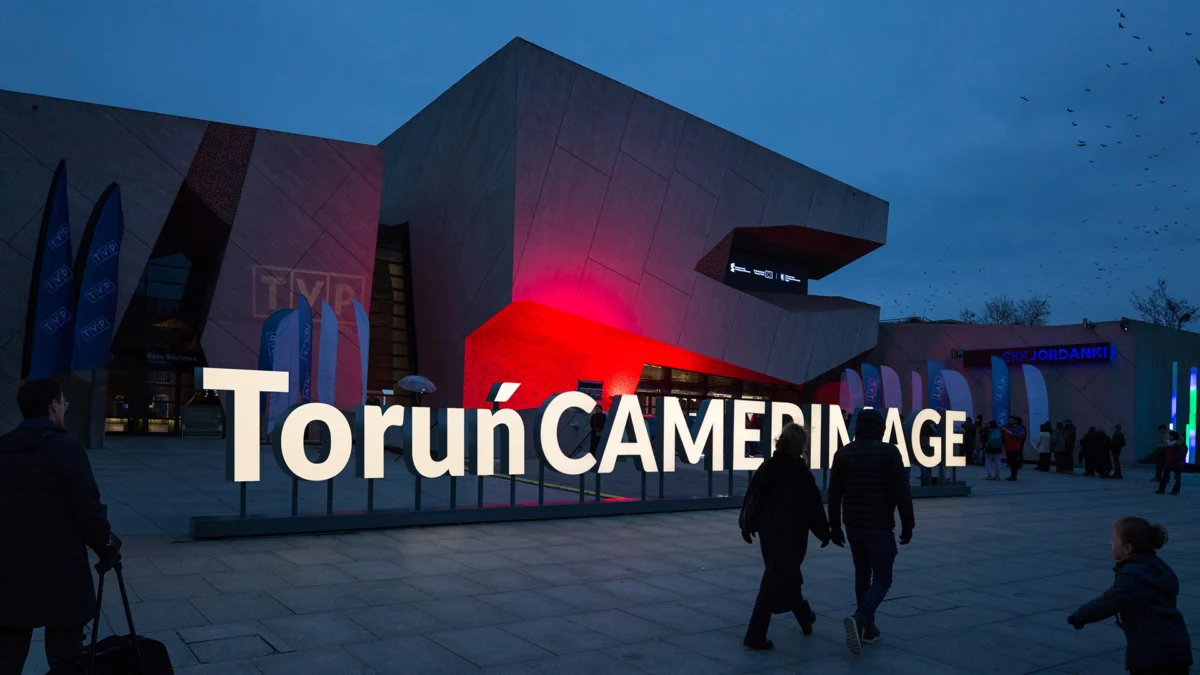
The world’s largest film festival dedicated to the art of cinematography, previously known as Camerimage, has officially unveiled its rebranding, adopting the new name ToruńCamerimage. This strategic evolution, announced on Thursday, underscores a profound deepening of its enduring partnership with the historic city of Toruń, Poland, which has served as its host for many pivotal years and where the festival was originally founded 35 years ago. The move is designed to align the prestigious event more closely with the model established by leading international film festivals such as Cannes, Berlin, London, and Toronto, all of which are inextricably identified with their host cities, signaling a new, ambitious chapter in the festival’s storied history.
This renaming is more than a mere cosmetic change; it reflects a conscious decision to anchor the festival’s identity firmly within the unique cultural and historical landscape of Toruń. Organizers emphasized that the relationship between the city and the festival has matured into a symbiotic partnership, extending far beyond the cultural sphere to generate significant economic benefits across hospitality, gastronomy, transportation, and a wide array of service industries within the region. Toruń, a UNESCO World Heritage Site, is celebrated as one of Central Europe’s oldest and best-preserved medieval cities, renowned globally as the birthplace of the revolutionary astronomer Nicolaus Copernicus. The festival’s leadership articulated that the ToruńCamerimage Film Festival has emerged as a critical catalyst for the growth of a dynamic local film ecosystem, consistently attracting a constellation of leading filmmakers, cinematographers, producers, and audiovisual industry titans from every corner of the globe. Drawing a compelling parallel, organizers stated, "Just as Copernicus shifted humanity’s scientific point of reference, the festival is helping to establish a new international hub for dialogue around the language of images and the future of visual storytelling – a natural evolution from a culture shaped by the written word toward one defined by the power of the image."
A Legacy Forged in Light and Shadow: The History of Camerimage
The festival, now known as ToruńCamerimage, boasts a rich and complex history spanning over three decades, marked by periods of growth, relocation, and ultimately, a triumphant return to its roots. Founded in 1993 by Marek Żydowicz, the festival’s original vision was to create a platform uniquely dedicated to the art of cinematography, an often-overlooked craft despite its fundamental role in cinematic storytelling. Unlike most film festivals that focus on directors, actors, or specific genres, Camerimage carved out a niche celebrating the masters of light and shadow, the Directors of Photography (DPs) whose visual artistry shapes the audience’s experience.
The inaugural edition took place in Toruń in 1993, immediately establishing its innovative premise. However, the festival’s early years were characterized by a peripatetic existence. After its initial run in Toruń, it relocated to Bydgoszcz, a neighboring city, for several years, from 1999 to 2006. This period saw the festival solidify its international reputation, drawing prominent cinematographers and filmmakers from Hollywood and European cinema. Yet, financial and logistical challenges often accompanied these moves, reflecting the complexities of securing stable funding and infrastructure for a growing international event. Following its tenure in Bydgoszcz, Camerimage moved to Łódź in 2007, a city with a deep cinematic heritage, home to the renowned National Film School. This move was initially seen as a logical progression, leveraging Łódź’s existing film infrastructure and academic environment. The festival continued to thrive in Łódź for over a decade, further cementing its status as a global leader in cinematography. However, after more than a decade in Łódź, and amidst ongoing discussions about a permanent home and the development of a dedicated film center, the festival eventually made its much-anticipated return to Toruń in 2019. This return was heralded as a homecoming, driven by the city of Toruń’s unwavering commitment and substantial investment in the festival’s future, including the ambitious plans for the European Film Center Camerimage. This chronology underscores the profound significance of the current rebranding, solidifying a partnership that has truly come full circle and now formally intertwines the festival’s identity with its foundational city.
Toruń: A UNESCO Jewel and Emerging Cinematic Hub
Toruń’s historical significance and architectural splendor make it an exceptionally fitting backdrop for a festival celebrating visual artistry. Recognized as a UNESCO World Heritage Site since 1997, Toruń’s Old Town is a meticulously preserved example of medieval European urban planning, characterized by its Gothic brick architecture, defensive walls, and the iconic Old Town Hall. Its narrow cobblestone streets, vibrant market squares, and historic churches offer a captivating visual tapestry, inspiring visiting artists and providing a unique atmosphere for attendees. Beyond its aesthetic appeal, Toruń holds immense historical weight as the birthplace of Nicolaus Copernicus (1473-1543), whose heliocentric model revolutionized astronomy and fundamentally altered humanity’s understanding of its place in the universe. This legacy of paradigm-shifting discovery resonates deeply with the festival’s mission to push the boundaries of visual storytelling and foster innovation in cinematography, often challenging conventional perspectives on visual communication.
The city’s proactive engagement with the festival extends far beyond simply hosting the annual event. Toruń is currently undertaking a monumental project: the development of the European Film Center Camerimage (EFC Camerimage). This ambitious undertaking envisions not merely a permanent home for the festival but a comprehensive, state-of-the-art cultural and educational hub. The EFC Camerimage is designed to feature multiple screening rooms, exhibition spaces, educational facilities, and potentially even soundstages and post-production suites, positioning Toruń as a year-round center for film education, production, and artistic development. This center, once completed, is expected to significantly enhance the festival’s capacity, attract international productions, foster local talent, and serve as a beacon for cinematic innovation in Central Europe. The projected completion of the EFC Camerimage, with substantial funding from the Polish government and European Union structural funds, represents a tangible manifestation of Toruń’s long-term commitment to the audiovisual industry and its central role in the festival’s future. The 34th edition of the festival, now ToruńCamerimage, is scheduled to take place from November 7th to 14th, indicating the regularity and anticipation surrounding this annual event and its growing significance on the global film calendar.
The Economic and Cultural Multiplier Effect
The rebranding to ToruńCamerimage also strategically highlights the significant economic and cultural multiplier effect the festival has on its host city and the broader region. While specific financial figures are often proprietary, the organizers’ statements underscore a well-documented phenomenon observed with major cultural events globally. A festival of this magnitude, attracting thousands of international and domestic visitors – including filmmakers, industry professionals, journalists, and film enthusiasts – injects substantial revenue into the local economy. For instance, similar-sized festivals in Europe can generate tens of millions of euros in economic impact annually for their host cities, a benchmark ToruńCamerimage increasingly approaches.
For the hospitality sector, this translates into increased demand for hotels, guesthouses, and short-term rentals, often leading to full occupancy during the festival week. Restaurants, cafes, and bars experience a surge in patronage, supporting local gastronomy and creating a vibrant atmosphere throughout the city. Transportation services, from taxis to public transit, see heightened activity, while local businesses benefit from increased retail sales. Moreover, the extensive infrastructure required to run a world-class festival – including event management, technical support, security, marketing, and media services – creates numerous temporary and, in some cases, permanent employment opportunities for local residents. Beyond direct financial contributions, the festival enhances Toruń’s global profile as a cultural destination, stimulating tourism year-round and attracting further investment. The continuous presence of leading international cinematographers and film industry figures fosters a vibrant local film ecosystem, inspiring aspiring filmmakers, facilitating networking opportunities, and potentially drawing film productions to the region, creating a virtuous cycle of artistic and economic growth. This synergy between culture and commerce is a cornerstone of the festival’s deepened partnership with the city, validating the investment and commitment from Toruń’s municipal authorities.
Statements and Broader Implications for Polish Cinema
The decision to formally integrate Toruń into the festival’s name has been met with positive reception, particularly from city officials and cultural stakeholders who have long championed the event. While specific quotes from city representatives were not provided in the initial announcement, the organizers’ statement clearly reflects a unified vision. "The new name reflects the deepening of a long-standing partnership with the city of Toruń, where the festival was founded 35 years ago," they reiterated, signaling a mutual commitment. This rebranding is implicitly endorsed by municipal leadership, recognizing the profound benefits of associating Toruń with an internationally acclaimed cultural institution and its role in regional development.
For Polish cinema, ToruńCamerimage serves as a crucial international showcase and a vital platform for artistic exchange. Poland has a proud cinematic tradition, from the internationally recognized Polish Film School movement of the mid-22th century, featuring masters like Andrzej Wajda and Roman Polański, to contemporary auteurs and cinematographers making their mark today. The festival provides an invaluable opportunity for Polish cinematographers to gain international recognition and for global trends in visual storytelling to influence local practice. The establishment of the European Film Center Camerimage further solidifies this role, promising to elevate Poland’s standing as a hub for film education and production. It positions Toruń, and by extension Poland, as a significant player in the global dialogue surrounding the future of cinematic images, moving beyond a purely historical appreciation to actively shape future visual narratives. This commitment to fostering a "new international hub for dialogue" suggests a proactive role in defining the evolving language of film and nurturing the next generation of visual artists within Poland and beyond.
Celebrating Cinematic Excellence: The Golden Frog and Beyond
Central to ToruńCamerimage’s mission is its commitment to recognizing and celebrating outstanding achievement in cinematography. The festival’s main competition awards, the Golden, Silver, and Bronze Frogs, are among the most prestigious accolades a cinematographer can receive globally. These awards highlight the exceptional skill, artistic vision, and technical mastery required to craft compelling visual narratives, often distinguishing themselves through innovative techniques, profound emotional resonance, or groundbreaking visual design.
In the most recent edition for which awards have been announced, the 31st edition held in 2023, the coveted Golden Frog for the main competition was awarded to Judith Kaufmann for her mesmerizing work on Late Shift. This film, a poignant collaboration with director Petra Biondina Volpe and starring Leonie Benesch, captivated audiences and critics alike with Kaufmann’s nuanced and evocative cinematography, showcasing her profound ability to translate complex emotions and narrative depth through visual composition and lighting. Her win underscores the festival’s dedication to honoring cinematographers who push artistic boundaries and achieve visual poetry, solidifying her reputation as a leading figure in contemporary European cinema.
The Silver Frog was bestowed upon Fabian Gamper for his striking contributions to Sound of Falling, directed by Mascha Schilinski. Gamper’s work was lauded for its innovative approach and ability to create a distinctive visual language that perfectly complemented the film’s thematic concerns, often employing experimental techniques to enhance the narrative. Completing the trio of top honors, the Bronze Frog went to Michał Sobociński for his exquisite cinematography in Chopin, A Sonata in Paris, from director Michał Kwieciński. Sobociński’s ability to evoke the historical period and emotional intensity of the subject through his lens was particularly noted by the jury, demonstrating a mastery of period aesthetics and character-driven visual storytelling.
Beyond the main competition, ToruńCamerimage also presents numerous other awards, including those for documentary features, debut films, music videos, and television pilots, alongside lifetime achievement awards that honor the enduring legacies of cinematic masters. Past recipients of the Lifetime Achievement Award have included legendary figures like Vittorio Storaro, Roger Deakins, Edward Lachman, and Vilmos Zsigmond, further cementing the festival’s standing as a vital institution in the world of cinematography. These awards not only celebrate individual excellence but also contribute to the broader discourse on visual aesthetics and the evolving craft of the Director of Photography, ensuring that the art of the moving image continues to be meticulously examined, appreciated, and advanced. The festival’s commitment to showcasing both established masters and emerging talents solidifies its role as a crucial incubator for the future of visual storytelling.
Charting the Future: A Global Vision for Visual Storytelling
The rebranding of Camerimage to ToruńCamerimage marks a pivotal moment in the festival’s history, signaling not just a name change but a renewed commitment to its founding principles while embracing an ambitious global vision. By firmly embedding the city’s name within its identity, the festival strengthens its institutional foundations and enhances its international recognition, mirroring the success of other world-class cultural events that are intrinsically linked to their geographical hosts. This strategic alignment promises increased stability, greater sponsorship opportunities, and an elevated profile on the international cultural stage.
This strategic move is poised to amplify ToruńCamerimage’s influence as a preeminent platform for exploring the art and craft of cinematography. With the European Film Center Camerimage on the horizon, the festival is not merely a transient annual event but an integral component of a burgeoning, year-round cinematic ecosystem in Toruń. This permanent infrastructure will provide unparalleled opportunities for education, research, and production, attracting new talent and fostering innovation within the audiovisual industry, potentially establishing new standards for film education and technical advancement. The organizers’ vision of shifting the cultural paradigm "from a culture shaped by the written word toward one defined by the power of the image" is a bold declaration of intent, positioning ToruńCamerimage at the forefront of a global movement towards increasingly visual communication in an era dominated by screens and digital media. The festival’s continued success and evolution will undoubtedly play a crucial role in shaping the aesthetic and technical future of cinema, further cementing Toruń’s status as a beacon for visual artistry and a vital international hub for cinematic dialogue. The 34th edition, scheduled for November 7-14, will be the first under the new banner, promising a vibrant celebration of the moving image in its historic new-old home.