TKO Group Holdings, the premium sports and entertainment conglomerate formed by the merger of UFC and WWE, announced a landmark performance for the first quarter of 2026, signaling a period of unprecedented financial acceleration and market consolidation. The company reported total revenue of $1.6 billion, representing a 26 percent increase compared to the same period in the previous year. This growth was largely propelled by the commencement of a high-value media rights agreement between the UFC and Paramount, alongside a robust performance in live event hospitality and the successful launch of new ventures, including Zuffa Boxing.
In a move reflecting high internal confidence, the TKO Board of Directors authorized an incremental $1 billion for its share repurchase program. This expansion of the buyback initiative follows a year of strategic integration and suggests that the company’s leadership views its current market valuation as a conservative reflection of its long-term potential. The financial report also highlighted a net income of $250 million and an adjusted EBITDA (Earnings Before Interest, Taxes, Depreciation, and Amortization) of $550 million, a 32 percent year-over-year improvement that underscores the efficiency of the combined UFC-WWE operating model.
Financial Performance by Segment
The first quarter of 2026 demonstrated the diverse revenue streams within the TKO portfolio, with each major division contributing to the double-digit growth.
UFC: The Paramount Transition and Media Growth
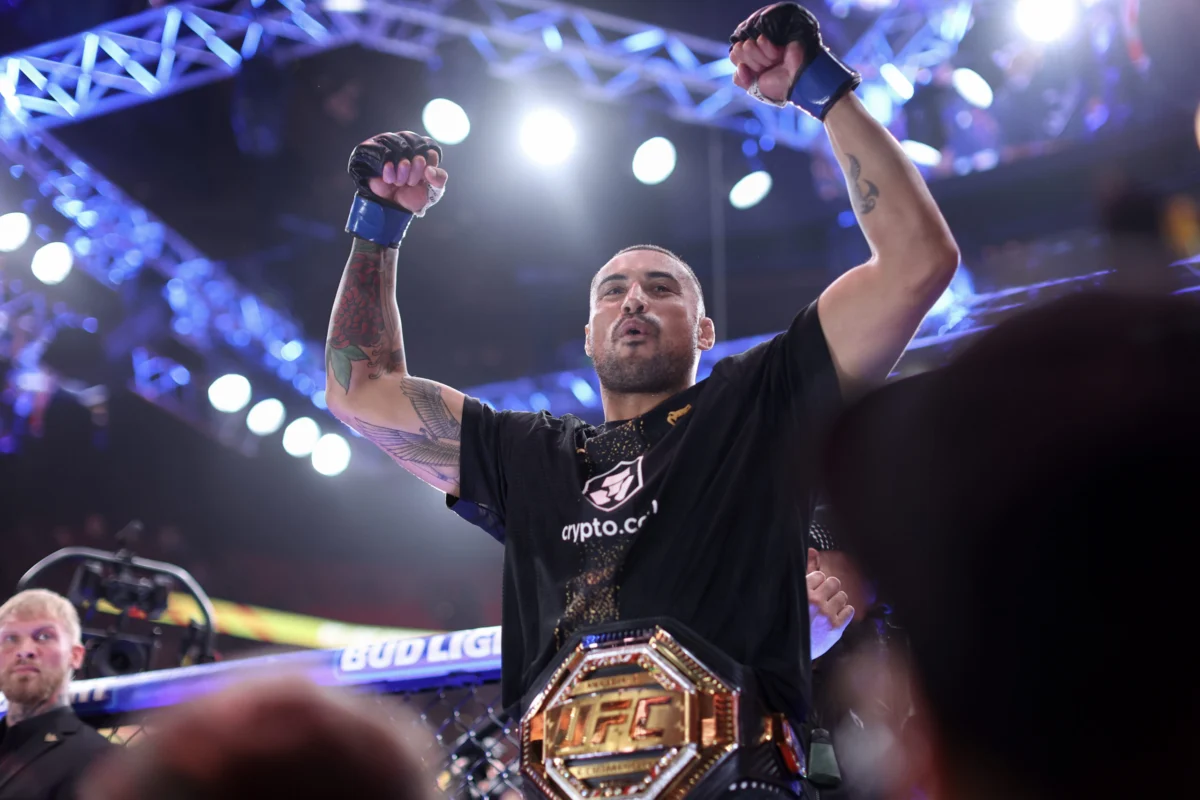
The Ultimate Fighting Championship (UFC) saw its revenue climb 12 percent to $401 million. The primary driver of this increase was a $51 million surge in media rights revenue, marking the official Q1 debut of the promotion’s partnership with Paramount. This deal, which succeeded the previous long-term arrangement with ESPN, has significantly elevated the per-event valuation of UFC’s content library and live broadcasts. While media rights flourished, the segment saw a $10 million decline in live events and hospitality revenue, a dip attributed to the timing of specific marquee events rather than a decrease in consumer demand. Sponsorship and marketing revenue for the UFC also trended upward, increasing by $3 million as the brand secured new global partners in the technology and beverage sectors.
WWE: Live Event Dominance
World Wrestling Entertainment (WWE) reported revenue of $476 million, a 22 percent increase year-over-year. Unlike the UFC, which was bolstered by media rights, WWE’s growth was primarily fueled by its live events and hospitality division, which saw a $47 million increase. This surge is linked to the continued international expansion of WWE’s premium live events (PLEs) and the sustained popularity of its domestic touring schedule. Media rights for WWE also grew by $30 million, benefiting from the full-scale implementation of its global streaming and domestic broadcast deals. Furthermore, the segment saw gains in product licensing and consumer products, reflecting the high engagement levels of its fanbase.
IMG and On Location: The Olympic and FIFA Influence
The IMG segment, which includes the premium hospitality firm On Location, emerged as the largest revenue contributor for the quarter, bringing in $655 million. This 38 percent increase was almost entirely driven by a $179 million boost in live events and hospitality. The presence of the 2026 Winter Olympics played a pivotal role in this performance, as On Location managed high-end hospitality and travel packages for the games. Additionally, the segment began realizing revenue from its role as the official hospitality provider for the upcoming FIFA World Cup, a partnership expected to drive significant returns throughout the remainder of the fiscal year.
Corporate and Emerging Ventures
TKO’s "Corporate and Other" revenue rose 36 percent to $74 million. This segment’s growth was largely attributed to Professional Bull Riders (PBR), which has seen a resurgence in viewership and sponsorship, and the official launch of Zuffa Boxing. The move into boxing represents a significant strategic pivot for TKO, leveraging the promotional infrastructure of the UFC to capture a share of the traditional combat sports market.
Chronology of Strategic Integration (2023–2026)
The current financial success of TKO Group Holdings is the result of a multi-year strategy focused on the "sportainment" model—merging the competitive nature of professional sports with the high-production value of entertainment.
- September 2023: Endeavor Group Holdings officially closes the merger between UFC and WWE, forming TKO Group Holdings. The new entity begins trading on the New York Stock Exchange.
- 2024: The "Year of Integration." TKO focuses on back-office consolidation, eliminating redundant costs and streamlining the sales teams for both UFC and WWE. This period saw the first joint sponsorship deals, where brands began purchasing advertising packages across both platforms.
- 2025: Major media rights negotiations dominate the year. WWE begins its transformative partnership with Netflix, while UFC secures its lucrative agreement with Paramount. These deals pivot the company toward a mix of traditional broadcast and high-reach streaming.
- Q1 2026: The financial results of these negotiations manifest. TKO reports record revenue and initiates a massive share buyback, solidifying its position as a dominant force in global media.
Executive Perspectives and Shareholder Strategy
Ariel Emanuel, Executive Chair and CEO of TKO, characterized the start of 2026 as "formidable." In a statement accompanying the earnings release, Emanuel emphasized that the company’s momentum is consistent across all business units. "We are reaffirming our full-year guidance, and today’s incremental $1 billion share repurchase authorization underscores our conviction in TKO and its long-term value," Emanuel stated. The buyback is seen by market analysts as a signal to institutional investors that the company is generating excess cash flow and is committed to returning value to shareholders.
Mark Shapiro, President and COO of TKO, highlighted the "durability" of the company’s intellectual property. "Our media rights portfolio is firmly in place, our financial incentive packages continue to scale, and demand for our premium live events and experiences is healthy," Shapiro said. He specifically pointed toward upcoming cultural milestones, such as "UFC Freedom 250," which is scheduled to take place at the White House, and the FIFA World Cup partnership, as catalysts for future audience growth.
Broader Impact and Industry Implications
The performance of TKO Group Holdings serves as a bellwether for the broader sports and media industry. Several key implications can be drawn from the Q1 2026 report:
The Shift to Premium Live Experiences
The massive growth in the IMG and On Location segments indicates that consumer spending remains resilient in the "experience economy." Despite inflationary pressures in other sectors, high-net-worth individuals and corporate clients are showing an increased willingness to pay for premium, all-inclusive hospitality packages at major sporting events like the Olympics and the World Cup.
Media Rights Resilience
The $51 million increase in UFC’s media rights revenue suggests that live sports remain the most valuable asset for media conglomerates like Paramount. As traditional cable television continues to face challenges from cord-cutting, live "appointment viewing" provided by TKO’s brands offers a reliable way for broadcasters to maintain high advertising rates and drive subscriptions to streaming services like Paramount+.
Strategic Diversification: Zuffa Boxing
The launch of Zuffa Boxing is an attempt to apply the UFC’s centralized organizational structure to the historically fragmented world of professional boxing. If successful, this could consolidate the boxing market under a single promotional banner, much like how the UFC transformed mixed martial arts (MMA). This move diversifies TKO’s combat sports portfolio and provides a hedge against any potential plateauing in MMA growth.
The Significance of UFC at the White House
The announcement of "UFC Freedom 250" at the White House represents more than just a sporting event; it is a significant cultural milestone for the promotion. Once marginalized by mainstream politicians in its early years, the UFC’s move to one of the most prestigious venues in the world symbolizes the sport’s total integration into the American cultural fabric. This event is expected to generate massive global viewership and further enhance the brand’s "cultural relevance," as noted by Mark Shapiro.
Future Outlook
Looking ahead, TKO Group Holdings has reaffirmed its guidance for the full fiscal year 2026. The company’s trajectory is expected to be influenced by several high-profile events in the summer and autumn quarters. The FIFA World Cup, where On Location will manage hospitality, is anticipated to be a significant revenue driver. Furthermore, the continued expansion of PBR and the maturation of the Zuffa Boxing brand are expected to contribute to the "Corporate and Other" revenue stream.
As the company enters the second quarter, investors will be watching for the execution of the $1 billion share buyback and any further announcements regarding international expansion. With its media rights secured for the foreseeable future and its live event business scaling at an aggressive pace, TKO Group Holdings appears positioned to maintain its lead in the global sports and entertainment landscape. The synergy between UFC’s combat sports dominance and WWE’s storytelling prowess, backed by IMG’s logistical capabilities, has created a diversified powerhouse that is currently outperforming traditional media competitors.