A captivating documentary, "The Girl Princes," directed by Kim Hye-jung in 2013, is set to reach London audiences at the Queer East Film Festival 2026. The film delves into the fascinating and largely untold history of Yeoseong Gukgeuk, the all-female theatre troupes that captivated post-war Korea. Far from waiting for conventional narratives, these pioneering women carved their own destinies on stage, defying societal expectations and fostering a unique cultural phenomenon that predates contemporary Korean fandom culture by decades. Their stories, steeped in passion, defiance, and a profound sense of community, offer a rare glimpse into a vibrant, yet often overlooked, chapter of Korean history, revealing how art provided solace and identity amidst a rapidly changing nation.
The Historical Tapestry of Post-War Korean Theatre
The immediate aftermath of the Korean War (1950-1953) plunged the peninsula into profound social and economic upheaval. With cities devastated, infrastructure shattered, and families displaced, the nation grappled with immense psychological and material hardship. In this challenging environment, entertainment emerged as a vital coping mechanism, offering temporary escape and a sense of collective identity. While cinema and radio began to gain traction, live theatre remained a dominant and accessible form of public amusement, particularly in rural areas and burgeoning urban centers. It was against this backdrop of reconstruction and societal flux that the Yeoseong Gukgeuk, or all-female Korean traditional opera troupes, rose to prominence, becoming an unexpected beacon of cultural vitality.
These troupes distinguished themselves by exclusively featuring female performers who took on all roles, including the traditionally male heroic leads. This cross-dressing aspect was not merely a theatrical gimmick but a central pillar of their appeal, challenging entrenched gender norms long before such concepts gained mainstream currency. Drawing extensively from Korean folklore, historical epics, and popular narratives, Yeoseong Gukgeuk performances were characterized by their elaborate costumes, dramatic storytelling, traditional music (pansori and gugak elements), and stylized dance. The productions offered audiences, particularly women, a powerful space for escapism and emotional resonance, allowing them to witness stories of courage, love, and destiny enacted by figures who mirrored their own gender, yet embodied qualities often denied to them in real life.
Yeoseong Gukgeuk: A Cultural Phenomenon and Social Anomaly
The appeal of Yeoseong Gukgeuk extended far beyond mere entertainment; it cultivated an intensely loyal and passionate fan culture that bears striking resemblances to the modern K-Pop fandom phenomenon, albeit rooted in a different era and medium. In the 1950s and early 1960s, these troupes toured extensively across the country, performing in makeshift theatres, village squares, and urban venues. Their fans, predominantly female, followed their every move with an almost religious devotion. This era saw the emergence of dedicated fan clubs, enthusiastic gift-giving, and an emotional connection between performers and their admirers that transcended the stage. Actresses, particularly those celebrated for their portrayals of charismatic male heroes, achieved superstar status, with their private lives and public personas becoming subjects of widespread fascination. This fervent devotion fostered a unique community where women could openly express admiration and form bonds, a stark contrast to the often restrictive social environment of post-war Korea.
The very existence and success of Yeoseong Gukgeuk represented a significant cultural and social anomaly. In a deeply Confucian society where women’s roles were traditionally confined to the domestic sphere and public life was largely male-dominated, these troupes offered an alternative vision. The actresses, by choosing a theatrical career, often defied familial expectations and embraced a lifestyle of independence and artistic expression. Their portrayal of strong, often romantic, male characters challenged conventional gender binaries, allowing for a temporary suspension of established social order. This gender fluidity on stage, coupled with the intense bonds formed within the all-female performance and fan communities, created a space ripe for exploring themes of identity, desire, and agency that were otherwise suppressed in mainstream society.
The Girl Princes: Kim Hye-jung’s Cinematic Exploration
Director Kim Hye-jung’s "The Girl Princes" embarks on a vital mission to document and celebrate this forgotten cultural legacy. Released in 2013, the documentary stitches together a compelling narrative through a seemingly simple, yet profoundly effective, cinematic approach. It primarily features "talking heads" interviews with the surviving Yeoseong Gukgeuk actresses and some of their most devoted fans, many of whom are now in their 70s, 80s, and even 90s. These contemporary testimonies are expertly juxtaposed with a rich trove of archival materials, including rare still photographs from their performing heyday, performance recordings, and candid footage of their daily lives.
The film’s strength lies in its ability to bring these remarkable women to life, showcasing their enduring passion and indomitable spirit. Many of the featured actresses were born around the tumultuous periods of the Second World War and the Korean War, emerging from an era of profound hardship to forge extraordinary lives. "The Girl Princes" highlights their decision to pursue their artistic calling, often against considerable societal pressure to conform to traditional roles. Kim Hye-jung’s camera intimately captures the meticulous process of makeup application, the intricate details of their stage costumes, and the poignant reflections of women who, despite their advanced age, still embody the "girls" driven by an unyielding love for the stage and for each other. The documentary thus becomes a powerful testament to personal resilience, artistic dedication, and the human capacity to forge one’s own path, even in the most challenging of circumstances.
A Journey Through Time: Chronology of Troupes and Film
The history of Yeoseong Gukgeuk follows a distinct trajectory, mirroring broader societal shifts in Korea:
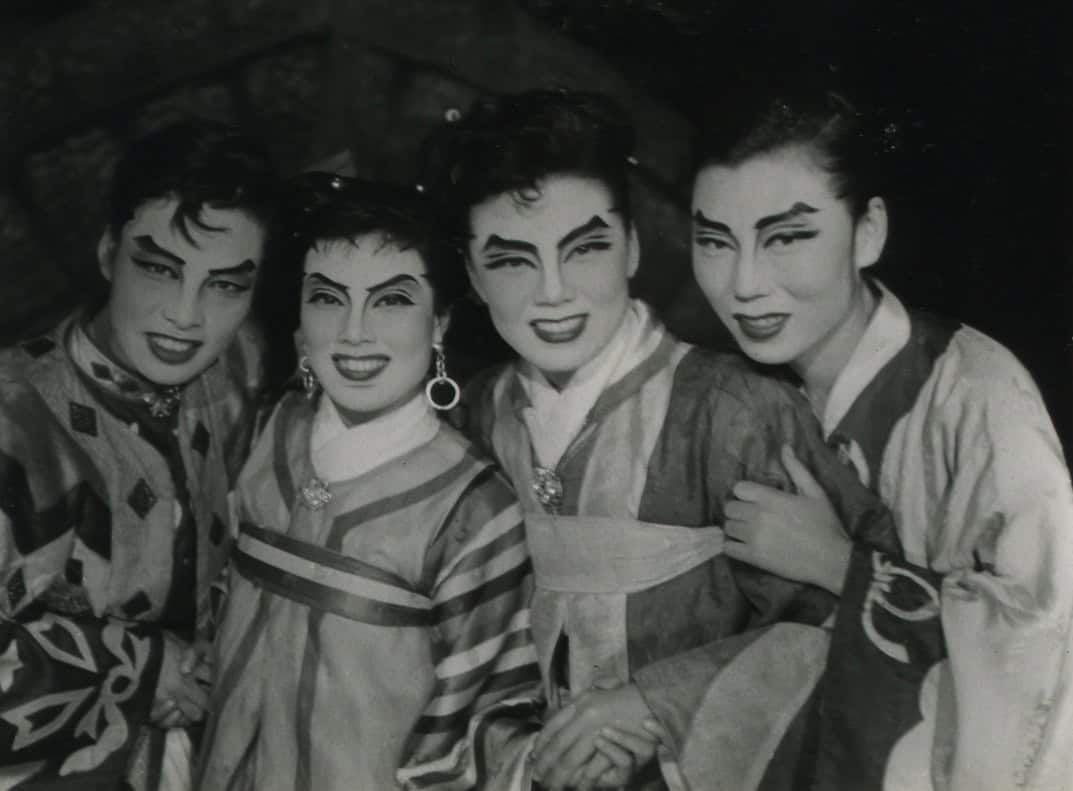
- Early 1950s: Emerging in the immediate post-Korean War era, Yeoseong Gukgeuk rapidly gains popularity as a form of accessible and engaging entertainment, offering solace and escapism.
- Mid-1950s to Early 1960s: This period marks the zenith of the troupes’ influence. They tour extensively, attracting massive audiences and fostering intense fan loyalty. Actresses become national celebrities, and their performances shape a significant part of popular culture.
- Late 1960s and 1970s: The popularity of Yeoseong Gukgeuk begins a gradual decline. This can be attributed to several factors, including the rapid rise of cinema and television as dominant entertainment mediums, shifting public tastes, and increased government scrutiny under authoritarian regimes. Reports suggest that government funding, which had previously supported traditional arts, was gradually restricted, possibly due to the troupes’ perceived challenge to conventional gender roles or their independent lifestyles.
- 1980s onwards: Yeoseong Gukgeuk largely fades from mainstream public consciousness, maintained only by a dedicated few and in niche cultural circles.
- 2013: Director Kim Hye-jung’s "The Girl Princes" is released, bringing this forgotten history to light for a new generation. The film serves as a crucial act of cultural preservation.
- 2013-2025: The documentary embarks on an international film festival journey, garnering critical acclaim and introducing the story of Yeoseong Gukgeuk to global audiences, highlighting its unique cultural and social significance.
- 2026: "The Girl Princes" is slated for screening at the Queer East Film Festival in London, marking its continued relevance and its recognition as a significant work within queer cinema and historical studies.
Beyond the Stage: Social Realities and Queer Subtexts
"The Girl Princes" offers more than just a historical account of a theatrical form; it provides a nuanced commentary on the social realities and constraints of Korea during its authoritarian period. The 1960s and 1970s in South Korea were characterized by rapid industrialization, intense nation-building efforts, and a series of military-backed authoritarian governments that often suppressed individual freedoms in the name of national stability and economic growth. In this tightly controlled environment, the independent spirit of the Yeoseong Gukgeuk performers, their unconventional lifestyles, and their ability to command such public devotion were remarkably subversive. Their existence challenged the patriarchal structures and rigid social expectations prevalent at the time, particularly those dictating women’s roles.
Crucially, the documentary weaves a subtle yet powerful feminist narrative, celebrating women who actively chose alternative paths to self-fulfillment outside the prescribed societal norms of marriage and domesticity. These actresses, like countercultural youth or early punks in other parts of the world, lived on their own terms, driven by artistic passion rather than social conformity.
Furthermore, "The Girl Princes" courageously explores the queer subtexts inherent in the Yeoseong Gukgeuk phenomenon. The film reveals compelling anecdotes, such as the story of a female fan who, driven by intense emotion, emotionally blackmailed an actress, demanding a deeper connection. These accounts, which might sound like fiction, illuminate the profound emotional and sometimes romantic bonds that formed within this all-female space. The depictions of "female love" that extended beyond platonic admiration, particularly within the conservative social fabric of 1960s Korea, are particularly striking and historically significant. These relationships, whether overtly romantic or intensely devotional, created a haven for emotional expression and identity formation that was rarely available or acknowledged in mainstream society. The all-female environment of the troupes and their fan base inadvertently fostered a space where such affections could develop and even thrive, making the film an invaluable document for understanding the nascent and often hidden expressions of queer identity in mid-20th century Korea.
Queer East Film Festival: A Platform for Overlooked Narratives
The selection of "The Girl Princes" for the Queer East Film Festival 2026 in London underscores its profound relevance to contemporary discussions on gender, sexuality, and cultural history. Queer East Film Festival is renowned for its commitment to showcasing LGBTQ+ cinema from East and Southeast Asia, providing a crucial platform for narratives that challenge norms, celebrate diversity, and shed light on historically marginalized communities. The festival’s mission aligns perfectly with the documentary’s exploration of gender fluidity, unconventional relationships, and the forging of identity outside societal strictures.
Festival organizers are understood to have highlighted the film’s unique contribution to queer historical discourse, noting its portrayal of a vibrant, albeit often overlooked, pre-modern queer subculture in Korea. The film demonstrates that expressions of gender non-conformity and same-sex affection are not purely modern phenomena but have roots stretching back decades, even in societies perceived as highly conservative. By presenting these historical precedents, "The Girl Princes" helps to broaden the understanding of queer history beyond Western contexts, offering a vital Asian perspective on the complexities of sexuality and identity. Its screening at Queer East will undoubtedly spark important conversations about the historical continuity of queer experiences and the power of art to both reflect and shape social realities.
The Lasting Echoes: Broader Impact and Implications
To this day, "The Girl Princes" remains the only known film directed by Kim Hye-jung, making it an exceptionally rare and invaluable cinematic artifact. Its singular focus on the Yeoseong Gukgeuk, a topic once widely discussed in Korea for its challenge to gender norms but subsequently largely forgotten, solidifies its position as a critical work of cultural preservation. The documentary ensures that the contributions and legacies of these pioneering women are not erased from history.
The broader impact of "The Girl Princes" extends to several academic and social spheres. For cultural historians and scholars of Korean studies, it offers an indispensable primary source for understanding post-war popular culture and the evolution of performance arts. For gender studies and feminist scholarship, it provides a powerful case study of women’s agency, resistance, and alternative forms of community-building in a patriarchal society. Crucially, for queer studies, it offers a compelling historical narrative of gender fluidity and same-sex affection within an Asian context, contributing to a more global and nuanced understanding of queer history.
Ultimately, "The Girl Princes" is a work that transcends its historical subject matter. It stands as a timeless testament to the human spirit’s capacity for passion, creativity, and defiance. It educates its audience not just about a forgotten theatrical form, but about the courage required to live authentically. In an era where individuality and self-determination continue to be celebrated and challenged, the stories of these "Girl Princes" resonate profoundly, inspiring viewers to remain true to themselves, even when societal currents run against them. Their legacy, brought to vivid life by Kim Hye-jung’s film, continues to illuminate the enduring power of art to transform lives and reshape history.