Thirty years ago this weekend, Eric Cantona etched his name into football folklore with a moment of sheer brilliance. From the edge of the penalty area, the enigmatic Frenchman unleashed an audacious volley that secured the 1996 FA Cup final for Manchester United. This triumph not only signified a dominant victory over their bitter rivals, Liverpool, but also cemented an unprecedented second league and cup double for the club. More profoundly, however, it marked the dramatic culmination of one of the Premier League’s most extraordinary comeback narratives, a story now captivating the global stage in a feature film poised to make a significant impact at the Cannes Film Festival.
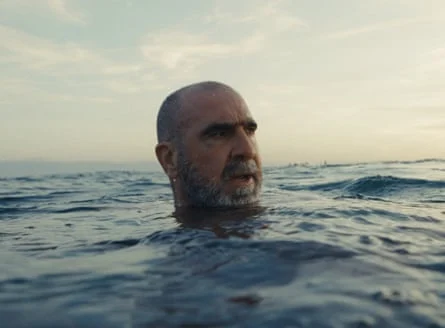
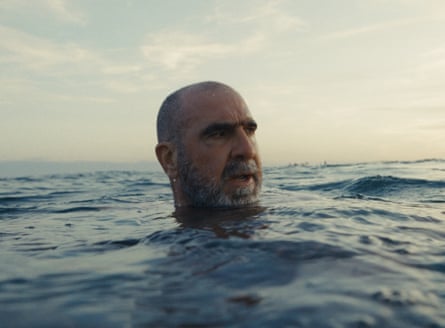
Directed by the acclaimed British duo David Tryhorn and Ben Nicholas, the documentary "Cantona" stands as the sole British entry in the official selection for this year’s prestigious festival. Through a lens of cinematic artistry, the film meticulously crafts a portrait of one of football’s most singular and compelling personalities, charting his five tumultuous yet triumphant seasons in Manchester. Viewers are treated to a visual feast of his sublime goals and his characteristic, often profound, philosophical pronouncements. Interspersed with these celebrated moments are poignant flashbacks to his tempestuous early career in France, a period marked by a scathing denouncement of the national team manager as "incompetent," a significant suspension from his club Marseille, and even a temporary departure from the sport altogether.
The narrative’s core, however, revolves around the most notorious incident of Cantona’s illustrious career: the infamous "kung-fu kick" at Crystal Palace. Following a red card during a match, a provoked Cantona, unable to contain his fury, launched himself into a flying kick at a jeering spectator. The incident sent shockwaves through the footballing world. Cantona narrowly avoided a custodial sentence, receiving an eight-month ban from the Football Association (FA), a penalty that brought him to the brink of retirement, for the second time in his career.

The Genesis of a Legend: From Exile to Icon
The journey of Eric Cantona to that iconic FA Cup final goal is a testament to resilience and the transformative power of belief. Arriving at Old Trafford in November 1992 for a modest £1.2 million from Leeds United, Cantona was initially met with scepticism by some, given his somewhat chequered past. However, his immediate impact was undeniable. In his first season, he was instrumental in ending Manchester United’s 26-year wait for a league title, inspiring them to the Premier League crown. This was swiftly followed by the FA Cup in 1994, completing the club’s first league and cup double. The 1995-96 season, however, would prove to be the crucible where his legend was truly forged.
The infamous incident at Selhurst Park on January 25, 1995, saw Cantona sent off for a retaliatory kick on Crystal Palace defender Richard Shaw. As he was leaving the field, a sustained barrage of abuse from the crowd culminated in him vaulting over advertising hoardings to deliver the infamous kick to supporter Matthew Simmons. The immediate aftermath was a whirlwind of legal proceedings, media frenzy, and severe disciplinary action from the FA. The eight-month ban, the longest ever imposed on a player in English football at the time, threatened to derail his career and his impact on English football.
The Comeback Kid: Ferguson’s Masterstroke
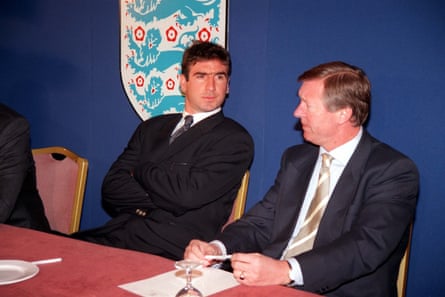
The documentary delves deeply into the pivotal role played by Manchester United manager Sir Alex Ferguson in orchestrating Cantona’s remarkable return. Facing the prospect of losing his talisman, Ferguson, known for his astute man-management and unwavering belief in his players, worked tirelessly to convince Cantona not only to remain at the club but to channel his rediscovered passion into further brilliance. This period of introspection and rehabilitation saw Cantona spend time back in France, honing his physical and mental conditioning.
The filmmakers highlight the delicate dance between player and manager during this critical juncture. Ferguson’s unwavering faith in Cantona’s talent and his potential to contribute to future successes provided the essential scaffolding for the player’s return. The narrative suggests that this period of enforced absence allowed Cantona to reflect, mature, and ultimately return with an even greater determination to prove his doubters wrong. The subsequent two seasons saw Cantona deliver performances that cemented his status as a Manchester United legend, culminating in the dramatic Wembley triumph of 1996.
A Cinematic Vision: Beyond the Formula
Directors Tryhorn and Nicholas have consciously steered clear of the conventional sports documentary template. "We wanted to make something a bit more cinematic," explains Tryhorn. "I think sports films these days can be a little bit formulaic and paint-by-numbers." This philosophy is evident in their deliberate eschewing of typical league table graphics and uplifting orchestral scores. Instead, the film is imbued with a brooding electronic soundtrack, courtesy of Orbital’s Paul Hartnoll, which complements the introspective and often intense portrayal of Cantona.
The visual language of the film is equally distinctive. Lingering shots capture Cantona in moments of artistic contemplation, flinging paint onto canvas amidst the serene olive groves of his native southern France. This artistic pursuit, a significant aspect of his post-football life, is presented as a metaphor for his creative and complex personality. Cantona’s personal archive also plays a crucial role, with never-before-seen 8mm footage shot by his father offering an intimate glimpse into his childhood. These early home movies, featuring a young Cantona observing a deceased rabbit and playfully aiming a toy gun at the camera, provide a raw and unfiltered look at the man before the global phenomenon.
Voices of Influence: Testimonials and Authenticity
The film is enriched by contributions from a select group of individuals who knew Cantona intimately. The presence of Sir Alex Ferguson offers invaluable insights into the dynamics of their relationship and the strategic decisions that shaped Cantona’s career. Teammate David Beckham provides a contemporary perspective on Cantona’s influence on the dressing room and his unique aura. Crucially, Cantona himself is a central figure, offering his own reflections on his career, his motivations, and his enduring philosophy.
Tryhorn emphasizes the importance of capturing Cantona’s authentic voice, stating, "No other footballer thinks or talks like Eric." To this end, the directors prioritized conducting interviews with Cantona in his native French, believing it to be the only way to elicit genuine and unvarnished responses. "We knew he could be prone to veering into cliché a little bit in English," Tryhorn elaborates. "You’re only ever going to get genuine authenticity, I think, in someone’s native language." This commitment to linguistic authenticity ensures that the film captures the nuances of Cantona’s thought processes and his unique worldview.
A Love Story of Adversity and Redemption
Nicholas and Tryhorn, seasoned documentarians with previous football projects such as "Pelé" and "The Figo Affair," view the "Cantona" documentary through a distinct lens. They describe the film as a "love story between Ferguson and Cantona," a narrative of mutual respect and understanding that transcended moments of significant tension. "Eric puts Fergie to the test on a couple of occasions, enormously so after [the kick], but Fergie forgives him, they get back together and Eric repays him with this masterpiece season at the end of it," notes Tryhorn. This framing elevates the story beyond a simple sports biography, highlighting the complex interpersonal dynamics at play.
The King of the ‘Meat and Potatoes’ World
Cantona’s arrival in the "meat and potatoes world" of English football in the early 1990s, as described by Nicholas, was nothing short of a seismic event. His distinctive appearance – the thick monobrow, the upturned collar, the intense gaze – immediately set him apart. For Tryhorn and Nicholas, who were still teenagers at the time of Cantona’s peak, his impact resonated with the electrifying presence of a rock star. Nicholas draws a compelling parallel to Bob Dylan’s arrival in Liverpool as depicted in "Don’t Look Back," capturing the sense of an "unknowable, ungraspable character, who is just so magnetic." This rock-and-roll persona, combined with his on-field genius, created an aura that captivated a generation of football fans.
A Man of Contradictions: The Enduring Enigma
The film leaves the audience contemplating a man defined by profound contradictions. Cantona, who craved freedom and artistic expression, chose a profession demanding immense discipline and adherence to rules. He possessed the finesse to conjure sublime assists and breathtaking goals, yet was capable of a violent outburst that shook the foundations of the sport. His philosophical reflections on his ban – famously stating, "I was watching my own death" – stand in stark contrast to his present-day stance. At 59, he admits to having no regrets about the infamous kick, chillingly stating, "I should have kicked him even harder, because he deserved it." This unwavering conviction underscores the complex and often unrepentant nature of his character.
Cannes Debut: A Surreal Triumph for the Filmmakers
To the immense relief of the directors, Cantona himself has viewed the finished film and expressed his enjoyment. This approval, particularly notable as he did not have final editorial control – a departure from the norm for many celebrity documentaries – eases the path for the film’s promotion at Cannes. For Tryhorn and Nicholas, their debut at the festival is a "surreal" and "exciting" experience. "And also quite funny that in a really auteur-driven year, there’s these two weird sports documentary guys that nobody has heard of," says Tryhorn. "But we’re unbelievably proud that Cannes has selected the film. It does validate all the work and effort." The selection serves as a powerful endorsement of their distinctive approach to sports filmmaking and the enduring fascination with one of football’s most captivating figures. The story of Eric Cantona, a tale of redemption, controversy, and unparalleled talent, continues to inspire and provoke, now through the powerful medium of cinema.