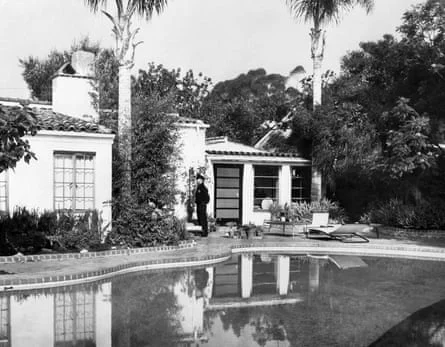
Marilyn Monroe, the incandescent icon whose life was a whirlwind of studios, fleeting romances, and a constant search for stability, is famously said to have inhabited over 50 addresses. Yet, in the final, poignant months of her tragically short life, she possessed a dwelling that was unequivocally, and for the first time, entirely her own. This singular haven, a testament to her burgeoning independence, is now at the heart of a complex legal battle, pitting preservationists against property rights advocates and raising profound questions about heritage, ownership, and the enduring legacy of a cinematic legend.
A Spanish Bungalow, A Symbol of Independence
Acquired in February 1962, mere months before her untimely death at the age of 36 from a drug overdose, the Hollywood star invested in a quintessential Spanish Colonial-style bungalow nestled at the foothills of the Santa Monica Mountains. This property, complete with a swimming pool, represented more than just a physical address; it was a tangible symbol of her efforts to break free from the constraints of the studio system and the tumultuous personal relationships that had defined her career. The failure of her marriage to playwright Arthur Miller and a subsequent year-long hiatus from acting, driven by mounting health issues, had left Monroe seeking solace and a sense of self-determination.
At a time when single women owning property was a rarity, this purchase was a bold statement. Cultural historians and preservationists view Monroe’s acquisition of this home as emblematic of her trailblazing spirit. It mirrored her courage in challenging the entrenched power structures of the film industry and asserting her autonomy against those who had, in her ascent, "used and abused her." Though she spent a scant few months in the affluent Brentwood neighborhood of west Los Angeles, and her efforts to decorate the house with mementos from her trips to Mexico were minimal, its symbolic weight is immeasurable.
Adrian Scott Fine, president and chief executive of the nonprofit LA Conservancy, underscores the home’s profound significance. "She talked about this house and was photographed in this house," Fine stated. "It was where she was embarking on a new chapter of her independence, and it tells an important, poignant story about her." This narrative is further entwined with the numerous conspiracy theories surrounding her death in August 1962, many of which center on this very property, the place where her star tragically faded.

From Haven to Battleground: The Demolition Dispute
The idyllic image of Monroe’s final sanctuary was shattered in 2023 when the property was purchased for $8.35 million by Brinah Milstein, a real estate heiress, and her husband, reality television producer Roy Bank. Their stated intention was to demolish the original house and integrate the land into their adjacent, half-acre estate, where they had resided for a decade. To Milstein and Bank, the historic bungalow was an "unoccupied wreck," a structure they felt held no intrinsic value worthy of preservation.
Their legal filings revealed a belief that no official objections had been raised to over two dozen previous requests for property modifications, leading them to apply for and initially secure a demolition permit. However, news of the impending demolition ignited a passionate public outcry, culminating in a swift and determined campaign to designate the house as a "cultural-historical monument." This designation, finalized in 2024, halted demolition plans and placed the property under stringent protection.
The Legal Fallout: Property Rights vs. Public Heritage
The preservation order has plunged Milstein and Bank into a protracted legal dispute. They are now suing the city, seeking compensation for what they allege is an unconstitutional infringement on their property rights, rendering their multimillion-dollar investment essentially worthless. Their legal team argues that the designation forces them to "preserve and maintain a monument on their own dime for the public’s enjoyment," a burden they deem untenable.
This argument, however, has thus far failed to gain significant traction in the courts. A federal judge recently dismissed the allegation that the city had improperly seized private property, though he allowed for the possibility of an amended complaint with stronger legal footing. Simultaneously, an attempt to overturn the historical preservation order in state court has also stalled.
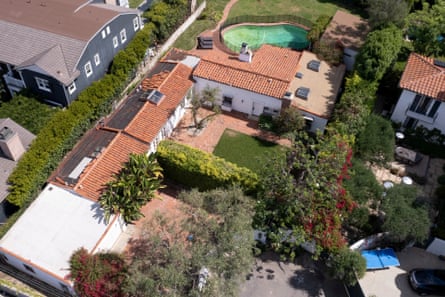
The circumstances surrounding this case are admittedly unusual. Typically, prospective buyers are aware of a property’s historical designation beforehand, and existing homeowners who wish to avoid preservation obligations generally have a functional property to sell. In this instance, the owners claim they were unaware of the full implications of the designation at the time of purchase, or that its impact was not adequately disclosed.
A House in Disrepair: The Challenge of Neglect
Beyond the legal wrangling, a more immediate and pressing concern is the deteriorating state of the house itself. Since its last occupancy in 2019, the property has reportedly fallen into disrepair. Preservationists express grave concerns about "demolition through neglect"—a slow erosion of the historical fabric of the house, which a city designation alone cannot prevent.
Photographs and court filings suggest significant structural issues: a large section of the roof is exposed to the elements, the heating and plumbing systems are reportedly non-functional, and there are indications of leaks and potential mold infestations. While the city’s office of historic resources identified "significant character-defining features" as intact in 2021, the planning office acknowledges uncertainty about the current condition. The homeowners, in their lawsuit, corroborate this, alleging that "many elements of the house [are] in disrepair and non-functional."
Adding to the complexity, the property’s historical significance is not readily apparent to the public. The house is not visible from the street, and there is no public right of access. This has led to an increase in unauthorized visitors, including celebrity tour buses, which have disrupted the neighborhood and raised public safety concerns, with some individuals attempting to trespass onto the property.
Navigating a Quagmire: The City’s Dilemma
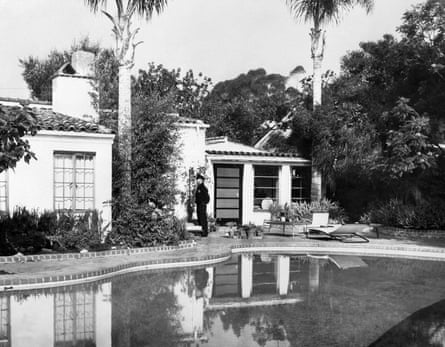
The Los Angeles city planning office possesses powers to intervene if a historic property is deemed substandard, hazardous, or a "nuisance." The building and safety department could theoretically barricade and protect the house, undertaking necessary repairs, with the homeowners bearing a significant portion of the cost. However, the current owners’ legal stance suggests they would likely resist such interventions, viewing them as further infringements on their rights.
David Breemer, the lead attorney for Milstein and Bank, has indicated that any such demands would be incorporated into their ongoing settlement negotiations, emphasizing his clients’ pursuit of "just compensation for the lost value of their property." He also highlighted the practical difficulties of selling or renting a property with such a history of public interest and potential for trespass, stating, "Selling is not really an option… And they don’t want to be landlords."
The prospect of the city acquiring the property, a potential solution for many historic sites in distress, is also not on the table. "The city does not have a dedicated funding source to purchase more than 1,300 historic-cultural monument properties," a spokesperson for the planning office confirmed.
The Enduring Enigma of Marilyn
Councilwoman Traci Park, who represents the district and championed the house’s preservation, has eloquently described Marilyn Monroe as unparalleled in her iconic status within Los Angeles, calling her Brentwood home as significant as the star herself. Yet, her office acknowledges the limitations of the city’s current position, with no clear game plan emerging while legal proceedings are ongoing.
The situation presents a profound quandary: how to balance the rights of private property owners with the collective desire to preserve a tangible link to a cultural icon. The legal battles continue, but the immediate concern remains the physical integrity of the house. Without a clear resolution or a willing custodian, Marilyn Monroe’s final sanctuary, a symbol of her hard-won independence, risks fading into obscurity, a victim of neglect and a legal labyrinth that seems as complex and tragic as the life it is meant to commemorate. The city faces the daunting task of finding a path forward that honors both history and property rights, a challenge that has, thus far, proven to be an intractable puzzle. The future of this iconic bungalow, a silent witness to Hollywood’s golden age and the personal struggles of its most luminous star, remains uncertain, hanging precariously in the balance of legal precedent and public sentiment.