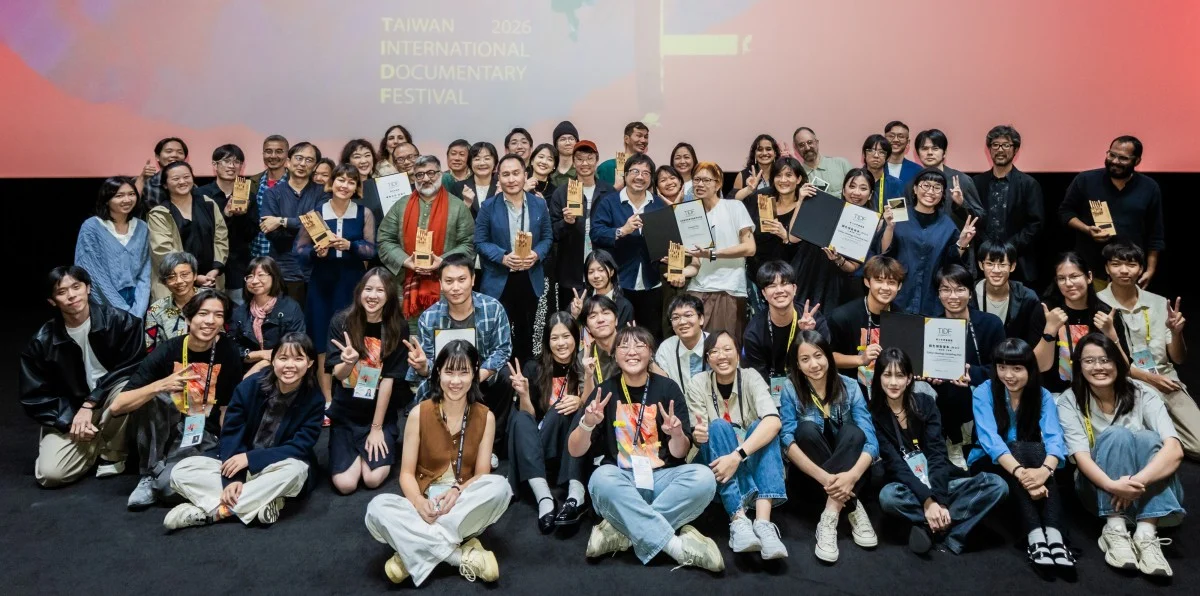
The prestigious ceremony, marking the culmination of one of Asia’s most significant documentary film events, celebrated a diverse array of cinematic achievements that collectively underscored the power of non-fiction storytelling in reflecting and shaping global realities. The festival, renowned for its "Re-encounter Reality" curatorial spirit, once again served as a vital platform for filmmakers to connect with audiences and foster critical dialogue on pressing social, political, and cultural issues. This year’s edition saw a record-breaking 2,617 submissions from 153 countries and regions, a testament to TIDF’s expanding international visibility and enduring impact on the global documentary landscape. From this vast pool, 44 films were shortlisted across the three main competition sections, while 18 titles vied for the TIDF Visionary Award, highlighting the rigorous selection process and the high caliber of works presented.
The awards ceremony convened a distinguished assembly of luminaries, including Taiwan Film and Audiovisual Institute (TFAI) Chairperson Arthur CHU, TFAI CEO DU Li-chin, TIDF Programme Director Wood LIN, along with respected jury members and the celebrated filmmakers themselves. Their presence underscored the collaborative spirit and institutional support that are integral to the festival’s success and its broader mission.
TIDF’s Enduring Legacy and Vision for Documentary Cinema
Established in 1998, the Taiwan International Documentary Festival is a biennial event that has grown to become a cornerstone of documentary filmmaking in Asia. Its commitment to artistic freedom, intellectual discourse, and presenting diverse perspectives has cemented its reputation as a crucial hub for independent cinema. The festival’s "Re-encounter Reality" theme, consistently woven through its programming, encourages both filmmakers and audiences to critically engage with the complexities of the world, challenging conventional narratives and embracing multifaceted truths.
TFAI Chairperson Arthur CHU articulated the festival’s intrinsic dynamism, stating, "The energy of our film festival arises from our audiences as well as the invited filmmakers and their works. With our audiences and filmmakers, these bits of energy are microcosms of a larger story as a whole, and I hope that every time everyone comes to our festival they become a part of a larger story." This sentiment highlights the communal aspect of film festivals, where individual stories contribute to a collective understanding and experience. Programme Director Wood LIN echoed this perspective, emphasizing the crucial role of the audience in completing the artistic process: "A documentary only becomes complete when it comes before an audience. A film festival only becomes complete when it comes together with its audiences and filmmakers. Documentary is a ray of light in this world, and I thank everyone for lighting up Taiwan and this world!" These statements collectively reinforce TIDF’s philosophy that documentary cinema is not merely a form of entertainment but a powerful medium for enlightenment, connection, and social change.
Asian Vision Competition: Narratives of Resilience and Freedom
The Asian Vision Competition, a crucial platform for showcasing the rich diversity of documentary filmmaking from across the continent, honored films that delved into profound socio-political issues with exceptional cinematic artistry. The Grand Prize was bestowed upon "Until the Orchid Blooms" by director Polen LY, a poignant work filmed over six years in an Indigenous village in northern Cambodia grappling with land dispossession. The jury lauded the film for its delicate balance between its vital subject matter and its elegant form, noting that beyond shedding light on critical issues of forced displacement and environmental degradation, it beautifully captured the inherent beauty of nature and the innocence of childhood. The jury also recognized Director LY’s remarkable potential as a storyteller. In his acceptance speech, Director LY shared the arduous journey of making the film, acknowledging that it was the rural children he filmed who acted as his guides through life and away from despair. He articulated a clear intent to avoid romanticizing the concept of "resilience," instead striving to emphasize empathy and compassion, hoping these qualities would resonate with viewers. His concluding remark, "It’s human emotion that AI can never replace," served as a powerful testament to the irreplaceable essence of human-centered storytelling in an increasingly digital world. The film’s deep dive into land rights in Southeast Asia, a region frequently impacted by rapid development and resource exploitation, offers a crucial perspective on the struggles of marginalized communities.
The Jury Prize in this category went to the Indian film "Cycle Mahesh," praised for its fluid navigation between documentary, fiction, and myth. This artistic approach resonated deeply with TIDF’s "Re-encounter Reality" curatorial spirit, as the jury commended the film’s ingenious blurring of reality and representation in its portrayal of migrant workers during the COVID-19 pandemic. Director Suhel BANERJEE, in his acceptance, made a powerful statement on artistic freedom, noting the scarcity of platforms globally where films discussing sensitive topics like Palestine could be freely screened, particularly in India or the Western world. He underscored that his films and those of his peers "require a certain type of freedom" and called for mutual support in defending this fundamental right. His remarks highlighted TIDF’s vital role as an open forum for challenging narratives and promoting freedom of expression, especially in contexts where such discourse might be suppressed.
The Special Prize was awarded to "Writing Hawa," a film recognized for its powerful and unforgettable portrayal of three generations of Afghan women enduring oppressive patriarchy. The jury highlighted how the lives of these mothers and daughters etched an indelible memory of resistance. Co-director Najiba NOORI delivered a stark reminder of the ongoing crisis in Afghanistan, stating, "It has been for five years that the country has been under the control of a terrorist group, the Taliban; honestly it has become so normal that you don’t hear the world talk about Afghanistan anymore, the only country in the world that doesn’t allow women to go to school." She expressed profound gratitude to TIDF for providing a platform to bring her story to Taiwan, thereby drawing renewed attention to an issue that, tragically, was beginning to fade from global memory. The film serves as a crucial document of a human rights catastrophe, leveraging cinema to ensure accountability and remembrance.
Due to the exceptional overall quality of this year’s Asian Vision Competition entries, and to specifically encourage outstanding short films, the jury also awarded a Jury Special Mention to "Compact Disc." This film was recognized for its profound act of bearing witness, indelibly etching in time the experiences of a generation of Hongkongers, reflecting the ongoing socio-political transformations in the city.
International Competition: Poetic Explorations and Ecological Insights
The International Competition, featuring documentary works from around the globe, celebrated films that pushed the boundaries of cinematic form and thematic depth. The Grand Prize was awarded to "Hair, Paper, Water…" co-directed by TRUONG Minh Quy and Nicolas GRAUX. The jury lauded the film for its remarkable formal freedom and striking aesthetic approach, which skillfully wove together fragments of sound and image into a poetic ethnography. This evocative style captured the irreversible variations of culture across time, particularly focusing on vanishing Vietnamese traditions. Although GRAUX had already departed Taiwan, he received news of the win en route to the airport and initiated a group video call with TRUONG to express their thanks, describing the "childlike creativity" they strived to infuse into their project. The film’s sensitive depiction of cultural erosion resonates globally, as many indigenous and traditional practices face pressures from globalization and modernization.
The Jury Prize in this section went to "Nocturnes," the latest work by the acclaimed directing duo Anupama SRINIVASAN and Anirban DUTTA, both of whom have been previously shortlisted at TIDF. The film was celebrated for transcending the conventional ecological documentary, instead offering a quiet and profound probe into the very act of "seeing." It invites audiences to reconsider humanity’s place within the intricate web of all living beings. Cinematographer Satya Rai NAGPAUL accepted the award on behalf of the directors, expressing pleasant surprise and deep gratitude to TIDF and its staff for their meticulous attention and care for every detail of the festival. "Nocturnes" exemplifies a growing trend in documentary filmmaking to move beyond didactic environmentalism towards more contemplative and philosophical explorations of our relationship with the natural world.
A Special Mention was given to "Kabul, Between Prayers" by Aboozar AMINI, a film set against the tumultuous backdrop of Afghanistan’s transition from 20 years of US-backed rule to the return of the Taliban. The film was recognized for its intimate landscape of the hopes and dreams of young Taliban fighters, while simultaneously revealing the profound fragmentation and absence of women in public life. This complex and sensitive portrayal offers a rare glimpse into a highly charged political and social reality, challenging viewers to confront uncomfortable truths.
Taiwan Competition: Personal Journeys and Political Reflections
The Taiwan Competition spotlighted outstanding documentary works produced in Taiwan, often reflecting the unique cultural, social, and political dynamics of the island and its connections to the wider Chinese-speaking world. This year, the competition notably honored films by Hong Kong directors now based in Taiwan, underscoring the island’s role as a haven for creative expression.
Making its world premiere at TIDF, "Scenes from Departure" won the Taiwan Competition Grand Prize, an impressive achievement for director Ray Kam-hei CHAN’s first documentary feature. The film delicately follows Chan’s tender and often awkward attempts to reconnect with his father. The jury praised its modest means, quiet assurance, and capacity to surprise, noting that it proposes a new mode of political cinema through deeply personal filmmaking. Director Ray thanked his producers for their encouragement and for helping him believe in the value of his own personal story. Reflecting on his childhood, he shared that as an only child, he often felt lonely, but it was through encountering cinema that he truly learned to communicate. He extended heartfelt gratitude to his father for allowing such intimate filming and dedicated his film to his deceased mother. The film’s exploration of family dynamics within the context of diaspora and generational shifts holds particular resonance for many in Taiwan and Hong Kong.
The Jury Prize was awarded to "Colour Ideology Sampling.mov," a film that had previously earned the Best Documentary Short Film award at the prestigious Golden Horse Awards. This film creatively locates the contradictions inherent in political participation by mixing vérité footage of debates occurring in both private and public spaces. The jury commended its inventive approach to exploring these tensions. Co-director Kathy WONG first thanked her team and quoted a friend, saying, "Our collaborative partners are our ‘reality’ along the way, thank you Hong Kong, and thank you Taiwan!" Co-director CHAN Cheuk-sze eloquently described how documentary cinema "held out an umbrella" for her, enabling her to navigate the pouring rain without getting soaked. She expressed her intent to continue "running about in the rain" until her next encounter with an audience, symbolizing the resilience and dedication required in documentary filmmaking, especially for those grappling with sensitive political themes.
TIDF Visionary Award: Resisting Forgetting in Chinese-Language Cinema
The TIDF Visionary Award, specifically dedicated to Chinese-language documentaries, recognized works that demonstrated exceptional vision and profound impact. Hong Kong director Rico WONG’s "Compact Disc" received the Grand Prize, building on its earlier Jury Special Mention in the Asian Vision Competition. The film was lauded as a powerful cinematic act of resistance against forgetting and the erasure of a city’s history. Director WONG specially thanked his four-person team and a friend who endured hardships with him, entrusting their stories to his lens with "100% of their trust." He recalled his first visit to TIDF two years prior as an audience member, where he found courage and insight that inspired him to embark on his own film after returning to Hong Kong. Expressing his honor to be recognized among such luminaries, he voiced his hope to continue creating and being seen as a filmmaker. This dual recognition of "Compact Disc" underscores its critical importance as a historical document and artistic statement concerning collective memory and identity in Hong Kong.
The Jury Special Prize went to the Taiwanese film "XiXi," praised for its intimate exploration of East Asian womanhood. The film celebrates the freedom of young women while honestly confronting the societal costs of challenging tradition. The jury particularly commended director WU Fan for courageously appearing in the film and revealing her own vulnerability, adding a layer of authenticity and personal conviction. A surprised Director WU Fan explained that participating in TIDF this year mirrored her first attendance, where she discovered that "films can actually be made like this." She expressed profound gratitude to other filmmakers, asserting that their existence enabled her to continue her own cinematic journey, thanking everyone for their courageous works of creativity. "XiXi" contributes significantly to the evolving discourse on gender roles and individual autonomy within East Asian societies.
Non-Competition Awards and Industry Recognition
Beyond the competitive categories, TIDF also bestowed several significant non-competition awards. The Taiwan Critics Association Recommendation Award, announced prior to the festival, was presented to Chinese director HU Sanshou for "Xiangzidian Village: The Stage," a new documentary intimately portraying his hometown. HU Sanshou thanked the film critics for their appreciation, noting his particular affinity for this year’s theme of "Re-encounter Reality" and stating that this was no ordinary award to him. His hometown of Xiangzidian, he emphasized, represents one of the most important points in his life, and he thanked his family members, fellow villagers, and those who had already passed away, highlighting the deep personal connection inherent in his work.
The Outstanding Contribution Award, a special honor announced at the beginning of the festival, was presented to Taiwan Public Television Service’s "Viewpoint" program. This award recognized the program’s remarkable 27 years of dedication to documentary filmmaking in Taiwan. Accepting the award on behalf of the program, Tony SU eloquently explained, "If documentary is an important medium that reflects society, then Viewpoint, which began broadcasting in 1999, is a program that grew out of Taiwan’s diverse and democratic earth." He thanked audiences who had consistently supported the program over the years and expressed hope that "Viewpoint" would continue to serve as a vital window for free creativity in the Chinese-speaking world. This award underscores the crucial role of public broadcasting in fostering documentary culture and freedom of expression.
This year’s Audience Award went to the Taiwanese documentary "LA PALOMA," giving the film significant momentum ahead of its theatrical release in Taiwan. The film is a powerful biopic of a singer who persisted in spite of state surveillance during the martial law period. Director LU Yuan-chi happily explained that his team had particularly hoped to receive the Audience Award, as gaining an audience’s appreciation meant a great deal to them. The film’s narrative sheds light on Taiwan’s complex authoritarian past and the courage of artists who defied oppression, resonating strongly with contemporary audiences.
Finally, the Next Generation Award, co-organized by TIDF and the Fubon Cultural & Educational Foundation, represented the unique perspective of a new generation. Based on the voting of 23 teenage jurors, this award also went to "Colour Ideology Sampling.mov." The youth jury noted that the film creates an unstressed opportunity for visual acknowledgment and reflection, serving as a doorway for teenagers to explore politics, while also reminding them not to fall into arbitrary or singular frameworks of thought. This recognition highlights the film’s pedagogical value and its ability to engage young audiences in critical thinking about civic participation and diverse ideologies.
Broader Impact and Future Horizons
The 15th Taiwan International Documentary Festival has once again reaffirmed its position as a beacon for compelling, challenging, and artistically daring non-fiction cinema. The diverse themes explored by the winning films—ranging from land rights and political oppression to cultural preservation, personal identity, and the struggles of women—collectively illustrate the profound capacity of documentary to illuminate complex global realities. TIDF’s commitment to providing a platform for voices from across Asia and beyond, particularly those from marginalized communities or those addressing sensitive political subjects, underscores Taiwan’s role as a vital hub for freedom of expression and intellectual discourse in the region. The record number of submissions and the enthusiastic participation of filmmakers and audiences alike signal the festival’s growing influence and the enduring power of documentary storytelling. As TIDF looks towards its future editions, it continues to inspire, educate, and connect, ensuring that documentary cinema remains a critical "ray of light" in the world.