Produced by Gendai Eigasha and distributed by the pioneering Art Theatre Guild (ATG), Confessions Among Actresses (女優たち, Joyūtachi), released in 1971, stands as a seminal work in the Japanese New Wave movement. Directed by the enigmatic Yoshishige Yoshida (also known as Kiju Yoshida), the film uniquely explores the multifaceted concept of the actress within cinema, utilizing a narrative approach that deliberately blurs the lines between reality, memory, dream, and performance. Featuring three of Japan’s most prominent actresses of the era—Ruriko Asaoka, Mariko Okada, and Ineko Arima—the film delves into profound psychological landscapes, challenging conventional storytelling and audience expectations.
The Genesis of an Avant-Garde Vision
Yoshishige Yoshida, a key figure of the Japanese New Wave alongside directors like Nagisa Ōshima and Masahiro Shinoda, was renowned for his intellectually rigorous and stylistically audacious filmmaking. His works, often characterized by philosophical depth and formal experimentation, sought to dissect societal norms, existential anxieties, and the complexities of human identity in post-war Japan. Confessions Among Actresses arrived after a series of highly influential films, including Eros + Massacre (1969) and Heroic Purgatory (1970), solidifying his reputation as a director unafraid to confront challenging themes with an equally challenging aesthetic.
The film’s production by Gendai Eigasha and distribution by the Art Theatre Guild was crucial to its realization. ATG, founded in 1961, played an indispensable role in fostering independent and experimental cinema in Japan. Unlike the major studios that focused on commercial productions, ATG provided a platform for auteur directors to pursue artistic visions unconstrained by mainstream pressures. They championed films that explored taboo subjects, utilized unconventional narrative structures, and engaged deeply with social and philosophical questions. ATG’s model, which often involved financing and distributing films with limited budgets but significant artistic merit, allowed Confessions Among Actresses to embrace its intricate, non-linear structure and thematic ambition. The partnership between Yoshida’s distinct vision and ATG’s commitment to artistic freedom created an environment where such a bold cinematic endeavor could thrive.
Deconstructing the Actress: A Labyrinthine Narrative
At its core, Confessions Among Actresses grapples with a seemingly simple question that proves to be profoundly complex in practice: "What is an actress?" Yoshida approaches this query not through a straightforward examination of the craft, but by immersing the viewer in the lives of three women on the cusp of appearing in a fictional production also titled "Confessions Among Actresses." The narrative unfolds over two days leading up to the scheduled shooting, yet it eschews traditional backstage drama in favor of constructing three parallel, interlocking stories steeped in desire, trauma, rivalry, and self-deception. The film consistently blurs the boundaries between what is genuinely lived, what is merely remembered, what is dreamt, and what is ultimately acted, creating a disorienting yet compelling experience.
The film immediately establishes its central thematic concerns from its opening sequence. An actress, believed to have lost her voice, communicates through signs, while another woman in the room articulates her unspoken words. This striking imagery lays bare the work’s core propositions: identity is fluid and unstable; speech and truth can be transferred or mediated; trauma can be both deeply felt and strategically staged; and the very essence of an actress resides in the ambiguous space between her authentic self and the projections she embodies. From this conceptual foundation, Yoshida meticulously expands his ideas through a multilayered structure that follows the intertwined fates of Aki Kaido, Shoko Ichimori, and Makiko Isaku, three performers whose private existences appear inextricably linked to the images they project, both on and off screen.
The Intertwined Fates: Aki, Shoko, and Makiko
Each of the three central narratives serves as a distinct exploration of the film’s overarching themes:
Aki Kaido’s Story: The Echoes of Past Trauma
Aki’s narrative begins amidst whispers of an affair with a director named Nose, a seemingly scandalous premise that quickly unravels into something far more intricate. While Nose’s wife silently confronts Aki, the true emotional entanglement lies between Aki and her attendant, Kyoko. What initially appears to be a romantic scandal gradually morphs into the resurgence of an old, festering wound from their high school days. This past incident involves a teacher, the sinister use of chloroform, sexual violence, and a dark quest for revenge. However, Yoshida is less concerned with establishing an objective truth than with demonstrating the subjective and often conflicting nature of memory. Both women recall the same traumatic event, yet their recollections diverge significantly. What remains is not a clear, shared truth, but a cruel and enduring struggle over victimhood, guilt, and possession, highlighting how personal histories are continually re-enacted and reinterpreted.
Shoko Ichimori’s Arc: Dreams, Psychoanalysis, and Performance
Shoko’s storyline delves even more explicitly into the realms of dreams and psychoanalysis, becoming a potent metaphor for the film’s exploration of inner worlds. She abruptly refuses to participate in the production, claiming that a vivid dream—where a plastic ball becomes lodged in her throat, causing her to lose her voice—has rendered her unable to perform. Her subsequent visit to a psychiatrist initiates sleep therapy, yet the therapeutic process itself transmutes into a form of theater. The dream is meticulously reconstructed with real individuals assigned roles, including her estranged husband, her attendant Rie, and the men who orbit her life. In one of the film’s most characteristic and innovative ideas, psychoanalysis is presented as a cinematic endeavor, while the dream itself functions simultaneously as a diagnosis of psychological distress and a carefully orchestrated performance. This segment powerfully suggests that even our deepest subconscious fears can be staged and re-enacted, further blurring the line between internal reality and external presentation.
Makiko Isaku’s Narrative: The Performance of Self-Annihilation
Makiko’s story centers around the recurring motif of double suicide, perhaps the most melodramatic yet profoundly symbolic element in the film. Upon returning to her hometown, she revisits a traumatic past incident involving her young stepfather, who died while she survived. Her personal history is defined by a series of repeated, often romanticized, attempts at self-annihilation. Yet, each time, she inexplicably survives, as if even death itself refuses to release her from the relentless logic of performance. When she is confronted with the chilling assertion that, as an actress, she cannot truly die—because even the act of dying would inevitably become another performance—the film reaches one of its sharpest and most cynical conclusions. This narrative thread underscores the idea that for some, the performative aspect of life is so deeply ingrained that it extends even to the ultimate act of self-termination, transforming tragedy into spectacle.
(A relevant insight into the film’s thematic depth can be gleaned from this trailer: Confessions Among Actresses 告白女優たちの (1971) 予告編 Trailer)
Star Power and Subversion: The Cast
Contextually, Confessions Among Actresses is particularly fascinating because it ingeniously transforms the established public images of its three leading stars—Ruriko Asaoka, Mariko Okada, and Ineko Arima—into raw material for its fragmented, essayistic exploration of female performance. These actresses were not merely playing characters; they were seemingly engaged in a meta-performance, challenging, distorting, and even weaponizing their own carefully cultivated screen personas.
- Ruriko Asaoka: Known primarily for her roles in Nikkatsu studio productions, often portraying strong, independent women in crime thrillers and melodramas, Asaoka brought a distinctive elegance and intensity to her part. Her presence in an avant-garde ATG film marked a significant departure, allowing her to explore a more complex and vulnerable side of her artistry.
- Mariko Okada: As Yoshida’s wife and frequent collaborator, Mariko Okada was already deeply embedded in the Japanese New Wave aesthetic, having starred in many of his previous experimental works. Her performances often showcased a profound psychological depth and a willingness to tackle challenging roles, making her perfectly suited for the film’s intricate demands.
- Ineko Arima: A veteran actress who had worked extensively in both studio and independent productions, Arima brought a mature gravitas and a nuanced understanding of melodrama to her character. Her portrayal contributed to the film’s exploration of older wounds and the enduring impact of the past.
Yoshida’s casting choices were deliberate. He leveraged their public identities, suggesting that the actress is simultaneously glamorous and trapped, possessing immense power yet also consumed by her roles, highly visible yet fundamentally unknowable. This meta-commentary on stardom and performance was a hallmark of the Japanese New Wave, which often sought to critique the very medium it operated within. The film’s insistence on themes of sex, nudity, jealousy, sexual trauma, suicide, and neurosis, while occasionally feeling overloaded, served to push the boundaries of cinematic representation and explore the darker undercurrents beneath the polished surface of celebrity. While the deliberate excess in the stories sometimes risks feeling schematic beneath its avant-garde veneer, it undeniably creates a powerful, if sometimes overwhelming, emotional and intellectual landscape.
A Pillar of the Japanese New Wave
Confessions Among Actresses firmly entrenches itself within the broader context of the Japanese New Wave, a transformative cinematic movement that emerged in the late 1950s and flourished through the 1960s and early 1970s. This movement, a reaction against the perceived stagnation and conventionalism of the post-war studio system, was characterized by its radical thematic concerns, formal experimentation, and socio-political critiques. Directors like Yoshida, Ōshima, Shinoda, and Imamura challenged traditional narrative structures, explored taboo subjects such as sexuality, violence, and political radicalism, and embraced a more subjective, often fragmented, storytelling approach.
Confessions Among Actresses exemplifies these characteristics through its non-linear narrative, its use of symbolism and dream logic, its unflinching examination of female psychology and trauma, and its meta-cinematic critique of performance and identity. It rejected the easy answers and clear resolutions favored by mainstream cinema, instead inviting viewers into a complex, ambiguous world that mirrored the uncertainties and anxieties of modern Japanese society. The film’s intellectual rigor and its willingness to delve into the darker aspects of human experience positioned it as a significant contribution to a movement that redefined Japanese cinema for a global audience.
Art Theatre Guild’s Enduring Legacy
The role of the Art Theatre Guild (ATG) in bringing films like Confessions Among Actresses to fruition cannot be overstated. From its inception, ATG served as a vital alternative distribution and production model, providing financial backing and exhibition opportunities for films that would otherwise struggle to find an audience. Their catalog includes groundbreaking works from directors across the Japanese New Wave, demonstrating a consistent commitment to artistic freedom and challenging cinema. ATG’s influence extended beyond simply funding films; it cultivated a distinct cinematic sensibility, fostering a generation of filmmakers who pushed the boundaries of form and content. Without ATG’s support, many of the most iconic and intellectually stimulating films of the era, including Yoshida’s entire output during this period, might never have reached screens. Their dedication to a diverse range of voices and uncompromising artistic visions cemented their status as a crucial institution in the history of Japanese cinema. (Further exploration of ATG’s impact is available via our coverage: Follow our coverage of Art Theatre Guild by clicking on the image below)
Cinematic Craftsmanship and Psychological Depth
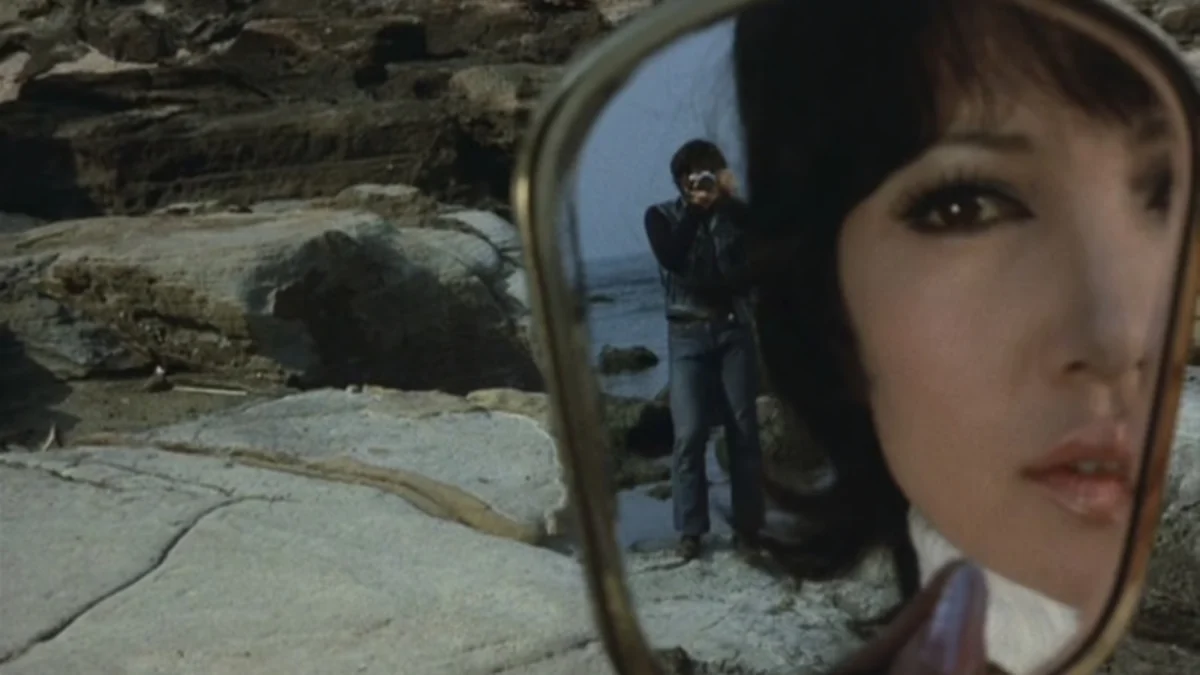
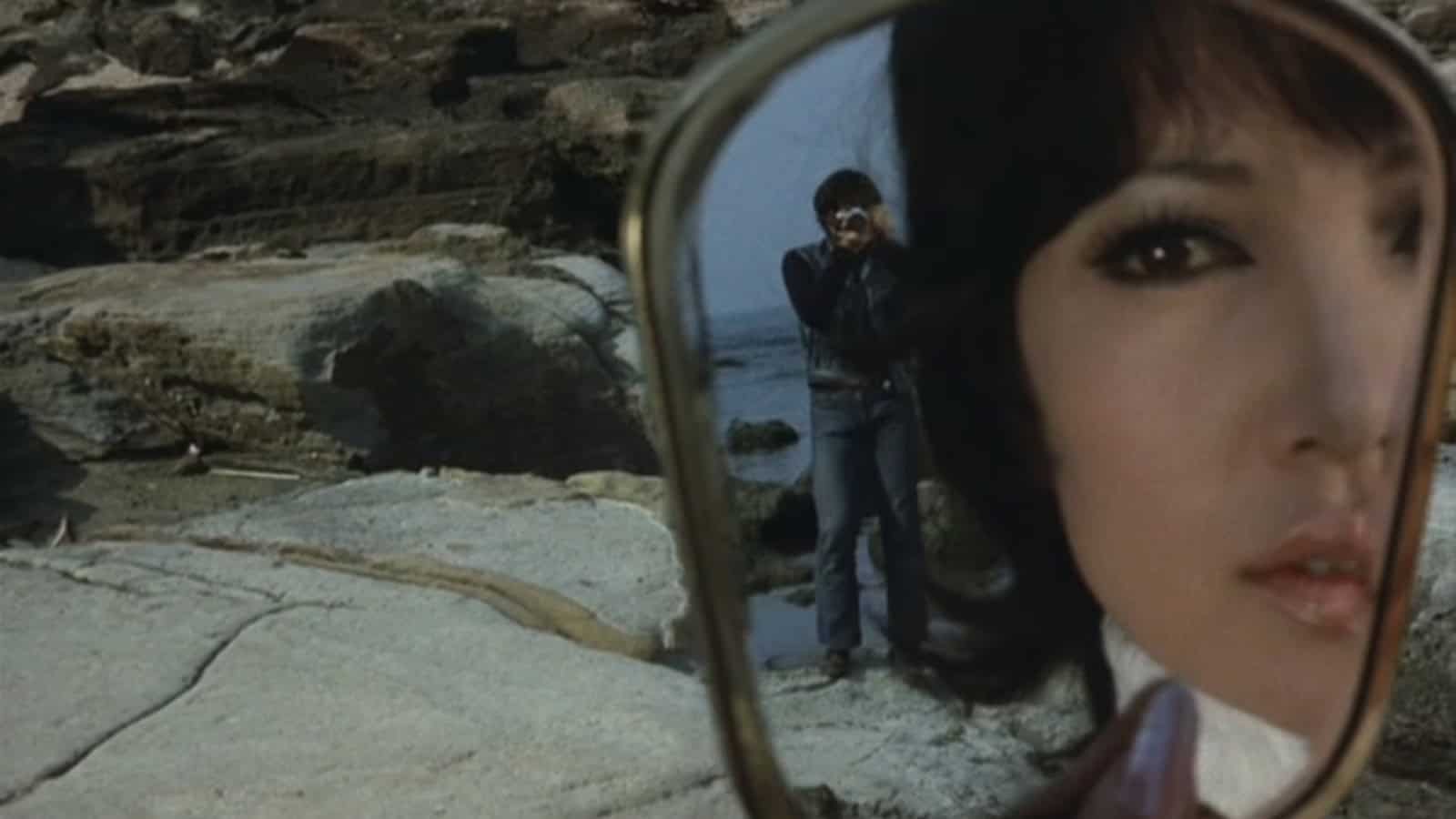
Visually, Confessions Among Actresses remains an impressive achievement. Cinematographer Yutaka Hasegawa’s work is characterized by its repeated use of irregular compositions. Objects, walls, mirrors, and architectural lines frequently dominate the frame, often pushing characters to the corners or trapping them within narrow, confining spaces. The women in the film often occupy only a small fraction of the image, visually conveying a sense that their own lives and identities have been usurped—stolen by the rooms they inhabit, the gazes upon them, the weight of their memories, and the relentless machinery of the cinematic apparatus itself. This unique approach creates an undeniable sense of voyeurism and oppression, transforming ostensibly private spaces into psychological traps. The constant, fluid movement between reflections, shadows, fragmented bodies, and masks further reinforces the film’s central thesis: that the glamorous public life of a star often conceals a nightmarish, tumultuous reality beneath its polished surface.
The acting performances by Asaoka, Okada, and Arima are equally central to the film’s success. They deliver the necessary intensity and theatricality to characters who are deliberately not intended to feel naturalistic in the conventional sense. Their portrayals are replete with controlled artifice, a stylistic choice that perfectly aligns with the film’s overarching concept of performance as an all-encompassing mode of existence. However, the structural choice to largely keep the three actresses in separate narrative lines, only bringing them together in a climactic sequence, somewhat limits the explosive potential of their combined presence. The closing interview scene, where each woman offers her definition of what it means to be an actress, is consequently both striking and subtly frustrating. While their statements seem to reveal something profoundly true about their characters, they simultaneously carry the weight of perfectly polished lies, further cementing the film’s ambiguity.
Critical Reception and Enduring Legacy
Upon its release, Confessions Among Actresses likely garnered a polarizing critical reception, a common fate for avant-garde works of its kind. While some critics would have lauded its intellectual ambition, formal audacity, and profound psychological insights, others might have found its complex structure, thematic density, and deliberate ambiguity challenging or even alienating. Mainstream audiences, accustomed to more conventional narratives, would have found it a demanding viewing experience.
Despite these potential divisions, the film has solidified its place in cinema history as a bold and memorable work within Yoshida’s oeuvre and the broader Japanese New Wave. Its greatest achievement lies in its unwavering refusal to allow the viewer to settle on a single, definitive truth. Instead, it posits that the actress, in Yoshida’s meticulously constructed world, is far more than simply someone who performs. She is an individual whose entire existence, every facet of her being—her suffering, her memories, her loves, her deceptions, and even her approach to death—has been irrevocably transformed into performance.
While Confessions Among Actresses is undoubtedly not an easy or always narratively satisfying film, its complexities are integral to its artistic purpose. It can feel crowded, occasionally mannered, and at times overly fascinated with its own psychoanalytic mechanisms. The sheer abundance of characters, memories, dreams, and confrontations can be exhausting, and the melodramatic foundations of the individual stories, while deliberately excessive, do not always enrich them. The constant return to themes of wounded femininity and sexualized psychological disturbance, beneath its avant-garde surface, can sometimes make the narrative feel almost too schematic. Yet, these aspects are part of its unique fabric.
Its lasting impact stems from its unflinching exploration of female stardom, identity, trauma, and desire through a uniquely cinematic lens. It continues to be studied for its innovative narrative structure, its meta-commentary on the nature of acting, and its profound psychological depth. Confessions Among Actresses remains a testament to Yoshishige Yoshida’s uncompromising artistic vision and the Art Theatre Guild’s pivotal role in championing a cinema that dared to be different, challenging, and enduringly thought-provoking.