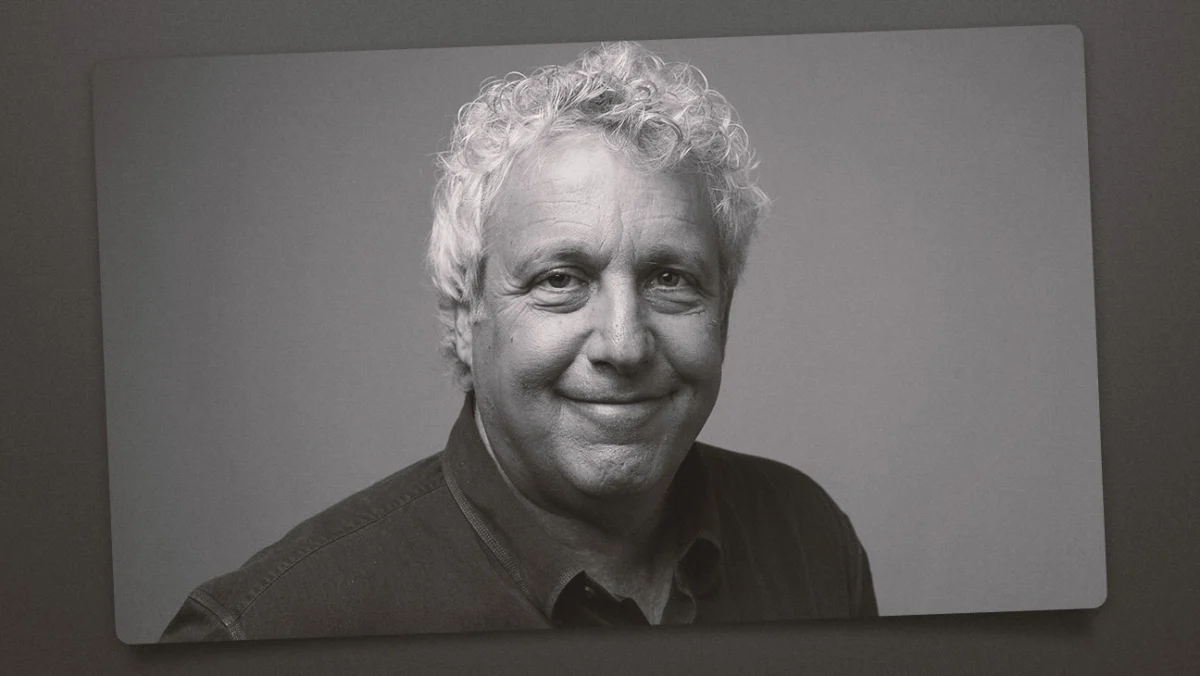
The world of comedy, film, and documentary filmmaking mourns the loss of Barry Blaustein, a prolific writer, director, and educator whose creative brilliance shaped some of the most indelible characters and narratives of the past four decades. Blaustein, best known for his extensive and transformative collaboration with comedy legend Eddie Murphy on iconic Saturday Night Live sketches and blockbuster films like Coming to America and The Nutty Professor, passed away at the age of 72. His death, announced by Chapman University’s Dodge College of Film and Media Arts, where he served as a cherished professor, followed a courageous battle with Parkinson’s disease, diagnosed in mid-2016, and a recent diagnosis of stage four pancreatic cancer last month.
Blaustein’s career was a testament to his versatility and profound impact across multiple facets of the entertainment industry. From the raucous humor of late-night television to the intimate revelations of documentary film, he consistently demonstrated an incisive wit and a deep understanding of human nature. His legacy is etched into the cultural fabric, particularly through the unforgettable characters he helped bring to life alongside Eddie Murphy, and his groundbreaking work in documentary cinema, notably the critically acclaimed Beyond the Mat.
An Early Life and the Path to Comedy
Born Barry Wayne Blaustein on September 10, 1954, he grew up in Westbury, New York, on Long Island. His early experiences in the suburbs of New York would later subtly inform his comedic sensibilities. After graduating from W.T. Clarke High School in 1972, Blaustein pursued his higher education at New York University. His professional journey began in 1979 when he landed a writing job on The Mike Douglas Show, a popular syndicated daytime program that he had fond memories of watching with his grandmother. This early foray into television provided him with crucial experience in crafting daily content and understanding the rhythm of a broadcast production.
The year 1980 marked a pivotal turning point in Blaustein’s career and, indeed, in the history of American sketch comedy. He and his future long-time writing partner, David Sheffield, were hired for Saturday Night Live‘s sixth season. This was a tumultuous period for the legendary NBC sketch comedy show. Creator Lorne Michaels had departed, and Jean Doumanian had taken over as producer, presiding over a season often regarded as one of SNL‘s most challenging and least successful, lasting only 13 episodes before her dismissal. Amidst this uncertainty, a relatively unknown, electrifying talent named Eddie Murphy also joined the cast as a "featured" player, often relegated to the sidelines.
The Saturday Night Live Era: Forging an Unbreakable Partnership
Blaustein and Sheffield quickly recognized the untapped potential in Murphy. As Blaustein recalled in a 2023 interview, the established cast wasn’t "setting the world on fire," prompting the writers to take a chance on the rookie. "Man, the minute he stepped on camera, it was like, ‘Whoa, he’s got it.’" This intuition led to one of the most fruitful comedic collaborations in television history. Blaustein and Sheffield began writing almost exclusively for Murphy, providing him with material that allowed his extraordinary talent to explode onto the national stage.
Their partnership flourished, and they were swiftly promoted to head writers and then supervising producers before their departure from SNL in 1983. During their tenure, they were instrumental in creating some of Eddie Murphy’s most iconic and culturally resonant characters, transforming him from a featured player into a bona fide superstar and, arguably, saving SNL from its mid-period slump.
Among these legendary creations were:
- Gumby: A subversive take on the beloved, malleable claymation character. Murphy’s aggressive, cigar-chomping portrayal, famously declaring, "I’m Gumby, dammit!", transformed a children’s icon into a foul-mouthed, self-important showbiz veteran, instantly becoming a catchphrase and a fan favorite.
- Buckwheat: A hilariously exaggerated and often absurd rendition of the Little Rascals character. Murphy’s Buckwheat, known for his unintelligible singing and signature "O-TAY!" exclamation, became so popular that Blaustein and Sheffield eventually penned a controversial but brilliant storyline involving his "assassination" and the ensuing investigative reports, parodying sensationalist media coverage. This audacious sketch was a bold move for live television and remains a standout moment in SNL history.
- Mr. Robinson: A gritty, inner-city parody of Fred Rogers from Mister Rogers’ Neighborhood. Murphy’s Mr. Robinson taught urban lessons about shoplifting, eviction, and street smarts, offering a sharp social commentary wrapped in comedic genius. Blaustein recounted an anecdote where the real Fred Rogers visited the SNL offices, politely requesting they "stop doing the sketches" after they had their fun, a request the writers, already feeling they had exhausted the character, readily obliged.
Beyond these staples, Blaustein and Sheffield also penned sketches that showcased Murphy’s incredible range, including his impersonations of music legends James Brown (notably in a "Celebrity Hot Tub" sketch) and Stevie Wonder, political figures like Jesse Jackson, and original characters such as the infamous pitchman Velvet Jones. These characters didn’t just generate laughs; they became cultural touchstones, reflecting and often satirizing the societal anxieties and pop culture phenomena of the early 1980s.
Transition to the Big Screen: Crafting Blockbuster Comedies
The success Blaustein and Sheffield found with Eddie Murphy on SNL naturally paved the way for their transition to feature films. Their first cinematic collaboration was not with Murphy, but on Police Academy 2: Their First Assignment (1985), demonstrating their ability to contribute to established comedic franchises. However, it was their reunion with Murphy that would cement their place in Hollywood history.
In 1988, Eddie Murphy approached Blaustein and Sheffield with an idea for a film, which would evolve into the timeless classic Coming to America. Directed by John Landis, the R-rated romantic comedy captivated audiences worldwide, telling the story of Prince Akeem Joffer of Zamunda (Murphy) who travels to Queens, New York, to find a queen. The film was a massive box office success, finishing as the third highest-grossing film worldwide in 1988, raking in an impressive $288.8 million globally against a budget of approximately $39 million. Its intricate world-building, memorable characters (many of whom Murphy played in multiple roles, showcasing his chameleonic talent), and quotable lines ensured its enduring status as a beloved comedy.
The trio continued their prolific collaboration. Blaustein and Sheffield penned the screenplays for several other Murphy vehicles, including:
- Boomerang (1992): A romantic comedy that further showcased Murphy’s leading man capabilities.
- The Nutty Professor (1996): A highly successful remake of the Jerry Lewis classic, which saw Murphy deliver multiple, transformative performances thanks to groundbreaking makeup effects by Rick Baker. The film was a critical and commercial hit, grossing over $273 million worldwide.
- Nutty Professor II: The Klumps (2000): The sequel continued the story, further expanding the beloved Klump family and achieving another significant box office take of over $166 million globally.
Their partnership with Murphy was so profound that they reunited decades later for the much-anticipated sequel, Coming 2 America (2021), a film released directly to streaming during the global pandemic, which allowed a new generation to experience the Zamundan saga. This later collaboration underscored the deep creative bond and mutual respect that persisted between Blaustein, Sheffield, and Murphy for over four decades.
Beyond their work with Murphy, Blaustein and Sheffield also wrote the pilot for a Murphy-produced CBS series called What’s Alan Watching? in 1987, which, despite critical acclaim, was not picked up. They also contributed to the ill-advised 2005 feature remake of The Honeymooners, starring Cedric the Entertainer. In a nostalgic and heartwarming full-circle moment, they returned to SNL in 2019, 36 years after their initial departure, to write for Eddie Murphy when he hosted the show. That episode became SNL‘s most-watched installment since 2008, a testament to the enduring power of their collective comedic genius.
A Unique Vision: The Documentary Filmmaker and Director
While his contributions to comedy are undeniable, Barry Blaustein also carved out a significant niche as a director, particularly in the realm of documentary filmmaking, where he revealed a more serious, investigative side of his creative persona. His 1999 documentary, Beyond the Mat, stands as his most celebrated directorial work and what he frequently called "the favorite thing he had ever done."
Beyond the Mat offered an unprecedented, raw, and often heartbreaking look into the demanding and dangerous world of professional wrestling, particularly during the late 1990s, an era of immense popularity for Vince McMahon’s World Wrestling Federation (WWF, now WWE) and the burgeoning, gritty Extreme Championship Wrestling (ECW) circuit. Blaustein, a lifelong wrestling fan who initially kept his passion quiet, decided to embark on the documentary after a surprise 40th birthday party where legendary grappler Dusty Rhodes made an appearance.
His approach to the film was meticulous and deeply personal. Blaustein spent two years securing funding and approvals, followed by another year traveling with WWE wrestlers without cameras, simply to earn their trust and gain genuine insight into their lives. The documentary ultimately focused on three wrestlers at different stages of their careers: Mick Foley (known as "Mankind"), a top-tier star pushing his body to its limits; Terry Funk, a veteran wrestling icon refusing to retire; and Jake "The Snake" Roberts, a former superstar grappling with addiction and personal demons. The film pulled back the curtain on the physical toll, emotional sacrifices, and psychological complexities of a life spent performing in the squared circle, challenging the traditional "kayfabe" (the portrayal of staged events as real) that defined professional wrestling.
Beyond the Mat was not without its controversies. Vince McMahon, displeased with the film’s candid revelations, reportedly threatened to sue to prevent its release. Despite this, the documentary garnered widespread critical acclaim, becoming one of the 12 finalists for the Oscar for Best Documentary Feature. Its unflinching portrayal of the human cost of professional wrestling profoundly impacted how the industry was perceived by both fans and the wider public, influencing subsequent sports documentaries and journalism.
Blaustein’s directorial endeavors also included narrative features such as The Ringer (2005), a comedy starring Johnny Knoxville, Brian Cox, and Katherine Heigl, revolving around a man faking a disability to compete in the Special Olympics, and Peep World (2010), a dramedy exploring a dysfunctional family, featuring an ensemble cast including Michael C. Hall, Sarah Silverman, Rainn Wilson, and Ben Schwartz. He also directed the 2009 documentary Guys N’ Divas: Battle of the Highschool Musicals and even contributed to the creation of a Russian TV comedy called Fizruk, or Gym Teacher, over two summers, showcasing his global reach and adaptability.
The Educator and Mentor at Chapman University
Beyond his professional achievements in Hollywood, Barry Blaustein dedicated a significant portion of his later life to nurturing the next generation of filmmakers. Since 2012, he served as a full-time professor of screenwriting at Chapman University’s prestigious Dodge College of Film and Media Arts. His commitment to teaching, even amidst his declining health, was a testament to his passion for storytelling and mentorship.
Stephen Galloway, the dean of Dodge College and a former THR editor and writer, spoke eloquently about Blaustein’s character: "It was one of the great pleasures of my life to know Barry. He faced his declining health with a level of stoicism I’ve never seen and kept his warmth and humor throughout. Even when he could no longer drive, he kept on teaching. It’s a sign of how beloved he was that a group of faculty created a shuttle service to take him back and forth to Chapman. He’s irreplaceable. We’ll miss him enormously."
Blaustein himself found immense joy and inspiration in his teaching role. In a 2015 interview, he recounted an anecdote where a struggling student in his class finally had a breakthrough with her script on the very same day the filming of Coming 2 America was announced. "I was more excited about that than I was about Coming 2 America," he stated, adding, "I find teaching students really inspiring, and I hope to make them better writers, because I know they make me a better writer." This sentiment encapsulates his generous spirit and profound belief in the reciprocal nature of education. He didn’t just impart knowledge; he engaged with it, learned from his students, and fostered an environment of mutual growth.
A Courageous Battle with Illness and an Enduring Spirit
Barry Blaustein’s final years were marked by a courageous battle against serious health challenges. He was diagnosed with Parkinson’s disease in mid-2016, a degenerative neurological condition that progressively affects movement. Despite the debilitating nature of the illness, he refused to let it deter him from his work or his passion for life. His dedication to teaching at Chapman University, even as his physical capabilities diminished, stands as a powerful testament to his resilience.
His commitment was further highlighted during the production of Coming 2 America. Blaustein candidly revealed in an interview for the Parkinson’s Foundation that he initially concealed his diagnosis from Paramount Pictures, fearing they wouldn’t hire an ailing writer, especially one "past an age when they hire [writers]." He eventually confided in Eddie Murphy, who proved to be "very supportive." This anecdote sheds light on the often-harsh realities of ageism and illness in the entertainment industry, while also underscoring the strong personal bond he shared with Murphy.
Just a month before his passing, Blaustein received the devastating news of a stage four pancreatic cancer diagnosis. Yet, even in the face of such dire circumstances, his philosophy remained steadfast and inspiring: "You’ve got to be realistic, but you’ve got to stay upbeat because you can’t let this disease defeat you. It wants you to stay home, it wants you to lie down, to go into your shell. That’s not a way to live a life. You’ve got to fight it." This unwavering spirit and determination to live life fully, despite immense adversity, deeply resonated with his colleagues, students, and all who knew him.
Legacy and Tributes
Barry Blaustein’s passing leaves an undeniable void in the entertainment world. His legacy is multifaceted, spanning decades of impactful contributions. As a writer, he helped define an era of comedy, crafting characters and scripts that have brought joy and laughter to millions and cemented Eddie Murphy’s status as a comedic icon. His ability to blend sharp wit with cultural commentary made his SNL work revolutionary and his film screenplays enduring.
As a director, he showcased a brave and empathetic eye, particularly with Beyond the Mat, which dared to expose the raw, often painful truths behind a spectacle, forever changing the landscape of sports documentaries. The film remains a benchmark for its integrity and depth.
As an educator, he was a beloved figure who inspired countless aspiring writers and filmmakers, sharing his vast experience and nurturing their talents with genuine warmth and encouragement. His influence will undoubtedly be felt for years to come through the work of his former students.
Blaustein is survived by his wife, Debra, whom he married in 2021; his children, Corey and Kasey; and his granddaughter, Daisy. The film and academic communities, along with generations of fans, remember him as a brilliant creative force, a dedicated mentor, and a remarkably resilient individual. Chapman University will host a memorial service to honor his life and contributions, with details to be announced. His spirit, characterized by humor, warmth, and an unyielding fight, will continue to inspire.