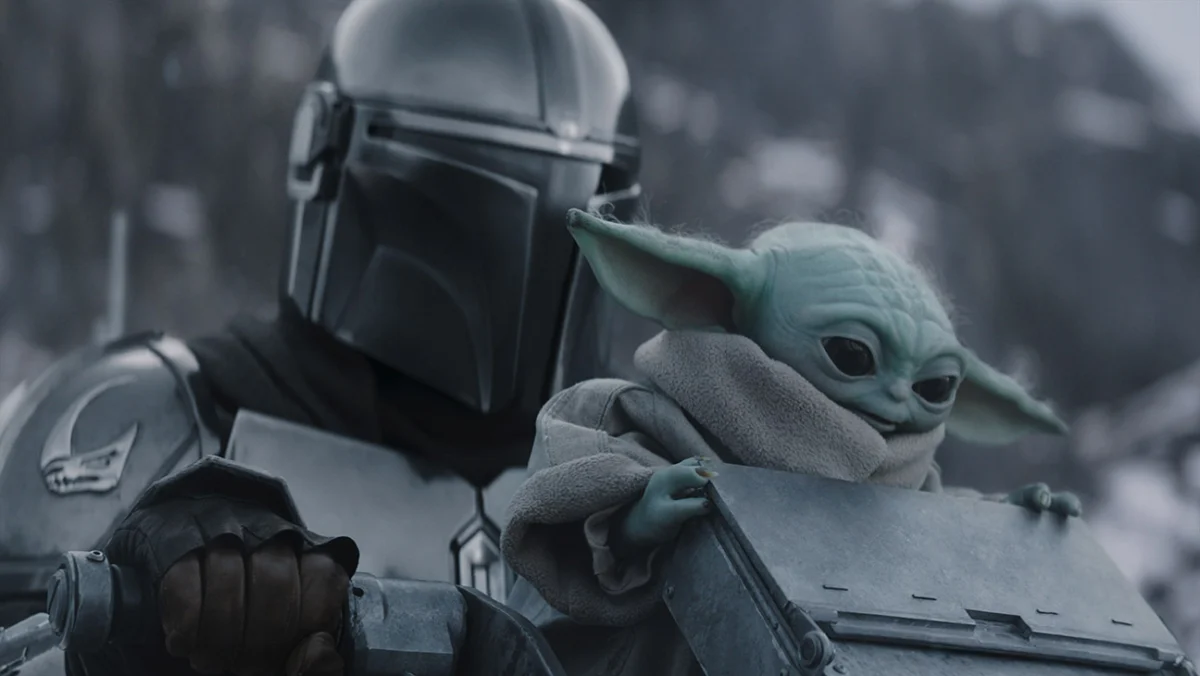
The Mandalorian and Grogu, the highly anticipated feature film adaptation of the acclaimed Disney+ series, held its inaugural press screenings on Thursday night, eliciting a diverse range of social media reactions from attendees. Set to premiere on May 22, 2026, the film signifies a pivotal moment for the Star Wars franchise, as it marks its return to cinematic exhibition after a seven-year hiatus following 2019’s The Rise of Skywalker. While official critical reviews remain embargoed until May 19, Disney and Lucasfilm permitted journalists and industry insiders to share their initial, brief impressions on social media platforms, providing an early glimpse into the film’s reception.
The Star Wars Franchise: A Cinematic Legacy and Streaming Evolution
The journey of Star Wars on the big screen has been one of monumental success, cultural impact, and, more recently, periods of introspection and strategic recalibration. Since George Lucas first introduced audiences to a galaxy far, far away in 1977, the saga has defined generations of filmmaking and fandom. The original trilogy (1977-1983) set an unparalleled standard for cinematic storytelling and special effects, cementing its place as a global phenomenon. The prequel trilogy (1999-2005), while commercially successful, faced a more divided critical and fan response, initiating discussions about the franchise’s creative direction.
Following Disney’s acquisition of Lucasfilm in 2012 for over $4 billion, a new era began, promising a revitalized cinematic universe. This period saw the release of the sequel trilogy (The Force Awakens in 2015, The Last Jedi in 2017, and The Rise of Skywalker in 2019), alongside anthology films like Rogue One: A Star Wars Story (2016) and Solo: A Star Wars Story (2018). The Force Awakens broke numerous box office records and garnered widespread critical acclaim, signaling a triumphant return. However, subsequent films in the sequel trilogy, particularly The Last Jedi and The Rise of Skywalker, generated intense debate among fans regarding narrative choices, character development, and overall thematic coherence. The Rise of Skywalker, intended as the culmination of the Skywalker saga, received a mixed critical reception and performed below some box office expectations for a tentpole Star Wars film, though still achieving a global gross exceeding $1 billion.
This period of "sequel trilogy fatigue" and the varying reception of anthology films prompted Lucasfilm and Disney to reassess their theatrical release strategy. The focus shifted, temporarily, to the burgeoning streaming landscape, where Disney+ launched in late 2019. It was on this platform that The Mandalorian debuted as a flagship series, quickly becoming a massive critical and commercial success. The series, created by Jon Favreau, offered a fresh narrative perspective within the Star Wars universe, blending classic Western tropes with samurai film influences and establishing a tone distinct from the main saga. Its blend of compelling storytelling, stunning visual effects (utilizing groundbreaking StageCraft technology), and the introduction of the universally adored character Grogu (affectionately known as "Baby Yoda") revitalized interest in the franchise and became a cornerstone of Disney+’s early subscriber growth. Series like Andor, Obi-Wan Kenobi, and Ahsoka followed, further diversifying the streaming content and expanding the lore.
The decision to bring The Mandalorian to the big screen with The Mandalorian and Grogu represents Disney’s renewed commitment to theatrical Star Wars experiences, leveraging the immense popularity and established fanbase of its most successful streaming property. This strategic move aims to bridge the gap between streaming exclusivity and the grandeur of cinematic presentation, seeking to recapture the broad audience appeal that has historically defined Star Wars films.
The Road to the Big Screen: From Streaming Phenomenon to Theatrical Event
The journey of The Mandalorian from a groundbreaking streaming series to a major theatrical release underscores a significant shift in Disney’s approach to its most valuable intellectual properties. Following three highly successful seasons on Disney+, the announcement of a feature film adaptation was met with both excitement and curiosity. Fans and industry observers alike pondered how a narrative structure built for episodic television would translate to the expansive demands of a big-screen spectacle.
Jon Favreau, the visionary behind the Disney+ series, takes the helm as director for the film, working from a script he co-wrote with long-time Star Wars creative Dave Filoni and Noah Kloor. Favreau’s consistent vision for The Mandalorian as a "space western," drawing heavily from the minimalist storytelling and character-driven narratives of classic Westerns, has been a defining characteristic of the series. This creative philosophy is expected to permeate the film, offering a distinct flavor compared to the more sprawling, galaxy-spanning conflicts of the Skywalker saga. Dave Filoni, known for his extensive work on Star Wars: The Clone Wars and Star Wars Rebels, has been instrumental in shaping the modern Star Wars animated and live-action landscape, and his collaboration with Favreau signals a continuity of the established tone and lore.
Production for The Mandalorian and Grogu notably continued to utilize the innovative StageCraft technology, often referred to as "The Volume." This immersive LED stage environment allows for real-time digital backgrounds, minimizing green screen use and providing actors with a more interactive environment. This technology, pioneered by Favreau for the series, revolutionized virtual production and is expected to deliver a visually stunning cinematic experience that maintains the aesthetic quality of the show while elevating it for the big screen.
The film’s plot centers on Din Djarin (Pedro Pascal), the stoic Mandalorian bounty hunter, and his inseparable apprentice, Grogu, the impossibly cute animatronic puppet of Yoda’s species. They are recruited by the New Republic for a perilous mission: to rescue Rotta the Hutt, a character previously seen in Star Wars: The Clone Wars, who is now portrayed by Jeremy Allen White. This rescue operation forces the duo to navigate treacherous territories, evading both persistent Imperial remnants seeking to reclaim power and a host of deadly bounty hunters. The casting also includes Lateef Crowder, known for his stunt work as the body double for the Mandalorian, and veteran sci-fi icon Sigourney Weaver, whose role is highly anticipated.
This narrative setup promises a blend of action, adventure, and the heartfelt connection between Din Djarin and Grogu that has captivated millions. It positions the film as a self-contained adventure within the broader Star Wars timeline, specifically following the events and character arcs established in The Mandalorian series, rather than directly connecting to the traditional episodic films.
Early Social Media Reactions: A Spectrum of Impressions
The immediate aftermath of the press screenings saw a flurry of social media posts, offering a preliminary gauge of the film’s impact. The reactions, while not definitive critical appraisals, painted a picture of a film that largely delivers on the established tone and appeal of its streaming predecessor, yet also grapples with the inherent challenges of translating an episodic narrative to a theatrical format.
Many positive reactions highlighted the film’s success as an entertaining "space western" adventure. Peter Sciretta described it as "a lot of fun," asserting that "if you like the show you’ll love this." Erik Davis echoed this sentiment, calling it a "thrilling adventure full of big fights, gnarly creatures and plenty of adorable Grogu moments," appreciating its focus on being "a fun, freaky romp across the galaxy" rather than heavy lore. Tom Chatalbash praised it as a "Star Wars adventure worthy of the big screen," commending Favreau for taking the IP "back to its Eastwood-esque space western roots" and effectively expanding the world. Simon Thompson labeled it a "grin-inducing crowd-pleaser" and an "energizing, action-packed adventure" that "puts Star Wars back on theatrical track," suggesting it’s the "summer blockbuster you’re looking for." Christopher Gallardo affirmed that "Pedro Pascal still nails it as Din Djarin," while emphasizing Grogu’s continued ability to "tug at your heartstrings." Rachel Leishman declared it "a perfect expansion of what the show set up," praising it as "the best outing yet for Baby Yoda and his dad." Abe Friedtanzer specifically noted that it "proves that #StarWars doesn’t need lightsabers to be worthy of the big screen," appreciating its "cool creature design & a sleek look" and its lean towards "entertaining action-adventure."
A recurring theme among both positive and mixed reactions was the observation that the film felt like an extended or "supersized" episode of the Disney+ series. Peter Sciretta noted it "does feel like a supersized high budget few episodes of the tv show – more of an adventure of the week than a huge galactic event story." Jordie Poblete similarly described it as "a long Disney+ TV movie," while acknowledging a "loved low-stakes feel" but wishing for "more story deserving of the big screen." Germain Lussier found it "as expected. A longer, bigger episode of the show," enjoying some parts but feeling "frustrated by the rest" due to its focus on "new locations with new creatures than the characters." Erik Voss described it as "a Lucasfilm toy box showcase," suggesting fans of the pre-Darksaber lore will find it appealing but also humorously advising to "grab a hot dog, it’s a bit long."
However, not all reactions were favorable. A segment of critics expressed disappointment, describing the film as "muted" or even "weak." Bill Bria explicitly stated, "finally, they made a Star War for me to despise! Some cute moments can’t save it from feeling terminally dull & offensively inoffensive," likening it to "marathoning the blandest episodes of the show that are also totally inessential." Jonathan Sim called it "one of the weakest Star Wars movies," an "emotionless, predictable experience that doesn’t push Din Djarin anywhere interesting," with "dull, unexciting fight scenes; just CGI monsters. Action figures mashed together." Griffin Schiller found it "fine? An inoffensive, technically impressive spectacle that’s kinda a snooze fest," feeling "very much structured like an abridged season of the tv show which unfortunately plays like watching the cutscenes of a Star Wars video game instead of playing one."
Specific elements also drew commentary. Grogu’s irresistible charm was almost universally praised, with Perri Nemiroff stating, "I am just defenseless against Grogu." Conversely, the depiction of Rotta the Hutt proved more polarizing, with Nemiroff noting, "Live action Hutts are a challenge to pull off, a gladiator Hutt even more so, and it…" implying difficulty in its execution. Ludwig Göransson’s musical score, a hallmark of the series, received consistent accolades, with Andrew J. Salazar highlighting his "new themes and motifs are just as addicting as ever," deeming him "invaluable to the whole Mando franchise." Nemiroff concurred, calling Göransson her "MVP," and praising his ability to energize the film with his music.
Implications and Broader Franchise Trajectory
The mixed-to-positive initial social media reactions to The Mandalorian and Grogu carry significant implications for the future of the Star Wars franchise, both on the big screen and within Disney’s broader content strategy. After a seven-year absence from cinemas, this film is not just a standalone adventure; it serves as a critical test case for Lucasfilm’s ability to re-engage theatrical audiences with Star Wars in a post-sequel trilogy era.
One key implication lies in the perception that the film feels like an "extended TV episode." While some viewers found this to be a comfortable, familiar expansion of the beloved series, others viewed it as a limitation, suggesting it lacked the narrative scope and cinematic gravitas traditionally associated with a Star Wars feature film. This dichotomy highlights a fundamental challenge for Disney: how to translate the intimate, episodic storytelling that works so well on streaming to the grand scale and distinct narrative demands of a blockbuster movie. If general audiences, beyond the dedicated fanbase, perceive the film as merely a stretched-out television experience, it could temper box office expectations and influence future decisions regarding other Disney+ series adaptations for the big screen.
For the Star Wars theatrical slate, The Mandalorian and Grogu is an important bellwether. Lucasfilm has several other cinematic projects in various stages of development, including a film centered on Rey’s new Jedi Order starring Daisy Ridley, a "Dawn of the Jedi" film directed by James Mangold, and a film intended to culminate Dave Filoni’s "Mando-verse" stories. The reception of The Mandalorian and Grogu will undoubtedly inform the marketing, production, and even the creative direction of these upcoming films. A strong performance, both critically and commercially, could instill confidence in exploring different corners of the Star Wars universe on the big screen, moving beyond the Skywalker saga. Conversely, a lukewarm reception might prompt a re-evaluation of which stories are best suited for theatrical release versus continued development on streaming.
Furthermore, the film’s success could validate Disney’s strategy of nurturing successful streaming properties into cinematic events. In an era where the lines between television and film are increasingly blurred, and streaming services invest heavily in high-budget original content, studios are constantly seeking ways to maximize their IP across platforms. The Mandalorian and Grogu could demonstrate a viable path for monetizing popular streaming shows through theatrical releases, offering fans a premium experience while also attracting new viewers who may not subscribe to Disney+.
The cultural phenomenon of Grogu, often cited as a major factor in The Mandalorian‘s success, is expected to be a significant draw. The character’s undeniable appeal, as evidenced by the social media reactions, underscores the power of beloved characters in driving audience engagement. For Disney, Grogu represents not just a fan favorite but also a highly lucrative merchandising opportunity, which a theatrical release can further amplify.
Ultimately, The Mandalorian and Grogu stands at a crucial juncture for the Star Wars franchise. It is an opportunity to re-establish the brand’s theatrical presence, experiment with new narrative approaches for the big screen, and capitalize on the immense goodwill generated by its streaming success. The full critical reviews, set to drop just days before its worldwide release, will provide a more comprehensive picture, but the initial social media chatter suggests a film that will likely satisfy core fans of the series, while perhaps prompting broader industry discussions about the evolving nature of cinematic storytelling in the age of streaming. The Force, it seems, is still very much with Star Wars, but its manifestation on the big screen is undergoing a significant evolution.