The chilling tapestry of urban legends, woven from whispered tales of lurking dangers and unsettling coincidences, has long permeated popular culture. These stories, often presented as fact, tap into primal fears and societal anxieties, becoming a shared cultural currency. From the infamous babysitter receiving calls from within the house to the chilling imagery of a killer’s corpse scraping against a car’s roof, these narratives have a remarkable ability to lodge themselves in our collective consciousness. This deep-seated fascination with the folklore of the everyday is precisely the fertile ground upon which the 1998 slasher film Urban Legend, directed by Jamie Blanks and penned by Silvio Horta, was cultivated. Far from being a mere imitation of its genre predecessors, Urban Legend offers a compelling examination of how these whispered myths and anxieties are not only reflected in horror cinema but also, in turn, shaped by it, burrowing into the zeitgeist and becoming legends in their own right.
A Campus Under Siege: The Premise of Urban Legend
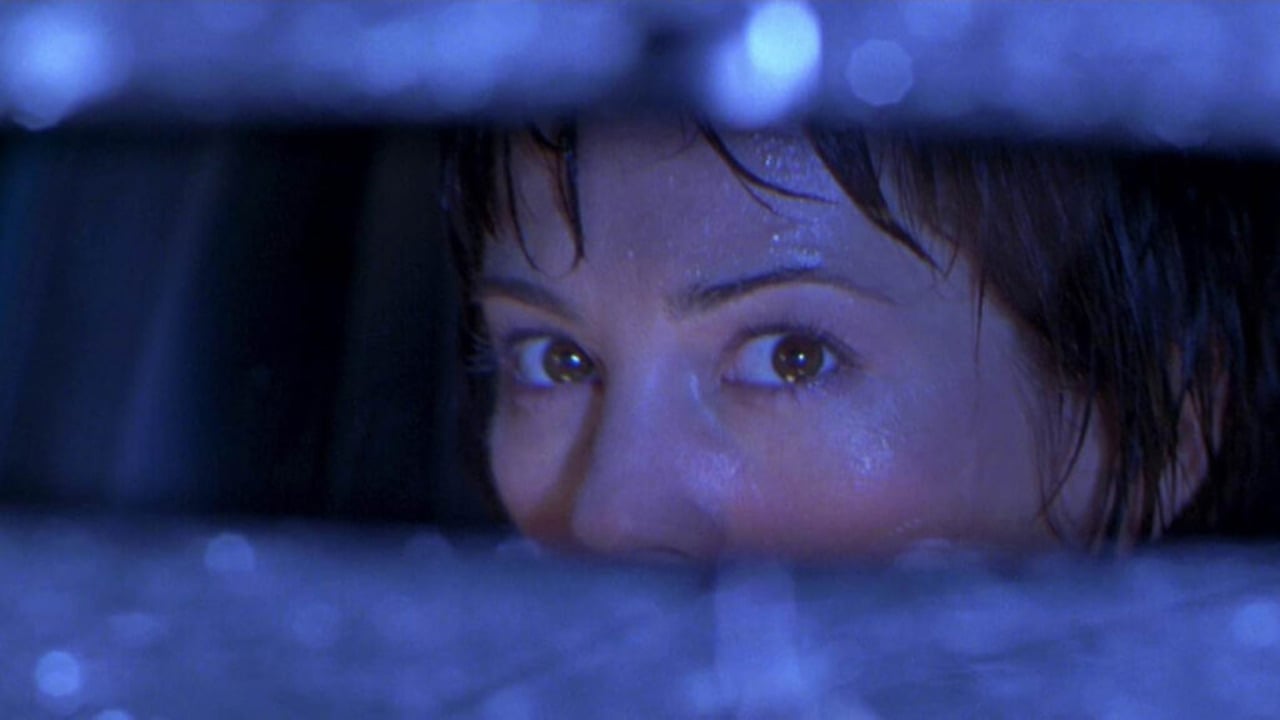
At its core, Urban Legend centers on Natalie (Alicia Witt), a college student at Pendleton University. Her life takes a terrifying turn when her ex-best friend is brutally murdered, an event that unearths a deep well of pain and fear. This personal tragedy quickly escalates into a horrifying realization: a killer is systematically targeting students, meticulously recreating infamous urban legends as the modus operandi for their gruesome crimes. As the anniversary of a tragic campus massacre looms, Natalie finds herself in a desperate race against time. She must unravel the identity of the killer before she becomes the next chilling chapter in a bloody new legend, forever etched into the annals of Pendelton’s dark history. The film masterfully interweaves the fabric of these classic urban myths with a contemporary college setting, amplifying the sense of vulnerability and impending doom.
Beyond the Slasher: A Commentary on Horror’s Cultural Resonance
Released in the wake of Wes Craven’s groundbreaking Scream (1996), Urban Legend was, by many accounts, initially dismissed as a derivative of its predecessor. While Scream served as a meta-commentary on the tropes and conventions of the slasher genre, Blanks’ film took a more nuanced approach. Instead of deconstructing the genre itself, Urban Legend delves into the very essence of horror’s impact on society. It explores how these frightening narratives, whether originating from folklore or from the silver screen, seep into our daily lives, shaping our perceptions and fueling our anxieties. The film posits that horror movies, much like potent urban legends, possess the power to transcend their fictional origins, becoming ingrained in our cultural fabric and influencing our behavior.
The Genesis of a Cinematic Myth: Production and Release
The production of Urban Legend was spearheaded by Phoenix Pictures, a relatively new studio seeking a commercially viable horror property. Silvio Horta’s script, with its compelling blend of familiar folklore and contemporary terror, proved to be the perfect vehicle. Director Jamie Blanks caught the attention of the producers with his short film Silent Number. To demonstrate his vision for the project, Blanks reportedly shot a trailer in the style that would ultimately define Urban Legend, a bold move that seemingly sealed the deal.

Upon its release on October 23, 1998, Urban Legend defied the critical skepticism that often greeted post-Scream slashers. The film proved to be a significant commercial success, grossing over $70 million worldwide against a production budget of just under $15 million. This financial triumph suggests that audiences were indeed receptive to cleverly crafted slasher films that tapped into a cultural zeitgeist. Whether this success was driven by a lingering hunger for Scream-esque meta-commentary or a genuine appreciation for Blanks’ slick, stylish direction and a compelling cast, the film undeniably struck a chord. For many, particularly those who encountered it during their formative years, Urban Legend became a memorable entry in the horror canon due to its astute exploration of how cinematic fears translate into real-world anxieties.
The Haunting Opening: A Nod to Cinematic Precedents
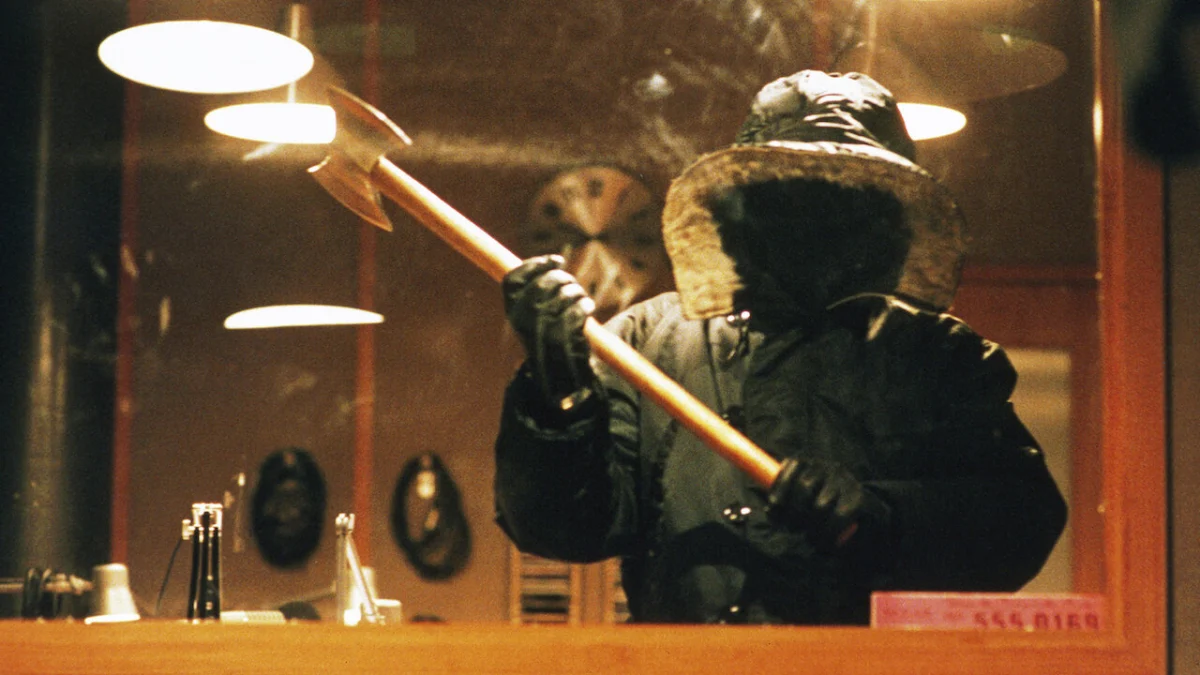
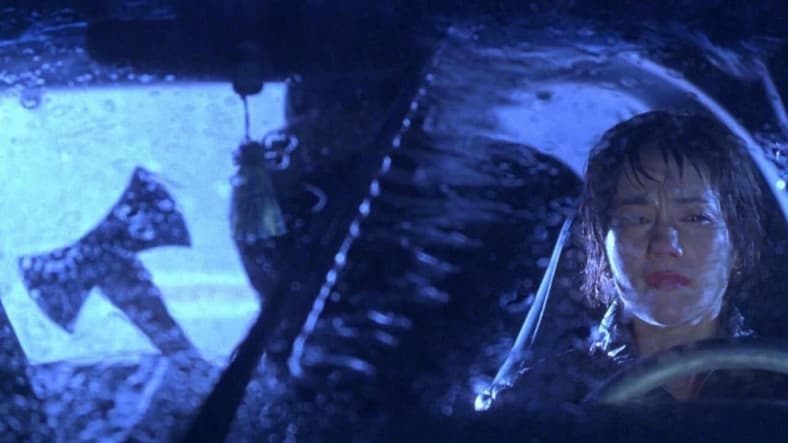
Urban Legend opens with a scene that immediately establishes its intent to play with audience expectations and fears, drawing a direct parallel to Scream‘s iconic opening featuring Drew Barrymore. In Urban Legend, Michelle (Natasha Gregson Wagner), a popular actress at the time, drives through a severe storm. Her journey takes a sinister turn when she stops at a remote gas station, encountering a disquieting, stuttering attendant played by Brad Dourif, the iconic voice behind Chucky in the Child’s Play franchise. As Michelle flees in terror, Dourif’s character shouts a chilling warning: "There’s someone in the back seat!" The ensuing sequence, with Michelle desperately singing an off-key rendition of "Total Eclipse of the Heart," culminates in her horrific demise by an axe-wielding assailant hidden in the back seat.
This shocking opening is undeniably influenced by classic cinematic suspense. The narrative echoes Alfred Hitchcock’s Psycho (1960) in its audacious early dispatch of a seemingly central character, Janet Leigh’s Marion Crane. However, the specific trope of a killer lurking in the backseat is not entirely novel. Michael Myers employed a similar tactic in John Carpenter’s Halloween (1978) to dispatch Annie Brackett. The film Dead of Winter (1987) also features a backseat murder during a winter storm. Urban Legend‘s brilliance lies not in inventing this scare but in skillfully appropriating and amplifying a concept that had already permeated horror storytelling for decades. The sequence effectively signals that the film is not merely presenting a series of scares but is instead a deliberate reflection of the pervasive fears cultivated by scary stories that have become part of our cultural lexicon.

The film further underscores this theme through the character of Dean Adams (John Neville), who exhibits an almost compulsive habit of checking his car’s backseat, not once, but twice, before entering. His eventual fate, however, reveals that some threats lie beyond the immediate visual scan. This moment serves as a stark illustration of how certain narratives become so deeply ingrained that they manifest as persistent, albeit sometimes misplaced, precautions in our daily lives. We check car backseats, feel uneasy in showers, and perhaps even double-check toilet bowls, all in response to the lingering echoes of fictional horrors. Urban Legend effectively captures this phenomenon of fictional fears becoming tangible, lived anxieties.
A Pantheon of Fear: The Cultural Significance of Urban Legends
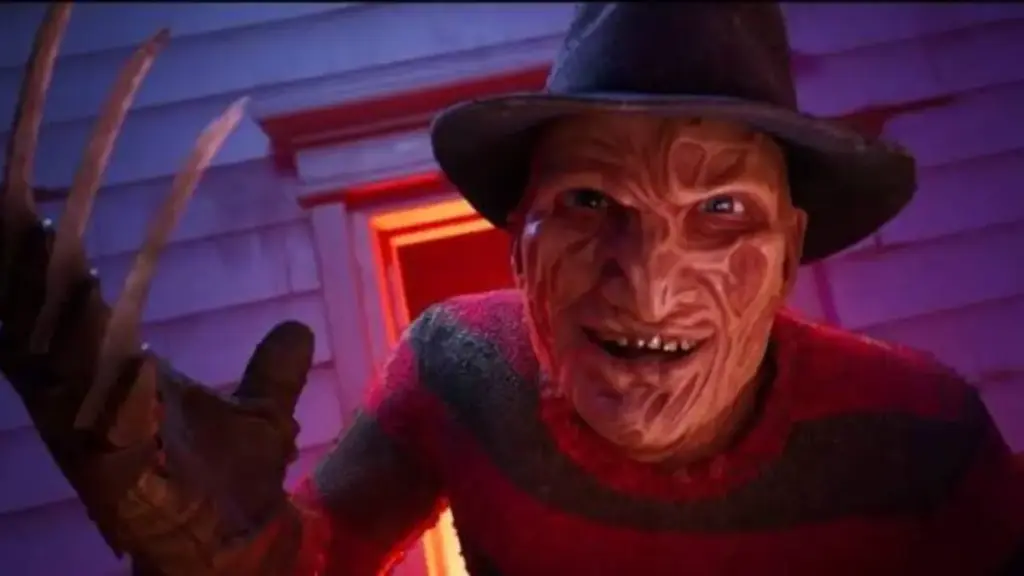
A pivotal scene in Urban Legend features Robert Englund, the legendary Freddy Krueger himself, as Professor Wexler. In this sequence, Wexler engages in a discourse on various urban legends, notably the tale of the babysitter receiving menacing phone calls from a killer inside the house. This particular legend formed the basis for Fred Walton’s 1979 film When a Stranger Calls. The article’s author recalls this film as their personal introduction to the terror of phone calls, illustrating how specific cinematic interpretations can become one’s personal "legend." Scream, in its own way, reignited this primal fear for a new generation in the mid-1990s.
Professor Wexler’s musings extend beyond mere storytelling, suggesting that urban legends function as a gauge of societal beliefs and moral codes. He posits that while true urban legends are believed to be factual, horror films often serve a similar purpose. Early slasher films, such as the Friday the 13th series, perpetuated a moralistic narrative: engaging in drug use or premarital sex was portrayed as a direct precursor to death. While demonstrably false, these films reflected and reinforced societal pressures and anxieties directed at teenagers.

The article highlights how certain horror films, like The Blair Witch Project (1999), masterfully blurred the lines between fiction and reality, convincing audiences of their authenticity through a "found footage" aesthetic. Similarly, the original Faces of Death documentary combined genuine footage with sophisticated gore effects to create the illusion of viewing actual snuff films. The enduring power of these narratives is evident in the lingering apprehension many still feel when contemplating the incantation of "Candyman" five times in front of a mirror, a testament to the potent imagery and perceived threat associated with the character.
Urban Legend further pays homage to the icons of the horror genre by casting actors intrinsically linked to these cinematic boogeymen. The presence of Brad Dourif and Robert Englund directly evokes the chilling legacies of Child’s Play and A Nightmare on Elm Street, respectively. Danielle Harris, who gained prominence as the daughter of Laurie Strode in Halloween 4 and 5, plays Natalie’s roommate, Tosh, adding another layer of genre recognition. Even the killer’s distinctive parka is suggestive, albeit perhaps unintentionally, of the iconic poster for John Carpenter’s The Thing. These casting choices and stylistic nods serve as constant reminders of the genre’s most formidable figures, figures who have transcended the screen to become ingrained in our collective fears.
The film’s narrative structure also underscores its thematic concerns. Natalie becomes a target precisely because she and her friend Michelle participated in the "gang high-beam initiation," a story they had heard circulating. This act, born from a tale that felt disturbingly real, tragically leads to the death of the fiancé of Natalie’s friend and killer, Brenda (Rebecca Gayheart), demonstrating how stories, once embraced as truth, can have devastating real-world consequences.
A Legacy of Fear: The Enduring Impact of Urban Legend
It is facile to dismiss Urban Legend as a mere imitation of Scream. While acknowledging its thematic kinship with Craven’s film, Blanks and Horta delivered a slasher that offers a more profound exploration of the genre. The film doesn’t just celebrate the popular stories and horror icons that preceded it; it delves deeply into our collective fascination with fear itself. These narratives, born from whispered tales or cinematic creations, possess a power that allows them to evolve beyond their initial fictional boundaries. They shape our daily lives, take on lives of their own, and occasionally strike a chord so deeply resonant that they feel terrifyingly real, even when we intellectually understand their fictional origins.
The enduring appeal of Urban Legend lies in its astute observation of how folklore and cinema intertwine to create a shared cultural experience of fear. It serves as a potent reminder that the stories we tell, and the movies we watch, can profoundly influence our perceptions of the world and our place within it. As the film concludes, it leaves audiences with a lingering question, a final echo of its central theme: have you remembered to check the backseat lately? This simple query, imbued with the weight of cinematic history and folklore, encapsulates the film’s lasting impact and its contribution to the ongoing dialogue between horror and its audience.