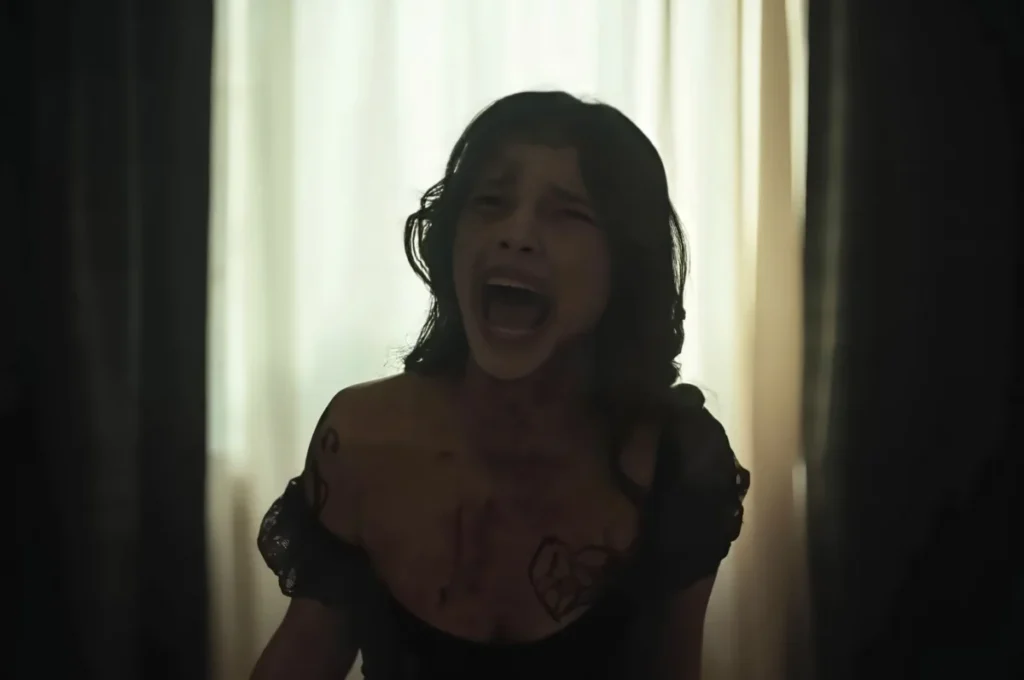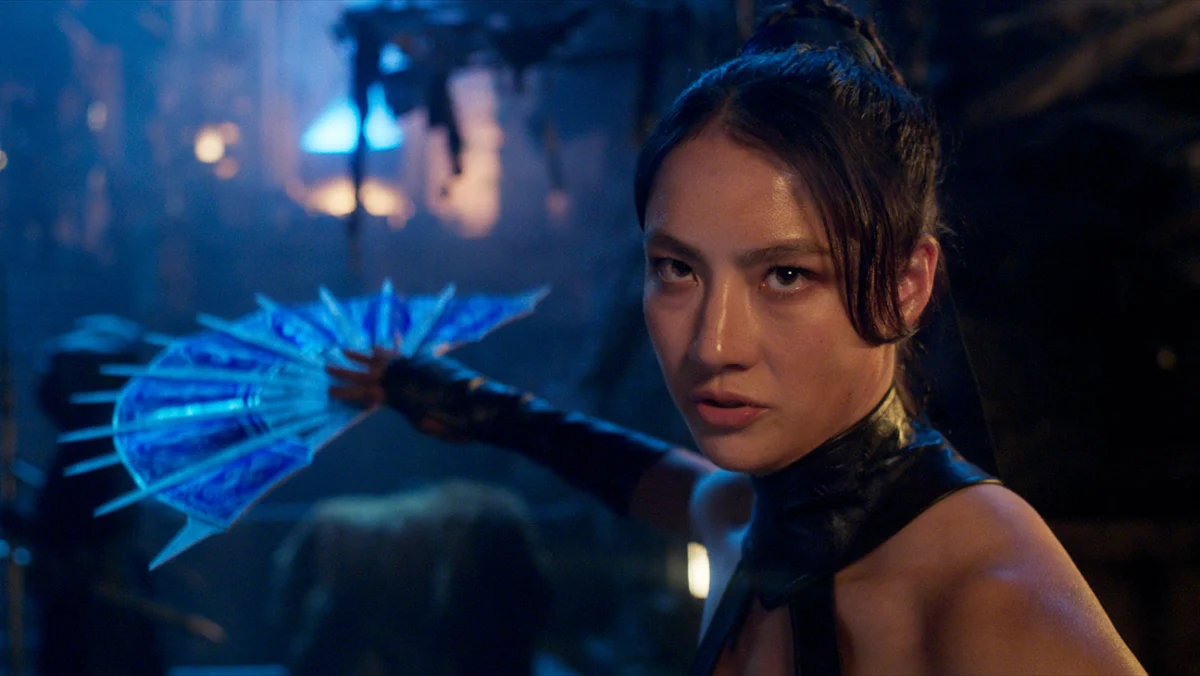
Adeline Rudolph has swiftly ascended to a pivotal role in the Mortal Kombat cinematic universe, taking on the mantle of co-protagonist as Kitana in Mortal Kombat II. Her journey into the heart of Outworld’s conflicts marks a significant narrative shift for the franchise, emphasizing an ensemble approach while placing Kitana’s deeply emotional quest at the forefront. Rudolph, with characteristic humility, attributes the film’s strength to its collective cast, a sentiment indicative of a lead actor dedicated to the project’s overarching vision.
The Strategic Evolution of the Mortal Kombat Narrative
The decision to elevate Kitana and Johnny Cage (Karl Urban) to co-protagonist status in Mortal Kombat II directly stems from screenwriter Jeremy Slater’s vision to mirror the dynamic gameplay of the iconic video game series. Unlike traditional linear narratives, Mortal Kombat games often allow players to select diverse warriors for each playthrough, fostering a varied perspective on the unfolding saga. This creative choice has resulted in parallel, yet equally compelling, character arcs for both Kitana and Johnny Cage, ensuring that the sequel offers a fresh take on the beloved lore.
Kitana’s narrative is particularly rich with a blend of personal vendetta and royal duty. Her story centers on the reclamation of her ancestral home, Edenia, which has long been subjugated by the tyrannical Shao Kahn (Martyn Ford) of Outworld. Decades prior, Shao Kahn brutally murdered Kitana’s father, King Jerrod, and subsequently transformed her mother, Queen Sindel, into his undead consort – a "Revenant" in Mortal Kombat terminology. This dark history imbues Kitana’s quest with profound emotional weight, driving her to confront the architect of her family’s destruction and restore Edenian sovereignty. The film meticulously tracks her evolution from a loyal, albeit conflicted, warrior under Shao Kahn’s thumb to a defiant queen fighting for justice.
Adeline Rudolph’s Transformative Journey into a Warrior Princess
Born in Hong Kong and possessing a rich multicultural heritage of Korean and German descent, Adeline Rudolph brings a unique global perspective to her roles. Her upbringing afforded her fluency in Korean, German, and English, with documented proficiency in French. However, stepping into the realm of Mortal Kombat II presented a novel challenge: immersion in the worlds of competitive gaming and intricate martial arts. Rudolph candidly admits to her lack of prior experience in both domains, necessitating an intensive "crash course" in Mortal Kombat game lore and the specialized fighting styles required for her portrayal of the warrior princess. This rigorous preparation involved not only understanding the extensive mythology of the games but also undergoing intense physical training to embody Kitana’s distinctive combat prowess.
Rudolph’s commitment to the role extended to internalizing Kitana’s emotional core. Reflecting on the climactic confrontations, she shared with The Hollywood Reporter her method for achieving the raw intensity seen on screen: "There were a hundred people around me on set, and to zone in, I would stare Martyn [Ford] down a couple minutes before they called action. I’d then let out a guttural scream to really get into it. What you saw on screen was how I was really feeling. It just felt really heartbreaking and frustrating." This dedication culminated in Kitana’s triumphant victory over Shao Kahn, ultimately leading to her coronation as the rightful Queen of Edenia, a moment that resonated deeply with both Rudolph and the audience.
A Rigorous Casting Process and a Fortuitous Reunion
The path to securing the role of Kitana was a demanding one for Rudolph, characterized by a protracted casting process. It began with a general meeting with director Simon McQuoid, where Rudolph, having already delved deep into Kitana’s game lore and script, articulated her vision for bringing the character to life. This initial discussion led to multiple rounds of taped auditions and re-tapes. A pivotal moment was an hour-long director session conducted remotely via Zoom from Bulgaria, a challenging environment given the technical limitations. Rudolph expressed her uncertainty during this phase, questioning whether the nuanced portrayal of Kitana’s grounded struggle would translate effectively through a pixelated screen. Fortunately, her performance resonated, though the wait for confirmation was prolonged. The news ultimately came not through official channels but serendipitously from her future co-star, Tati Gabrielle, who "accidentally" disclosed Rudolph’s successful casting.

This accidental reveal highlighted a delightful coincidence for the production: Rudolph and Gabrielle, who portrays Jade, share a significant professional history. The two had previously played "weird sisters" on the acclaimed Netflix series Chilling Adventures of Sabrina. While producers were likely aware of their prior collaboration, the exact depth of their sisterly dynamic was perhaps not fully known. Rudolph remarked that this reunion, allowing them to portray a different iteration of a sisterly bond, was a "pleasant surprise." Their established friendship, maintained since Sabrina, proved invaluable, fostering a natural chemistry that translated seamlessly into their on-screen relationship as Kitana and Jade, enriching the film’s portrayal of their bond.
The Mileena Conundrum and Franchise Future
The Mortal Kombat fan base has long been invested in the intricate lore surrounding Kitana’s relationships, particularly with Mileena, her sister-clone from the games. Mileena’s elimination by Sonya (Jessica McNamee) in the 2021 Mortal Kombat film left many fans speculating about her potential revival for the Kitana-centric sequel. However, Mortal Kombat II makes no direct mention of Mileena, prompting renewed discussions among fans about whether the creative team has entirely abandoned her video game backstory in favor of establishing Jade as Kitana’s sole "sisterly" figure.
Adeline Rudolph, however, remains optimistic about Mileena’s potential return and the exploration of her complex relationship with Kitana. "I definitely think there is a lot of room left for Mileena to have her own [sisterly] storyline with Kitana. I wouldn’t necessarily close that door," Rudolph stated. She emphasized that Jade’s character is distinct and not a replacement for anyone, suggesting that the franchise could accommodate multiple profound relationships for Kitana. In Rudolph’s mind, the possibility of Mileena as Kitana’s sister-clone remains very much alive, offering a rich vein of storytelling for future installments.
Mastering the Art of Combat: Fans, Fluidity, and Ferocity
Rudolph’s entry into the action-heavy Mortal Kombat universe necessitated an intense regimen of martial arts training. Having found out about her casting while awaiting a green card appointment in Germany, she was fast-tracked to Australia, where her first month was dedicated almost entirely to stunt training. This involved a combination of rigorous fight choreography and fundamental drills in specific martial arts styles, including Tai Chi, Wushu, and Kung Fu, all chosen to align with Kitana’s elegant yet deadly combat form.
Kitana’s fighting style is characterized by its dance-like grace, royal demeanor, and fluid movements, a stark contrast to more conventional combat techniques. Rudolph worked extensively with stunt coordinator Malay Kim to achieve this distinctive fluidity, describing it as "very foreign" to her initially. A hallmark of Kitana’s arsenal is her signature steel fans. Rudolph quickly adapted to wielding these formidable weapons, noting how they "somehow became extensions of my limbs." She diligently practiced with basic fans at home, mastering their manipulation, and even managed to take a pair of the film’s prop fans home, a testament to her deep connection with the character’s iconic weaponry. She highlighted the intricate detail of having left and right-handed fans, underscoring the production’s commitment to authenticity.
Rudolph further elaborated on the varying emotional and physical demands of different fight sequences. While the initial confrontation with Johnny Cage was "down to business [and performative]," the sparring scene with Jade offered a more "lighthearted and playful" dynamic, showcasing a seldom-seen side of the characters’ camaraderie. The climactic battle against Shao Kahn, however, was exceptionally "heavy," requiring Rudolph to channel profound emotions of heartbreak and frustration into her performance, culminating in a visually stunning and emotionally resonant victory.
A Triumphant Climax and the Road to Mortal Kombat III
The final confrontation between Kitana and Shao Kahn is a narrative and visual centerpiece of Mortal Kombat II. Rudolph described the experience of filming this pivotal battle as intensely nerve-wracking yet incredibly rewarding. Her method of focusing on Martyn Ford and releasing a guttural scream before "action" was called underscored the profound emotional investment she poured into the scene. The fusion of raw emotion with meticulously choreographed stunts resulted in a captivating display of Kitana’s journey from subjugated warrior to triumphant queen.

Upon witnessing the completed sequence, with its stunning visual effects and enthusiastic audience reactions, Rudolph expressed immense satisfaction. She noted the power of seeing the ensemble’s efforts come to fruition and the lasting impact of the film’s emotional depth.
The conclusion of Mortal Kombat II sets the stage for a potential third installment, with the surviving champions assembling to undertake a perilous mission: venturing into the Netherrealm to rescue their fallen comrades, including Liu Kang (Ludi Lin). While a second draft of Mortal Kombat III is reportedly nearing completion by Jeremy Slater, the film has yet to receive an official green light. Rudolph remains in the dark about specific plot points but expressed excitement for the prospect of this journey, highlighting the franchise’s unique approach to mortality where "death isn’t necessarily a death." She cited the return of characters like Kung Lao, Sindel, and Kano as Revenants, underscoring the intriguing possibilities of retrieving lost souls.
For future storylines, Rudolph expressed a strong desire to further explore the complex "sisterhood" between Kitana, Mileena, and Jade, acknowledging their rich, interwoven history from the game lore. She also noted the potential for deeper dives into Kitana’s relationships with Liu Kang and Raiden, elements that are central to the Mortal Kombat mythology. Furthermore, Rudolph shed light on Kitana’s nuanced relationship with her Revenant mother, Sindel, emphasizing that despite Sindel’s altered state, Kitana’s inability to bear losing another parent underscores her deep-seated emotional wounds and motivations.
Beyond Outworld: Adeline Rudolph’s Expanding Genre Footprint
Adeline Rudolph’s career trajectory has seen her unexpectedly carve out a significant niche in genre filmmaking. Despite not initially envisioning such a path, her impressive resume includes prominent roles in Riverdale, Hellboy, Resident Evil, and Chilling Adventures of Sabrina, in addition to Mortal Kombat II. Rudolph attributes this to the nature of an actor’s journey, where projects often "find" them, especially early in their careers. She expressed gratitude for the privilege of working on projects with established intellectual property (IP), which provides a rich "backstory to dive into" during character preparation.
Looking ahead, Rudolph has several exciting projects in the pipeline that further solidify her genre presence. One highly anticipated film is Perfect Girl, an original K-pop thriller. Rudolph expressed immense enthusiasm for exploring the "rich" K-pop world, particularly the highly competitive and psychologically intense trainee system in South Korea. She shared a personal anecdote about her younger sister being offered a K-pop contract, highlighting her family’s tangential connection to the industry. The film delves into the inner turmoil of aspirants vying for a coveted spot in a K-pop group, an industry where only a handful debut annually. Rudolph praised her co-stars, K-pop artists Jeon Somi and Nancy McDonie, and producer/actress Arden Cho (Kpop Demon Hunters), for their insights into the system’s realities. She teased Perfect Girl as a blend of "glitzy and glammy and horrific and sad," promising a unique psychological thriller.
Additionally, Rudolph is set to appear in Neagley, a spinoff from the popular Reacher series. This project offered a fortuitous reunion with Damon Herriman, who also appeared in Mortal Kombat II as the necromancer. Rudolph noted her excitement about working with familiar faces again, particularly Herriman, whose involvement immediately piqued her interest in the role. She hinted that her character in Neagley is markedly different from the highly trained warrior Kitana, describing her as "still working her way to a place where she can really hold her own," showcasing a new facet of Rudolph’s versatile acting range.
As Mortal Kombat II continues its run in theaters, Adeline Rudolph stands as a prominent figure in its evolving narrative. Her dedication to embodying Kitana, coupled with her burgeoning career in diverse genre projects, positions her as an actor to watch in the contemporary cinematic landscape.